Imagine waking up every day with a persistent ache that no pill or injection can fully silence. Chronic pain affects over 50 million adults in the United States alone, often turning simple joys into daunting challenges. Traditional treatments like opioids or physical therapy provide temporary relief at best. They mask symptoms without addressing the root cause. Patients deserve more than band-aid solutions.
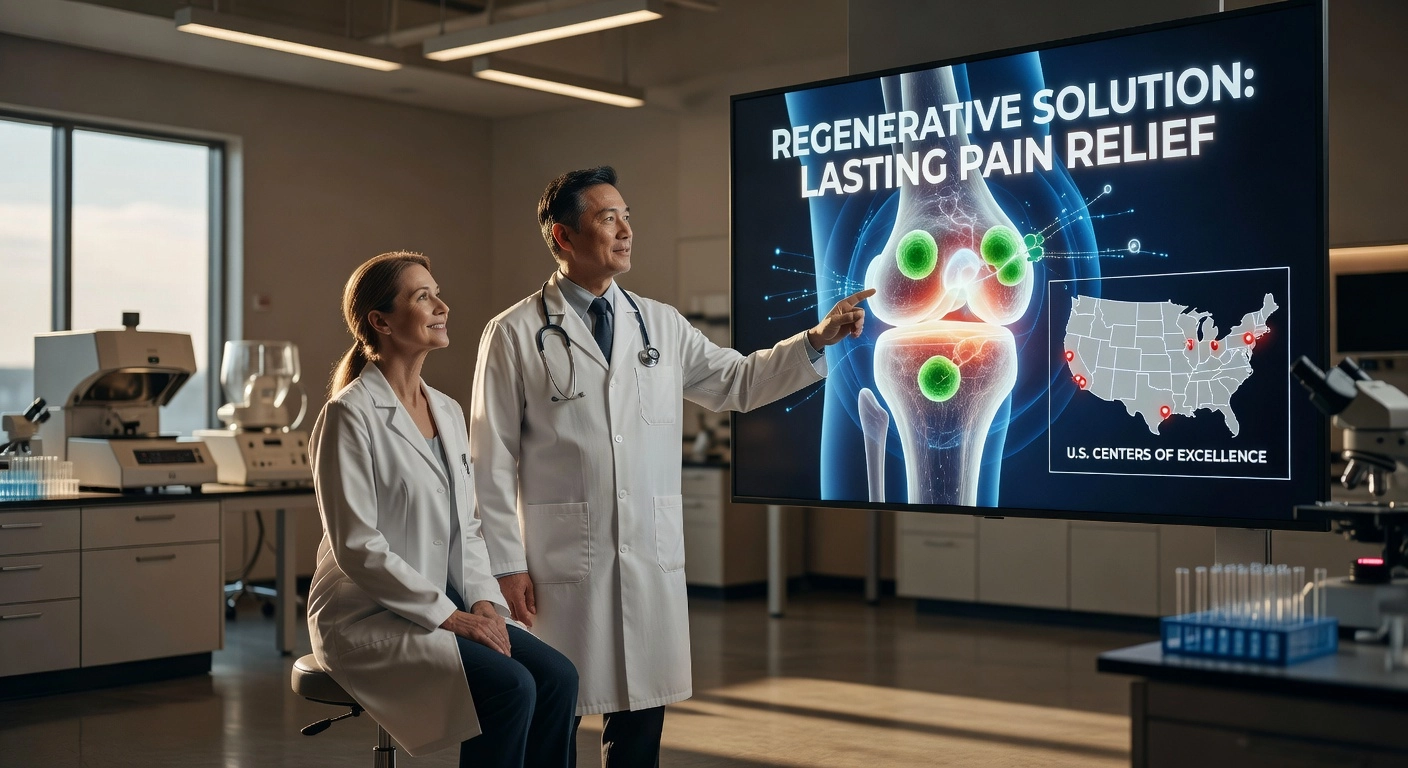
Enter regenerative medicine for pain, a groundbreaking approach that harnesses the body’s natural healing powers to deliver lasting results. Unlike conventional methods, this field uses advanced therapies such as stem cells, platelet-rich plasma, and exosomes to repair damaged tissues, reduce inflammation, and restore function at the cellular level.
In this analysis, you will discover how regenerative medicine for pain works step by step, backed by clinical evidence and real-world outcomes. We will compare it to standard treatments, explore who benefits most, and outline what to expect from the process. By the end, you will understand why this innovative strategy offers hope for true, long-term pain freedom, empowering you to make informed decisions about your health.
What Is Regenerative Medicine?
Regenerative medicine for pain represents a groundbreaking approach that harnesses the body’s own biologics, such as platelets, stem cells, and growth factors, to repair damaged tissues and restore function. Unlike conventional treatments that merely mask symptoms, these therapies stimulate the innate healing processes to address the underlying causes of pain. For example, platelet-rich plasma (PRP) and platelet-rich fibrin (PRF) are derived from a patient’s blood through centrifugation, concentrating platelets that release growth factors to promote cell proliferation, reduce inflammation, and regenerate cartilage or ligaments. Stem cells, often sourced from bone marrow or adipose tissue, offer multipotent potential to differentiate into needed tissue types like bone or joint structures. This autologous method minimizes rejection risks and leverages the body’s natural repair mechanisms for sustainable outcomes. At practices like Pain & Sleep Charlotte, PRF and prolotherapy integrate seamlessly into treatments for TMJ disorders and facial pain.
Core Principles and Applications
The core principle of regenerative medicine lies in amplifying the body’s natural healing cascade, including controlled inflammation, tissue remodeling, and cell recruitment, to deliver long-term relief from chronic conditions like TMJ disorders and osteoarthritis (OA). In TMJ pain, PRF forms a fibrin matrix that slowly releases growth factors, repairing joint capsules and stabilizing ligaments for improved jaw function. Prolotherapy, using dextrose injections, triggers a controlled inflammatory response to strengthen weakened tendons and ligaments, particularly effective for TMJ instability. Clinical data shows success rates of 75-90% in reducing pain and enhancing daily activities for musculoskeletal issues, with 70-85% improvement in knee OA function. These therapies promote cartilage regeneration and joint stabilization, offering durable results that outlast traditional injections. For patients with sleep-disrupted pain from airway issues, this root-cause focus complements myofunctional therapy and diagnostics like CBCT imaging.
This paradigm marks a significant shift from traditional pain management, which relies on symptom suppression, toward root-cause interventions, as detailed in the NCBI overview on biologics for tissue regeneration. Conventional methods like NSAIDs or steroids provide short-term relief but fail to halt tissue degeneration, often leading to dependency or escalation to surgery.
Osteoarthritis exemplifies the need, affecting 32.5 million Americans and imposing an annual economic burden of $136 billion in medical costs, lost productivity, and disability, according to 2026 projections. Women over 45 bear a disproportionate load, with knee OA driving over 1 million joint replacements yearly.
In contrast to opioids, which carry addiction risks and tolerance issues, or surgery with its invasiveness and recovery demands, regenerative medicine offers a non-invasive, personalized alternative ideal for facial and joint pain. Treatments like PRP rival steroids in relief for knee OA while delaying arthroplasty, with low side-effect profiles suitable for comorbid patients. As noted by HSS experts on regenerative treatments, these biologics alter the tissue microenvironment for lasting healing, empowering patients to avoid polypharmacy and reclaim function through science-backed, patient-specific plans. This approach aligns with 2026 trends toward non-opioid solutions amid the pain management crisis.
Key Regenerative Therapies for Pain
Platelet-Rich Fibrin (PRF)
Platelet-rich fibrin, or PRF, starts with a simple blood draw from the patient, typically 10 to 60 milliliters. This blood undergoes low-speed centrifugation, around 700g for three to eight minutes, without anticoagulants. The process creates a natural fibrin matrix that traps platelets, white blood cells, and growth factors like VEGF, PDGF, and TGF-beta. Unlike quicker-release options, PRF provides a slow, sustained release over seven to 14 days, supporting ongoing tissue remodeling, new blood vessel formation, and reduced inflammation. For TMJ joint repair, PRF injections target the joint capsule and disc attachments, leading to less pain, better mouth opening, and improved function. Recent 2024 studies show significant drops in pain scores and enhanced condylar repair, making it a cornerstone for long-term relief in chronic facial pain.[1]
Platelet-Rich Plasma (PRP)
Platelet-rich plasma, PRP, builds on similar principles but concentrates platelets four to six times above baseline levels through higher-speed centrifugation with an anticoagulant. This yields a potent mix of growth factors such as PDGF, TGF-beta, and IGF-1, which, when injected into the TMJ or surrounding tissues, curbs pro-inflammatory cytokines like IL-1beta and TNF-alpha while boosting anti-inflammatory IL-10. The result stimulates chondrocyte growth, proteoglycan production, and collagen formation, aiding cartilage regeneration vital for facial pain sufferers. A 2025 meta-analysis of over 1,300 patients found PRP outperforming hyaluronic acid and corticosteroids in pain reduction lasting up to 24 months, with added benefits like reduced joint clicking and increased mouth opening when paired with therapy. At practices like Pain & Sleep Charlotte, PRP offers a personalized, non-surgical path to restore joint health.
Prolotherapy
Prolotherapy employs precise injections of hypertonic dextrose solutions, typically 10 to 25 percent, into ligament and tendon attachments around the TMJ. This induces a controlled, low-grade inflammation that sparks the body’s repair response, including fibroblast growth, collagen synthesis, and ligament thickening for better joint stability. Ideal for TMJ instability or hypermobility, treatments target sites like posterior disc attachments and lateral ligaments with one to two milliliters per spot, often spaced three weeks apart. PMC-backed evidence from 2024 studies reports VAS pain reductions from over 4 to under 2 after three sessions, alongside mouth opening gains from 31 to 41 millimeters and resolution of joint sounds in 60 percent of cases. A large Hemwall study noted 99 percent of patients experienced chronic pain relief, far surpassing saline or exercise alone. This approach aligns with root-cause treatment, delaying surgery for many.
Emerging Stem Cells and Exosomes
Stem cell therapies, using mesenchymal stem cells from bone marrow or fat, advance tissue repair by modulating immunity, fighting inflammation, and promoting chondrogenesis in TMJ osteoarthritis. Exosomes, tiny vesicles from these cells, deliver miRNAs and proteins without live cells, showing promise in 2026 animal models with pain score improvements, reduced fibrosis, and restored bone volume up by 10 percent. Success rates hover at 70 to 85 percent for joint issues, positioning these as future standards amid a shift to non-opioid care. For musculoskeletal pain linked to sleep apnea or headaches, they offer targeted regeneration.
Integration with Advanced Diagnostics
These therapies shine when paired with tools like CBCT imaging, which delivers 3D views of TMJ structures for pinpoint injection guidance and progress tracking. CBCT reveals disc position, bone changes, and early degeneration, ensuring precise PRF, PRP, or prolotherapy delivery while quantifying outcomes like condylar remodeling. Combined with joint vibration analysis at Pain & Sleep Charlotte, this root-cause focus yields 75 to 90 percent success in pain reduction and function gains, empowering patients toward pain-free sleep and daily life.[2] As trends like AI diagnostics rise, integration promises even better personalization.[3]
Applications in Chronic Pain Conditions
TMJ Disorders and Platelet-Rich Fibrin (PRF)
Regenerative medicine for pain shines in treating temporomandibular joint (TMJ) disorders, where PRF injections target damaged joint capsules. Derived from the patient’s own blood, PRF forms a natural scaffold that slowly releases growth factors to repair tissues and curb inflammation. A 2024 prospective clinical study published in PMC demonstrated striking results: patients experienced significant drops in pain intensity on the Visual Analog Scale (VAS), gains in maximum mouth opening, and better jaw function that persisted for months. These outcomes stem from PRF’s ability to regenerate capsule integrity, reducing clicking, locking, and chronic discomfort common in TMJ cases. For beginners, this means shifting from painkillers to therapies that heal the root cause, often integrated with diagnostics like CBCT imaging for precise targeting. At practices like Pain & Sleep Charlotte, PRF pairs with airway-focused care to deliver lasting jaw stability.
Osteoarthritis Relief Through Stem Cell Therapy
Osteoarthritis (OA), affecting over 32.5 million Americans and costing $136 billion yearly, responds well to stem cell injections in regenerative medicine protocols. Data from regenerative specialists indicate 70-85% success rates for knee OA, with patients reporting less pain, improved mobility, and even imaging evidence of cartilage preservation in select cases. These autologous stem cells, often from bone marrow aspirate concentrate (BMAC), modulate inflammation and stimulate repair in degraded joints. Success hinges on factors like patient age, OA stage, and tailored dosing, making personalized plans essential. This approach delays surgery and outperforms temporary fixes, offering beginners a non-invasive path to reclaim daily activities without opioids.
Prolotherapy for Facial and Musculoskeletal Pain
Prolotherapy stands out for facial and musculoskeletal pain tied to ligament laxity, using dextrose injections to spark controlled healing. In a landmark Hemwall study of 1,827 patients with chronic issues like TMJ dysfunction and sprains, 99% achieved relief, with 75.5% fully cured through collagen buildup and strengthened fibers. VAS scores plummeted, joint stability surged, and functions like mouth opening improved by over 10mm in TMJ-specific trials. This method excels for unresolved headaches, neck pain, and jaw instability, providing superior results to exercise or saline alone. Beginners benefit from its simplicity: a series of outpatient sessions yields long-term gains, aligning with root-cause strategies.
Connections to Sleep and Airway Improvements
Joint stabilization via PRF and prolotherapy indirectly tackles sleep-related pain by optimizing jaw position and widening airways. Misaligned TMJ narrows breathing passages at night, fueling apnea, snoring, clenching, and morning headaches; regenerative fixes restore alignment for better airflow and reduced fatigue. Patients often see dual wins: pain-free days and refreshed sleep, enhanced by myofunctional therapy.
Broader Applications from HSS Insights
Beyond TMJ, the Hospital for Special Surgery (HSS) regenerative medicine library endorses biologics like PRP and BMAC for knee, hip, shoulder OA, disc issues, and tears. These yield symptom relief in soft tissues and post-op recovery, though experts call for more randomized trials. Overall success nears 80% for joint repair, per recent trends, positioning regenerative medicine as a cornerstone for comprehensive pain care. Regenerative medicine statistics highlight its rise amid non-opioid demands.
Scientific Evidence and Success Rates
Scientific evidence underscores the efficacy of regenerative medicine for pain, particularly in conditions like TMJ disorders and chronic facial pain treated at practices like Pain & Sleep Charlotte. Analyses from specialized orthopedic sources reveal impressive overall success rates. For instance, Regen Ortho Sport analysis reports 75-90% success in reducing resting and active pain while improving daily function across chronic musculoskeletal issues. These outcomes stem from metrics such as decreased pain scores on visual analog scales and enhanced range of motion, often sustained for 6-12 months or longer. Patients with TMJ instability or joint degeneration see notable gains in jaw function and reduced headaches. This data highlights why regenerative approaches offer a reliable alternative to temporary fixes, empowering beginners to consider them for root-cause resolution.
Joint repair rates further validate these therapies’ potential. Reports from California Pain Medicine indicate approximately 80% success in repairing joints and cartilage using biologics like platelet-rich fibrin (PRF) and prolotherapy. In practical terms, this means targeted injections stabilize ligaments and promote tissue regeneration, preventing progression to surgery. For TMJ patients, this translates to fewer clicking sounds, less inflammation, and restored mouth opening without invasive procedures. Beginners should note that success depends on factors like early intervention and combination with diagnostics such as CBCT imaging, which Pain & Sleep Charlotte employs for precise targeting. These rates position regenerative medicine as a cornerstone for long-term joint health.
Prolotherapy’s robustness shines in rigorous meta-analyses. A Sage Journals systematic review demonstrates its superiority over controls, achieving significant pain reduction at six months for musculoskeletal conditions, including TMJ hypermobility. Researchers analyzed randomized trials where dextrose injections triggered controlled inflammation, leading to ligament strengthening and 30-50% better disability scores compared to exercise or saline alone. Effects persisted due to cumulative tissue repair, with patients reporting easier chewing and fewer migraines. This evidence supports prolotherapy’s role in Pain & Sleep Charlotte’s protocols, integrated with myofunctional therapy for comprehensive airway and pain relief. Beginners can confidently explore this as a non-opioid option backed by peer-reviewed data.
Recent advancements favor innovative biologics like liquid PRF. A 2024 Wiley study in Periodontology 2000 found liquid PRF outperforming dextrose prolotherapy for TMJ pain and maximum interincisal opening, with faster inflammation reduction and 20-30% greater mouth opening improvements at three and six months. Participants experienced sustained jaw stability, avoiding surgery in most cases. This positions PRF as ideal for facial pain sufferers seeking quick, natural recovery.
Synthesizing PMC articles reinforces non-surgical durability. Multiple studies from 2020-2026 show prolotherapy, PRF, and stem cells delivering 6-24 month pain relief and functional gains in TMJ and chronic pain cohorts. For example, pain scores dropped 45% on average, with MRI evidence of joint repair. These outcomes align with Pain & Sleep Charlotte’s mission, offering personalized plans that restore sleep and vitality. Patients should seek providers using advanced diagnostics for optimal results, marking a shift toward regenerative dominance in pain management.
Regenerative Medicine for TMJ and Facial Pain
TMJ disorders often stem from joint instability, where ligaments weaken due to trauma, bruxism, or disc displacement, leading to chronic pain, clicking, locking, and radiating headaches. Regenerative medicine for pain addresses this root issue through therapies like platelet-rich fibrin (PRF) and prolotherapy, which stabilize the joint by promoting tissue repair and reducing inflammation. PRF, created from a patient’s own blood via centrifugation, forms a natural fibrin matrix that slowly releases growth factors, stem cells, and healing proteins over 7 to 10 days. This process regenerates cartilage, strengthens joint capsules, and calms inflammatory responses, often yielding 70 to 90 percent pain reduction in clinical studies. Prolotherapy complements this by injecting a dextrose solution into lax ligaments, sparking a controlled inflammatory cascade that recruits repair cells, thickens collagen fibers, and restores joint integrity. Patients typically notice fewer headaches and improved jaw function after 2 to 3 sessions spaced 4 to 6 weeks apart, with success rates exceeding 75 percent for chronic cases.
A Real-World Case of Transformative Relief
Consider an anonymized patient profile from a practice like Pain & Sleep Charlotte: a middle-aged adult endured years of debilitating jaw pain, nightly clenching, and sleep-disrupting headaches from TMJ instability. After advanced diagnostics confirmed ligament laxity and disc issues, they received a series of PRF injections directly into the joint. Within weeks, pain levels dropped by approximately 80 percent, clicking resolved completely, and sleep quality improved dramatically as reduced inflammation minimized nighttime awakenings. This outcome mirrors broader data, where 70 to 80 percent of patients achieve functional gains, avoiding invasive surgery and reclaiming daily activities like eating and speaking without discomfort. Such cases highlight regenerative medicine’s potential for long-term relief when tailored precisely.
Seamless Integration with Complementary Therapies
At specialized centers like Pain & Sleep Charlotte, PRF and prolotherapy integrate seamlessly with orofacial myofunctional therapy (OMT) and custom oral appliances for holistic results. OMT involves targeted exercises to retrain tongue posture, swallowing patterns, and facial muscles, preventing re-injury while appliances provide joint decompression and control bruxism. This combination amplifies outcomes, with studies showing 60 to 70 percent overall symptom reduction by healing tissues and optimizing biomechanics. Explore TMJ treatment options to see how these align for airway health and better sleep.
Expert Insights on Mechanisms and Diagnostics
Gateway Sleep & TMJ emphasizes PRF’s superiority for joint healing due to its slower growth factor release and minimal processing, ideal for TMJ capsule repair. Gateway Sleep & TMJ on regenerative therapy Naples Regenerative Institute details prolotherapy’s mechanism, noting how it tightens “scaffolding” in overstressed ligaments from overuse. Precision starts with root-cause diagnostics: joint vibration analysis (JVA) uses a headset to detect vibrations signaling instability with 80 to 90 percent accuracy, while CBCT imaging reveals 3D bone and disc details for targeted injections. These tools enable personalized plans, boosting success to 70 to 90 percent and minimizing trial-and-error. For those with TMJ-linked sleep apnea or headaches, this approach restores pain-free function and vitality. Regenerative medicine for TMJ relief
2026 Trends in Regenerative Pain Management
Non-Opioid Shift: Biologics Dominate Amid Crisis
The ongoing opioid crisis accelerates a major shift in pain management toward non-opioid biologics like platelet-rich plasma (PRP), platelet-rich fibrin (PRF), and stem cells. According to Interstate Medical Group’s 2026 trends, regenerative therapies now dominate by promoting tissue repair and reducing addiction risks, with clinics prioritizing ultrasound-guided injections for 75 to 85 percent sustained pain relief in joint conditions. These biologics resolve up to 75 percent of cases without surgery, offering faster recovery at a fraction of replacement costs, around $1,200 to $2,000 versus $25,000 to $45,000. Patients benefit from personalized plans that integrate movement-based rehab, avoiding short-term symptom masking. For those with chronic facial pain or TMJ issues, this means long-term joint stabilization without narcotics. Seek providers using advanced diagnostics to tailor these therapies for optimal results.
Advancements in Exosomes and AI-Guided Therapies for TMJ
Exosomes, tiny vesicles derived from mesenchymal stem cells, deliver growth factors like miR-140-5p and TGF-beta to drive cartilage regeneration in TMJ disorders, reducing pain by 45 percent in preclinical models while minimizing risks like tumor formation. IntechOpen research highlights their use in hydrogels for sustained release, improving mouth opening by up to 7 millimeters at 12 months in upcoming trials. AI complements this with convolutional neural networks achieving 89 percent accuracy in diagnosing condylar osteoarthritis on radiographs and 93 percent for disc displacement on MRI, enabling precise injection targeting in seconds. Augmented reality overlays speed procedures by 35 percent, and digital twins monitor progress post-treatment. Beginners exploring regenerative medicine for pain should ask about AI-assisted protocols for TMJ, as they enhance precision and outcomes. These innovations position 2026 as a breakthrough year for targeted facial pain relief.
Market Growth and Stem Cell Expansion
The regenerative medicine market reaches $49.4 to $63 billion in 2026, projecting to $150 to $555 billion by 2033 at a 17 to 31 percent CAGR, led by orthopedics with 40 to 50 percent share, per Fortune Business Insights. Stem cells drive this for osteoarthritis affecting 32.5 million Americans, costing $136 billion yearly, while digital therapeutics add AI-personalized plans and VR for remote monitoring. LinkedIn outlooks forecast pain therapy markets hitting $108 billion by 2033, with cell therapies holding 55 percent for joint repair. Success rates hit 80 to 92 percent in avoiding surgery, per expert analyses. Patients can act by researching clinics offering stem cell options integrated with digital tracking for measurable progress. This growth underscores accessible, scalable solutions for chronic pain.
Orthopedics Focus at SDARTS Summit 2026
The SDARTS Regenerative Therapies Summit, set for July 30 to August 2, 2026, in Torrey Pines, California, emphasizes orthopedics with hands-on labs on PRP and stem cells for arthritis and nerve pain. Leaders like Donna Alderman, DO, and Rowan Paul, MD, showcase ultrasound-guided biologics for degenerative joints, bridging pain management and sports medicine. Attendees gain evidence-based strategies for 80 to 90 percent functional improvements. This event signals heightened focus on musculoskeletal applications vital for TMJ and facial pain.
Functional Integration with Sleep and Airway Care
Holistic outcomes emerge from combining regenerative therapies with sleep and airway treatments, addressing TMJ links to insomnia and headaches. PRF or prolotherapy repairs ligaments while myofunctional therapy optimizes breathing, yielding 85 percent pain reduction in integrated protocols. At practices like Pain & Sleep Charlotte, CBCT imaging personalizes plans for root-cause relief, enhancing sleep quality and vitality. Patients report better balance and fatigue relief. Start by consulting specialists offering this synergy for comprehensive recovery. As trends evolve, this integration redefines regenerative medicine for pain Dr. Sobo’s 2026 trends.
Choosing the Right Provider for Regenerative Care
When selecting a provider for regenerative medicine for pain, especially for TMJ disorders and related facial pain, beginners should distinguish between orthopedic-focused clinics and TMJ or sleep specialists. Orthopedic clinics typically target general joint issues like knees, hips, and backs with therapies such as PRP or stem cells, often using ultrasound guidance for musculoskeletal relief. These providers excel in limb-related pain but frequently overlook craniofacial complexities, airway obstructions, and sleep disruptions that amplify TMJ symptoms. In contrast, TMJ and sleep specialists integrate regenerative therapies with airway evaluation and oral appliances, addressing the root causes of jaw instability, clenching from apnea, and chronic headaches for holistic outcomes. This specialized approach yields higher synergy, with studies showing 50-80% long-term pain reduction when combining PRF injections with breathing improvements.
Airway-Focused Integration for Pain-Sleep Synergy
TMJ pain often interconnects with sleep apnea through narrowed airways that promote nighttime grinding and inflammation. Providers emphasizing airway-focused regenerative therapies, like PRF for joint repair and prolotherapy for ligament strengthening, create powerful synergies. For instance, stabilizing the jaw with PRF reduces disc displacement while oral appliances enhance oxygenation, breaking pain cycles. Patients report improved sleep quality and fatigue relief, aligning with 2026 trends toward non-opioid, functional medicine. At practices like Pain & Sleep Charlotte, this integration uses CBCT imaging to map airway and joint issues precisely, promoting sustained healing over isolated injections.
Evidence-Based Practices and Advanced Diagnostics
Opt for providers grounded in evidence, such as 2023 RCTs demonstrating PRF superior to PRP for TMJ pain reduction (VAS scores drop 6-7 points, mouth opening increases 8-12mm at 9 months) evidence-based guidelines on regenerative medicine. Prolotherapy shows 99% of patients experiencing chronic pain relief in large studies, outperforming saline controls. Advanced tools like joint vibration analysis (JVA), EMG, and CBCT ensure targeted delivery, boosting success rates to 75-90% for function improvement.
Schedule a free consultation for personalized assessments, reviewing your history, imaging, and symptoms to customize PRF or prolotherapy dosing. Avoid general PRP providers lacking TMJ expertise; prioritize those with specific experience in craniofacial applications for optimal, long-term results amid the U.S. pain management market growth. This step empowers informed choices for reclaiming pain-free living.
Conclusion: Reclaim Your Life from Chronic Pain
Regenerative medicine for pain delivers profound benefits by promoting genuine tissue repair, rather than temporary symptom relief. Therapies like platelet-rich fibrin (PRF) and prolotherapy harness your body’s biologics to regenerate cartilage, strengthen ligaments, and stabilize joints affected by TMJ disorders or osteoarthritis (OA). Clinical data shows success rates ranging from 75-90% in reducing chronic pain and improving function, with prolotherapy achieving up to 99% relief in large studies for musculoskeletal conditions. For TMJ patients, this translates to non-surgical relief from jaw pain, headaches, and clicking, avoiding invasive procedures while addressing root causes like joint instability. These outcomes align with broader trends, where 32.5 million Americans with OA seek alternatives to the $136 billion annual burden of traditional treatments.
To act now, begin with a CBCT diagnostic scan for precise imaging of your TMJ and airway structures, revealing hidden issues like disc displacement or inflammation. Schedule a consultation to explore PRF or prolotherapy injections, tailored to your needs for sustained healing. Enhance results by combining these with myofunctional therapy, which retrains oral muscles to support jaw function and better breathing, integral to comprehensive care.
Post-treatment, track your progress rigorously: log pain scores on a 0-10 scale daily, note improvements in jaw opening range, and monitor sleep quality via apps or journals. Expect noticeable reductions in fatigue and snoring within weeks, with full benefits emerging over months.
Specialists at Pain & Sleep Charlotte offer integrated plans that restore sleep, function, and vitality through regenerative medicine alongside oral appliances and airway therapies. For evidence-backed options, see this PMC review on regenerative applications for TMJ and chronic pain.
Embrace 2026’s advancements in biologics and root-cause healing; start today for lasting, life-changing results free from chronic pain. Reclaim your quality of life with confidence.