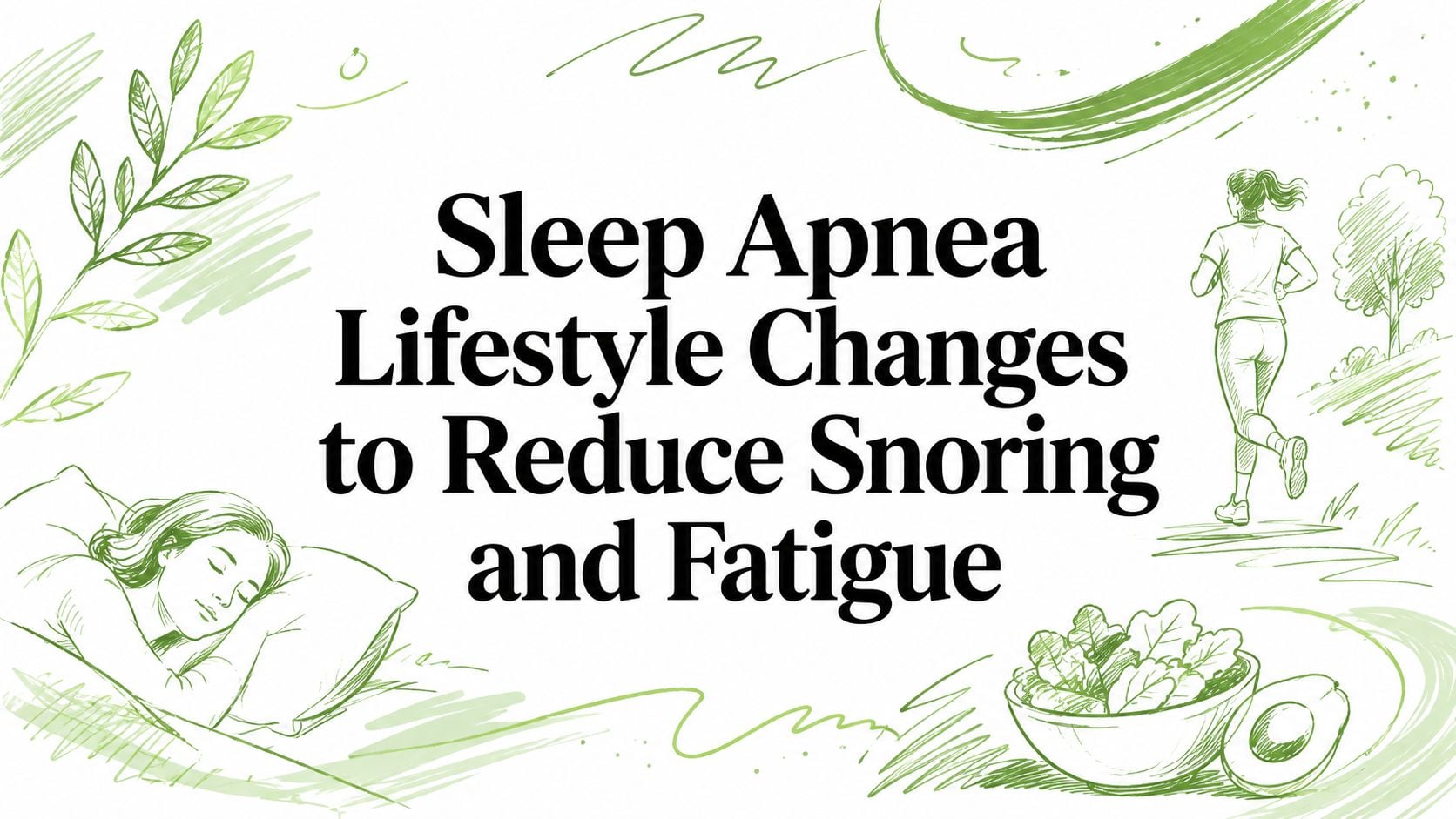
You wake up tired again, your partner says you snore too loudly, and by morning you're already behind. That's the point where many people start asking whether sleep apnea lifestyle changes can make a difference, or whether a machine is the only real answer. In practice, the right habits can lower risk, reduce severity, and make treatment easier to live with, especially when they match the person's specific phenotype.
Why Sleep Apnea Lifestyle Changes Work
The airway does not collapse for one reason alone, so treatment rarely succeeds with one habit by itself. Weight, sleep position, alcohol use, smoking, nasal airflow, and daily routines all affect how stable the upper airway stays during sleep. A broader plan usually works better than isolated advice, especially when the changes match the person's main risk factors.
Large population data published in 2024 found a strong dose-response relationship between healthier habits and lower OSA risk, with each one-point increase in a composite healthy lifestyle score linked to a 33% reduction in the odds of OSA, with OR 0.67 and a 95% CI 0.63 to 0.71 (PMC11619612). The study used NHANES data from adults 40 years and older in the 2005 to 2008 and 2015 to 2018 survey windows, which makes the pattern relevant to adults dealing with the mix of habits, airway issues, and medical problems seen in everyday practice.
Practical rule: if a habit improves weight, airway tone, nasal breathing, or sleep continuity, it has a plausible role in OSA care.
The value of these changes lies in their low-risk, cumulative nature. One habit rarely fixes everything on its own, but several targeted habits can improve snoring, sleep quality, and next-day energy together.
Managing Weight With Diet and Exercise
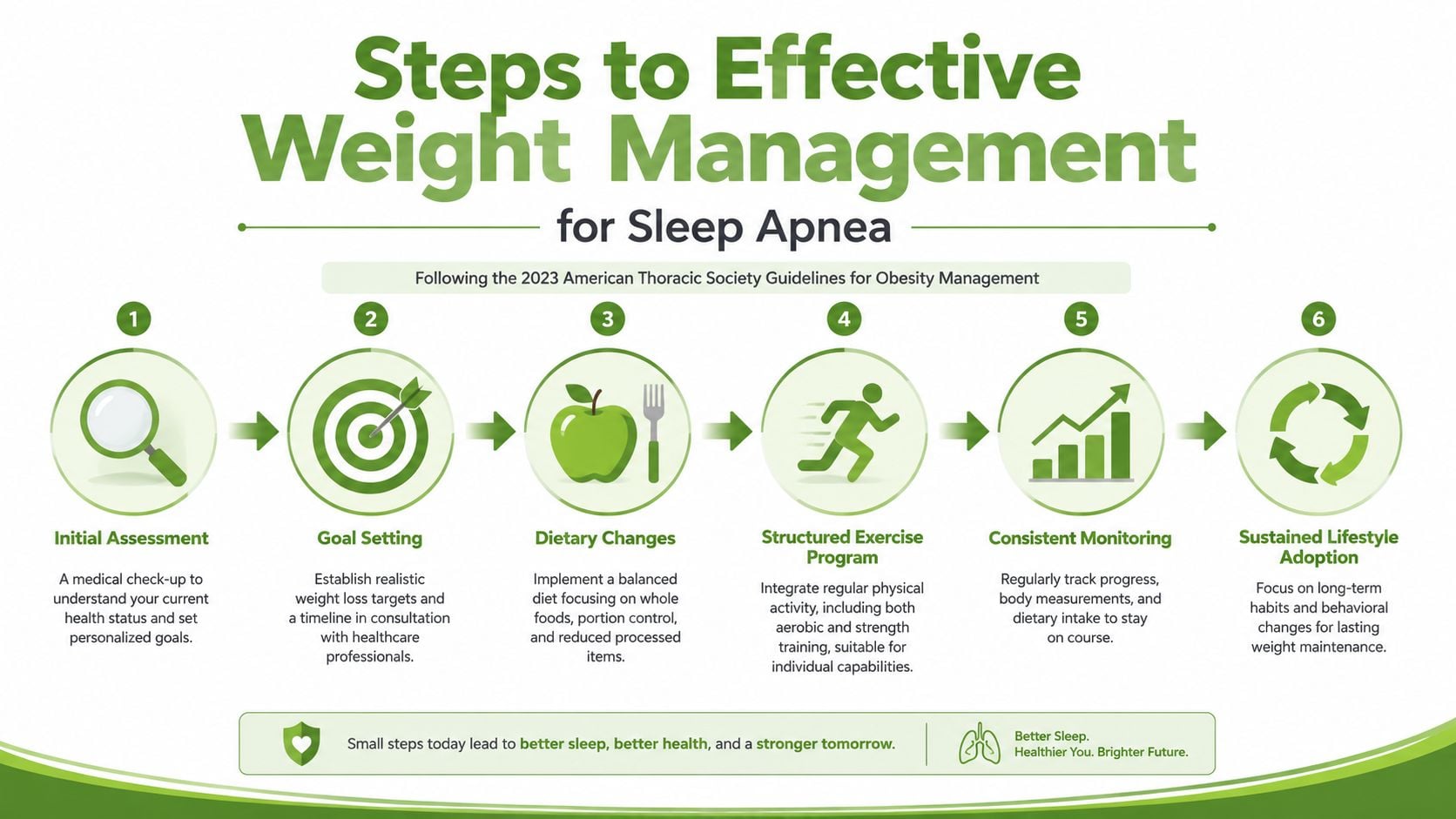
A patient with snoring, daytime sleepiness, and a larger neck circumference often has more than one issue driving airway collapse, and weight is one of the most modifiable ones. The ATS guideline recommends that adults with OSA who are overweight or obese take part in a lifestyle program that combines a reduced-calorie diet, exercise or increased physical activity, and behavioral counseling (ATS guideline). In practice, that advice fits the people whose apnea is tied to central adiposity and upper-airway crowding, because even modest weight loss can reduce the burden on the airway and improve sleep quality.
The key is matching the plan to the phenotype in front of you. Someone whose OSA is largely weight related usually needs a different emphasis than a patient whose events are driven more by positional sleep or nasal obstruction, and the evidence supports using that distinction to guide treatment. In randomized trial data summarized in JAMA Network Open, an interdisciplinary 8-week weight-loss and lifestyle intervention in men with moderate-to-severe OSA and overweight or obesity led 45% of participants to no longer require CPAP at 8 weeks and 62% by 6 months, with 15% achieving complete remission at the intervention endpoint (JAMA Network Open).
A practical plan usually works better than a broad warning to "lose weight." Start with the intake pattern that is doing the most harm, whether that is late-night eating, liquid calories, oversized portions, or frequent snacking during sedentary evenings. Pair that with activity that the patient can sustain, such as walking, cycling, or resistance training, because the goal is not a perfect fitness routine, it is a routine that survives real life.
- Choose one main target: calorie reduction, meal timing, or both, instead of trying to rewrite every eating habit at once.
- Match activity to tolerance: walking helps many patients start, while resistance work is useful when muscle loss, low stamina, or metabolic risk are part of the picture.
- Track one marker each week: body weight, waist size, or adherence to a food plan keeps progress visible.
- Use behavioral support: a clinician, coach, or structured program helps with follow-through when motivation fades.
The same JAMA Network Open trial summary also reported that a behavioral intervention improved one OSA severity class in 40% of the intervention group versus 16.7% in controls, with mean AHI improvement of 9.7 and an odds ratio of 4.5 for severity-class improvement (JAMA Network Open). That matters in clinic because it shows the benefit is not abstract. For the right patient, weight loss and exercise can lower symptoms, reduce CPAP pressure needs, and sometimes move the disease into a milder category.
If weight is part of the picture, the goal is not a crash diet. The goal is a repeatable routine that can still work three months later, and for some patients that includes reading how to stop snoring naturally alongside sleep and diet changes.
Optimizing Sleep Position and Hygiene
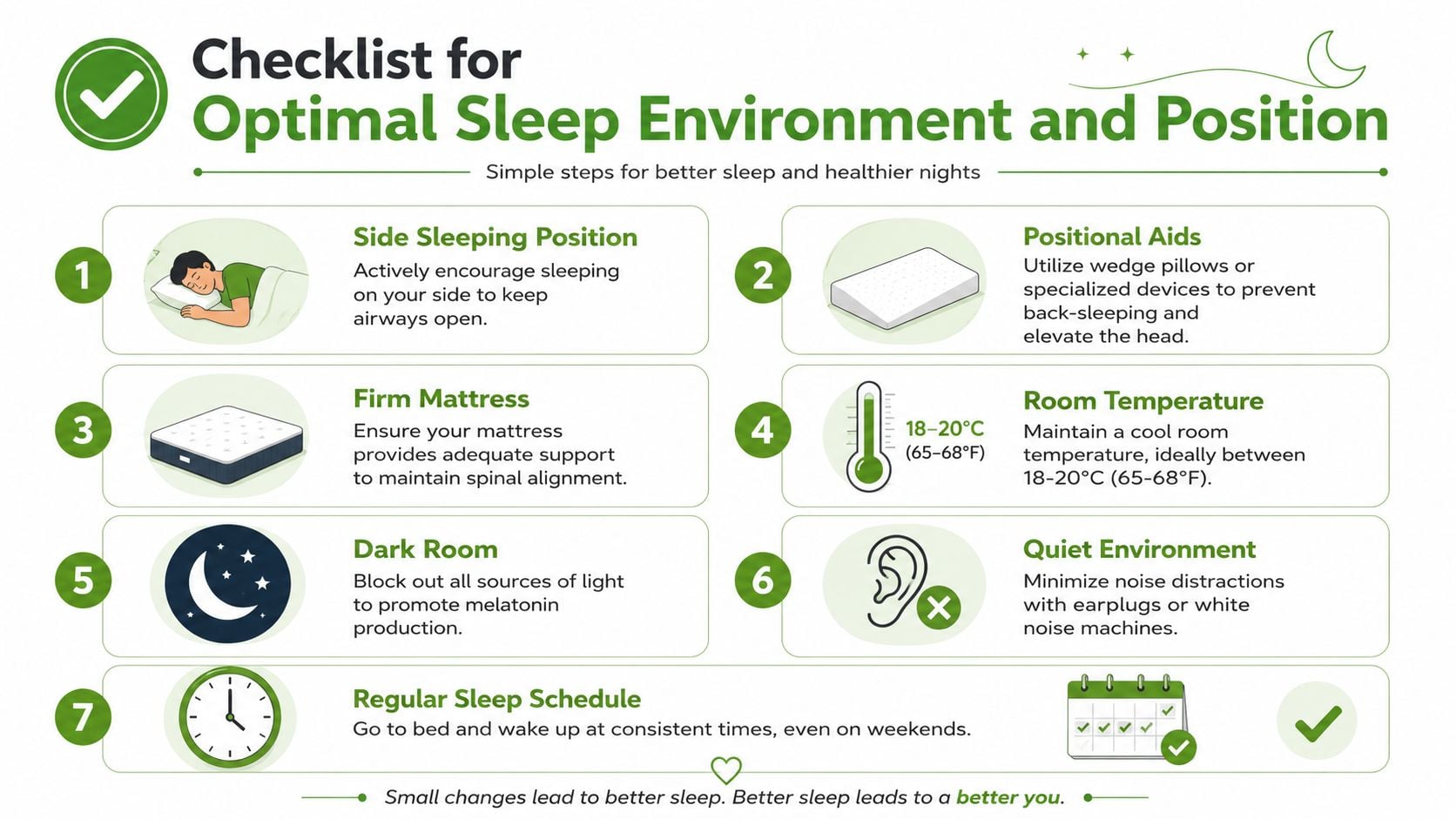
A back-sleeping pattern often makes the airway more collapsible, so position is one of the fastest phenotype-specific levers to test. Side sleeping, wedge support, and positional devices can be especially useful when symptoms are worse supine, and the point is simple, you're trying to keep the tongue and soft tissues from falling backward. For patients who want a practical starting point, Addiction Resource Center's sleep advice is a reasonable companion read because it reinforces restoration habits without drifting into gimmicks.
A few setup changes usually give the best return:
- Side-sleeping support: use a body pillow or positional aid so turning onto your back takes effort.
- Head elevation: a wedge pillow can help some people, especially if reflux or nasal congestion is part of the problem.
- Room control: keep the bedroom cool, dark, and quiet so sleep is less fragmented.
- Consistent schedule: a regular bedtime and wake time can reduce sleep debt that worsens fatigue.
The bedroom itself should make the desired behavior easier. A firmer mattress or better spinal support can help side sleeping feel tolerable, and small adjustments like blackout curtains or white noise can cut down on awakenings that make apnea feel worse in real life. If the room is too hot, too bright, or too noisy, patients often blame their apnea when the environment is also sabotaging sleep continuity.
For people who want a broader list of natural approaches, this overview on ways to stop snoring naturally fits well with positional therapy and sleep hygiene. A practical guideline is that bedtime consistency matters more than a perfect routine. Small, repeated changes are more useful than one aggressive reset that lasts three nights.
Reducing Alcohol Use and Quitting Smoking
Alcohol and tobacco each make the airway less stable, but they do it in different ways. Alcohol relaxes throat muscles and can deepen airway collapse during sleep, while smoking irritates the upper airway lining and can worsen congestion and inflammation. If someone tells me they “sleep worse after drinking,” I usually take that seriously, because bedtime alcohol often shows up first in snoring and fragmented sleep.
The practical move is to treat alcohol like a timing issue, not just a quantity issue. Evening drinks are more likely to interfere with sleep than daytime drinks, so the safest test is often to move alcohol earlier, reduce frequency, or eliminate it for a few weeks and observe the change. For smokers, cessation works best when it's planned rather than improvised, so nicotine replacement, trigger mapping, and a quit date matter more than willpower alone.
The patients who do best usually don't try to change everything at once. They pick the most obvious trigger and make that one harder to reach.
If tobacco is part of the picture, the priority is complete cessation, not just cutting back. Even partial reduction can help some people, but airway irritation tends to persist if smoking continues. In phenotype terms, this matters most for the patient whose snoring is mixed with chronic nasal or throat irritation, because airway inflammation lowers the margin for error during sleep.
Improving Nasal Breathing and Orofacial Strength
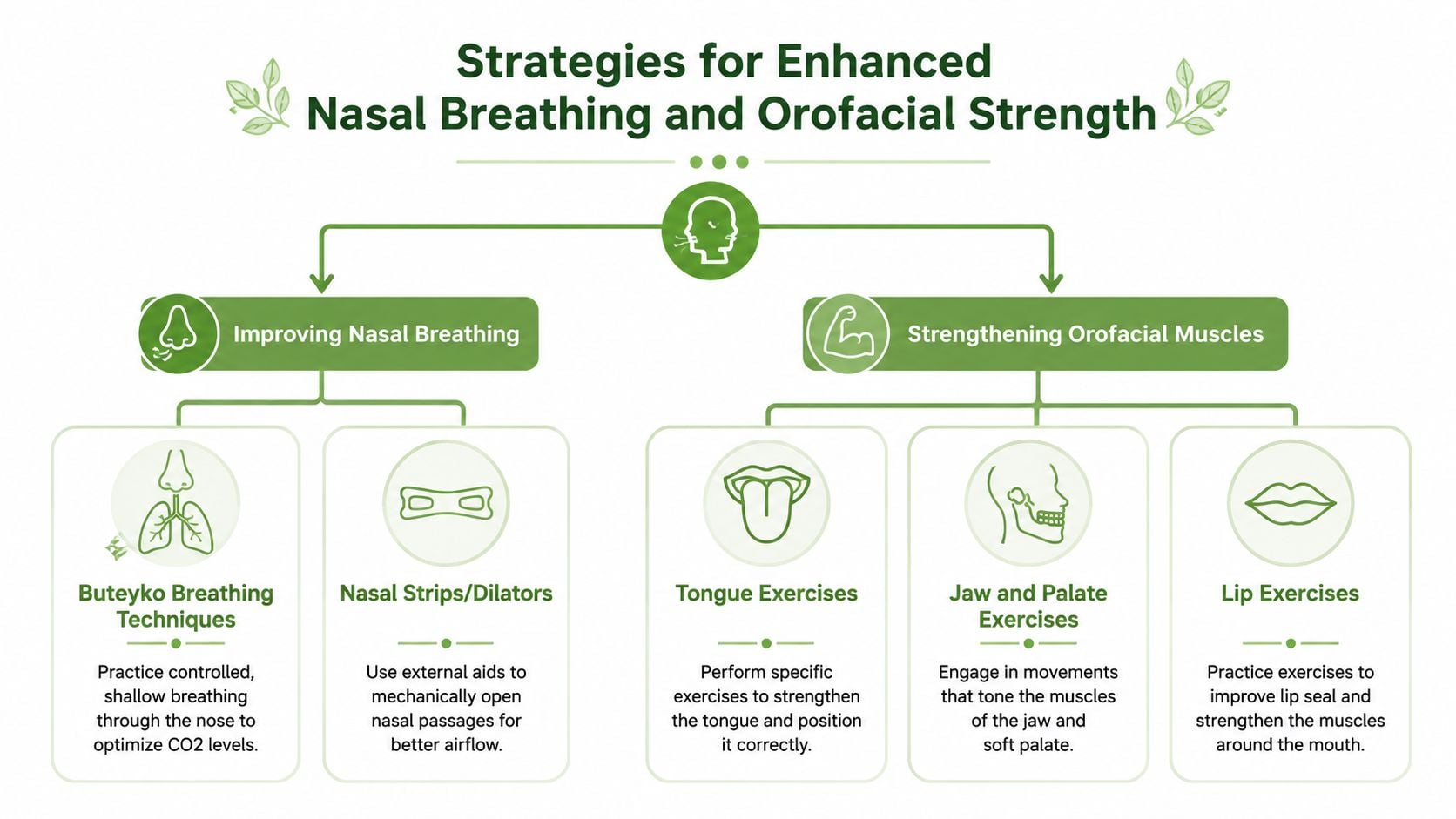
When nasal airflow is poor, patients often mouth-breathe through the night, and that can worsen dryness, snoring, and upper-airway instability. The goal here isn't mystical breathing work, it's improving the mechanical conditions that support nasal breathing and oral rest posture. A useful clinical option is myofunctional therapy for sleep apnea, which focuses on coordinated exercises for the tongue, lips, jaw, and soft palate.
Buteyko-style breathing drills are usually the entry point for people who are constantly mouth-breathing. Start by breathing gently through the nose, with the lips closed and shoulders relaxed, then slow the breath without forcing air hunger. The point is to lower over-breathing habits and notice how often the mouth wants to open when the body is at rest. If the person feels panicky or strained, the drill is too aggressive.
Orofacial work is more specific and should feel almost boring:
- Tongue posture: rest the tongue lightly on the palate, not pressed hard, with the tip just behind the upper front teeth.
- Lip seal: keep the lips closed gently during wakeful practice so mouth breathing becomes less automatic.
- Jaw relaxation: unclench the teeth and let the jaw hang loosely when not eating or speaking.
- Nasal support: consider strips or dilators if congestion or narrow nasal passages are part of the problem.
A patient with persistent mouth breathing often notices that practice improves comfort before it improves apnea metrics. That's normal. The change begins with better airflow and better muscle tone, then the sleep-related benefit follows if the pattern is consistent. Ten minutes a day is more useful than sporadic, intense sessions that leave the jaw sore and the patient discouraged.
Combining Lifestyle Changes With CPAP and Care
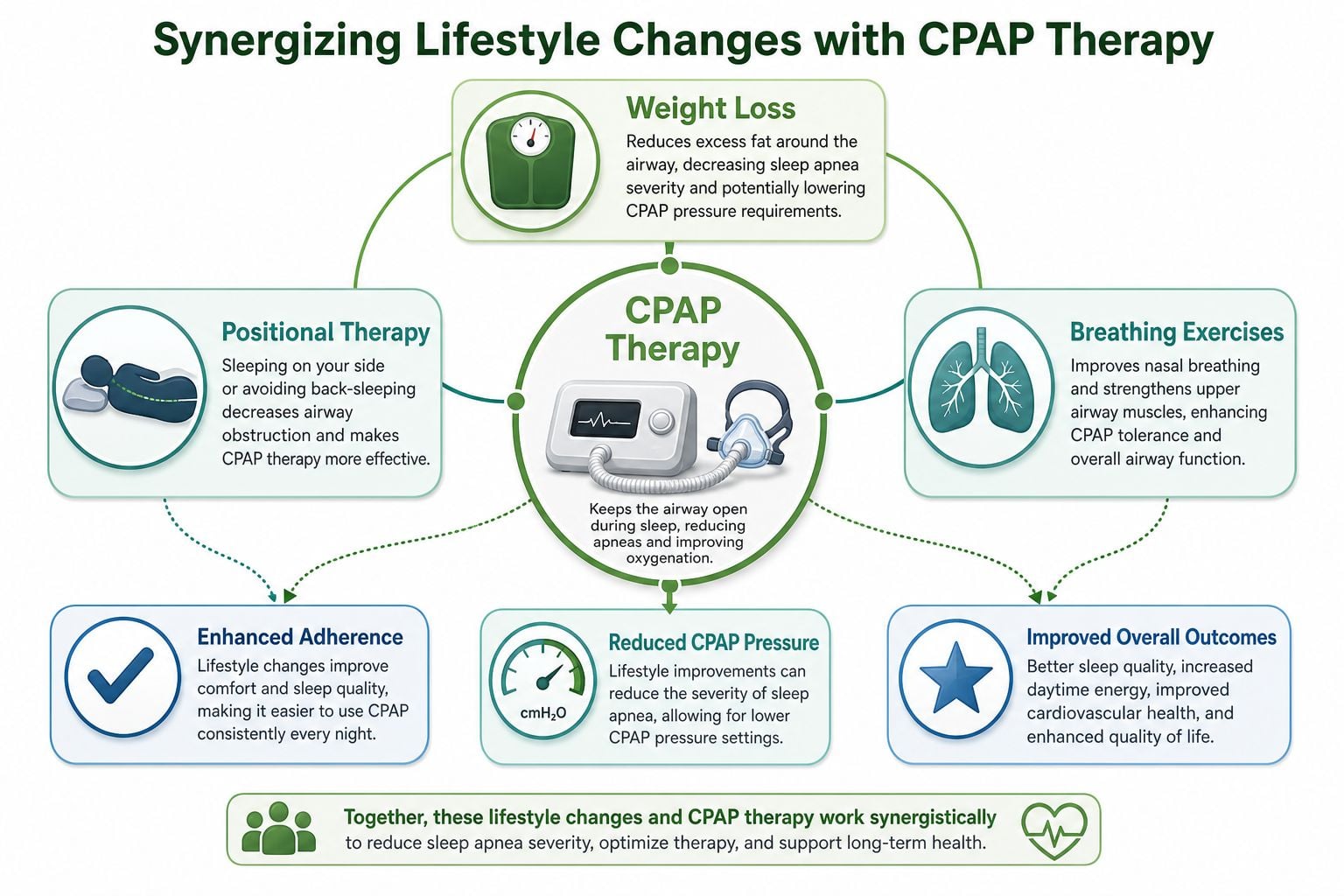
A patient who still snores through CPAP, wakes unrefreshed, or struggles with mask comfort often has more than one issue driving the problem. In those cases, sleep apnea lifestyle changes work best as part of care, not as a substitute for it. A review in PMC notes that targeted strategies such as weight loss, alcohol reduction, and positional therapy can improve sleep apnea outcomes even when CPAP is already prescribed (PMC8457263). That matters because CPAP and lifestyle changes are usually complementary, especially when the underlying risk factors differ from patient to patient.
The practical approach is to match the change to the phenotype:
- High body weight: use structured weight management alongside device therapy, since excess tissue around the neck and upper airway can keep obstruction high even with good CPAP use.
- Supine-worse apnea: prioritize positional therapy so back-sleeping does not keep overwhelming the treatment plan.
- Nasal or oral-breathing issues: combine airway exercises with CPAP comfort adjustments, since dry mouth, congestion, and mask leaks often travel together.
- Difficulty tolerating treatment: review alcohol use, sleep timing, congestion, and mask fit before concluding the device itself is the problem.
That phenotype-based view fits with a broader natural sleep apnea treatment approach found at natural sleep apnea treatment, where the goal is to improve the airway environment instead of relying on a single tool alone.
In clinic, I look for the part of the story that changes the treatment plan. A patient who loses weight may need a pressure check. A patient whose apnea is worse on the back may do better once positional therapy is added, even if CPAP stays in place. A patient with ongoing mouth breathing may need nasal support or oral appliance coordination so the device can do its job without constant leaks or discomfort. Those adjustments are worth reassessing rather than guessing, because the airway changes, and the treatment should change with it.
Pain and Sleep Therapy Center is one option for patients who need oral appliance therapy, myofunctional support, or airway-focused evaluation alongside other care. The point is coordination, not treating every change as a separate project. When patients and providers use the same measures, treatment becomes easier to fine-tune and the lifestyle work has a better chance of showing up in the results.
Putting It All Together
The most reliable plan is simple to describe and hard to fake. Pick the habits that fit your phenotype, weight management if excess weight is a major driver, positional work if back-sleeping makes things worse, alcohol reduction if evenings are the trigger, and nasal or orofacial work if mouth breathing is part of the story. Track what changes, because subjective sleepiness alone can miss real progress.
Weekly check-ins help. Record snoring, energy, weight if relevant, and CPAP or oral appliance comfort if you're using treatment, then adjust one variable at a time instead of randomizing everything. The reason these sleep apnea lifestyle changes matter is not that they're trendy, it's that they're low-risk, measurable, and often cumulative when they match the underlying cause.
If snoring, fatigue, or CPAP discomfort is still getting in the way, schedule a visit with Pain and Sleep Therapy Center to review your breathing pattern, treatment options, and the lifestyle changes most likely to help your specific case.