If your toddler was sleeping reasonably well last week and is suddenly waking up angry, chewing on everything, drooling through shirts, and refusing foods they usually like, 2 year molars symptoms may be the reason. This stage often catches parents off guard because it looks bigger than ordinary teething. It can also look a lot like illness.
These final baby molars tend to bring the roughest stretch of the primary teething journey. The discomfort is real. The behavior changes are real. And for some children, the sleep disruption is what pushes the whole household into survival mode.
What matters most is knowing what fits normal molar eruption, what deserves a call to your pediatrician or dentist, and when sleep and breathing changes suggest a larger issue than sore gums alone.
Decoding the 'Terrible Twos' Teething Grand Finale
A lot of parents describe this stage the same way. Their child seems “off” for days, then bedtime gets harder, then the tantrums ramp up, and only later do they realize the back gums are swollen. That pattern makes sense.
2-year molars are the final four primary teeth to erupt. They’re larger than earlier baby teeth, they come in farther back, and they often create more pressure as they move through the gums. According to Medical News Today’s review of ADA timing guidance, two-year molars typically erupt between 23 and 33 months, with the lower set often appearing first at 23 to 31 months and the upper set following at 25 to 33 months. The same source notes that symptoms can start 1 to 2 weeks before the tooth breaks through the gums.

What makes these molars feel worse
These aren’t “just more teeth.” They erupt during a phase when toddlers already have strong opinions, uneven sleep, and limited language for explaining pain. That’s why molar discomfort often gets folded into the broader challenge many families know as the Terrible Twos and Threes.
Common signs include:
- Chewing and biting more because pressure on the gums can feel relieving
- Irritability that seems to spike without an obvious reason
- Drooling beyond your child’s usual baseline
- Red or tender gums in the very back of the mouth
- Night waking or difficulty settling down for sleep
Some toddlers also start clenching, rubbing their cheeks, or resisting toothbrushing because the back gums are so sensitive.
Practical rule: If behavior changes and sleep disruption show up before you can see a tooth, check the back gums anyway. Molars often announce themselves before they become visible.
Why parents often miss it at first
Front teeth are easy to inspect. Second molars are not. They sit far back, and many toddlers won’t let you look for long. Parents may first notice secondary clues like food refusal, more wakeups, or a child who keeps pushing fingers toward the back of the mouth.
That’s also why it helps to think of teething as part of overall oral development, not an isolated event. Changes in tongue position, chewing patterns, and jaw tension can all show up during this phase. If your child has other oral habits you’ve noticed before, such as nighttime grinding, this related guide on 9-month-old grinding teeth can add useful context about how oral discomfort sometimes shows up through clenching and rubbing behaviors.
Teething Pain or Something More Serious?
The hardest question for most parents isn’t whether molars can hurt. It’s whether the symptoms are still within the range of teething, or whether their child is sick.
That confusion is understandable because molar eruption can trigger an inflammatory response that overlaps with common childhood illness. But there are lines that matter. According to Main Street Pediatric Dentistry and Orthodontics, true teething does not include high fever above 100.4°F, diarrhea, or significant ear pain, and ear pulling is commonly misattributed.
Symptom Checker: Teething vs. Illness
| Symptom | Likely Teething | Could Be Illness (Cold, Ear Infection) |
|---|---|---|
| Mild fussiness | Common, especially with swollen back gums | Possible, but usually comes with other signs |
| Drooling | Common | Can happen, but not a defining illness sign |
| Chewing on objects | Very common | Less typical as a primary symptom |
| Red or tender gums | Strongly suggests teething | Not typical of a cold or ear infection |
| Sleep disruption | Common, especially if pain worsens at night | Also possible if congestion, cough, or ear pain is present |
| Ear pulling | Can happen because pain is referred | More concerning if persistent or paired with obvious ear pain |
| Temperature rise | Teething can cause only a mild increase | Higher fever points away from teething |
| Diarrhea | Not a true teething symptom | More likely infection or another illness |
| Vomiting | Not a typical teething symptom | Needs medical assessment |
| Persistent significant pain | Less typical | Needs evaluation |
Signs that fit molar eruption
Teething discomfort usually behaves in a recognizable way. Your toddler may be miserable at bedtime, then perk up during the day. They may refuse crunchy or textured foods but still drink well. They may chew on a washcloth, cup, toy, or shirt collar because pressure helps.
The gums often tell the story. If you can safely look, the tissue over the back molars may appear puffy, red, or stretched.
Teething can look dramatic. It should not look like a child who is systemically unwell.
Signs that deserve a call
Call your pediatrician if your child has a temperature over 100.4°F, repeated vomiting, diarrhea, signs of dehydration, or pain that seems centered in the ear rather than the gums. If your toddler is listless, refuses fluids, or seems much sicker than “fussy and uncomfortable,” don’t chalk it up to teething.
A helpful principle is this: teething changes mood and comfort. Illness changes the whole child.
Parents who are already watching oral function closely sometimes run into a separate question during this stage. Is there another structural issue affecting feeding, sleep, or mouth posture? If that’s on your radar, this overview of how to check for tongue-tie can help you understand what to look for and when a more complete oral evaluation makes sense.
Safe and Effective Soothing Strategies for Your Toddler
The best relief methods for 2 year molars symptoms are simple. They reduce pressure, cool inflamed tissue, and help your child regulate when pain peaks. The goal isn’t to eliminate every rough moment. It’s to lower the pain enough that your toddler can eat, sleep, and settle more comfortably.
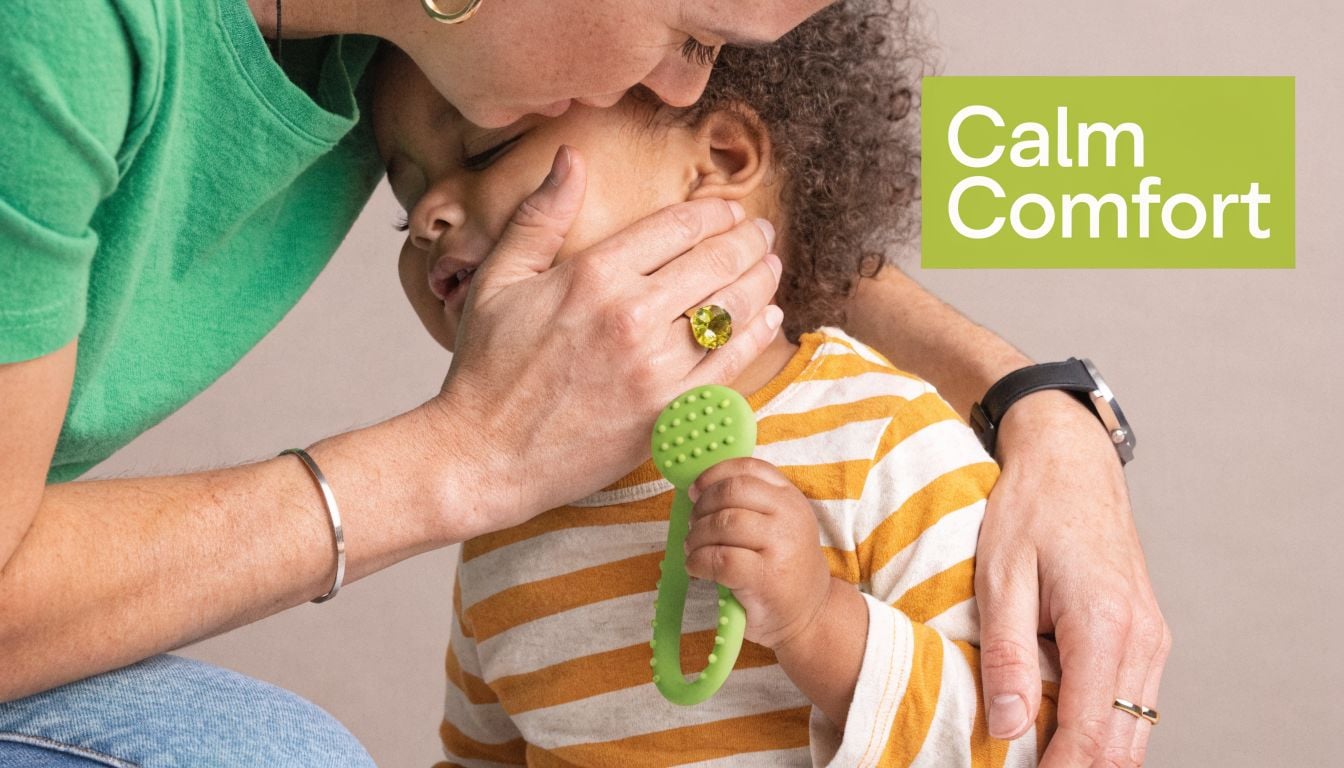
Use pressure first
For back molars, pressure often works better than front-tooth teething gadgets.
- Silicone molar teether. A sturdy silicone teether with enough reach for the back gums can give useful counterpressure.
- Clean finger gum massage. Some toddlers tolerate a gentle rub over the swollen gum better than a toy.
- Chewing foods with supervision. If your child is developmentally ready and safe with textures, firm chilled foods can help. Supervision matters.
Not every child wants the same input. Some want to bite hard. Others want very light contact. If a tool makes them angrier, stop and switch.
Use cold without overdoing it
Cold can calm inflamed gums, especially before sleep.
A chilled washcloth works well because it combines texture and temperature. Refrigerated teethers can also help. Keep them cool, not frozen. Extreme cold can be uncomfortable on already irritated tissue.
Oral care still matters when molars are erupting. Brush gently around the area with a soft toddler toothbrush. Don’t skip the back teeth because your child is tender. Plaque on inflamed gums can make everything feel worse.
A lot of parents like seeing soothing techniques demonstrated. This short video gives a helpful visual reference for calming approaches during teething:
Comfort helps more than people think
Pain is only part of the picture. Toddlers also lose patience faster when they’re tired and don’t understand why they hurt.
Try these supports:
- Earlier bedtime if naps were poor
- Extra holding and rocking during the worst stretch
- Low-demand meals with softer textures
- Routine over stimulation because a tired, sore toddler usually does worse with a packed day
Some parents keep adding new remedies when what the child really needs is less stimulation, a calmer evening, and one soothing method used consistently.
What to avoid
Some approaches create more risk than benefit.
- Amber teething necklaces aren’t a safe pain treatment.
- Hard plastic objects can be too rough on sore gums.
- Numbing gels may seem appealing, but anything that overly numbs the mouth can create its own problems.
- Random homeopathic products aren’t something I’d treat as a default solution for a toddler in pain.
If you’re considering medication such as acetaminophen or ibuprofen, ask your child’s pediatrician for dosing guidance based on your toddler’s age and weight. That’s one area where precision matters.
The Hidden Link Between Molars Sleep and Airway Health
When parents search for 2 year molars symptoms, they usually want help with pain. What often gets missed is how easily molar eruption can spill into sleep, breathing, and oral posture.
A toddler with sore back gums may sleep with an open mouth because it feels easier. They may shift their jaw, clench, or rest in odd positions trying to avoid pressure. If that pattern lasts, even temporarily, sleep quality can slide fast.
Why molars can affect more than the gums
The most common sleep complaint during this stage is repeated waking. The less obvious issue is what happens between those wakeups. A child may start breathing noisily, snoring, or sleeping restlessly because congestion, inflammation, and altered mouth posture are happening at the same time.
According to Hersch Smiles, up to 30% of toddlers in the 20 to 33 month molar eruption window experience increased adenoid swelling and nasal obstruction, which can worsen fatigue and contribute to new or worse snoring. That doesn’t mean molars cause every breathing problem. It does mean parents shouldn’t ignore snoring just because teething is also happening.
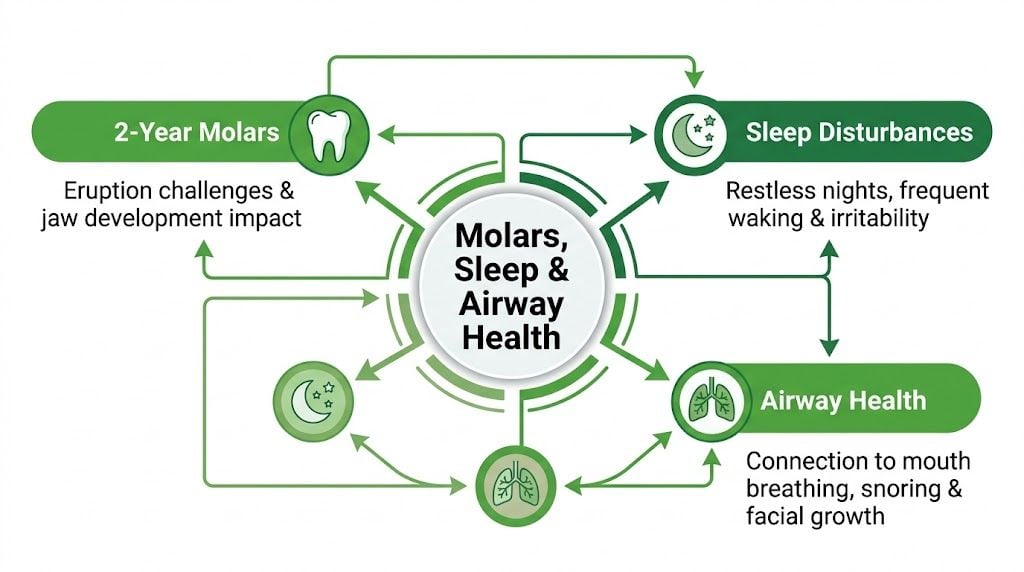
Oral posture matters during this stage
A toddler who can’t get comfortable may start:
- Mouth breathing more often, especially at night
- Clenching or jaw tightening to cope with pressure
- Sleeping with the head extended to find an easier airway position
- Waking unrested, then acting more irritable the next day
Those patterns can outlast the worst gum pain if nobody notices them. Parents often assume the child is still “just teething,” when the bigger issue has become disrupted breathing or poor sleep architecture.
New snoring during molar eruption deserves attention, especially if it continues after the gums look better.
What to watch at home
A few nights of disrupted sleep during teething is common. More persistent changes deserve a closer look.
Pay attention if you notice:
- Snoring that starts or becomes louder
- Restless sleep with unusual positions
- Chronic open-mouth sleeping
- Daytime fatigue or unusual crankiness after the tooth has erupted
- Frequent waking that doesn’t improve as the gums settle
Parents dealing with repeated night wakeups often need support for themselves too. This resource on tips for coping with sleep deprivation is practical and realistic for the parent side of the equation.
If your child’s sleep symptoms seem out of proportion to teething alone, or they continue beyond the molar flare, it may help to learn more about pediatric sleep apnea treatment. The key is not to panic. It’s to notice patterns early.
When to Contact a Professional for Molar Troubles
Most molar eruption can be managed at home. Some cases shouldn’t be. The challenge is choosing the right professional instead of waiting too long and hoping it passes.
A useful threshold comes from Georgia Pediatric Dentistry, which notes that most toddlers have symptoms for 7 to 14 days, and symptoms that continue beyond 2 weeks can point to an eruption anomaly such as ectopic positioning, reported there as affecting about 5% of cases.
Call the pediatrician when the problem looks systemic
Your pediatrician is the right first call if your child seems sick rather than mildly uncomfortable.
Examples include:
- High fever
- Vomiting or diarrhea
- Poor fluid intake
- Lethargy
- Pain that doesn’t seem centered in the gums
That pattern suggests something more than routine teething.
Call a pediatric dentist when the concern is local to the teeth or gums
A pediatric dentist is often the better fit when the issue seems mechanical, delayed, or unusually intense in the mouth itself.
Watch for:
- Swelling that seems excessive
- A tooth that doesn’t seem to be progressing
- Strong resistance to chewing on one side
- Persistent gum pain beyond the usual window
- Concern that the tooth is erupting in an abnormal path
Dentists can assess whether the tooth is taking its time or whether it’s coming in in a way that needs closer monitoring.
Parents often wait because they can see “something is happening.” That’s reasonable for ordinary teething. It’s less reasonable when the same severe symptoms keep repeating without improvement.
Seek airway or functional evaluation when sleep and breathing stay off
This is the category many families miss. If the molars seem to trigger a longer pattern of mouth breathing, snoring, jaw tension, or restless sleep, a more specialized assessment can make sense.
Consider a sleep or orofacial evaluation if your toddler has:
- New snoring that persists
- Chronic mouth-open sleep
- Noticeable jaw clenching
- Feeding difficulty linked to oral discomfort and poor function
- Sleep disruption that stays intense after the gum flare should have settled
The main trade-off is simple. Waiting may spare you an appointment your child didn’t need. But waiting can also let a short-term teething problem become a longer-term sleep or breathing pattern. When the symptoms are isolated and improving, watchful waiting is reasonable. When they’re broadening or dragging on, it’s time to get another set of eyes on the problem.
Frequently Asked Questions on Two-Year Molars
How long does the worst part usually last
The roughest stretch often happens before and during breakthrough. For many toddlers, that means a concentrated period of soreness, mood changes, and disrupted sleep rather than one continuous miserable month. If symptoms don’t ease after the usual flare, it’s worth getting help.
Can 2 year molars symptoms be worse at night
Yes. Many parents notice that nighttime is harder. There are fewer distractions, tired toddlers cope poorly with discomfort, and bedtime puts pressure on a child to settle when they’re already sore.
Is ear pulling always an ear infection
No. Referred discomfort from back molars can lead to ear pulling. What matters is the bigger pattern. If the child also seems to have clear ear pain, worsening distress, or other illness signs, don’t assume it’s only teething.
Should I use over-the-counter pain medicine
Sometimes that’s appropriate, but the decision and dosing should come from your child’s pediatrician. It’s reasonable to ask when sleep, eating, or comfort has become difficult enough that basic soothing measures aren’t enough.
Are amber teething necklaces a good idea
No. They aren’t my recommendation for toddlers with molar pain. There are safer ways to manage teething discomfort.
What if my toddler won’t let me brush the back teeth
Use a soft brush, keep it brief, and try again later rather than forcing a long battle. A short gentle pass is better than skipping oral care completely for days.
Can teething affect snoring
It can coincide with snoring or make existing breathing challenges more noticeable. If snoring is new, louder, or still present after the molars are through, it deserves attention.
When should I stop assuming it’s “just teething”
Stop using teething as the explanation if your child looks ill, isn’t drinking well, has high fever, or keeps having severe symptoms without improvement.
If your child’s molar phase seems to be affecting more than the gums, especially sleep, snoring, mouth breathing, or jaw tension, Pain and Sleep Therapy Center offers airway-focused, root-cause care for pediatric oral and sleep concerns. The team evaluates how pain, oral posture, breathing, and sleep interact so families can get clearer answers and a more targeted plan.