
If you're one of the millions struggling with jaw pain, clicking, or headaches, you know that finding effective TMJ relief can feel overwhelming. The term 'TMJ' is often used as a catch-all for jaw problems, but the temporomandibular joint is a complex system influenced by everything from your bite and posture to your breathing and stress levels. Many patients are only offered a night guard, a solution that can be helpful but often fails to address the root cause of the dysfunction.
The landscape of modern care, however, has expanded dramatically. A comprehensive approach means looking beyond the immediate symptoms to address the underlying biomechanics, airway function, and regenerative needs of your body. Effective, long-term relief often requires a combination of strategies tailored to your specific diagnosis, from retraining muscle function to healing damaged joint tissues. This is where a detailed exploration of TMJ treatment options becomes essential for patient empowerment.
This guide moves past the basics to explore 10 advanced and foundational treatment pathways. We will cover everything from conservative therapies and therapeutic exercises to cutting-edge regenerative injections and airway-focused protocols. Our goal is to provide you with the specific, actionable knowledge needed to have informed discussions with your healthcare provider. This roundup will equip you to understand the possibilities and help you find a sustainable path to not just manage your pain, but to resolve it for good.
1. Orofacial Myofunctional Therapy (OMT) and Therapeutic Jaw Exercises
Orofacial Myofunctional Therapy (OMT) is a specialized form of physical therapy focused on retraining the muscles of the face, mouth, and throat. When combined with therapeutic jaw exercises, it addresses the root biomechanical causes of TMJ dysfunction. This powerful pairing corrects improper habits related to tongue posture, breathing, chewing, and swallowing that contribute to jaw strain, muscle imbalances, and pain. The goal is neuromuscular re-education, helping patients restore normal function and eliminate harmful compensatory patterns.

This approach is highly effective because it treats the TMJ not in isolation but as part of an interconnected system. For instance, a patient with a "tongue thrust" swallow may be unknowingly putting excessive force on their jaw joints thousands of times a day. OMT identifies and corrects this habit, while targeted exercises strengthen weak jaw muscles and improve the joint's range of motion.
Why It's a Top TMJ Treatment Option
Success stories highlight its efficacy. Patients often achieve a 60-70% reduction in symptoms with a structured 6-week program, while those with limited mouth opening can restore functional movement within 8-12 weeks. This option is non-invasive, empowers patients through self-care, and creates lasting results by fixing underlying functional problems.
Actionable Tips for Success
- Start with a professional assessment: An orofacial myofunctional therapist or physical therapist specializing in TMJ can pinpoint specific dysfunctions.
- Follow a progressive plan: Begin with gentle exercises and gradually increase intensity every 2-4 weeks under professional guidance.
- Be consistent: Perform exercises 2-3 times daily for about 10-15 minutes per session for optimal results.
- Use visual feedback: A mirror can help ensure you are performing movements correctly and building proprioceptive awareness.
OMT and therapeutic exercise are foundational among tmj treatment options, often enhancing the effectiveness of other therapies like dental splints or manual therapy. To see specific examples, you can explore more detailed TMJ pain relief exercises.
2. Prolotherapy (Proliferant Therapy)
Prolotherapy, also known as proliferant therapy, is a regenerative injection technique designed to repair and strengthen weakened or damaged ligaments and tendons. It involves injecting a natural irritant solution, most commonly a dextrose (sugar) and anesthetic mixture, directly into the lax or injured connective tissues surrounding the temporomandibular joint. This stimulates a controlled, localized inflammatory response, which triggers the body’s natural healing cascade, recruiting growth factors and promoting the production of new, stronger collagen fibers to stabilize the joint.
This treatment is particularly effective for chronic TMJ instability, where the ligaments that hold the jaw joint in place have become stretched or loose, leading to clicking, popping, and dislocation. By tightening these supportive tissues, Prolotherapy restores proper joint mechanics and addresses the root cause of the instability, offering a durable solution beyond temporary symptom relief. It effectively rebuilds the joint’s natural “scaffolding.”
Why It's a Top TMJ Treatment Option
Prolotherapy offers a minimally invasive alternative to surgery for patients with chronic joint instability or degenerative conditions. Case studies and clinical experience show that patients with significant ligamentous laxity can achieve a 70-80% improvement in pain and function after a complete series of treatments. It has also been used successfully to stabilize residual instability after corrective jaw surgery and has even helped patients avoid joint replacement by regenerating damaged tissues.
Actionable Tips for Success
- Combine with supportive therapies: Integrate Prolotherapy with Orofacial Myofunctional Therapy (OMT) and postural correction to stabilize the joint both structurally and functionally.
- Follow post-injection protocol: Avoid aggressive chewing, wide yawning, or strenuous jaw movements for at least 48 hours after each injection to protect the healing tissues.
- Ensure precise application: Treatment should be administered under ultrasound guidance to guarantee the proliferant solution is accurately delivered to the target ligaments and joint capsule.
- Allow for tissue remodeling: Treatments are typically spaced 4-6 weeks apart, giving the body adequate time to complete the healing and strengthening cycle between sessions.
As one of the leading regenerative tmj treatment options, Prolotherapy focuses on healing the source of the problem, making it an excellent choice for achieving long-term stability and pain reduction.
3. Platelet-Rich Fibrin (PRF) Injections
Platelet-Rich Fibrin (PRF) is an advanced regenerative therapy that harnesses the body's natural healing capabilities to repair damaged jaw joint tissues. This autologous treatment involves drawing a small amount of the patient's own blood, which is then centrifuged to concentrate platelets, growth factors, and white blood cells into a powerful biological scaffold. When this PRF solution is injected directly into the temporomandibular joint, it stimulates tissue regeneration, reduces inflammation, and supports the healing of cartilage and ligaments.
Unlike other platelet concentrates, PRF forms a fibrin matrix that releases growth factors slowly over an extended period, providing a sustained healing response. This makes it a powerful tool for addressing the degenerative changes often seen in chronic TMJ disorders, such as osteoarthritis or internal disc derangement. It essentially provides the raw materials the joint needs to repair itself from within, promoting long-term structural improvement rather than just temporary symptom relief.
Why It's a Top TMJ Treatment Option
PRF injections are a minimally invasive alternative to surgery, offering a way to heal tissue that has otherwise lost its ability to recover. Case studies demonstrate significant success, particularly for patients with TMJ osteoarthritis, where PRF has been shown to preserve cartilage and dramatically reduce pain. Similarly, individuals with disc displacement have experienced improved joint function and a reduction in clicking or locking without needing surgical intervention. The therapy is safe, using the patient's own biological material, which eliminates the risk of allergic reaction or disease transmission.
Actionable Tips for Success
- Prepare for your appointment: Ensure you are well-hydrated before the blood draw to support good blood quality and volume for PRF preparation.
- Follow post-injection protocol: Avoid anti-inflammatory medications (NSAIDs) for at least 48-72 hours after the injection, as they can interfere with the intended healing process.
- Plan for a series of treatments: For optimal results, injections are typically spaced 4-6 weeks apart to allow the regenerative cycle to complete before the next treatment.
- Combine with rehabilitative therapy: Support the regenerative process with therapeutic jaw exercises or orofacial myofunctional therapy to restore proper joint mechanics as the tissue heals.
PRF is a leading-edge solution among tmj treatment options, especially for cases involving joint degeneration or chronic inflammation. To understand more about how this process works, you can find additional details about regenerative medicine approaches at pscharlotte.com.
4. Cold Laser Therapy (Low-Level Laser Therapy – LLLT)
Cold Laser Therapy, also known as Low-Level Laser Therapy (LLLT), is a non-invasive treatment that uses specific wavelengths of light to interact with tissue. It's a non-thermal modality, meaning it does not produce heat, making it a painless option for managing TMJ-related pain and inflammation. The targeted light energy penetrates the skin and stimulates cellular repair by boosting the production of adenosine triphosphate (ATP), the energy currency of cells. This process helps reduce inflammatory cytokines, improve blood circulation, and accelerate the healing of damaged muscles and joint tissues.

This therapy is particularly effective for both acute and chronic TMJ pain, especially when myofascial inflammation is a primary component. By targeting the source of pain at a cellular level, LLLT can provide significant relief and restore function without medication or more invasive procedures. It is often integrated into a comprehensive treatment plan to enhance the effects of other therapies like manual therapy or therapeutic exercises.
Why It's a Top TMJ Treatment Option
Cold laser therapy offers a scientifically-backed, gentle approach to pain management. Evidence shows that patients with myofascial TMJ pain can experience a 50-60% reduction in symptoms after a course of treatment. It is also used to accelerate healing after procedures like trigger point injections or to help patients with arthralgia (joint pain) regain a more comfortable range of motion. Its ability to reduce pain and inflammation makes it one of the most effective supportive tmj treatment options available.
Actionable Tips for Success
- Start early: For acute flare-ups, initiating cold laser therapy in the early phase can significantly speed up recovery and prevent chronic pain patterns.
- Ensure proper parameters: A knowledgeable practitioner will use a consistent wavelength, typically between 600-1000 nm, to achieve the desired therapeutic effect.
- Space out treatments: For optimal cellular response and healing, sessions are usually spaced 48-72 hours apart.
- Combine with other modalities: Pair LLLT with relaxation techniques, gentle jaw movements, and proper hydration to maximize its benefits and support overall tissue health.
5. Buteyko Breathing Technique
The Buteyko Breathing Technique is a respiratory retraining method designed to normalize breathing patterns, specifically by addressing chronic hyperventilation and mouth breathing. Developed by Dr. Konstantin Buteyko, this approach is based on the principle that many health issues, including TMJ dysfunction, are exacerbated by dysfunctional breathing that leads to low CO2 levels in the body. By training individuals to breathe lightly, slowly, and through the nose, it restores proper respiratory chemistry and reduces tension in the muscles of the airway, face, and jaw.
This technique directly impacts TMJ health by stabilizing the upper airway. When you breathe through your mouth or over-breathe, the muscles in your jaw, neck, and shoulders tense up to compensate. Buteyko promotes nasal breathing, which warms, filters, and humidifies air while also engaging the diaphragm correctly. This reduces the strain on accessory breathing muscles, including those connected to the jaw, allowing them to relax and alleviating a key contributor to TMJ pain and clenching.
Why It's a Top TMJ Treatment Option
Buteyko offers a unique, systemic approach to TMJ disorders by targeting the foundational issue of airway health. Clinical observations show that patients with sleep-disordered breathing, a common co-morbidity with TMJ dysfunction, can see significant improvements. For example, some individuals with sleep apnea have reduced their Apnea-Hypopnea Index (AHI) by 30-50% after consistent practice. This improvement in nighttime breathing directly translates to less jaw clenching, grinding, and morning facial pain, making Buteyko an excellent non-invasive tmj treatment option.
Actionable Tips for Success
- Prioritize Nasal Patency: Before starting, ensure your nasal passages are clear. Address any obstruction with a specialist, and use tools like saline rinses to maintain open airways.
- Practice "Control Pauses": Use short, gentle breath-holds after an exhalation to gradually increase your body's tolerance to CO2. This is a core exercise for retraining your respiratory center.
- Focus on Daytime Habits First: Master conscious nasal breathing during the day before attempting to control it at night. This builds the necessary muscle memory.
- Combine with Other Therapies: Buteyko works synergistically with orofacial myofunctional therapy, positional therapy for sleep, and proper tongue posture to maximize airway stability.
6. Occlusal Splint Therapy (Night Guard and Daytime Splints)
Occlusal splint therapy involves using custom-fabricated oral appliances to manage TMJ disorders. These devices, often called night guards or daytime splints, work by repositioning the mandible, decompressing the jaw joints, and reducing harmful muscle activity. Far from simple "boil-and-bite" guards, these are precision medical devices designed to create a stable, therapeutic bite that allows overworked jaw muscles to relax and heal. They also protect teeth from the destructive forces of bruxism (grinding and clenching).
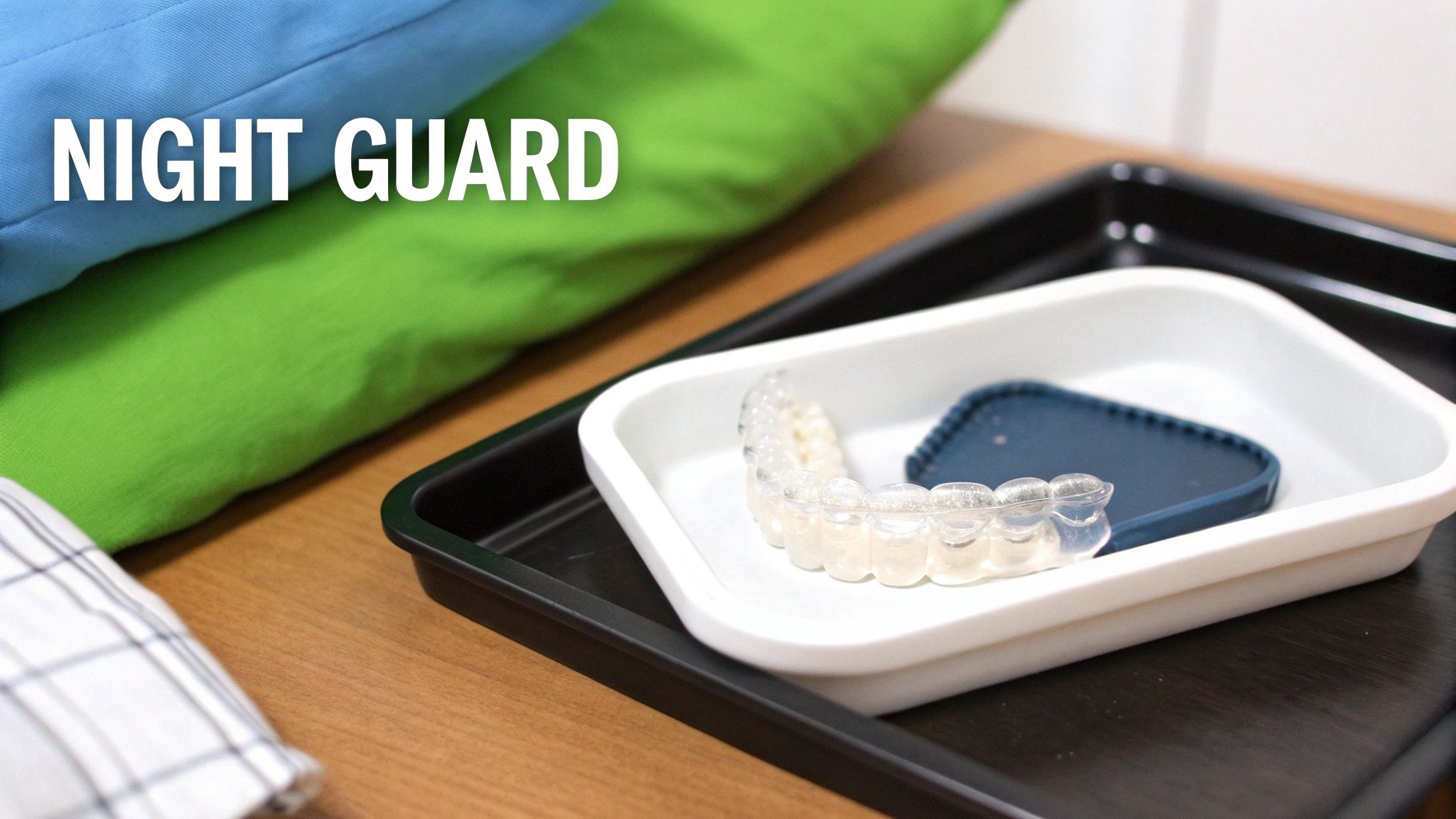
This approach is highly effective because it directly addresses the mechanical and neuromuscular factors contributing to TMJ pain. For example, a splint can gently guide the jaw into a more anatomically correct position, alleviating pressure on the joint disc and surrounding ligaments. By interrupting the feedback loop between clenching and muscle pain, it gives the entire masticatory system a chance to rest and recover, breaking cycles of chronic strain and inflammation.
Why It's a Top TMJ Treatment Option
Splints provide measurable and often rapid relief, making them a cornerstone of TMJ management. Patients with severe bruxism frequently report a 70% or greater reduction in grinding-related pain and headaches within just a few weeks of consistent use. When used as a mandibular advancement device, splints can also reduce sleep apnea events. This therapy is non-invasive and provides a protective barrier that is crucial for preventing further damage to teeth and joints.
Actionable Tips for Success
- Seek specialized fabrication: Ensure your splint is designed and fitted by a clinician experienced in TMJ and orofacial pain. A one-size-fits-all approach does not work.
- Follow a wear schedule: Your provider may recommend starting with nighttime wear only, gradually progressing to daytime use if needed for severe symptoms.
- Commit to adjustments: Expect several follow-up appointments in the first month to fine-tune the fit and occlusion for maximum therapeutic benefit.
- Combine with other therapies: A splint works best as part of a comprehensive plan. Integrate therapeutic jaw exercises to strengthen muscles and improve long-term stability.
As one of the most widely recognized tmj treatment options, splint therapy offers a powerful way to manage symptoms and stabilize the jaw. You can explore more about the role of splints and other approaches in our guide to TMJ symptoms and treatment.
7. Pediatric Tongue-Tie Evaluation and Laser Frenectomy
Addressing tethered oral tissues, like tongue-ties (ankyloglossia), in infants and children is a proactive approach to preventing future TMJ dysfunction. A restrictive lingual frenulum limits the tongue's range of motion, which is critical for proper oral posture, swallowing patterns, and airway development. A pediatric laser frenectomy is a minimally invasive procedure that uses a precise laser to release this restriction, restoring normal tongue mobility and function from an early age.
This early intervention is crucial because an untreated tongue-tie forces compensatory muscle use in the jaw, face, and neck. These abnormal patterns can lead directly to the muscle imbalances, jaw strain, and joint stress that cause TMJ disorders later in life. By correcting the root anatomical issue, a frenectomy supports healthy orofacial growth, promotes nasal breathing, and establishes a foundation for a stable, functional jaw system.
Why It's a Top TMJ Treatment Option
This preventative strategy is one of the most impactful tmj treatment options because it addresses a fundamental cause before symptoms become chronic. Success stories are common, with infants achieving pain-free nursing within a week or two post-procedure. Children often show marked improvements in speech clarity and are better able to maintain proper oral posture, reducing their risk for sleep-disordered breathing and future jaw problems.
Actionable Tips for Success
- Prioritize a functional assessment: A diagnosis should be based on how the tongue functions, not just its appearance. Collaborate with professionals who use validated functional tools.
- Coordinate with a multidisciplinary team: Work closely with lactation consultants, pediatricians, and orofacial myofunctional therapists to ensure comprehensive care.
- Combine with post-procedure therapy: The procedure is only the first step. Post-frenectomy exercises and OMT are essential for retraining the tongue and ensuring the tissue does not reattach.
- Follow post-care instructions diligently: Parents should be given clear guidance on gentle stretching exercises to perform several times a day to facilitate healing and maintain mobility.
While this is a pediatric intervention, its long-term benefits for preventing adult TMJ disorders are significant. For more information on the procedure, you can explore specialized resources on Laser Frenectomy.
8. Botulinum Toxin (Botox) Injection for TMJ Myofascial Pain
Botulinum toxin, commonly known as Botox, is a therapeutic agent used to treat muscle-dominant TMJ pain by reducing excessive muscle activity. When injected into specific, overactive jaw muscles like the masseter and temporalis, Botox temporarily blocks the nerve signals that cause them to contract. This targeted relaxation helps to decrease the intense forces from clenching and grinding (bruxism), providing significant relief from myofascial pain, tension headaches, and muscle fatigue associated with TMJ disorders.
This approach is particularly valuable for patients whose symptoms are driven by severe, unconscious muscle hyperactivity that hasn't responded to more conservative treatments. By calming the overworked muscles, Botox can break the cycle of pain and tension. This not only provides direct symptom relief but can also create a therapeutic window, allowing patients to more effectively engage in other rehabilitative therapies like OMT or physical therapy without being hindered by severe pain.
Why It's a Top TMJ Treatment Option
Botox offers a targeted, minimally invasive solution for severe cases. Success stories include patients with chronic, debilitating bruxism achieving a 70-80% reduction in grinding-related pain and morning jaw stiffness. For others, it serves as a crucial bridging therapy, reducing muscle tension enough to allow them to successfully participate in and benefit from therapeutic jaw exercises. This makes it one of the most effective tmj treatment options for managing severe myofascial components of the disorder.
Actionable Tips for Success
- Seek an expert injector: Ensure your provider has deep expertise in facial anatomy and specific training in using Botox for TMJ disorders.
- Combine with other therapies: Use Botox as an adjunctive treatment alongside OMT, physical therapy, and stress management for more comprehensive, lasting results.
- Start with a conservative dose: A skilled practitioner will begin with the lowest effective dose to achieve results while minimizing risks like an asymmetrical smile.
- Time injections strategically: Plan injections to coincide with periods of intensive physical therapy or OMT to maximize rehabilitative progress while the muscles are relaxed.
9. Cognitive Behavioral Therapy (CBT) and Stress Management
Cognitive Behavioral Therapy (CBT) and stress management techniques are psychological interventions that address the powerful link between the mind and body in TMJ disorders. This approach focuses on how thoughts, feelings, and behaviors contribute to physical symptoms like muscle tension, jaw clenching (bruxism), and pain perception. By identifying and modifying maladaptive patterns such as anxiety, pain catastrophizing, and stress-induced habits, CBT empowers individuals to break the cycle of chronic pain and dysfunction.
The therapy works by teaching practical coping strategies, relaxation training, and behavior modification. For instance, a person who unconsciously clenches their jaw during stressful work meetings can learn to recognize the trigger and replace the clenching response with a conscious relaxation technique. This re-education of the body's stress response can dramatically reduce the strain on the jaw joints and surrounding muscles, leading to significant symptom relief.
Why It's a Top TMJ Treatment Option
This is a critical component among tmj treatment options because it targets the psycho-emotional triggers that physical therapies alone cannot resolve. Studies show that high-stress TMJ patients who combine CBT with physical therapy can experience a 50-60% greater reduction in pain compared to physical therapy alone. By addressing the root causes of tension and improving adherence to other treatments, CBT creates a more resilient and sustainable recovery.
Actionable Tips for Success
- Identify your triggers: Keep a simple journal to note when your jaw pain or clenching worsens. Look for patterns related to specific situations, thoughts, or emotions.
- Practice daily relaxation: Dedicate 10-15 minutes each day to techniques like progressive muscle relaxation, diaphragmatic breathing, or mindfulness meditation to lower baseline tension.
- Integrate with physical care: Combine CBT with treatments like physical therapy or dental splints. Addressing both the mind and the body often yields the most comprehensive and lasting results.
- Consider biofeedback: This technique uses sensors to provide real-time feedback on muscle tension, helping you learn to consciously control and relax your jaw muscles.
10. Airway-Focused Comprehensive Assessment and Treatment
An airway-focused approach shifts the diagnostic lens beyond the jaw joint to evaluate the entire upper respiratory system, from the nasal passages to the pharynx. This integrative model recognizes that TMJ dysfunction is often a symptom of a larger problem: compromised breathing. When airflow is obstructed, the body instinctively repositions the jaw and tongue to open the airway, leading to chronic muscle strain, joint stress, and pain. This treatment philosophy addresses the root cause by identifying and correcting these airway obstructions.
This comprehensive evaluation often involves a multidisciplinary team, including ENTs, sleep medicine specialists, and dentists. For example, a patient with chronic morning jaw pain and headaches might be diagnosed with obstructive sleep apnea (OSA). Treating the underlying sleep-disordered breathing through interventions like nasal surgery, myofunctional therapy to improve tongue posture, or orthodontic expansion can resolve the airway issue, which in turn alleviates the TMJ symptoms that were merely a side effect.
Why It's a Top TMJ Treatment Option
This method provides a fundamental solution rather than just managing symptoms. By restoring proper nasal breathing and optimal oral posture, it breaks the cycle of compensation that strains the jaw. Success stories often involve patients who previously failed other treatments but find lasting relief once their airway issues are resolved. For instance, many TMJ patients see a significant reduction in clenching and grinding after their nasal breathing is optimized, as the jaw no longer needs to posture forward to maintain an open airway during sleep.
Actionable Tips for Success
- Start with a full airway assessment: If you have symptoms like snoring, daytime fatigue, or frequent nasal congestion alongside your TMJ pain, request an evaluation that may include a sleep study.
- Prioritize nasal breathing: Address any nasal obstructions first. Working with an ENT can clear the path, making it possible to retrain proper breathing patterns.
- Combine with targeted therapies: Airway optimization is most effective when paired with orofacial myofunctional therapy (OMT) to correct tongue posture and postural correction for the head and neck.
- Coordinate with a team: Effective airway treatment requires collaboration between your dentist, ENT, and sleep physician to ensure all contributing factors are addressed.
This approach is one of the most comprehensive tmj treatment options available, as it connects the dots between how you breathe and how your jaw functions, offering a path to profound and lasting relief.
10-Point TMJ Treatment Comparison
| Treatment | 🔄 Implementation Complexity | ⚡ Resource Requirements | ⭐📊 Expected Outcomes | 💡 Ideal Use Cases | ⭐ Key Advantages |
|---|---|---|---|---|---|
| Orofacial Myofunctional Therapy (OMT) & Therapeutic Jaw Exercises | Low–Moderate 🔄 — therapist-guided progressive program | Low ⚡ — therapist visits + home practice, minimal equipment | Functional gains in ROM, posture, pain; measurable 4–12 wk; greater gains 6–12 mo 📊⭐⭐ | Muscle dysfunction, limited ROM, adjunct to orthodontics/airway care | Non‑invasive, low cost, addresses biomechanical root causes |
| Prolotherapy (Proliferant Therapy) | Moderate 🔄 — serial injections, often image‑guided | Moderate–High ⚡ — skilled injector, clinic time, multiple visits | Joint stabilization and ligament strengthening over months; durable if successful 📊⭐⭐⭐ | Chronic ligamentous laxity, degenerative TMJ, post‑op instability | Regenerative for ligaments; can reduce need for surgery |
| Platelet‑Rich Fibrin (PRF) Injections | Moderate 🔄 — blood draw, centrifuge, guided injections | High ⚡ — centrifuge, trained injector, higher per‑session cost | Reduces inflammation, supports cartilage healing; 2–3 sessions; variable long‑term 📊⭐⭐ | TMJ osteoarthritis, cartilage damage, adjunct to rehab/OMT | Autologous growth factors; low infection risk; sustained release |
| Cold Laser Therapy (LLLT) | Low 🔄 — device‑based protocol, repeat sessions | Moderate ⚡ — clinic device, short appointments (10–15 min) | Painless reduction in pain/inflammation; outcomes vary by protocol 📊⭐⭐ | Acute myofascial pain, adjunct to injections/rehab | Non‑invasive, no downtime, repeatable safely |
| Buteyko Breathing Technique | Low–Moderate 🔄 — instruction and habit retraining | Low ⚡ — instructor time; no equipment | Improves nasal breathing and CO2 regulation over weeks–months; reduces airway‑related tension 📊⭐⭐ | Mouth breathing, sleep‑disordered breathing contributors to TMJ | Addresses airway root cause; sustainable with adherence |
| Occlusal Splint Therapy (Night/Day Guards) | Moderate 🔄 — custom fabrication and adjustments | Moderate ⚡ — dental lab, fittings, follow‑ups | Rapid symptom relief and bruxism protection; mainly symptom management ⭐⭐⭐📊 | Bruxism, acute pain control, protect dentition, stabilize joint | Immediate relief, reversible, protects teeth and joints |
| Pediatric Tongue‑Tie Evaluation & Laser Frenectomy | Low–Moderate 🔄 — assessment crucial; quick procedure + therapy | Moderate ⚡ — laser equipment, pediatric expertise, OMT follow‑up | Rapid feeding/speech improvement when combined with therapy; developmental benefits 📊⭐⭐⭐ | Infants with breastfeeding issues, speech/articulation concerns, airway development | Minimally invasive, quick recovery, supports early oral/airway development |
| Botulinum Toxin (Botox) for TMJ Myofascial Pain | Low–Moderate 🔄 — office injections; requires precise anatomy knowledge | Moderate ⚡ — drug cost, skilled injector, repeat treatments q12–16 wk | Short‑term muscle relaxation and pain reduction (~3–4 months) 📊⭐⭐ | Severe muscle‑dominant TMJ pain refractory to conservative care | Rapid symptom relief, reversible, facilitates participation in rehab |
| Cognitive Behavioral Therapy (CBT) & Stress Management | Moderate 🔄 — therapist‑led sessions, behavior change work | Low–Moderate ⚡ — clinician time, patient homework | Reduces pain perception and maladaptive behaviors over weeks–months 📊⭐⭐ | High‑stress chronic pain, pain catastrophizing, poor therapy adherence | Addresses psychological contributors; improves coping and compliance |
| Airway‑Focused Comprehensive Assessment & Treatment | High 🔄 — multi‑specialty coordination, diagnostics, possible surgery | High ⚡ — imaging, sleep studies, ENT/orthodontic/surgical resources | Broad improvement in sleep, TMJ symptoms, and growth; often 6–12+ months 📊⭐⭐⭐ | Complex sleep apnea, multisystem airway‑related TMJ dysfunction, pediatric growth issues | Treats root airway causes across disciplines; wide‑ranging systemic benefits |
Crafting Your Personalized TMJ Treatment Plan
Navigating the landscape of TMJ disorders can feel overwhelming. As we've explored, the array of TMJ treatment options is vast, ranging from foundational self-care and Orofacial Myofunctional Therapy (OMT) to advanced regenerative injections and airway-focused interventions. This comprehensive list is not meant to be a menu where you simply pick an item; rather, it's a toolbox. The most critical step in your journey toward lasting relief is understanding that the right tool depends entirely on the specific root cause of your pain and dysfunction.
The central takeaway is this: TMJ disorder is not a single diagnosis, but a complex category of conditions. Your path to healing must be as unique as your individual anatomy, habits, and health history. A treatment that provides miraculous relief for one person, like a custom occlusal splint, might be ineffective or even counterproductive for another whose primary issue is joint instability or a compromised airway.
Synthesizing Your Options: Key Principles for Moving Forward
As you reflect on the therapies discussed, from Buteyko Breathing to Cold Laser Therapy, recognize the interconnectedness of the jaw, airway, and nervous system. Lasting success rarely comes from a single, isolated intervention. Instead, it emerges from an integrated, multi-faceted strategy built on a precise diagnosis.
Key principles for your next steps include:
- Prioritize a Comprehensive Diagnosis: Before committing to any treatment, seek a provider who will conduct a thorough assessment. This should go beyond just looking at your teeth. It should evaluate your jaw joint function, facial muscle health, posture, breathing patterns, and sleep quality. This is the non-negotiable foundation of any effective plan.
- Embrace a Stepwise Approach: Effective TMJ treatment often follows a phased approach, starting with the least invasive options. Many patients find significant relief by combining conservative strategies like OMT, stress management techniques, and targeted therapeutic exercises before considering more advanced procedures like Botox or PRF injections.
- Recognize the Role of the Airway: A recurring theme throughout these treatments is the profound impact of the airway. An undiagnosed sleep-breathing disorder or dysfunctional breathing pattern can perpetuate a cycle of clenching, muscle tension, and inflammation. Addressing the airway isn't just an option; for many, it's the missing piece of the puzzle.
- View Treatment as a Partnership: Your role in your recovery is active, not passive. The most successful treatment plans are collaborative efforts between an informed patient and a knowledgeable provider. Use the information in this guide to ask insightful questions, track your symptoms, and provide clear feedback to your healthcare team.
Insight: The goal isn't just to stop the pain; it's to restore healthy, harmonious function. This means re-educating muscles, stabilizing joints, and establishing proper breathing and oral posture for long-term stability and resilience.
Taking Action: Your Path to a Pain-Free Life
Your journey to relief begins with empowerment. You now have a detailed map of the potential TMJ treatment options available. Your next step is to find an expert guide who can help you navigate this territory and tailor a plan specifically for you. Don't settle for a one-size-fits-all approach or a provider who only offers a single type of treatment.
Look for a practitioner who understands the intricate relationships between the jaw, muscles, sleep, and breathing. By investing in a thorough diagnosis and a personalized, integrated treatment plan, you are not just chasing symptoms. You are addressing the root cause, paving the way for a future free from the limitations of chronic jaw pain and dysfunction. This proactive approach is the most valuable investment you can make in your long-term health and quality of life.
Ready to move beyond temporary fixes and find a lasting solution? The team at the Pain and Sleep Therapy Center specializes in comprehensive diagnostics and creating personalized, integrated treatment plans that address the root cause of your TMJ disorder. Visit the Pain and Sleep Therapy Center to learn how our multi-disciplinary approach can help you reclaim a life free from pain.