
A single dental implant in the U.S. typically costs $3,000 to $7,000 when the quote includes the implant post, abutment, and crown. In many straightforward single-tooth cases, the full treatment also commonly falls around $3,000 to $6,000.
If you're researching the average cost of dental implants, you're probably trying to answer two questions at once. First, what will this really cost me? Second, why do quotes from different offices look so different?
That confusion is understandable. Many patients see one number online, then sit down for a consultation and hear about imaging, grafting, extractions, or a restoration fee that wasn't obvious at first. The problem usually isn't that anyone is hiding the truth. It's that a dental implant isn't one item. It's a treatment process.
A useful estimate looks at the whole journey, not just the screw placed in the bone. When you understand what belongs in the fee, what can raise it, and which add-ons are medically necessary versus optional upgrades, the numbers start to make sense.
The Three Core Parts of a Dental Implant Price
A patient sees an ad for a "$1,500 implant," then hears a much higher number at the consultation. In many cases, the office is quoting only one part of the treatment, not the finished tooth.
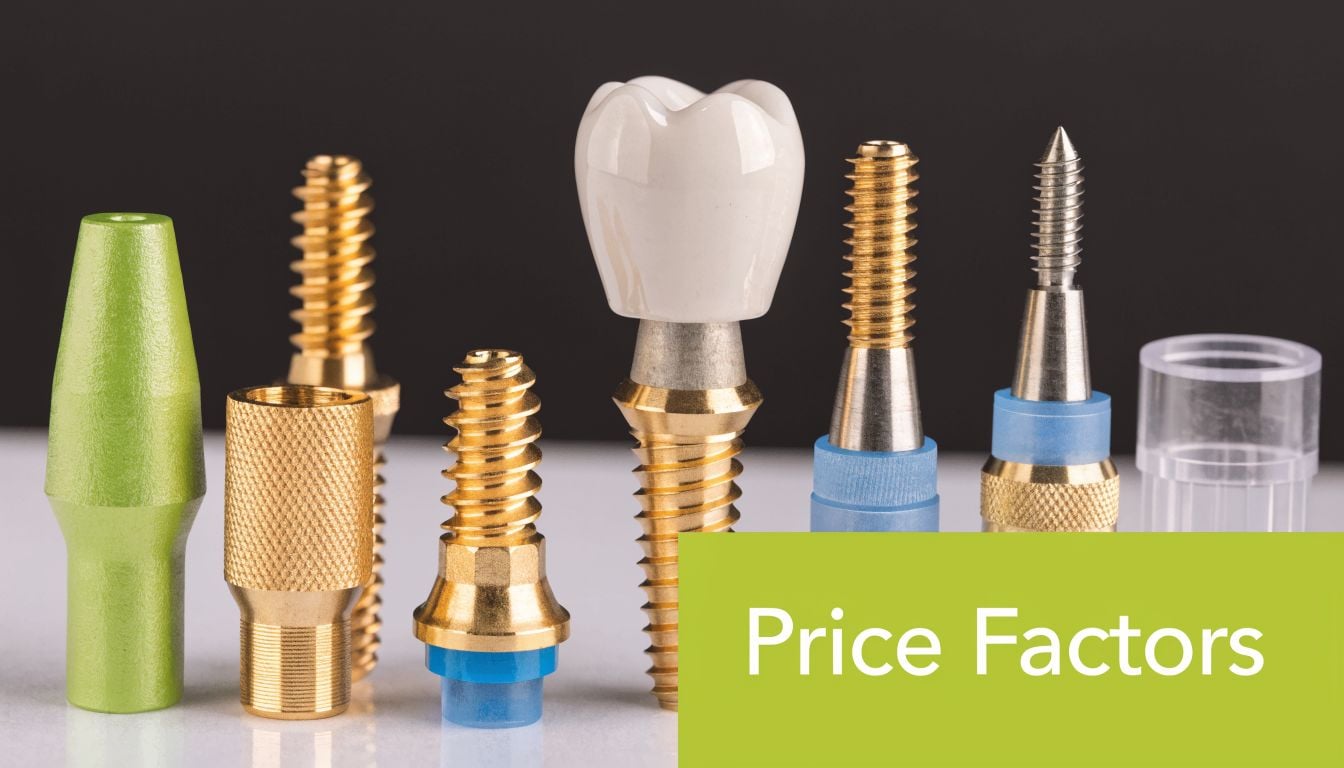
A single implant fee usually has three separate components: the implant post, the abutment, and the crown. If one office lists all three and another lists only the surgical portion, the prices will look wildly different even when neither office is being misleading.
The three parts patients are actually paying for
| Component | Function | Typical role in the treatment |
|---|---|---|
| Implant post | Replaces the tooth root in the jawbone | Surgical component placed in bone |
| Abutment | Connects the implant post to the final crown | Connector that shapes support for the restoration |
| Crown | The visible replacement tooth | Custom tooth that restores appearance and chewing |
The implant post is the titanium or zirconia fixture placed into the jawbone. This is the surgical foundation. Its cost reflects the implant system used, the surgical planning involved, and the skill needed to place it in the correct position.
The abutment connects the implant to the final tooth. Patients often overlook this part, but I pay close attention to it because abutment design affects how the crown sits, how the gum tissue heals around it, and how easy the implant is to keep clean over time.
The crown is the visible tooth-shaped restoration. A well-made crown should fit the bite properly, match neighboring teeth, and distribute force in a way that protects the implant. That is one reason the "tooth on top" is not a minor add-on. It is a major part of the final result.
A low quote can still be legitimate. It may cover the post alone.
Practical rule: Ask one direct question. "Does this fee include the implant post, the abutment, and the final crown?"
Why simple price comparisons break down
Implant treatment involves surgery, healing, lab work, and final restoration, meaning the headline number often leaves out where the true value and expense sit. A fee sheet that separates those steps is often more honest than one attractive number with very little detail.
This is also where patients should ask about who is doing each part of the case. In some offices, one clinician places the implant and another makes the crown. In others, the same team handles the process from planning through restoration. Neither model is automatically better, but the handoff between surgical and restorative phases needs to be clear.
Comfort planning matters too, especially for patients who have dental anxiety or need more involved surgery. An office that clearly explains its oral surgery anesthesia options is usually giving you a better picture of the full treatment process and the fees attached to it.
Additional Procedures That Affect Your Total Cost
A patient may come in expecting to pay for one implant and one crown, then learn the actual bill starts earlier. The missing tooth is only part of the case. The condition of the bone, gums, and neighboring anatomy often determines whether the implant can be placed safely and whether it has a fair chance of lasting.
The site prep that often changes the estimate
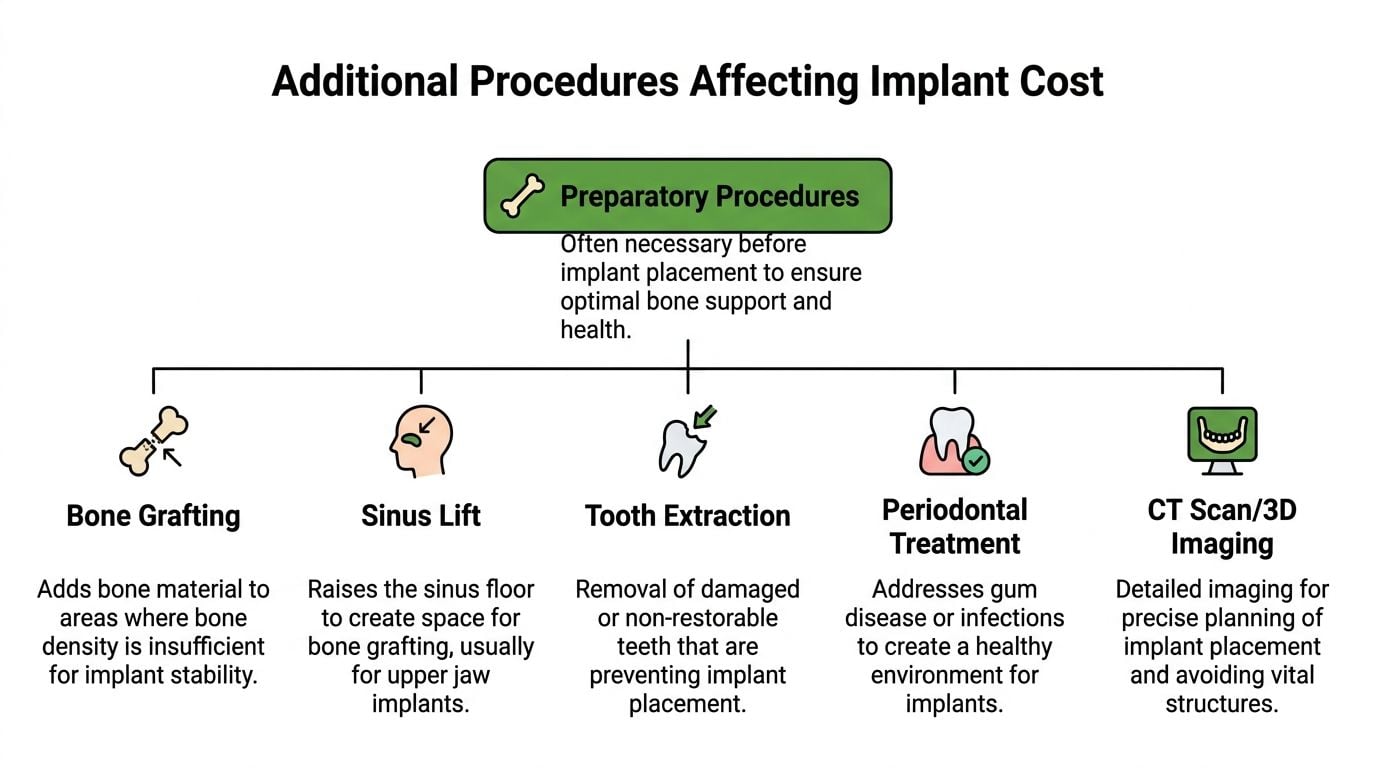
The first added cost is often diagnostic planning. Many implant cases require CT or CBCT imaging so the clinician can measure bone width, locate the nerve canal, assess sinus position, and plan the angle of placement before surgery. That fee is separate in many offices, and patients are often surprised by it because it does not look like "treatment" yet. Clinically, it can prevent expensive mistakes.
Bone grafting is another common driver of cost. If a tooth has been missing for months or years, the ridge often shrinks. In that situation, placing an implant into thin bone may create a weak result, poor esthetics, or a position that makes the final crown harder to clean.
Upper back teeth bring a different issue. The sinus can sit very close to the implant site, leaving too little bone height for stable placement. A sinus lift adds time, healing, and cost, but it may be the step that turns a questionable site into a workable one.
Some patients also need a tooth removed before implant treatment can begin. If that tooth is infected, fractured below the gumline, or surrounded by bone loss, the extraction itself may be straightforward or it may require grafting to preserve the site for the next phase.
What these add-ons mean in real treatment terms
The most common cost-changing procedures are:
- Tooth extraction: Removing a failing tooth before implant placement, sometimes with socket preservation grafting at the same visit.
- Bone grafting: Rebuilding ridge width or height so the implant has better support.
- Periodontal treatment: Reducing active gum infection and inflammation before surgery.
- CT or CBCT imaging: Planning the case more precisely before the implant is placed.
- Sinus lift: Creating enough bone height in the upper posterior jaw.
These are not cosmetic upgrades. They change whether the implant can be placed in a position that is healthy, functional, and maintainable.
I tell patients to ask a very plain question: "If my site needs extra work, what is optional and what is required?" That usually gets a clearer answer than asking for one total number too early.
Cost discussions can also overlap with coverage questions, especially if a patient is already comparing oral surgery fees and benefits. Patients who are sorting through insurance access may find it helpful to review oral surgeons in Charlotte that accept Medicaid while planning the broader treatment budget.
Trying to skip site preparation can lower the starting quote. It can also raise the risk of poor implant position, soft tissue problems, difficult hygiene, or failure under biting pressure. The cheaper plan on day one is not always the less expensive decision over time.
Why Dental Implant Prices Vary So Much
Most price differences come from one simple fact. Patients aren't buying a generic object off a shelf. They're paying for diagnosis, surgery, planning, lab work, materials, and follow-through.
That means two quotes can look far apart and still both be reasonable. The question is what each quote includes, and how predictable the result is likely to be.
The biggest reasons one quote is higher than another
- Itemized versus bundled pricing: CareCredit's implant financing guide notes that headline prices can understate true patient spend by 30% to 100% when surgical and restorative phases are separated. The same source reports an average of $2,143 for the implant procedure and materials alone, while the crown can add $488 to $3,254.
- Provider training: A straightforward single tooth in thick bone is different from an esthetic front tooth case or a difficult molar near vital anatomy. More advanced training usually means more precise planning and fewer surprises.
- Location of the practice: Larger metro markets often run higher than smaller communities because overhead, staffing, and lab costs are different.
- Materials used: Crown material, implant system, and custom components all influence the final fee.
- Technology: Digital scans, guided placement, and advanced imaging may improve precision, but they also add cost.
- Complexity of the bite: If the patient clenches, grinds, or has an unstable bite, the implant restoration may need more design work and follow-up.
What patients should ask before comparing prices
A quote is only useful if it's complete. Ask these questions:
- Does this include the implant post, abutment, and crown?
- Are imaging, temporary restorations, and follow-up visits included?
- If grafting becomes necessary, how is that billed?
- Who is placing the implant and who is making the final crown?
Patients who are balancing complex medical or financial factors sometimes also need to clarify broader coverage questions before they commit. If you're sorting through public benefits or specialist access, this guide to oral surgeons in Charlotte NC that accept Medicaid may help you understand the referral and payment system.
The cheapest quote isn't always the lowest total cost. Revisions, remakes, and poorly planned treatment are expensive.
Cost and Function Implants vs Bridges and Dentures
A fair comparison isn't just about the first bill. It should also consider function, maintenance, and what happens to the surrounding teeth and bone over time.
How each option behaves in real life
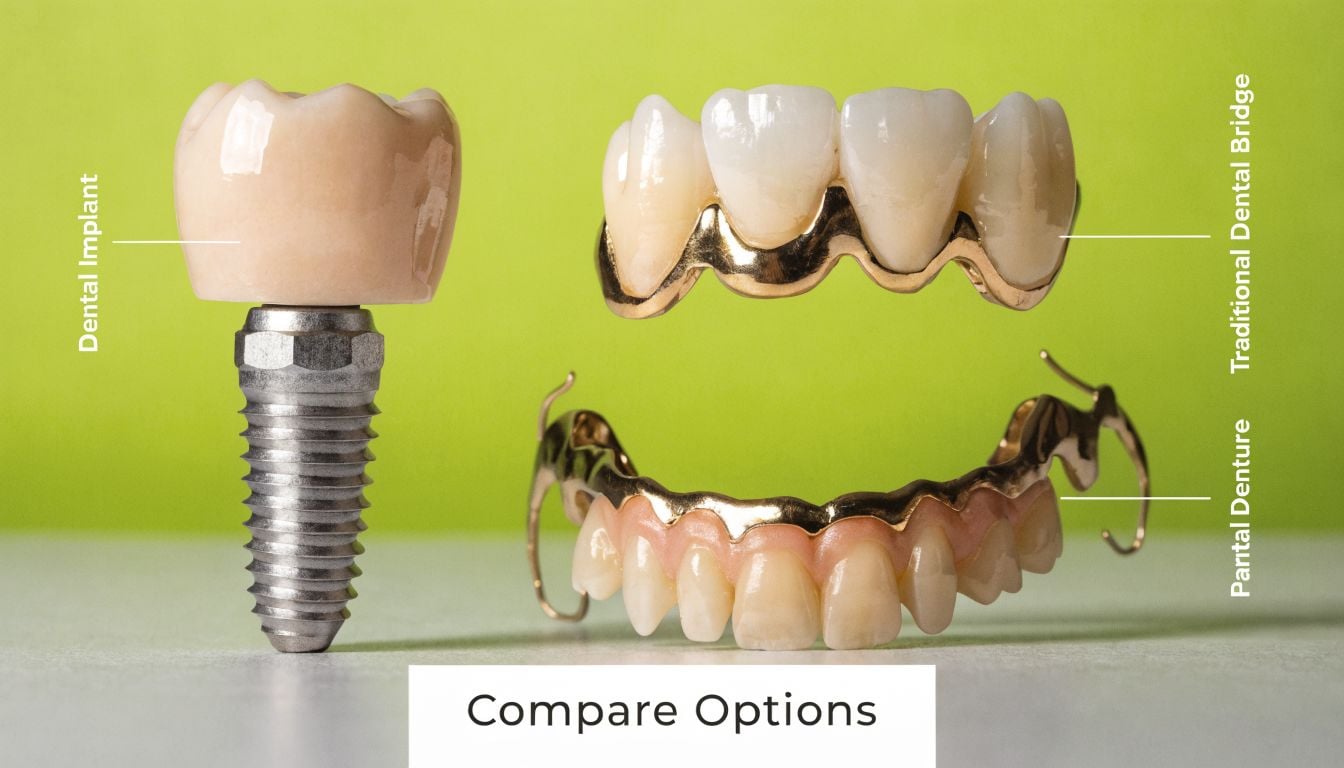
Implants are fixed in the bone and don't require support from neighboring teeth. They tend to feel closest to a natural tooth because the replacement stands on its own.
Bridges replace a missing tooth by attaching a restoration to the teeth on either side. That can be an appropriate solution in many cases, especially when those neighboring teeth already need crowns.
Dentures can replace more teeth at once and often lower the initial financial barrier. The trade-off is daily removal, more movement, and a very different chewing experience.
| Option | Up-front cost pattern | Effect on nearby teeth | Daily use |
|---|---|---|---|
| Implant | Higher initial investment | Usually preserves adjacent teeth | Fixed, brush and floss like a restoration |
| Bridge | Moderate initial cost | Requires support from adjacent teeth | Fixed, but cleaning underneath takes effort |
| Denture | Lower initial entry point | Doesn't anchor like a single tooth | Removable, more maintenance |
Value isn't the same as price
If a bridge protects already-restored neighboring teeth and fits the patient's budget, it can be a smart plan. If the adjacent teeth are healthy and untouched, many patients prefer an implant because it avoids cutting down those teeth.
Dentures can be life-changing for some patients, especially when multiple teeth are missing. But they ask more of the patient every day. Stability, chewing confidence, and speech adaptation matter just as much as the bill.
A short clinical overview can help you visualize these differences in function and design:
When each option makes the most sense
- Choose an implant when you want a single-tooth replacement that stands independently and the site is healthy enough to support it.
- Choose a bridge when the neighboring teeth already need crowns or the patient wants a fixed option without implant surgery.
- Choose a denture when multiple teeth are missing and a removable solution fits the clinical and financial picture better.
No option is universally best. The right choice depends on the condition of the surrounding teeth, the bite, bone support, daily habits, and budget.
Using Insurance and Financing for Your Implants
A common scenario unfolds like this. A patient is comfortable with the primary implant fee, then gets surprised by what insurance pays and what must be paid before surgery begins.
That gap matters. Dental benefits often help with parts of care, but many plans place annual maximums, waiting periods, exclusions on implants, or alternate-benefit clauses that reimburse at the level of a bridge instead of the implant itself. The practical question is not whether you have insurance. It is which parts of your treatment plan the carrier will recognize, and when.

How to build a workable payment plan
Start with a written estimate that separates each phase of care. I want patients to see the exam and imaging, any extraction or grafting, the implant placement, the abutment, and the final crown listed clearly. That is how you catch the difference between the headline price and the final bill.
Then verify benefits before treatment begins.
- Ask for a pre-treatment estimate: This gives you a better sense of what the insurer may reimburse before you commit.
- Check annual maximums and waiting periods: A plan may cover part of the restoration but not the implant surgery, or delay coverage for major services.
- Use HSA or FSA funds if available: Pre-tax dollars can lower your out-of-pocket cost.
- Ask whether treatment can be staged across benefit years: In some cases, timing the surgical and restorative phases can help you use two annual maximums instead of one.
- Review financing carefully: Third-party lenders and structured dental payment plans can spread out the cost, but the monthly number only helps if you also understand interest, fees, and what treatment is included.
Patients who are reviewing broader household benefits before major dental work may also find Bradenton family dental vision coverage useful for comparing how medical, dental, and vision planning fit together.
Financial mistakes that raise stress
The biggest mistake is approving treatment without a line-by-line breakdown.
The second is focusing only on the implant post and overlooking the surrounding costs. If the site needs a graft, a membrane, sedation, temporary tooth replacement, or extra imaging, those charges can change the budget more than patients expect. Some of those items may be billable to insurance. Some may not.
A good financial conversation should answer three questions clearly: what is included now, what could be added later if healing or anatomy requires it, and what portion is your responsibility if insurance pays less than expected. That is how patients make a sound decision without feeling rushed.
Two Real-World Dental Implant Cost Examples
A patient comes in after seeing an online ad for a "single implant" price. By the end of the consultation, the question is no longer whether one implant is needed. It is what that one implant includes, and what the site needs before an implant has a fair chance of lasting.
That difference is why the headline number so often fails to match the final bill.
Example one, a straightforward front tooth implant
Sarah loses a front tooth in an accident and seeks treatment quickly. The gum tissue is healthy, the bone volume is acceptable, and the neighboring teeth and bite make the case relatively clean.
Her fee is usually easier to predict because the plan may stay limited to the core parts of treatment: the implant post, the abutment, and the final crown. There may still be charges for imaging, exams, and temporary tooth replacement during healing, depending on how the office structures fees, but the site itself is not driving up the cost.
In a case like this, patients are often close to the price they expected when they started searching.
Example two, a back molar with site rebuilding
David has been missing an upper molar for some time. The bone has thinned, the sinus sits low, and the area needs more than simple implant placement.
His treatment plan can include:
- Removal of damaged tissue or a failing tooth, if the site is not fully healed
- 3D imaging to measure bone and avoid anatomical limits
- Bone grafting to create enough support for the implant
- A sinus lift when the upper back jaw does not have enough vertical bone
- The implant post, abutment, and crown
This is still "one implant" on paper. Financially, it is a different procedure with more surgery, more materials, more healing time, and more follow-up.
I often tell patients that the implant itself may be only one part of the budget. The condition of the site is what changes the total.
What these examples tell patients
Sarah and David are both replacing one tooth, but they are not buying the same treatment. One case is mainly tooth replacement. The other includes rebuilding the foundation first.
That distinction matters in every major dental estimate. It is similar to reading a gel and acrylic nail price breakdown and realizing the base service and the add-ons are priced separately. Dental implants work the same way, except the added steps affect both cost and long-term success.
The practical question to ask is simple: what does this quote cover today, and what may need to be added once the site is fully evaluated or opened surgically? Patients who ask that early usually avoid the frustration of a low starting quote that grows later.
Common Questions About Dental Implant Costs
Are cheap or discount implants a safe option
Sometimes a low price reflects efficiency and a well-run practice. Sometimes it reflects a partial quote, lower-grade restorative work, limited planning, or fewer follow-up visits.
The issue isn't the advertised number by itself. The issue is whether the treatment includes proper diagnosis, quality components, careful placement, and a restoration designed for your bite. A very low fee can become expensive if the implant is placed poorly or the crown has to be remade.
Does the price include future maintenance or repairs
Often, no. Many implant quotes focus on diagnosis, surgery, healing checks, and delivery of the final crown. They may not include future repairs from wear, trauma, loosening, or changes in bite forces.
Ask specifically about maintenance visits, screw tightening, crown replacement policies, and what happens if the temporary or final restoration chips. Those details matter.
How long do dental implants last for the cost
Longevity depends on placement, bone support, gum health, bite forces, smoking status, home care, and regular professional maintenance. A well-planned implant can serve for many years, but no ethical clinician should promise that every part will last forever.
The smartest way to think about value is this: implants can be durable, but durability comes from case selection and maintenance, not from marketing.
Ask your dentist which part of the treatment they expect to maintain over time. The implant itself, the abutment, and the crown don't all face the same wear patterns.
Is the consultation estimate usually the final number
Not always. A careful estimate is based on the exam and imaging available at that point. If hidden decay, infection, bone loss, or bite problems show up during planning, the number can change.
That doesn't mean the office was misleading you. It means diagnosis became more complete.
Is getting multiple opinions reasonable
Yes, especially for expensive or surgically complex treatment. A second opinion is most useful when you compare not just price, but diagnosis and scope.
Ask each office the same questions:
- What exactly is included in this fee
- Who places the implant and who restores it
- What preparatory work do you expect
- What happens if the site needs more treatment than expected
Why do people misunderstand implant pricing so often
Because many services are sold with a headline number. Dental implants don't work that way. They're more like custom medical-dental reconstruction than a single retail item.
Patients run into the same problem in other industries too. A base price rarely tells the whole story once materials, customization, and follow-up are included. Even outside dentistry, a clear gel and acrylic nail price breakdown shows how service pricing changes once upgrades and maintenance are added. Implant treatment works similarly, just with much higher stakes for health and function.
What's the best way to avoid financial surprises
Get everything in writing. Ask for the treatment sequence, what is included, what is not included, and which fees depend on healing or anatomy.
Then make your decision based on three things together: clinical quality, total cost, and how confident you feel in the explanation you received.
If jaw pain, clenching, headaches, poor sleep, or facial tension are part of the bigger picture around your dental health, Pain and Sleep Therapy Center offers specialized care focused on TMJ disorders, facial pain, and sleep-related breathing issues. Their team takes a root-cause approach, which can be especially valuable when bite forces, muscle strain, or airway concerns may affect long-term comfort and oral function.