

You may be reading this after a prenatal ultrasound, a newborn exam, or your first visit with a cleft team. Most parents in that moment have the same mix of thoughts. What exactly is wrong, when will surgery happen, and what will this mean for my child's speech, feeding, and future?
The reassuring answer is that cleft palate repair is a well-established, carefully planned process. Surgeons aren't just covering an opening. They're rebuilding a structure your child uses every day for swallowing, speaking, and directing airflow.
That's why the best care never revolves around one operation alone. It's a coordinated journey that starts early, follows your child's growth, and involves several specialists who each protect a different part of function.
Your Guide to the Cleft Palate Repair Journey
A cleft palate diagnosis can make everything feel urgent. Parents often want one simple answer to one simple question: how are cleft palates repaired?
The honest answer is both simple and more complete than expected. A cleft palate is repaired with surgery called palatoplasty, but the surgery works best when it's part of a broader plan for feeding, hearing, speech, breathing, dental development, and follow-up.
In countries with well-developed cleft systems, care usually begins early and is highly coordinated. A large international analysis also showed that many children in lower-resource settings do not receive timely palate repair, while the standard in places like the U.S. is an early-intervention approach built around infant development and team care, as described in this global cleft surgery analysis on PubMed.
That matters because access to a team changes the whole experience. Instead of wondering who handles what, families have a roadmap.
What parents are usually asking
At the beginning, most questions fall into a few groups:
- Feeding concerns. Will my baby be able to eat safely and gain weight?
- Surgery worries. When will the repair happen, and what does the surgeon do?
- Speech fears. Will my child be able to talk clearly later on?
- Long-term planning. Is this one surgery, or will there be other treatments as my child grows?
A dedicated cleft team helps answer those questions in order, instead of all at once. If you're looking at what coordinated specialty care can look like, a cleft palate clinic model is helpful because it shows how different professionals work around the child, not in isolation.
First reassurance: this journey is structured. Families usually do better once they understand that cleft care follows a sequence, not a scramble.
Why the team approach matters so much
Your child's palate affects more than the roof of the mouth. It influences how food and liquid move, how air is directed during speech, and how the muscles at the back of the mouth work together.
That's why modern cleft care is often described as multidisciplinary. One person may perform the operation, but many people help your child get the best result from that repair.
The True Goal of Cleft Palate Repair
A parent may hear, “We'll close the opening,” and picture the surgery as a simple patch. In reality, the goal is much bigger. Cleft palate repair is designed to help the mouth and nose work as separate spaces again, restore the soft palate muscles so they can do their job, and give a child the best possible starting point for feeding, speech, breathing, and growth.

Closing the gap matters. Function matters more.
A helpful comparison is a house roof with damage through multiple layers. Repairing only the visible surface would not stop leaks or restore support underneath. The palate works in a similar way. Surgeons are not only joining tissue edges. They are rebuilding a structure with separate layers, each with its own job.
- The nasal side is closed so air, milk, and food are better directed and the nose and mouth are properly separated.
- The muscle layer is rebuilt so the soft palate can lift and move during speech and swallowing.
- The oral side is closed to recreate the lining inside the mouth.
This layered goal is why many families benefit from learning about cleft palate reconstruction surgery as functional rebuilding, not just closure.
Why the muscle repair changes so much
The soft palate is not a flap of tissue sitting passively at the back of the mouth. It is an active valve. During speech, it helps close off the nose from the mouth so air can be directed where specific sounds need it. During swallowing, it helps coordinate movement between the mouth and throat.
That is why experienced cleft surgeons focus so carefully on the muscle repair. A palate can look closed on the surface and still struggle to work well if the muscles are not placed in a more normal position.
The best repair aims for a palate that is closed and able to function.
What this means for your child over time
Parents often want to know what success looks like in daily life. The answer usually shows up in small, meaningful functions that build on each other as a child grows.
| Function | Why the palate matters |
|---|---|
| Feeding | It helps keep liquid and food from passing into the nose and supports more coordinated swallowing |
| Speech | It helps control airflow so sounds are clearer and less nasal |
| Breathing | It contributes to how air moves through the mouth and nose during normal function |
| Growth | It gives the face and mouth a better foundation while surgeons try to limit scar-related restriction |
This is also why surgery is only one part of the journey. Repair creates the physical setup. Speech therapy, feeding support, hearing care, dental follow-up, and regular cleft team visits help a child make the most of that repair over the years.
For many families, that shift in perspective brings relief. The operation is a major milestone, but the true goal is broader. It is helping your child eat, speak, breathe, and grow with as much function as possible.
How Surgeons Perform the Palate Repair
When families ask how are cleft palates repaired in the operating room, the clearest answer is this: surgeons rebuild the palate in layers, with special attention to the muscles that make the soft palate work.
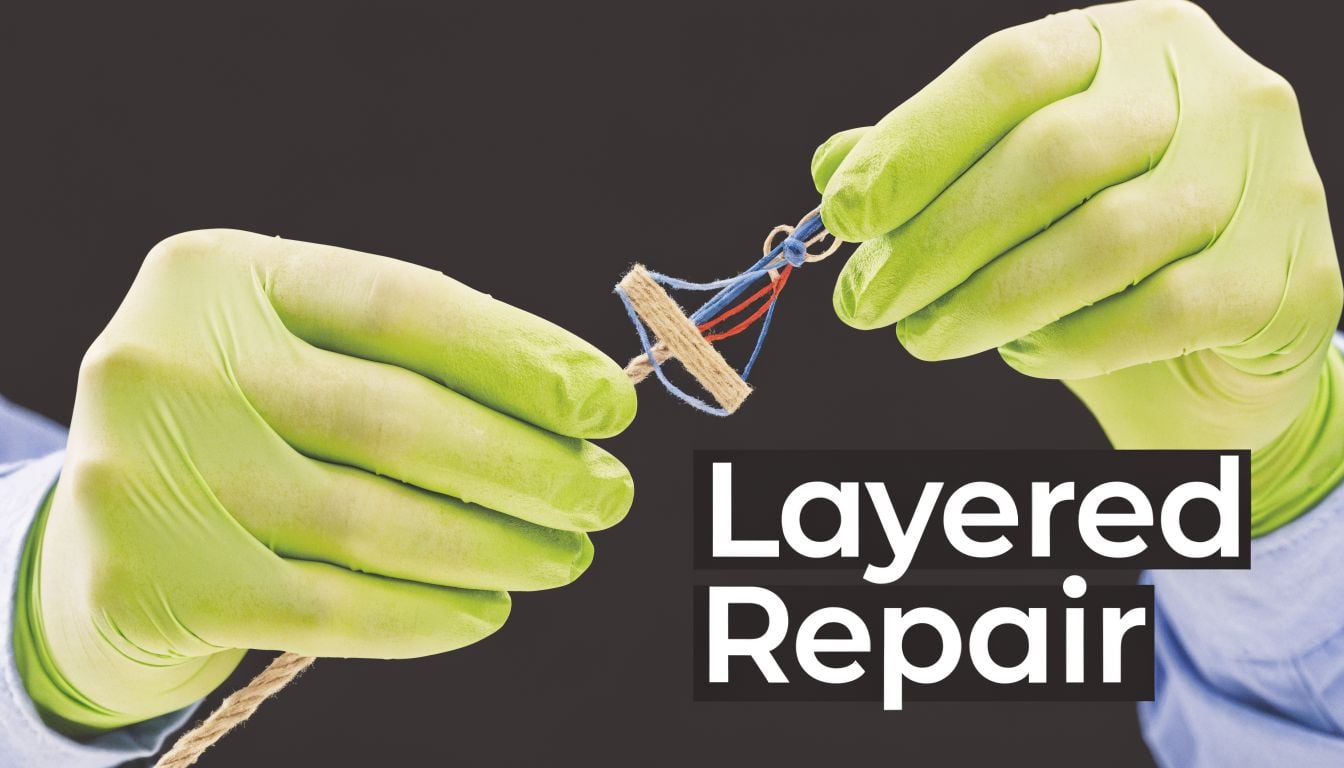
A standard repair involves a three-layer closure. The nasal lining is closed first, then the key muscles of the soft palate are repositioned into a functional sling, and finally the oral lining is stitched. This layered approach is described in detail in this cleft palate surgical review.
The first layer closes the nasal side
The innermost layer separates the nasal cavity from the mouth. Without that separation, milk, food, and air can travel in ways they shouldn't.
Parents sometimes assume this is the whole surgery. It isn't. It's the beginning.
The middle layer restores the muscle sling
This is the heart of the operation. The surgeon identifies the levator veli palatini muscles, which are the key muscles of the soft palate, and reorients them so they can function more like a normal muscular sling.
That muscle repair is what gives the soft palate a better chance of moving upward and backward during speech. Without it, the palate may be closed but still not work well.
A focused cleft palate reconstruction resource can help families understand why reconstruction is different from simple tissue closure.
The outer layer completes the oral lining
Once the deeper work is done, the surgeon closes the oral side of the palate. This completes the internal surface the tongue will contact during eating and speech.
The surgeon is trying to do two things at once here. Create reliable closure and avoid too much tension. Tension matters because tissues under strain are more likely to heal poorly or leave a persistent opening later.
Why layers matter: each layer solves a different problem. Separation, movement, and surface closure all have to work together.
A short visual can make this easier to picture:
Why technique can vary from child to child
There isn't one identical operation for every cleft. Surgeons choose techniques based on the width and shape of the cleft, the anatomy of the soft palate, and what will give the child the best chance at function.
One modern method often discussed is the Furlow double-opposing Z-plasty. In plain language, it's designed to lengthen the soft palate and reposition muscle more effectively in selected cases. It can be especially useful in narrower to moderate clefts, while wider clefts may require other strategies or added tissue movement to reduce tension.
That variation can confuse parents at first. It helps to remember that different methods are not signs of uncertainty. They reflect careful tailoring to your child's anatomy.
The Cleft Palate Repair Timeline From Birth to Toddlerhood
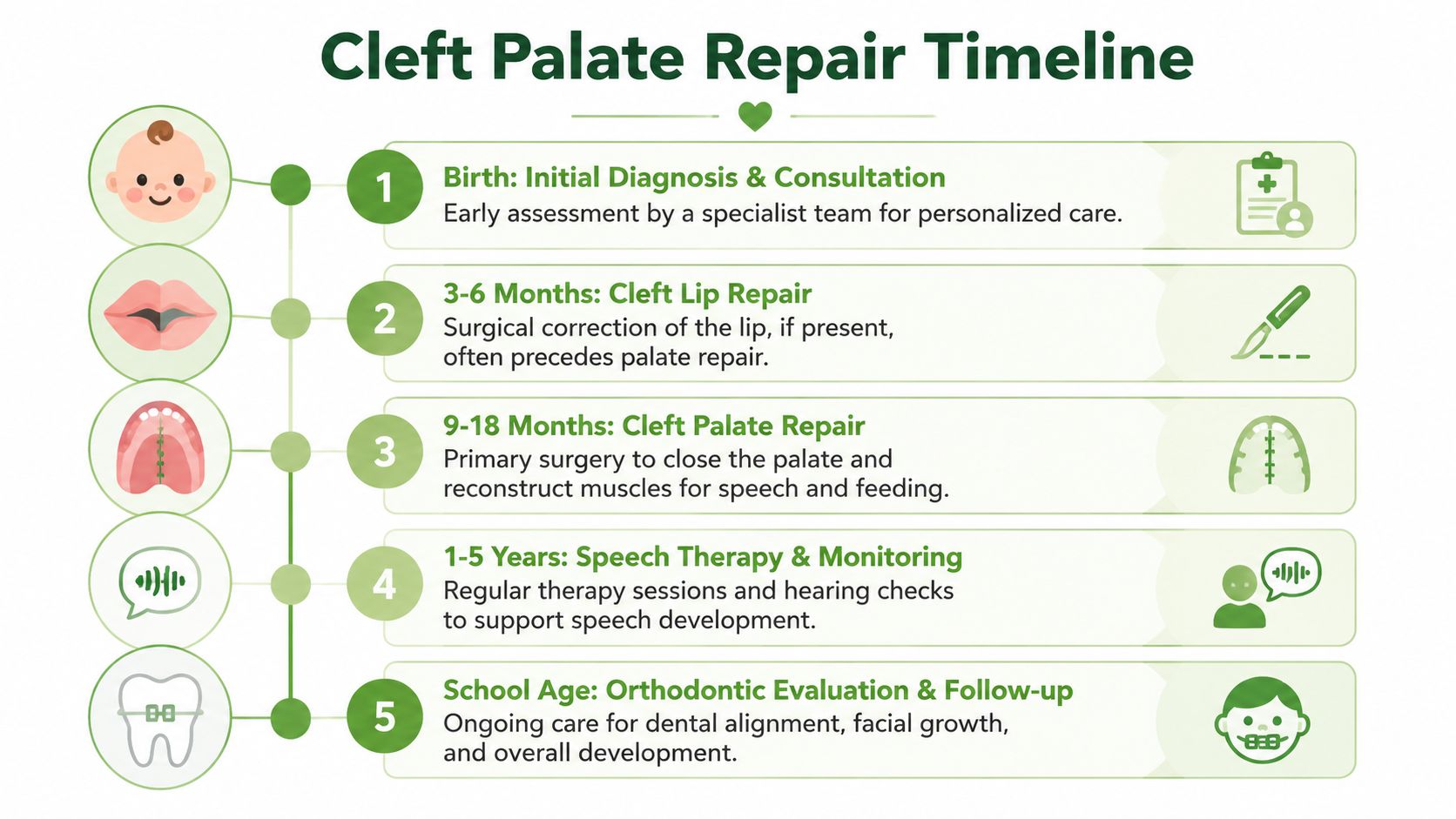
The first weeks after diagnosis often feel like standing at the start of a long road with only one question in mind: When will my baby have surgery? The answer matters, but the reason behind the timing matters just as much. Cleft palate repair is scheduled to match development, so the palate is repaired at a point that supports feeding, speech, breathing, and safe healing.
The usual early sequence
Many cleft teams repair the palate during late infancy, often around 9 to 12 months. Some children have surgery a bit earlier or later, depending on growth, anatomy, medical needs, and the surgeon's plan. If a baby has both a cleft lip and a cleft palate, the lip is often repaired first, with the palate repaired later.
For families trying to compare age windows and understand why one team recommends one month and another suggests a different one, this guide on the age for cleft palate surgery can help put the timing into plain language.
A helpful way to picture it is this. Surgeons are trying to repair the palate before speech patterns start taking hold, while also waiting until the baby is strong enough and the tissues are ready for a careful operation. It is a balance, not a race.
Why timing matters so much
The calendar is not just about getting to the operating room. It is about giving the repaired palate the best chance to do its jobs well over time.
Those jobs include:
- Supporting feeding early on so a baby can grow and arrive at surgery in the best condition possible
- Helping speech develop on a stronger foundation before compensatory speech habits become harder to change
- Allowing safe anesthesia and delicate tissue repair when the baby is large enough for surgery to be performed carefully
- Protecting future growth as much as possible by choosing the right moment and technique for that child
Parents sometimes ask why surgeons do not close the palate as soon as possible. Earlier surgery can sound reassuring, but timing that is too early may bring trade-offs in safety or tissue handling. Waiting too long can create a different problem, because children begin learning how to make sounds long before they can explain what they are doing. The repair works best as part of the whole developmental plan.
What this often looks like from birth to toddlerhood
A typical path looks something like this:
Birth to the first months
Feeding support starts right away. The cleft team confirms the type of cleft, watches weight gain, and helps parents learn practical feeding strategies.Early infancy
If a cleft lip is also present, that surgery is often scheduled first. During this period, the team also keeps an eye on hearing, ear fluid, and overall growth.Later in the first year
Palate repair is commonly performed during this window, when many surgeons aim to support later speech function while operating at a safe and practical age.Toddlerhood
Surgery closes the opening, but the journey does not stop there. The team continues to monitor speech sounds, feeding progress, hearing, middle ear health, and breathing patterns.
That last stage deserves more attention than it usually gets. Families sometimes hope the timeline ends on the day of surgery. In reality, surgery is more like building the walls of a house. The child still needs help learning how to use that repaired structure well. Speech therapy, hearing follow-up, ear care, dental and orthodontic planning, and regular cleft team visits all shape the final outcome.
Some children heal and progress smoothly after one palate repair. Others may need more support later, especially if speech, fistula healing, airway concerns, or ear problems continue. That does not mean the first surgery failed. It means cleft care is built around function over time, not only the appearance of closure in the operating room.
Meet Your Child's Multidisciplinary Care Team
A few months after surgery, parents sometimes hear two very different things in the same week. The surgeon says the palate is healing well. Then a speech specialist notices nasal air escape, or an audiologist finds hearing issues that could affect speech learning. Both can be true.
That is why cleft palate care is built around a team, not a single operation. Repair closes and reshapes the palate, but the long-term goal is larger. Your child needs to eat, hear, breathe, and speak using that repaired structure in everyday life.

The specialists families meet most often
Each specialist watches a different function, almost like members of an orchestra listening for different instruments. The goal is not a closed palate alone. The goal is a child who can use that palate well.
Plastic surgeon or cleft surgeon
This doctor plans and performs the repair, then follows healing and palate function over time. A palate can look closed on exam and still need further evaluation if speech or feeding concerns appear later.ENT physician
Children with cleft palate often have middle ear problems, fluid buildup, or airway concerns. The ENT helps manage the parts of the system that affect hearing, breathing, and pressure behind the eardrum.Audiologist
Clear hearing supports clear speech learning. If sounds are muffled or inconsistent, children may have a harder time learning where and how to place sounds correctly.Speech-language pathologist
This specialist listens for more than delayed words or toddler mispronunciations. They assess whether the repaired palate is directing air properly for speech and whether a child has learned workarounds that need therapy.Pediatric dentist and orthodontist
Teeth and jaws do not develop separately from the palate. These specialists track eruption, bite, arch shape, and later treatment planning as your child grows.
A role some families only hear about later
An orofacial myofunctional therapist focuses on how the mouth works at rest and during swallowing, breathing, and speech practice. That includes lip seal, tongue posture, nasal breathing, and oral muscle patterns.
Surgery repairs structure, while therapy helps the child use that structure efficiently. A repaired palate works a bit like a newly tuned valve; it still depends on coordinated muscles, airflow, and habits to do its job well.
For some children, the big questions after repair are practical. Is air moving through the nose the way it should? Is the tongue resting in a helpful position? Is swallowing organized, or is the mouth compensating in ways that could affect speech or dental growth?
Why team communication shapes the final result
Families often picture cleft care as a straight line. Diagnosis, surgery, healing, done. In real life, it works more like a relay race. One specialist hands important information to the next, and progress depends on how well those handoffs happen.
A surgeon may see healthy healing. A speech-language pathologist may hear persistent hypernasality. An audiologist may find hearing loss from ear fluid. A dentist may later notice developing bite issues. These are not separate stories. They are different views of the same child learning to function after repair.
That is also why needing therapy, ear care, orthodontic follow-up, or another procedure later does not automatically mean the first surgery failed. It means cleft palate repair is only one part of the full journey. The strongest outcomes usually come from coordinated care over time, with each specialist helping your child build speech, feeding, and breathing skills on the repaired foundation.
Life After Surgery Recovery and Key Outcomes
The evening after surgery often feels like the longest part of the whole process. Your child may be sleepy, irritable, and less interested in drinking. Parents often look at those changes and wonder if the repair is in trouble.
In many cases, this early period reflects normal healing inside a very sensitive part of the body. The mouth is swollen, the routine is different, and your child is recovering from anesthesia as well as surgery. The goal at home is simple at first. Keep your child comfortable, keep fluids going, and protect the repair while the tissue seals and strengthens.
What recovery often looks like at home
Your surgical team will give you a specific plan for feeding, pain medicine, and mouth protection. That plan matters because different surgeons use slightly different techniques, and the aftercare needs to match the repair.
For a short period, feeding may look unfamiliar. Some children do better with a special cup, syringe, spoon, or another modified method. That can feel like a step backward, but it is really a temporary way to let the palate heal without repeated rubbing or pressure.
You may also hear about soft arm restraints, sometimes called no-nos. They work like a seatbelt for healing. They are not a punishment. They help prevent a curious hand or toy from bumping a fresh repair inside the mouth.
At home, parents are usually watching for a few practical signs:
- Comfort. Is your child calm enough to rest, drink, and be soothed?
- Hydration. Wet diapers and a moist mouth matter more than finishing a usual diet right away.
- Protection of the repair. Avoid hard utensils, rough toys, and anything that could scrape the palate.
- Follow-up. Postoperative visits let the surgeon check that healing is staying on track.
What good healing means, and what the team still watches for
A closed palate is only part of the result. The deeper goal is a palate that can heal into a working muscular valve for speech, swallowing, and pressure control between the mouth and nose. A repaired palate works a bit like a curtain that has been carefully rehung. The opening may be covered, but the curtain also has to move at the right time and in the right direction.
That is why follow-up focuses on function, not just appearance.
Two terms can sound alarming if they come up later, so it helps to know them early.
- Palatal fistula means a small opening remains or reopens after repair.
- Velopharyngeal insufficiency, or VPI, means the palate does not close well against the back of the throat during speech.
These are known problems cleft teams watch for. They do not erase the value of the original surgery. They tell the team that a child may need closer monitoring, speech evaluation, or sometimes another procedure to improve how the repaired palate works.
Surgery builds the structure. Recovery, growth, hearing, and therapy help that structure do its job.
Signs that deserve a call to your team
Some children recover smoothly and move ahead with routine visits. Others need extra support as speech and feeding become more complex over time.
Let your team know if you notice:
- Food or liquid coming through the nose
- Speech that sounds very nasal
- Speech that remains hard to understand as words increase
- Snoring, mouth breathing, or other breathing concerns
- Feeding or swallowing that still looks unusually effortful
These signs do not mean you should assume the repair failed. They are clues. In cleft care, small clues matter because the best long-term results usually come from noticing problems early and having the right specialist respond. A surgeon may check healing, a speech-language pathologist may assess how the palate is working during speech, and other team members may step in if hearing, dental development, or airway issues are affecting progress.
That larger picture is what many parents find reassuring after the first operation. Recovery is not only about getting through the first week. It is about helping your child build clearer speech, safer feeding, and easier breathing on the repaired foundation.
The Long-Term Journey Beyond Initial Repair
The first repair is a major milestone. It isn't the end of cleft care.
Most children continue with some combination of speech follow-up, dental monitoring, orthodontic planning, and growth checks through childhood. That long horizon can sound daunting at first, but many parents feel better once they see it as a roadmap instead of a string of surprises.
What may happen later
Speech therapy is often one of the most important next steps. Surgery creates structure. Therapy helps a child learn to use that structure for clearer sound production.
Later, dental and jaw development become more central. The NHS notes that many children with cleft-related care later need a gum line bone graft between ages 8 and 12 to support adult teeth and may also need additional procedures or orthodontic treatment related to appearance, function, jaw growth, or alignment, as outlined in this NHS cleft lip and palate treatment guide.
Why this long plan is actually reassuring
Cleft care extends into adolescence because children grow. Teeth erupt. Jaws change. Speech matures. What your child needs at one stage may be different from what matters later.
That doesn't mean the original surgery failed. It means cleft care follows development.
A practical way to think about it is this:
| Stage | Main focus |
|---|---|
| Infancy | Feeding, growth, early surgical planning |
| Toddler and preschool years | Speech development, hearing, function |
| School age | Dental alignment, palate and jaw follow-up |
| Later childhood and adolescence | Orthodontics, bone grafting, growth-related decisions |
Parents often do best when they hold two ideas at the same time. The repair is important and hopeful. The journey is also longer than one operation.
If your child stays connected to an experienced team, each later step is usually approached with the same goal as the first one. Better function, clearer speech, safer breathing patterns, healthier growth, and more confidence in daily life.
If you're looking for support with the functional side of oral and airway development, Pain and Sleep Therapy Center offers interdisciplinary care focused on breathing, oral posture, swallowing, TMJ concerns, and pediatric myofunctional needs. Their team approach can be especially helpful for families who want guidance beyond anatomy alone and are thinking about how speech, sleep, airway function, and facial growth all connect over time.