
You're tired of chewing on one side, guarding your jaw in meetings, and waking up with that same dull temple ache. A night guard may have reduced the grinding, and a few medications may have taken the edge off, but the joint still clicks, the pain still returns, and you're left wondering whether there's a treatment that tries to fix the source instead of just quieting symptoms.
What Prolotherapy for TMJ Pain Actually Is
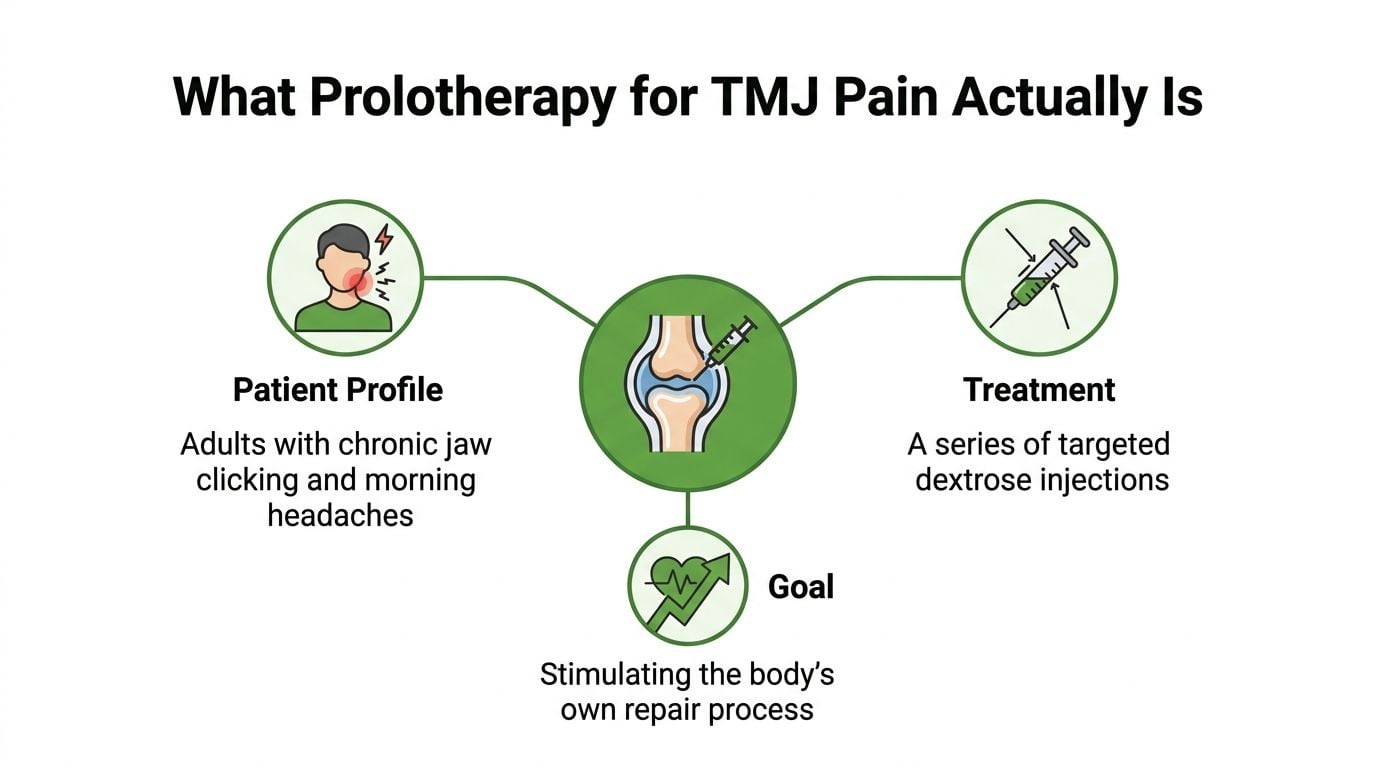
A patient usually comes in after months, sometimes years, of jaw clicking, morning headaches, and the feeling that the joint never fully settles. They've already tried the common first steps, a night guard, rest, maybe anti-inflammatory medicine, and the pain still keeps finding its way back. That is often the moment prolotherapy enters the conversation, not as a miracle cure, but as a regenerative injection therapy aimed at the ligaments and capsule around the TMJ.
The basic idea in plain language
Prolotherapy uses an injectable solution, usually dextrose, to create a controlled healing signal in tissue that's being strained or overstretched. Instead of numbing the joint the way a painkiller does, it asks the body to respond by repairing the passive stabilizers around the TMJ. That's why a TMJ specialist thinks about it differently from a steroid shot, which is usually aimed at calming inflammation more directly rather than encouraging tissue remodeling.
The simplest analogy is a small repair on a sagging hinge. If the supporting hardware is loose, the hinge keeps moving the wrong way, and the problem returns every time you use it. Prolotherapy is meant to help tighten those support structures so the joint doesn't keep taking the same mechanical beating.
Practical rule: If your pain keeps coming back after conservative care, the question isn't only “How do we calm this today?” It's also “What joint support has failed, and can it be improved?”
For a patient who wants a clinician's broader TMJ approach, Dr. Eric Wiitala TMJ care is a useful example of how regenerative treatment can fit into a larger evaluation instead of standing alone. The key idea is simple, prolotherapy is about supporting repair, not masking symptoms for a few hours.
How Dextrose Prolotherapy Works in the TMJ
The TMJ sits in a busy mechanical neighborhood. Every bite, yawn, and clench sends force through a joint that depends on soft-tissue stabilizers as much as on bone. Dextrose prolotherapy works by giving that tissue a carefully controlled nudge, a mild inflammatory signal that tells the body to send repair cells to the area and start laying down new collagen.
Why the injection pattern matters
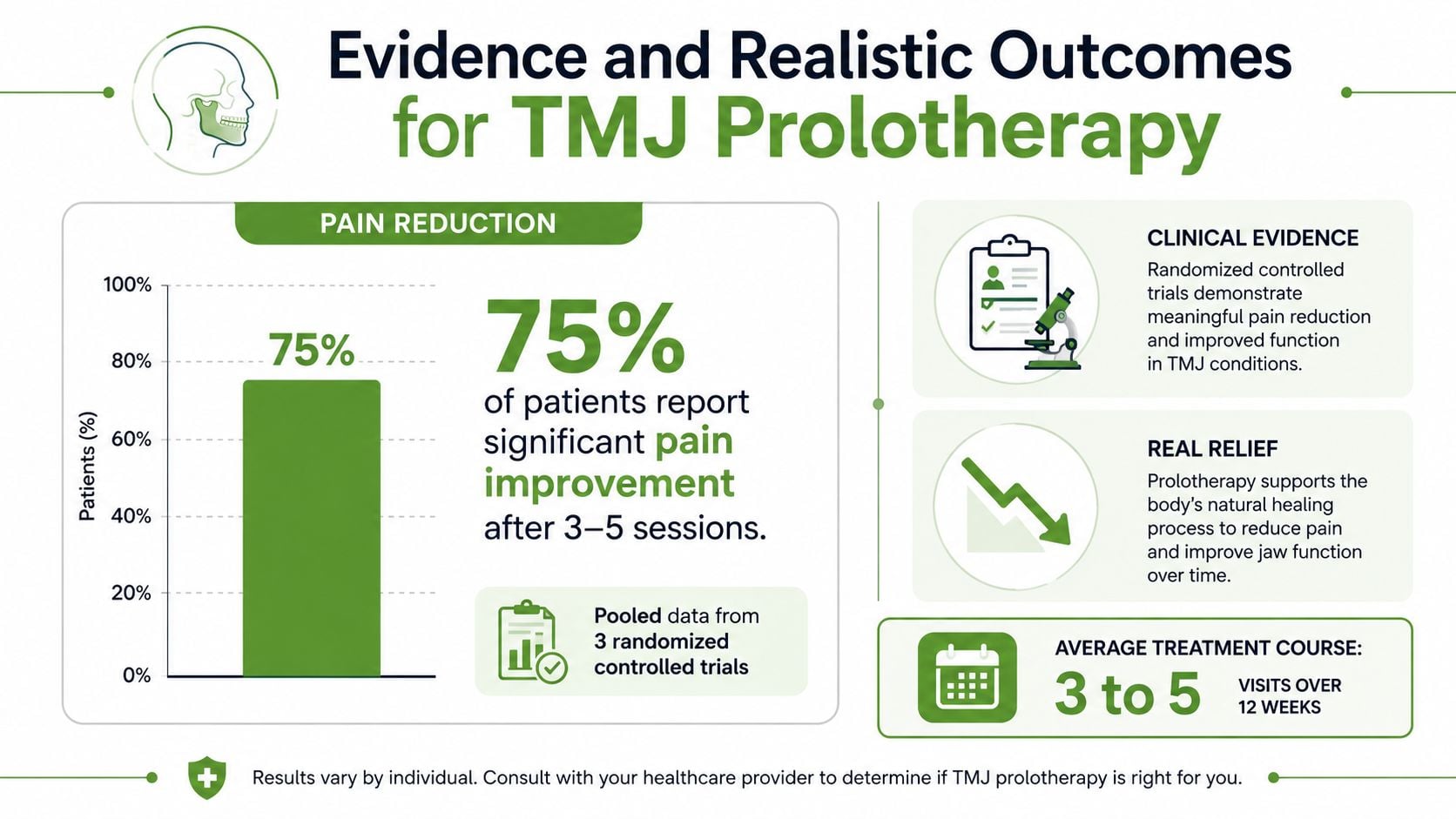
Many articles get lost in the chemistry and miss the issue. The point isn't just the concentration of dextrose, it's whether the injector reaches the posterior disc attachment, anterior disc attachment, and the superior and inferior lateral capsule with the right volume and technique. A recent review of TMJ prolotherapy literature reports that most studies use 3 to 5 sessions spaced 4 to 6 weeks apart, with small volumes per site (0.5–2 mL) distributed across peri-articular structures rather than dumped into one spot (TMJ prolotherapy literature review).
That serial schedule matters because collagen remodeling takes time. You're not trying to get instant numbness, you're trying to create a slow strengthening response that changes how the joint holds up under daily load.
What's actually in the syringe
Published TMJ protocols use a fairly narrow range of hypertonic dextrose solutions. One review notes 10% to 50% dextrose, with some clinical protocols using 30% dextrose in 3 monthly sessions, while others describe 12% to 12.5% dextrose mixtures with local anesthetic and sterile water for a final injectate of about 3 mL per site/session (scielo review of TMJ prolotherapy protocols). The technical logic is steady tissue stimulation without excessive trauma.
A specialist will often use a 30G needle in this region because the TMJ area is richly innervated and the goal is to keep the procedure as minimally traumatic as possible. That's part of why patient comfort and precise anatomy matter as much as the solution itself.
If you want to see how this fits into a broader office-based regenerative approach, the treatment philosophy described at Pain and Sleep Therapy Center's regenerative medicine for joint pain shows how a clinician can think in terms of tissue support, not just symptom suppression.
Who Is a Good Candidate for Prolotherapy TMJ Treatment
The people most likely to benefit usually do not have a brand-new jaw injury. They are often the ones who have been adapting for a long time, living with jaw soreness, clicking, stiffness, and flare-ups that appear after chewing, clenching, or a poor night's sleep. Prolotherapy tends to make the most sense when the joint seems mechanically overloaded, especially if an oral appliance and basic conservative care have helped some but still have not solved the problem.
Patterns that often fit
Adults with chronic TMJ pain, capsular tenderness, or signs that the joint is too lax or overloaded are often the first patients a clinician considers. That includes people who want to avoid surgery or long-term medication, and people whose pain seems more joint-based than purely muscle-based. A systematic review and meta-analysis supports that framing, since the clearest benefit in pooled randomized data has been pain reduction rather than every possible function measure.
Who usually needs a different plan
Some situations call for another first step. Active joint infection, a major inflammatory flare that is not controlled, or unmanaged sleep-disordered breathing can change the treatment equation. Expecting one session to fix a long-standing TMJ problem does too. This treatment is usually one part of a staged plan, not a one-visit answer.
The right candidate is not just someone with pain, it is someone whose symptoms, exam findings, and goals line up with a tissue-stabilizing approach.
A TMJ specialist will usually look at the symptom story, palpate the joint and muscles, review range of motion, and decide whether imaging is needed before recommending injections. For patients comparing options, find TMJ relief options can help place prolotherapy alongside conservative care, regenerative procedures, and other treatment paths.
What Happens During a Prolotherapy Appointment
A TMJ prolotherapy visit usually starts with listening and examining, not with a needle. The clinician asks where the pain sits, what sets it off, whether the joint clicks or locks, and how wide the jaw opens. Then they palpate the TMJ capsule and the chewing muscles around it, check side-to-side movement, and decide whether the joint looks like a reasonable target for a staged injection plan.
The injection visit itself
If prolotherapy is a fit, the skin is cleaned and the clinician uses a small needle, often a 30G needle, to limit tissue trauma in a tightly packed area. The injectate is placed in small amounts into the structures that need support, usually the disc attachments and the lateral capsule, rather than into one central spot. Published protocols describe posterior disc attachment (~2 mL), anterior disc attachment (~1 mL), and the superior/inferior lateral capsule (~0.5 mL each) under temporo-auricular nerve block, which matches the biomechanical goal of stabilizing the joint rather than numbing it.
Patients often want to know what the appointment feels like afterward. A dull ache for a few days is common because the treatment is meant to start a repair response, not work like a local anesthetic. That soreness usually settles as the tissue calms down, especially when the clinician has matched the dose and the target to the joint's anatomy.
What makes the visit successful
Accuracy matters more than bravado. If the needle misses the right capsular or ligamentous structures, the body gets the wrong signal, and the result can be underwhelming. In one clinical report, the first-needle success rate was 91.3% using a solution of 0.75 ml of 12% dextrose, 0.75 ml sterile water, and 1.5 ml of 2% lidocaine, which reinforces a point patients often miss, the protocol details and the anatomic target are part of the treatment, not side notes.
TMJ prolotherapy also works best when it is treated as one piece of a broader plan. A joint that is irritated by bite forces, clenching, airway strain, or disc instability may need more than injections alone. That is why a careful exam matters before the first visit and why follow-up planning matters after it.
Evidence and Realistic Outcomes for TMJ Prolotherapy
A patient sitting across the exam-room table usually wants the same answer, will this help the pain, and will it change the joint itself. The literature points most clearly to pain relief. A 2024 systematic review and meta-analysis found that studies comparing prolotherapy with placebo showed a significant drop in pain, and another review reported better results than placebo at follow-up, with low variation across trials.
What the numbers mean in real life
Those pooled findings support prolotherapy as a pain-focused treatment. They do not mean every patient improves the same way, and they do not mean every mechanical symptom disappears. The same review found no clear difference in jaw deviation at 1 year, which is a useful reminder that the treatment's most reliable benefit is pain reduction, while structural change is less predictable.
Clinical reports give a similar picture. In one clinical TMJ study, pain scores fell after treatment, mouth opening improved, and several patients with joint sounds had those sounds resolve. Jaw displacement and deflection also decreased. Those findings suggest that prolotherapy can help a joint move more comfortably, especially when the problem is load and instability rather than a fixed structural tear.
The practical lesson is straightforward. Prolotherapy often works best as part of a broader TMJ plan, not as a stand-alone promise. If clenching, bite forces, posture, sleep disruption, or airway strain keep loading the joint, the injection may help but then stall when the same stress returns.
Patients who are comparing options often do better when they first find TMJ relief options that match the actual cause of their symptoms, then decide whether prolotherapy belongs in that plan. For some people, that plan may also include oral appliances, PRF, or airway-focused care. For others, it may mean checking whether the joint needs a different orthobiologic approach such as orthobiologic therapy, especially when instability or repeated irritation keeps the pain cycle going.
Prolotherapy Compared to PRF, Steroid Injections, and Surgery
A patient sitting across the exam-room table usually wants the same four answers, what the treatment is trying to do, how long relief may last, how much downtime follows, and whether the procedure matches the underlying source of the pain. Prolotherapy is best understood as a stabilizing regenerative option. It aims to help irritated ligaments and capsule tissue respond and tighten over time. PRF works through a more biologic pathway, steroid injections focus on calming inflammation, and surgery is reserved for structural problems that have not improved with less invasive care.
Comparing TMJ Injection and Surgical Options
| Option | Mechanism | Typical Use | Downtime | Best Fit |
|---|---|---|---|---|
| Prolotherapy | Dextrose-triggered healing response | Chronic pain with joint laxity or overload | Mild short-term soreness | Patients who want a serial regenerative approach |
| PRF | Autologous fibrin and growth-factor support | When a clinician wants a richer biologic injectable | Usually short, depends on protocol | Cases where a regenerative option beyond dextrose is being considered |
| Steroid injection | Anti-inflammatory effect | Short-term flare control | Often brief, but tissue effects are not the goal | Inflammatory pain needing quick symptom relief |
| Surgery | Structural correction | Severe pathology or failed conservative care | Longest recovery burden | Clear anatomic disease that needs operative repair |
If you are comparing TMJ procedures inside a broader dental or medical workup, the option set described in this TMJ relief guide is a useful reference for seeing where each intervention tends to fit.
PRF also matters in this discussion because some clinics, including orthobiologic therapy, use it when they want a regenerative path and dextrose alone does not fully address the problem. That does not make prolotherapy obsolete. It means the plan should match the tissue problem, the patient's tolerance for serial care, and the clinician's ability to place the injection accurately across the disc attachments and capsule.
For TMJ patients, that last point often decides the outcome more than the brand name of the injection. A well-targeted, repeated prolotherapy series can help a joint that feels loose or overloaded, while the same joint may need a different approach if the main issue is active inflammation, disc mechanics, or a larger structural problem.
Recovery, Cost, Insurance, and Common Questions
After each session, the most common pattern is a few days of soreness, then a gradual easing as the joint settles. Patients are asked to avoid heavy chewing, gum, and other high-jaw-load activities early on so the tissue can respond without getting slammed back into overload. The benefit often builds over a treatment course, not in a single afternoon.
Practical recovery and payment questions
Insurance coverage is often limited for regenerative injections, because many plans treat them as elective or investigational. That means out-of-pocket payment is common, and some clinics offer payment plans to make the series more manageable. For a general sense of how practices discuss pricing, this prolotherapy cost guide is a useful place to compare how clinics frame the financial side of treatment.
Can I keep wearing my night guard? Often, yes, if your clinician thinks it still helps control clenching forces.
Can prolotherapy be repeated? Yes, serial treatment is part of the model, which is why most protocols use more than one session.
How do I choose a specialist? Look for someone who understands TMJ anatomy, asks about sleep and airway factors, and can explain where they plan to inject and why.
Will it replace every other TMJ treatment? Usually not. It's commonly one part of a broader plan that may also include appliance therapy, myofunctional work, or airway-focused care.
If you're considering prolotherapy TMJ treatment, Pain and Sleep Therapy Center can help evaluate whether your pain looks like a joint-stabilization problem, a sleep-related loading problem, or something that needs a different path. Visit Pain and Sleep Therapy Center to review your options and schedule a consultation with a team that treats TMJ pain and airway-related contributors together.