

You can be fine at breakfast and still notice something is off by dinner. Maybe chewing feels slower, a yawn pulls at your jaw, brushing your teeth takes longer than it should, or you're waking up tired even after a full night in bed. Those small changes are often the first clue that daily function is slipping, and clinicians use the activities of daily living definition to describe that shift in plain, practical terms.
The idea matters because it gives patients and providers a shared language for what is changing. Instead of saying only “I hurt” or “I'm tired,” it helps identify whether the problem is affecting basic self-care, more complex independence, or both. That distinction shapes the next step, whether the concern is pain, sleep, jaw function, or a broader health issue.
Why Everyday Tasks Suddenly Feel Hard
A patient might come in and say, “I'm not sleeping well,” but the underlying story shows up elsewhere. They're skipping tough foods because chewing hurts, propping their jaw with a hand to get through a meeting, or missing the energy to shower before work. Those are not random complaints, they're signs that routine function is changing.
When daily life becomes the symptom
Clinicians use activities of daily living, or ADLs, to sort out whether a person can still handle basic self-care tasks without help. The framework exists because decline is not always obvious from a quick conversation, especially when symptoms build slowly. A person may still “seem fine” while losing ease with the things that keep life moving.
That's why ADLs are useful in pain, sleep, and jaw-related care. They turn vague discomfort into something measurable and easier to act on. If brushing, eating, sleeping, or moving through the morning is getting harder, that functional change deserves attention, not just reassurance.
Practical rule: if a symptom changes how a person eats, sleeps, dresses, or gets through the morning, it belongs in the functional history, not just the symptom list.
For people dealing with fatigue that lingers, it can also help to look at broader sleep and energy patterns, including a structured check of sleep quality like this sleep quality assessment resource. That kind of context helps separate “I'm busy” from “my body isn't recovering well.”
Why clinicians reach for this framework
The point is not to label every inconvenience as disability. The point is to recognize when a basic task is becoming effortful enough to change treatment. In a jaw pain case, that might mean the patient is avoiding harder foods. In a sleep case, it might mean the person is too foggy to concentrate after poor rest.
ADLs give that pattern a name. Once you name it, you can plan around it.
The Core Definition of Activities of Daily Living
The modern clinical activities of daily living definition goes back to Sidney Katz in 1950, a framework that has lasted because it captures the basics of human independence in a simple way (NCBI Bookshelf). Katz's original model centers on six basic self-care tasks, eating, bathing, dressing, toileting, continence, and transferring. These are the everyday actions generally done without assistance.
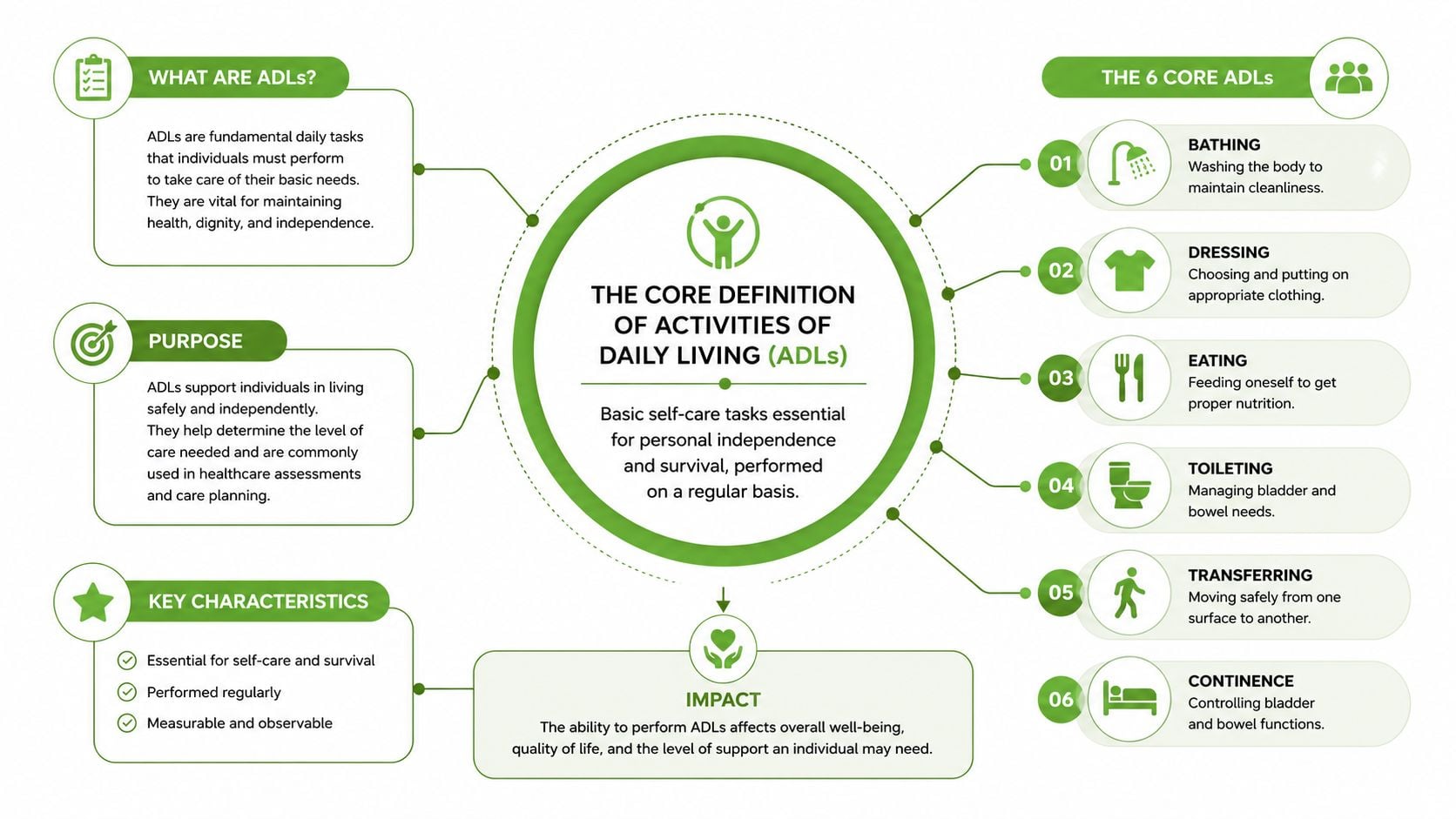
Basic tasks versus more complex tasks
A simple way to think about it is this, ADLs are the foundation, while activities of daily living, or IADLs, are the higher levels built on top of that foundation. IADLs include tasks such as managing finances, transportation, medications, and meal preparation, which are needed for independent community living but are not basic self-care (CMS framework). If the foundation is shaky, the upper floors become harder to use.
That difference matters in real life. Someone may still bathe and dress without help but struggle to organize appointments, get to work, or keep track of medications. That person may not look dependent in the usual sense, but they are already losing independence in ways that affect safety and treatment adherence.
What “difficulty” means in practice
Federal and survey frameworks often define limitation as difficulty doing the task by oneself and without special equipment, or not doing it at all because of health problems (CMS framework). That is an important threshold because it includes partial loss of function, not just complete inability.
If you want a care-oriented explanation of why that distinction matters in home settings, A Better Solution in Home Care offers a useful plain-language overview of how ADLs are viewed when families are considering support. The key idea is simple, if a task is taking more effort, more time, or more work to complete safely, it deserves to be documented as a functional issue.
Common ADL and IADL Assessment Tools Compared
Different settings use different tools because they answer different questions. A rehab team wants a functional snapshot, a primary care clinician may want a quick screen, and a caregiver needs language that explains what has changed without overcomplicating the picture. The tools below are common because they make those conversations more concrete.
How the major scales differ
The Katz Index of Independence in ADLs focuses on basic self-care. The Barthel Index is often used in rehabilitation settings to track everyday physical function. The Lawton IADL scale looks at more complex independence, and broader functional independence measures are used when a team needs a fuller picture of recovery and support needs.
Clinical takeaway: no single scale answers every question. The right tool depends on whether you're screening for basic self-care, tracking rehab progress, or looking for early signs that community independence is slipping.
| Tool | What It Measures | Best Used In | Scoring Focus |
|---|---|---|---|
| Katz Index | Basic ADLs such as eating, bathing, dressing, toileting, continence, transferring | Geriatrics, home care, quick functional screening | Independence in core self-care tasks |
| Barthel Index | Functional ability in daily physical tasks | Rehabilitation and recovery tracking | Level of assistance needed for practical mobility and self-care |
| Lawton IADL Scale | Higher-level independence such as shopping, meals, medications, and transportation | Community living assessment, caregiver planning | Ability to manage complex daily life tasks |
| Functional independence measures | Broader physical and cognitive function in structured care settings | Inpatient rehab and interdisciplinary planning | Overall assistance and support needs |
How to read the result
A low score does not always mean a person is unsafe to live alone. Sometimes it means the person needs targeted help with one part of daily life, while other skills remain intact. That is exactly why the score has to be read alongside the story behind it.
For readers who want a general primer on what clinicians mean by functional assessment, what is a functional capacity assessment is a helpful complement. It uses a similar mindset, measure what the person can do, not just what diagnosis they carry.
In sleep-related visits, this distinction is especially useful. A person might still handle self-care but be too exhausted to manage work, driving, or concentration, which is why a structured sleep screen such as this sleep quality assessment can reveal impairment that a casual question would miss.
ADLs in Orofacial, Sleep, and TMJ Patients
A patient with jaw pain may not say, “My ADLs are impaired.” They're more likely to say dinner takes forever, the first bite hurts, or they avoid chewy food because it sets off pain. That's ADL language in disguise, and it matters because it changes how you interpret the complaint.
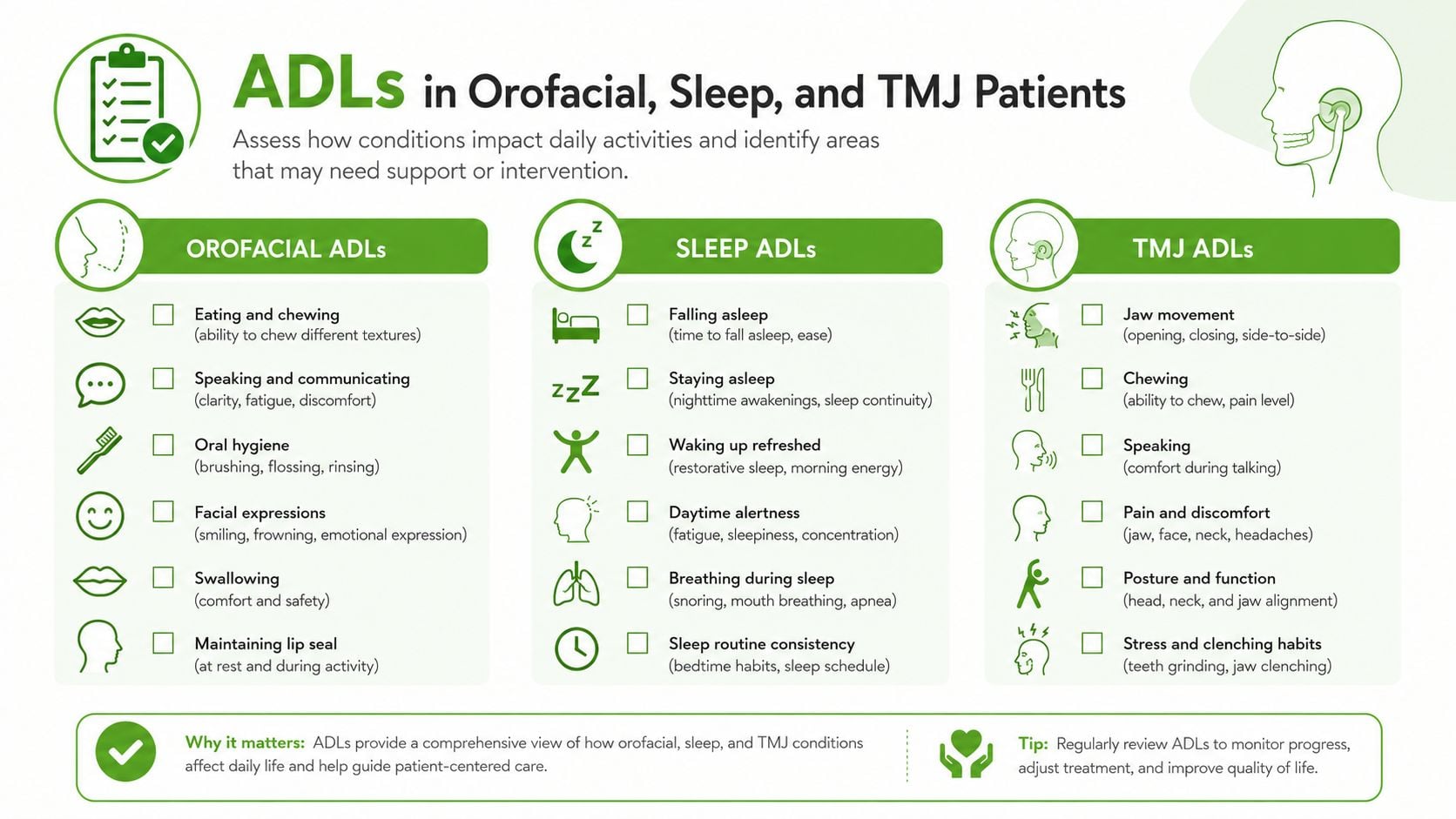
Chewing, speaking, and brushing are functional clues
Chewing is not just about nutrition. It reflects how well the jaw, teeth, muscles, and airway are working together. When a person is avoiding hard foods, speaking less because the jaw tires, or struggling through oral hygiene, those details tell you the body is compensating.
Sleep problems show up the same way. A person who snores loudly, wakes unrefreshed, or starts the day with a dry mouth may not connect those symptoms to daytime function, but the link shows up in attention, mood, and routine tasks. A child with mouth breathing or poor sleep may look restless at school or lose focus during normal activities, which is why sleep and oral function often belong in the same conversation.
Small changes can still be meaningful
A morning headache that makes bathing feel like a chore is different from a headache that comes and goes but does not alter daily life. Jaw stiffness that turns breakfast into a struggle is different from a mild ache after long talking. Those are subtle differences, but they matter because treatment planning should match the level of functional loss, not just the pain score.
The language of ADLs helps patients describe what is changing without needing medical jargon. It also helps referring providers understand why a complaint that sounds “minor” may be affecting real-world function. For more background on facial pain patterns and related symptoms, what is orofacial pain is a useful companion topic.
How ADL Impairment Shapes Treatment Planning
Functional loss changes the order of decisions. If a patient cannot chew comfortably, a rigid appliance plan may not make sense before the pain and diet are stabilized. If poor sleep is causing daytime fog, the first priority may be airway and sleep evaluation before anyone expects better focus, mood, or adherence.
Sequencing care around function
Treatment works better when it matches what the patient can tolerate. A person with TMJ pain who can only manage soft foods may need diet modification and symptom control first. A person whose sleep is so fragmented that they can't concentrate may need sleep-focused evaluation before detailed behavioral plans will stick.
ADL information becomes a triage tool. It helps answer who should lead, what should happen first, and what outcome matters most. If the main barrier is eating, then restoring comfortable chewing rises to the top. If the barrier is getting through the day, sleep quality may be the more urgent target.
Practical rule: treat the function that is most limiting first, because the rest of the care plan often becomes easier once daily life is more stable.
When to think beyond the local complaint
Sudden functional decline deserves more caution than gradual, familiar symptoms. A patient who suddenly cannot tolerate meals, sleep, or routine hygiene may need a broader medical review, especially if the change is out of proportion to the usual pattern. That is why functional screening is part of good referral thinking, not just paperwork.
In airway-related or jaw-related care, the goal is not only symptom relief. It is to get the person back to the tasks that make ordinary life possible. If a treatment doesn't improve how the patient eats, sleeps, speaks, or gets through the day, the plan may need to be adjusted.
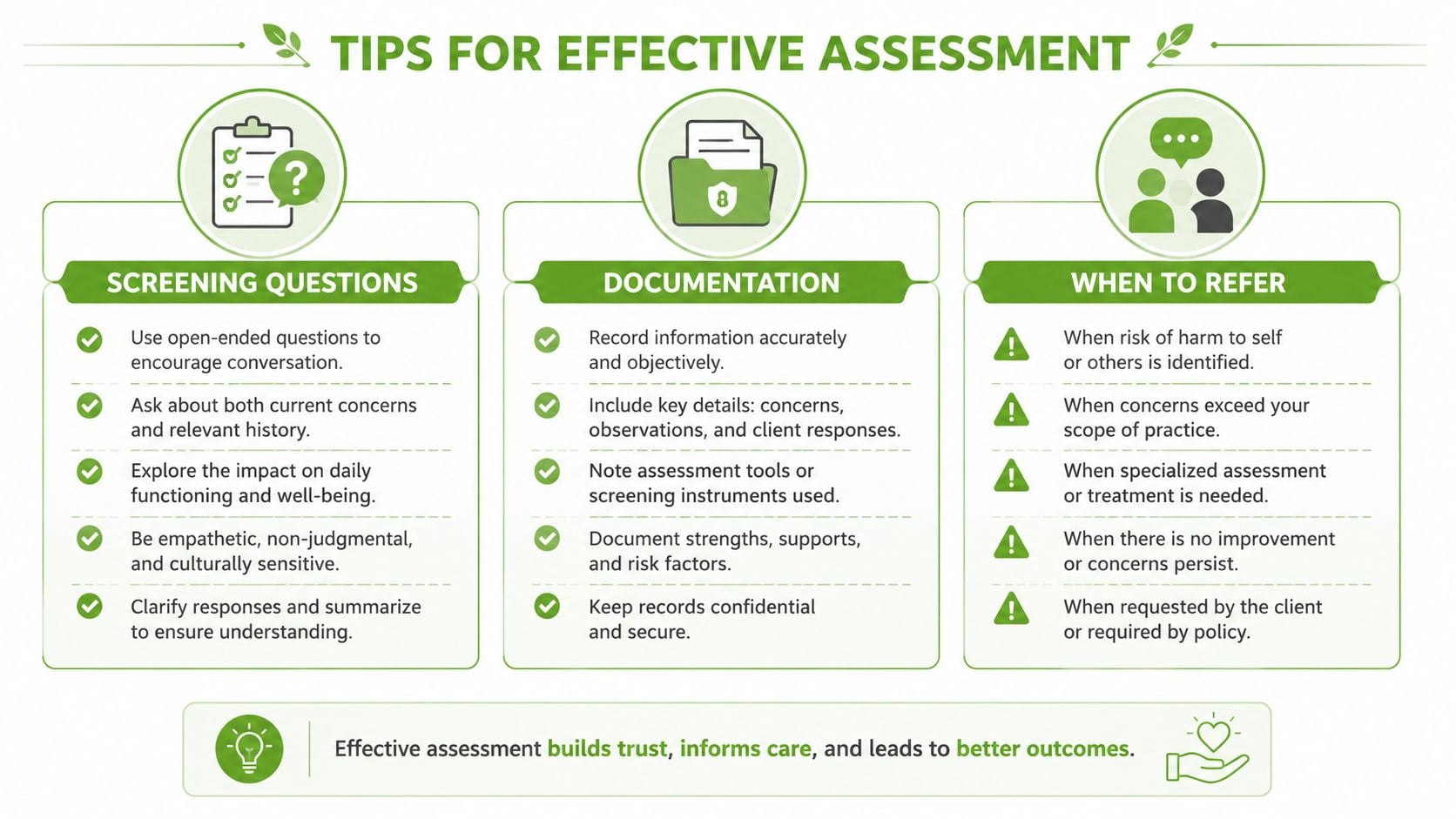
Screening Questions, Documentation, and When to Refer
The fastest way to use ADLs in practice is to ask short, direct questions. Patients answer more clearly when you keep the language concrete. Instead of “How bad is it?”, ask where daily life gets stuck.
Questions that open the right conversation
- Eating: “Are you avoiding certain foods because chewing hurts or feels tiring?”
- Oral care: “Is brushing or flossing harder because of jaw pain, fatigue, or limited opening?”
- Sleep: “Do you wake up tired, unrefreshed, or with a dry mouth more often than you used to?”
- Morning routine: “Are dressing, showering, or getting started in the morning taking more effort than before?”
- Focus and follow-through: “Has poor sleep or pain made it harder to concentrate, work, or keep up with medications?”
Use the answer to anchor your note in functional terms. A chart entry like “Patient reports difficulty chewing solid foods and disrupted sleep affecting daytime concentration” is more useful than a vague “pain continues.” It gives the next clinician a reason to think in ADL and IADL language right away.
When referral makes sense
Refer when the pattern is worsening, when symptoms are affecting multiple daily tasks, or when the complaint suggests airway compromise, neurological change, or pediatric feeding difficulty. Coordination often works best between dentists, ENT clinicians, neurologists, sleep physicians, and orofacial myofunctional therapists, depending on the pattern.
If you want a family-centered example of how support needs are translated into everyday care, practical caregiving tips can help frame what support looks like when daily tasks start taking more effort. The basic principle is the same in clinic and at home: notice what is harder now, then match help to the task that is failing.
Common Misconceptions About ADLs
One common mistake is assuming ADLs only matter for older adults. Age matters, but function matters more. A teenager with sleep-disordered breathing, an adult with TMJ pain, or a parent with crushing fatigue can all have ADL-related problems even if they are nowhere near the stereotypical “frail elder” picture.
Difficulty is not the same as dependence
People often think a task only counts if it cannot be done at all. That is too narrow. Federal-style definitions treat difficulty doing it alone and without special equipment as a meaningful limitation, even if the person still completes the task (CMS framework).
Assistive devices can preserve function, and that is a good thing. A device does not erase the problem, though, it shows the person needs a workaround to keep functioning. That distinction matters in care planning because it affects how you document need and how you think about independence.
IADL changes often appear first
A person usually notices trouble with complex tasks before basic self-care collapses. They miss appointments, forget medications, avoid driving, or stop cooking full meals long before bathing or toileting becomes impossible. That makes IADLs powerful early warning signs.
Watch for the quieter signs too. Avoiding chewy foods, needing more time to brush, or changing sleep positions to protect the jaw may not look dramatic, but they point to the same idea, the person is compensating. If those workarounds are becoming routine, the function is changing even if the diagnosis hasn't changed.
Putting ADLs to Work in Your Care
If you are a patient, bring one or two concrete examples to your next visit, not just a label like “pain” or “tired.” Say what has changed in eating, sleep, brushing, getting dressed, or getting through the morning, because that helps your clinician connect symptoms to function. If you are a clinician, add a few ADL and IADL questions to intake so you catch decline before it becomes a bigger problem.
The most useful care plans are the ones that restore daily life, not just reduce discomfort for a few hours. That means tracking whether the patient can chew more comfortably, sleep more steadily, and keep up with the tasks that make home and work life possible. It also means knowing when the pattern is bigger than one specialty can solve alone.
Pain and Sleep Therapy Center focuses on TMJ disorders, facial pain, and sleep-related breathing issues with root-cause care that looks at function, not just symptoms. If you want care that takes chewing, sleep, breathing, and daily performance seriously, visit Pain and Sleep Therapy Center to learn how their team evaluates the problem and helps patients move back toward comfortable, practical daily living.