
Most advice about activated charcoal bloating treats bloating like one simple problem. It isn't. People use the word bloating to mean excess gas, abdominal pressure, visible distension, fullness, or a tight belly after eating, and those are not the same thing.
That distinction matters because activated charcoal has a narrow evidence base. The best historical signal is for post-meal flatulence, not for every type of abdominal swelling or discomfort, and the research has been mixed from the start. A treatment can be useful without being universal, and that's exactly the case here.

Why Activated Charcoal Is Not the Bloating Cure You Think It Is
The most common mistake is treating activated charcoal like a broad fix for any stomach swelling. That's too vague to be useful, because the symptom people call bloating can come from gas, constipation, IBS, food intolerance, or simple abdominal distension that has little to do with gas at all. If the cause is wrong, the remedy usually disappoints.
The evidence also pushes against the “works for everything” idea. A foundational 1986 trial in the American Journal of Gastroenterology found that activated charcoal significantly reduced breath hydrogen versus placebo, and it also reduced symptoms of bloating and abdominal cramps attributable to gaseousness. Breath hydrogen matters because it's an objective marker of intestinal gas production, so that trial gave one of the earliest measurable hints that charcoal might help some gas-related symptoms rather than just subjective discomfort (PubMed record).
But that same historical picture already contained a warning sign. Later research was not uniformly positive, and a separate in vivo/in vitro study concluded that activated charcoal did not influence gas formation. That mixed pattern is why charcoal should be viewed as a situational tool, not a blanket fix.
The symptom you're actually trying to treat matters
If your main complaint is excess gas after meals, charcoal has a plausible role. If what you notice is a tight, swollen abdomen that persists all day, the problem may be constipation, IBS, or another cause that charcoal doesn't address well. Broad wellness marketing tends to blur those differences, which is why people try charcoal, get little relief, and assume the product failed.
Practical rule: If the symptom doesn't change after meals, don't assume gas is the main driver.
That's the sharper way to think about activated charcoal bloating. The rest of the evidence only makes sense once you separate gas-predominant bloating from distension and other causes.
How Activated Charcoal Works in the Gut
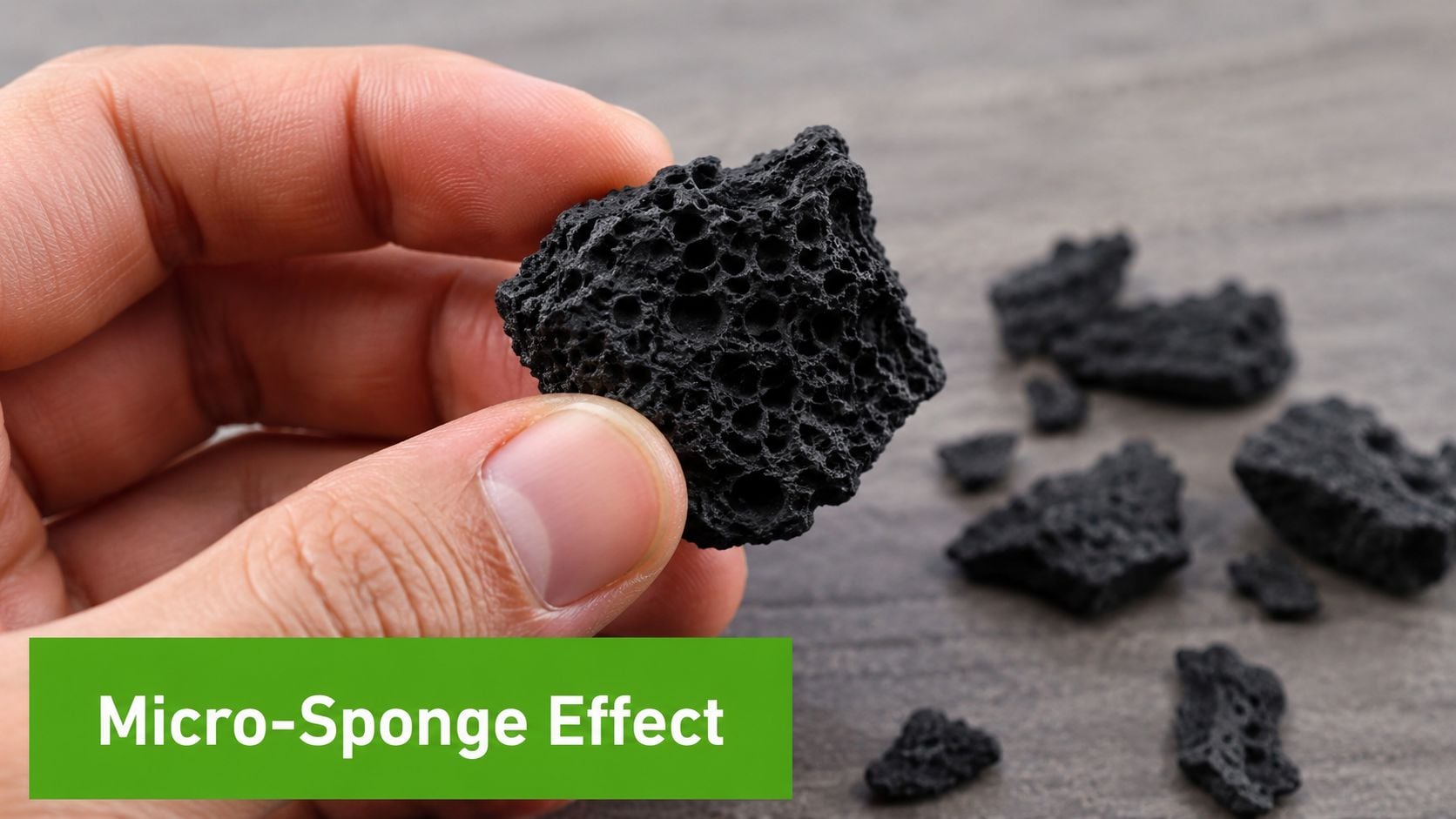
Activated charcoal is carbon that has been processed until it becomes extremely porous. Those pores create a very large surface area, which allows the charcoal adsorb certain molecules in the digestive tract. Adsorption means molecules stick to the surface. It is not the same as absorption, where a substance moves into the body's tissues or bloodstream.
The useful part is selective, not universal. Activated charcoal can bind some gas-related compounds, so it may reduce the material that contributes to post-meal flatulence. It does not remove every cause of bloating, and it does not change constipation, gut hypersensitivity, or abdominal distension in a broad sense.
That distinction matters because people often use the word bloating to describe different sensations. A person with gas-predominant symptoms may feel relief if charcoal binds compounds formed around a meal. Someone whose abdomen stays tight and visibly distended all day may be dealing with a different process entirely. In clinical terms, the symptom pattern matters more than the label on the bottle.
A direct analogy works better than hype here. Activated charcoal functions like a tiny filter inside the gut, catching some gas-related molecules before they accumulate enough to cause discomfort. That is narrower than many wellness claims suggest, and it is why the European claim is limited to meal-related flatulence rather than the broader symptom people usually mean by activated charcoal bloating (EFSA-linked summary).
Why timing matters more than marketing copy
The effect depends on charcoal being present when the relevant compounds are in the gut. If it is taken too late, the meal has already moved beyond the part of digestion where binding matters most. The timing in the EFSA claim reflects that logic, since it specifies use shortly before and after a meal, not at some arbitrary point later in the day (EFSA-linked summary).
People often buy charcoal capsules because the packaging makes the idea sound straightforward. The biology is less forgiving. A capsule can only bind what it encounters, so a meal-linked strategy makes more sense than treating it as a general digestive reset.
If you are comparing products, check the label closely and prefer a clearly stated charcoal dose instead of a vague blend. A straightforward option like gluten-free charcoal capsules can be easier to evaluate than a multi-ingredient formula, because you know exactly what you are testing.
Key point: Charcoal does not act like a drug that fixes the gut from the inside out. It works more like a binder that has to be in the right place at the right time.
That makes it a timing-sensitive option, not a broad treatment for all forms of bloating. If the symptom is persistent, constipation-linked, or tied to gut sensitivity and stress, this mechanism will not solve much.
What the Clinical Evidence Actually Shows
The evidence for activated charcoal bloating is real, but it is uneven, and the details matter. The strongest early signal came from the 1986 double-blind trial, which found significant reductions in breath hydrogen compared with placebo, along with significant reductions in bloating and abdominal cramps tied to gaseousness (PubMed record). That finding supports a narrow possibility, charcoal may help some people whose symptoms are driven by fermentation and gas production after meals.
The regulatory picture moved in the same narrow direction. A European Food Safety Authority health claim allows activated charcoal to “contributes to reducing excessive flatulence after eating”, with a specific use pattern of at least 1 gram shortly before a meal and another 1 gram after eating (EFSA-linked summary). That approval is about post-meal flatulence, not the wider set of complaints people often call bloating. Gas-predominant bloating, visible abdominal distension, IBS-related bloating, and constipation-driven bloating are different problems, even if they can feel similar from the outside.
Why the mixed studies matter
The negative findings matter just as much. A controlled in vivo and in vitro study using 4 g, or 16 capsules, found no significant difference in breath hydrogen or flatus frequency compared with placebo and concluded that activated charcoal did not influence gas formation (PubMed record). That is the kind of result that keeps the evidence from becoming oversold. One trial suggests a benefit signal, another does not, so the honest reading is that charcoal does not produce a dependable effect across everyone who feels bloated.
A combined-product trial adds another layer of caution. In that study, simethicone plus charcoal plus magnesium oxide improved overall dyspepsia symptom intensity, but that does not show charcoal alone was responsible. Mixed formulas can be useful in practice, yet they also make it harder to isolate which ingredient, if any, did the work.
So the best interpretation is limited. Charcoal may help a subset of people with fermentation-related gas after meals, but the effect is inconsistent across studies, and it is not reliable for every symptom people label as bloating. Cleveland Clinic's clinical summaries describe the findings as mixed, which matches the research pattern rather than exaggerating it.
Best reading of the data: charcoal is a narrow, situational option, not a universal digestive fix.
That is why the better question is not whether charcoal “works for bloating” in general. It is what kind of bloating is present. If the main issue is non-gas distension, constipation, IBS, or food intolerance, charcoal is usually the wrong tool.
How to Use Activated Charcoal If You Choose To
If you decide to test charcoal, treat it like a focused experiment rather than a daily wellness habit. The clearest dose pattern comes from the EFSA claim, 1 gram shortly before a meal and 1 gram after eating. That pattern is meant for excessive flatulence after eating, so it makes most sense when your symptoms reliably follow a specific meal.
Start with the meal that most predictably triggers symptoms. Use the same timing each time, because timing is part of the intervention, not a side detail. If your bloating happens randomly or all day, charcoal is less likely to tell you anything useful.
Make the trial easy to interpret
Keep the first attempt simple. A short symptom log can help you separate coincidence from actual benefit.
- Write down the trigger meal: Note what you ate, especially if fermentation-heavy foods are involved.
- Track the timing: Record whether charcoal was taken before the meal, after the meal, or both.
- Rate the response plainly: Did gas feel lower, stay the same, or get worse?
- Stop if nothing changes: If there's no clear pattern after a reasonable trial, the product probably isn't your match.
Formulation also matters. Capsules are easier to standardize, while powders can be messier and harder to dose accurately. Chewables may be convenient, but they can be harder to separate from other ingredients, which makes it harder to know what you're testing.
One practical caution is to keep charcoal away from other oral medications and supplements. The timing buffer matters because charcoal can interfere with what you take by mouth, which is why people often separate it from prescriptions rather than stacking it with breakfast.
Side Effects and Drug Interactions You Should Know
Charcoal gets marketed as gentle, but it still has real downsides. The most common issue is constipation, along with dark stools, which can alarm people who aren't expecting it. That doesn't mean everyone will get side effects, but it does mean charcoal isn't risk-free just because it's sold over the counter.
The bigger issue is interference with absorption. Chronic or poorly timed use can reduce the absorption of prescription medications, vitamins, and nutrients. The safest general rule is to separate charcoal from other oral medications by at least two hours. That timing doesn't remove every risk, but it lowers the chance that charcoal will bind something you need to absorb.
Medications and situations that deserve caution
Some oral drugs are particularly sensitive to missed absorption, including thyroid medications, certain antidepressants, and birth control pills. Drugs with narrow therapeutic windows deserve caution too, because small changes in absorption can matter clinically. If you take several daily medications, charcoal needs a deliberate schedule, not improvisation.
A few groups should avoid casual self-treatment altogether. Charcoal shouldn't be used during pregnancy, in children, or in anyone with a suspected gastrointestinal obstruction without medical supervision. If you're already dealing with slowed bowel movements, adding charcoal can make constipation worse.
A more detailed discussion of how charcoal can interfere with nutrient handling is available in this overview of absorption of vitamins, which is worth reviewing if you take supplements regularly.
Safety rule: If your medication schedule is complicated, charcoal is usually a bad experiment to run casually.
That doesn't mean no one should ever use it. It means safety has to come first, especially if you're trying to self-manage a symptom that could have multiple causes.
Smarter Alternatives for Different Kinds of Bloating
The first step is matching the remedy to the symptom pattern, because bloating is not one thing. A person with trapped gas after meals is dealing with a different problem than someone whose abdomen feels stretched and tight from constipation, or someone whose discomfort fits an IBS flare. Activated charcoal only has a narrow role in the first group, which is why it so often disappoints people who hoped it would solve every kind of bloating.
If the main problem is gas bubble pressure, simethicone is often a better fit because it helps break up gas bubbles. If the bloating sits inside an IBS pattern, peppermint oil may be more relevant because it targets abdominal tension and cramping instead of gas binding. The science points in different directions depending on the cause, so the remedy should follow the pattern, not the label on the bottle.
Food intolerance works the same way. Lactose-related symptoms need a different approach than meal-related flatulence, and digestive enzymes can be a better match when the trigger is specific. For recurring fermentation-driven symptoms, a structured diet approach usually makes more sense than a binder taken after the fact. Simple comfort measures can still help day to day, including herbal teas for bloating relief, but they do not replace a diagnosis when symptoms keep coming back.
Matching the remedy to the symptom
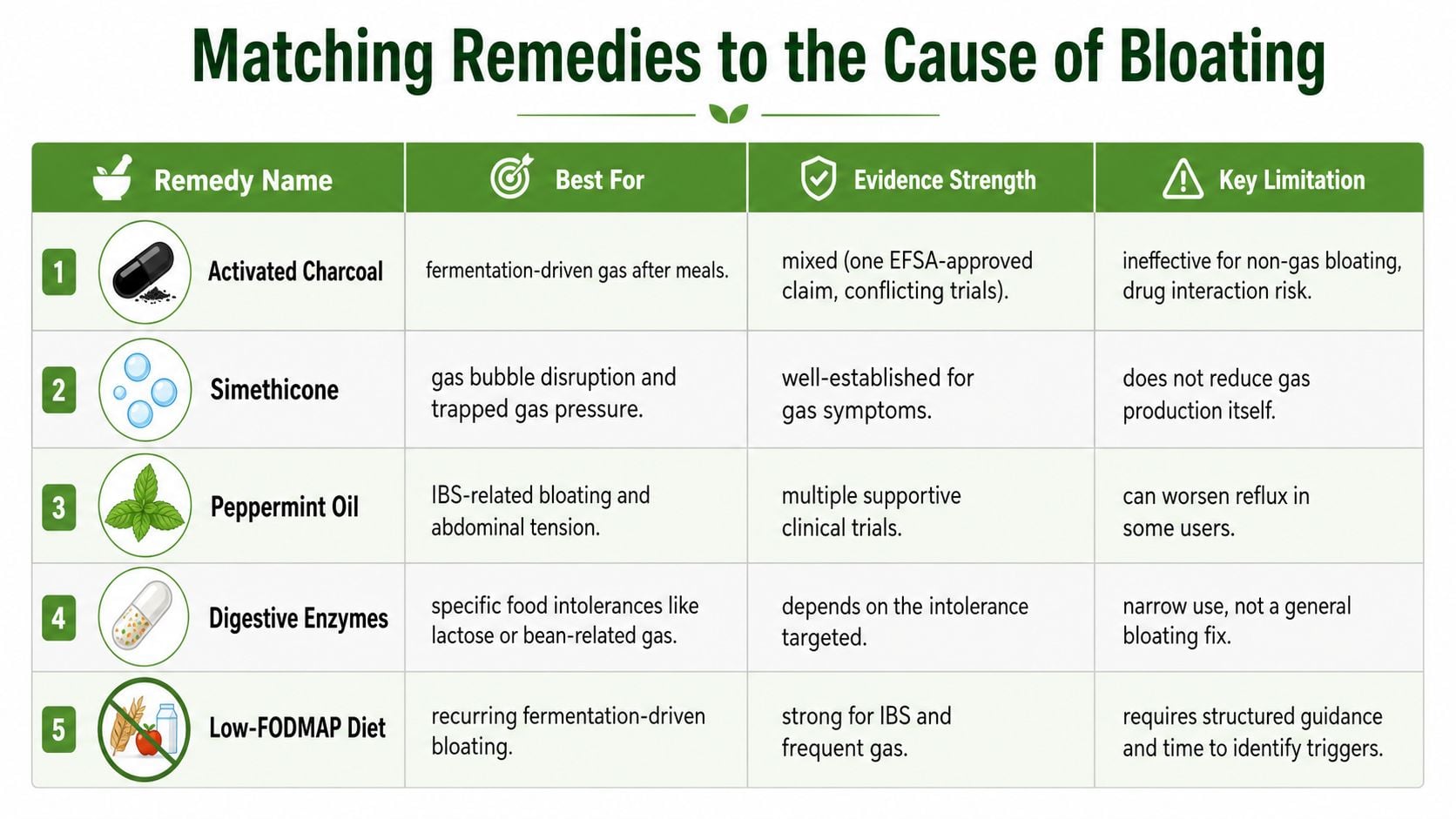
| Remedy | Best For | Evidence Strength | Key Limitation |
|---|---|---|---|
| Activated Charcoal | Fermentation-driven gas after meals | Mixed, with one narrow EU health claim and conflicting trials | Not reliable for non-gas bloating, interaction risk |
| Simethicone | Gas bubble disruption and trapped gas pressure | Well-established for gas symptoms | Doesn't reduce gas production itself |
| Peppermint Oil | IBS-related bloating and abdominal tension | Multiple supportive clinical trials | Can worsen reflux in some users |
| Digestive Enzymes | Specific food intolerances like lactose or bean-related gas | Depends on the intolerance targeted | Narrow use, not a general fix |
| Low-FODMAP Diet | Recurring fermentation-driven bloating | Strong for IBS and frequent gas | Needs structured guidance and time to identify triggers |
The table helps because many people reach for charcoal when they need a different tool. Constipation-driven bloating will not improve just because gas is present. Reflux-related symptoms can also change the choice of remedy, since peppermint oil may worsen upper digestive discomfort. If your symptoms are tied to food choices, a diet strategy may do more than a binder ever will.
A broader overview of natural bloating solutions from Maximum Health can help you compare comfort-focused options, but the main point stays the same, match the remedy to the symptom pattern. If reflux wakes you at night or you get choking sensations during sleep, review this guide on acid reflux choking while sleeping before assuming the problem is simple bloating. For right-sided abdominal pain or one-sided discomfort, don't keep guessing, because that pattern needs more caution than a supplement trial. Read more about ache on right side if pain is part of what you're feeling.
When to Skip Self-Treatment and See a Clinician
Persistent bloating isn't something to paper over forever. If symptoms last more than two weeks, come with unintentional weight loss, blood in the stool, severe pain, nighttime symptoms, or vomiting, a clinician should evaluate the cause. Those signs can point to problems that no over-the-counter binder, tea, or diet tweak should try to cover up.
Chronic bloating is usually approached by separating gas from distension, then looking for the pattern behind it. Depending on the history, a clinician may use bloodwork, breath testing, imaging, or structured food-elimination steps. That process sounds annoying when you just want the belly pressure to stop, but it's often faster than guessing through multiple supplements that don't fit the problem.
The hardest part for many people is accepting that bloating is a symptom, not a diagnosis. Activated charcoal can still have a place when the problem is clearly post-meal flatulence, but its role is narrow and its evidence is mixed. The sooner the cause is identified, the sooner the treatment becomes specific instead of random.
If bloating, jaw tension, reflux-like symptoms at night, or sleep disruption keep showing up together, Pain and Sleep Therapy Center can help you sort out what's driving the pattern instead of guessing at temporary fixes. Visit Pain and Sleep Therapy Center to explore thoughtful, root-cause care and see whether your symptoms need a more complete evaluation.