You're probably here because someone told you there's a “5th wisdom tooth” on your X-ray, or you saw an extra tooth sitting farther back than expected and immediately wondered whether that explains your jaw pain, headaches, or pressure in the back of your mouth. That reaction is normal. The term sounds alarming, and it often creates more confusion than clarity.
In practice, this usually comes down to one of two things. Either you have a standard wisdom tooth problem, or you have an extra molar, which is a different condition with different implications. That distinction matters, especially if you already deal with clenching, facial muscle tension, TMJ symptoms, poor sleep, or mouth breathing. A crowded posterior bite can affect more than the tooth itself. It can change how your jaw closes, how your muscles compensate, and how comfortable your face and jaw feel by day's end.
What Is a 5th Wisdom Tooth Really?
If a patient tells me they were diagnosed with a 5th wisdom tooth, the first thing I clarify is that this isn't a standard tooth name. Most adults have four wisdom teeth, also called third molars, one in each quadrant of the mouth. An additional tooth behind or near a wisdom tooth is generally considered a supernumerary tooth, which means an extra tooth beyond the normal set, not a true “fifth wisdom tooth,” as noted in this overview of wisdom teeth anatomy and eruption.
Why people use the term anyway
The phrase makes intuitive sense. You already know what a wisdom tooth is, and when there seems to be one more in the same area, “5th wisdom tooth” feels like the easiest label.
But that shortcut can blur two separate issues:
- A regular wisdom tooth issue involves a third molar that's erupting poorly, partially erupting, or staying impacted.
- An extra tooth issue involves a developmental anomaly. The mouth formed an additional tooth structure beyond the usual set.
Those are not the same diagnosis, and they aren't always managed the same way.
What the X-ray is actually showing
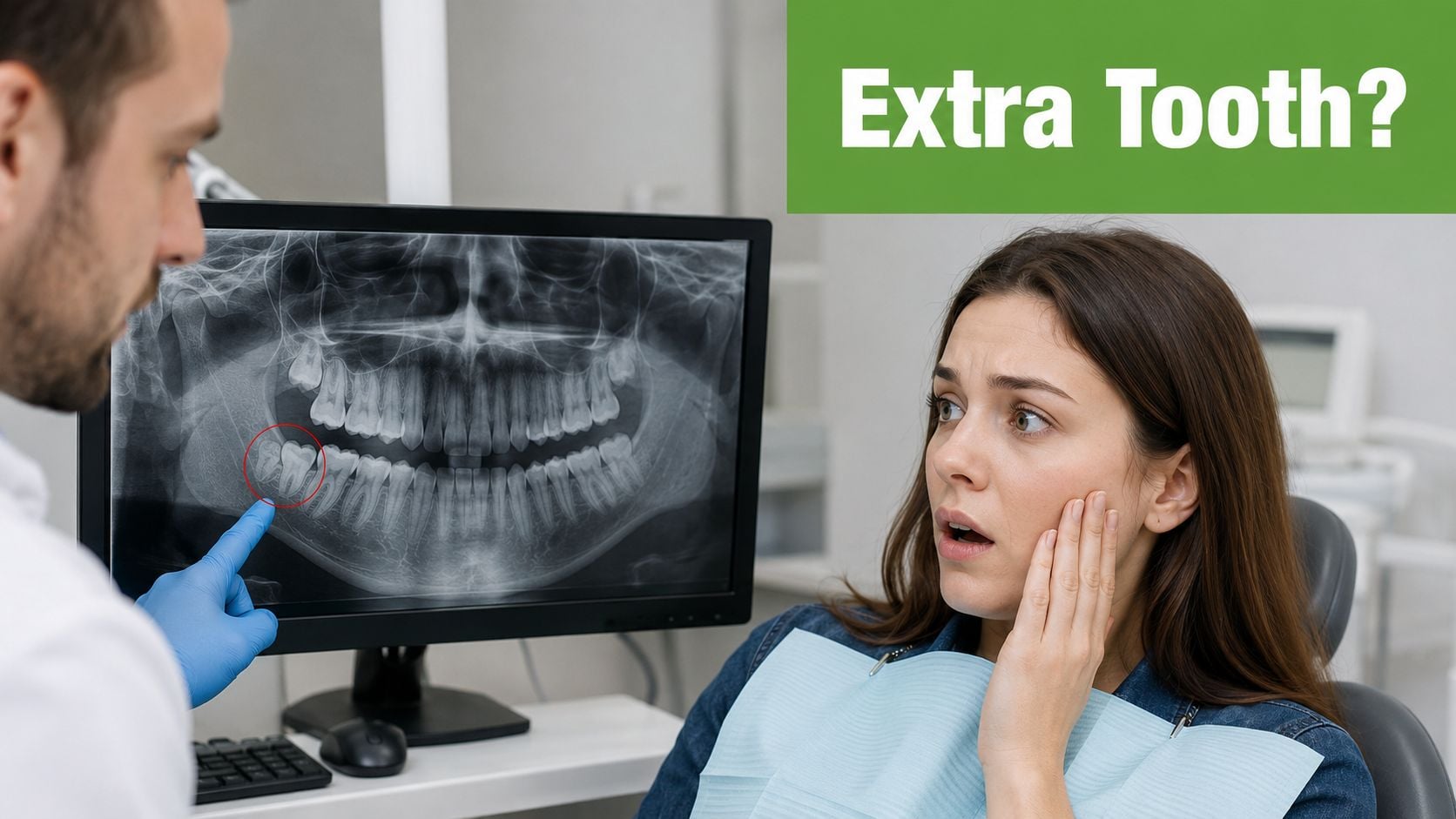
In many cases, the “extra” finding is discovered during a panoramic X-ray taken for jaw pain, orthodontic planning, or routine evaluation of third molars. Sometimes the patient has no idea it's there. Sometimes they've had vague symptoms for years and only later learn there may be an anatomic reason.
A useful way to think about it is this. A wisdom tooth is part of the standard blueprint. A supernumerary molar is a bonus tooth the blueprint didn't need.
That doesn't automatically mean something is wrong. Some extra molars stay quiet and never create meaningful trouble. Others interfere with eruption, hygiene, adjacent teeth, or bite mechanics.
If you're also trying to understand when normal third molars usually appear, this wisdom teeth timeline gives helpful age-based context. Standard wisdom teeth usually erupt in the late teen to young adult years. An extra molar can complicate that picture, especially when there isn't enough space in the back of the mouth.
Understanding Supernumerary Teeth and Fourth Molars
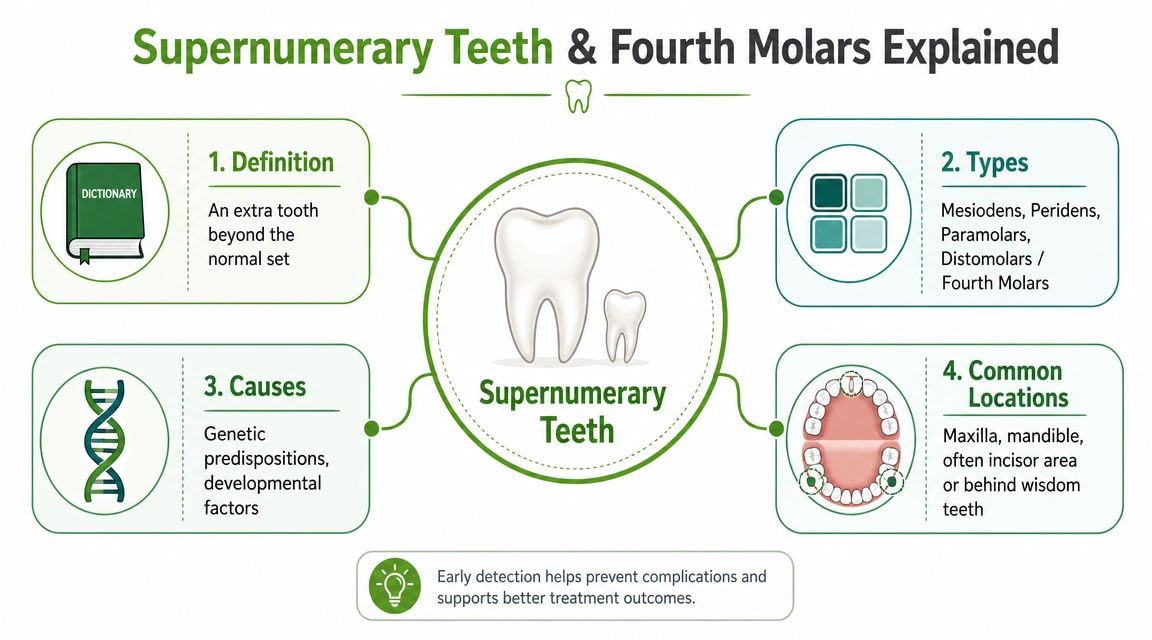
An extra molar has a specific name. The umbrella term is supernumerary tooth. If that tooth forms behind the usual wisdom tooth position, clinicians often call it a fourth molar or distomolar.
What makes a supernumerary tooth different
A supernumerary tooth is a developmental anomaly. It developed in addition to the normal number of teeth. That matters because the evaluation is different from a routine wisdom tooth problem.
In practice, I treat this as more than a naming issue. A third molar that is slow to erupt and an extra molar sitting behind it can create very different pressure patterns in the back of the jaw. That distinction becomes more important if a patient also has TMJ irritation, muscle guarding, ear-area pain, or clenching during sleep.
Extra molars may stay quiet for years. They may also interfere with eruption, trap plaque in an area that is already hard to clean, or press on nearby structures. Some remain buried in bone. Others partially erupt and create a chronic irritation point that a patient experiences as “back jaw pain” rather than a clear tooth problem.
How an extra molar can affect function
The back of the mouth has limited space. Add one more tooth to that area, and the mechanics can change.
Common effects include:
- Blocked eruption of a nearby molar
- Tighter cleaning access at the very back of the arch
- Altered bite contacts if the extra tooth changes how the teeth meet
- Soft tissue irritation when gum tissue partially covers the area
Those changes are not always dramatic, but they can be clinically relevant. A small shift in posterior bite contact can increase muscle activity in someone who already clenches. In the right patient, that can feed into facial pain, joint strain, morning jaw soreness, or a sense that the bite never feels settled. If nighttime grinding or airway-related sleep disruption is already part of the picture, an extra molar can become one more factor that keeps the system irritated.
Terms you may hear during an exam
These labels sound technical, but each one has a practical meaning.
| Term | What it usually means |
|---|---|
| Supernumerary tooth | Any extra tooth beyond the normal set |
| Fourth molar | An extra molar located behind the third molar |
| Distomolar | Another term for a fourth molar behind a wisdom tooth |
| Impacted tooth | A tooth that has not erupted normally into position |
The useful question is straightforward. Is this extra tooth harmless, or is it contributing to crowding, inflammation, bite instability, jaw strain, or pain?
Why some people have no symptoms
Some fourth molars are incidental findings on imaging and never need treatment. Others become relevant only after they start affecting adjacent teeth, periodontal tissue, or the way the jaw functions under load.
That is why the X-ray is only part of the assessment. The treatment decision depends on location, orientation, available space, hygiene access, nearby nerve anatomy, and whether the finding matches the symptoms you feel in daily life. In a pain and sleep setting, I also want to know whether the extra molar is part of a larger pattern involving TMJ symptoms, chronic facial pain, poor sleep, or nocturnal clenching.
Symptoms and Complications of an Extra Molar
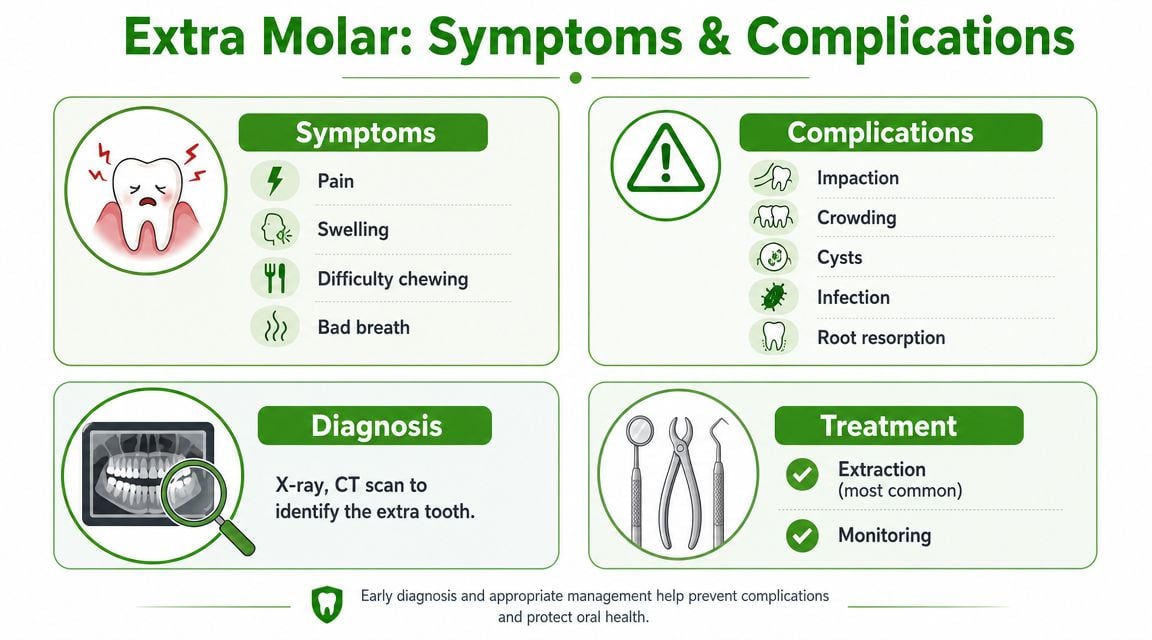
A supernumerary molar can stay silent, but when it becomes a problem, the effects can spread beyond the tooth itself. The obvious complaints are dental. Pain in the back of the mouth, tenderness when chewing, gum irritation, food trapping, bad taste, or swelling. Less obvious is what happens when the extra tooth alters bite stability and jaw mechanics.
The local dental problems
An extra molar in the posterior mouth often creates a tight, hard-to-clean area. That can trigger inflammation or set up repeated irritation in tissue that already has limited room. According to the Mayo Clinic overview of wisdom tooth extraction and related complications, impacted or misaligned extra molars can cause pain, infection, cysts, and damage to adjacent teeth. The same source notes that surgical removal can be more complex because access is difficult and nearby nerves must be protected carefully.
Common clinical problems include:
- Pressure and soreness in the very back of the jaw
- Gum inflammation around a partially erupted tooth
- Decay risk where food and plaque collect in hard-to-reach pockets
- Adjacent tooth damage if the extra molar presses against the second or third molar
- Cyst-related concerns when tissue around an unerupted tooth changes abnormally
If the extra tooth is in the lower jaw, the conversation often gets more technical because of nerve anatomy and the limited working space behind the last erupted molar.
How bite disruption can trigger TMJ and facial pain
In this situation, patients often feel dismissed elsewhere. They're told, “It's just a tooth,” even though their symptoms include temple headaches, jaw fatigue, ear-area pressure, or one-sided muscle tightness.
A back tooth matters because it helps determine where the jaw seats when you close. If an extra molar changes the last point of contact, the chewing muscles may start guarding around that interference. Over time, that can look like:
- Jaw joint strain from closing into an unstable bite
- Masseter and temporalis overwork, especially in clenchers
- Morning facial pain if nighttime grinding amplifies a posterior interference
- Cheek, ear, or temple discomfort that feels disconnected from the tooth itself
When a tooth changes how the bite lands, the muscles often complain before the patient realizes the bite changed.
This doesn't mean every fourth molar causes TMJ dysfunction. It means a tooth in the wrong place can become one contributor in a larger pain pattern.
The sleep connection patients don't expect
Posterior crowding and jaw tension can overlap with sleep issues, especially in people who already clench at night, wake with headaches, or struggle with nonrestorative sleep. An irritated back tooth can increase guarding. Guarding can increase clenching. Clenching can worsen muscle pain and morning jaw stiffness.
That cascade doesn't prove the extra molar is the sole cause of poor sleep. But clinically, it's reasonable to evaluate whether the tooth is part of a broader pattern that includes:
- Nighttime bracing
- Jaw soreness on waking
- Limited opening in the morning
- Headaches linked to sleep
- A bite that feels “off” after rest
When symptoms are more urgent
Call your dentist or oral surgeon promptly if you notice:
- Rapid swelling
- Fever or signs of infection
- A sudden increase in difficulty opening
- Sharp pain when biting on the back teeth
- Numbness or altered sensation
Those signs need direct evaluation, not guesswork.
Diagnosis and Deciding on a Treatment Plan
The first step is identifying what's present. Many patients come in convinced they have a rogue wisdom tooth when the image may show a fully impacted third molar, a supernumerary molar, or a shape variation that needs a closer look. Good treatment starts with naming the anatomy correctly.
How the diagnosis is made
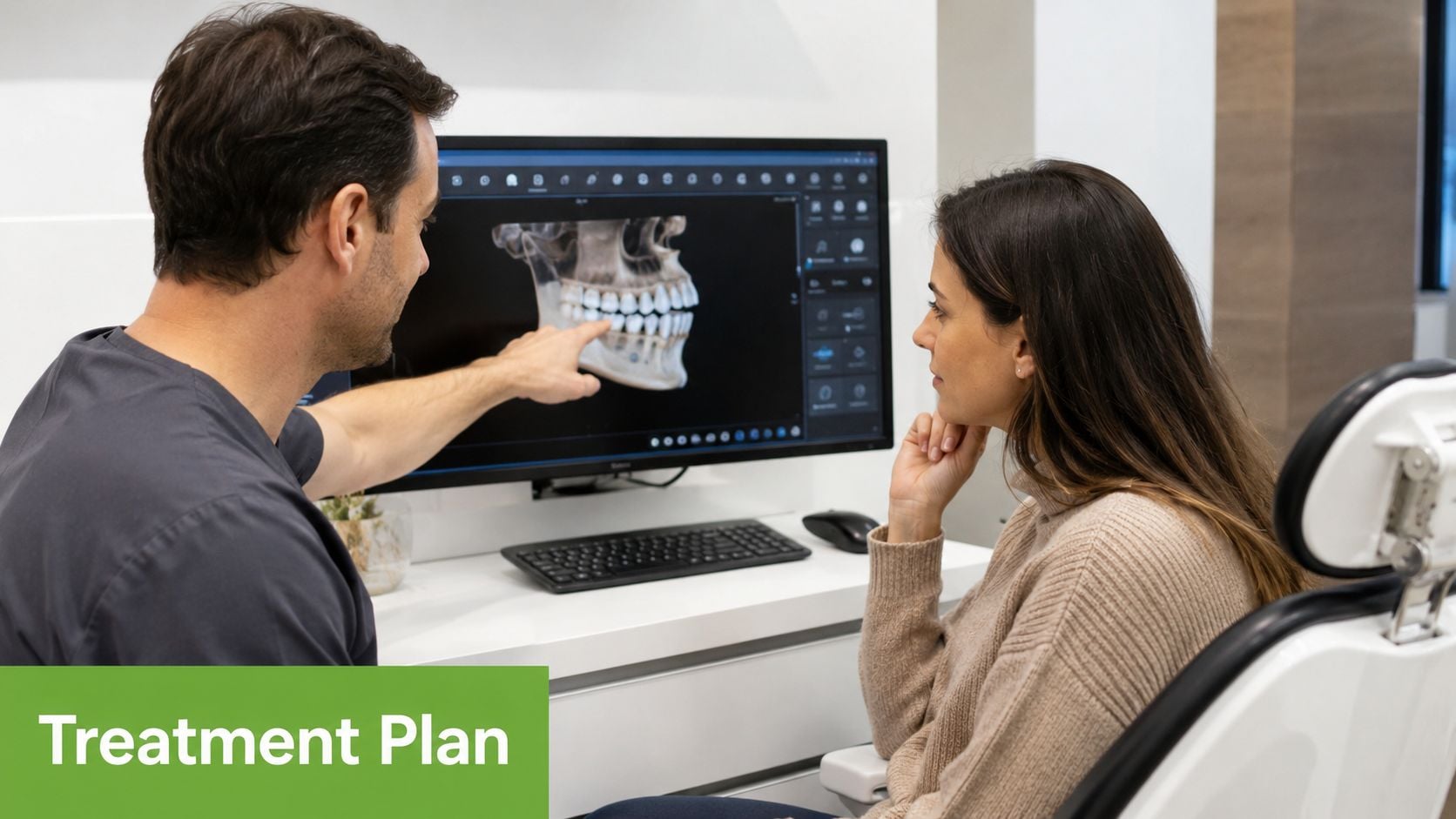
Most extra molars are first identified on routine dental imaging. A panoramic radiograph often shows the broad picture. If the tooth sits close to a nerve canal, lies at an unusual angle, or appears entangled with nearby roots, a clinician may recommend three-dimensional imaging for a more precise view.
The diagnostic process usually asks four practical questions:
Is it an extra tooth?
This separates a supernumerary molar from a standard third molar issue.Has it erupted, partially erupted, or remained impacted?
Position affects both symptoms and surgical difficulty.Is it damaging anything nearby?
The focus is on adjacent roots, bone, gum health, and available space.Does it match the patient's functional complaints?
This includes chewing discomfort, bite changes, facial muscle tension, and jaw loading patterns.
Monitoring versus removal
Not every extra molar needs extraction. That's important to hear clearly. Some teeth are better watched than treated immediately, especially if they're quiet, well-contained, and not creating pressure on surrounding structures.
A simplified comparison helps:
| Situation | Usual direction |
|---|---|
| No symptoms and no visible effect on nearby teeth | Monitor |
| Recurrent inflammation, pain, or hygiene problems | Consider removal |
| Evidence of pressure on adjacent teeth or cyst concern | Removal is often discussed |
| Bite disruption with jaw symptoms that line up clinically | Functional evaluation plus possible removal |
Practical rule: The presence of an extra molar matters less than its behavior. A silent finding may stay under observation. A disruptive one usually doesn't improve by being ignored.
Why symptoms alone don't tell the whole story
A patient can have significant jaw pain with only mild local tooth discomfort. The reverse is also true. That's why a treatment plan shouldn't be based only on whether the tooth “hurts.” It should be based on whether the tooth is contributing to a pattern of dysfunction.
For patients asking whether removal is always necessary, this discussion of whether everyone needs wisdom teeth removed is useful background. The same principle applies here. Anatomy, symptoms, risk, and function all matter.
What works and what doesn't
What tends to work:
- Precise imaging
- A symptom history that includes jaw function, not just tooth pain
- A plan that weighs monitoring against intervention
- Coordination between the general dentist, oral surgeon, and any TMJ or facial pain provider involved
What doesn't work well:
- Calling every posterior problem a wisdom tooth issue
- Removing a tooth without understanding its relationship to the pain pattern
- Assuming an asymptomatic extra molar must always come out immediately
- Ignoring a back-tooth interference in a patient with chronic clenching or TMJ loading
The Extraction Process and What to Expect During Recovery
If the extra molar needs to come out, the procedure is usually handled much like a difficult third molar extraction, but with added attention to access, angulation, and nearby anatomy. The goal isn't only to remove the tooth. It's to do it in a way that protects surrounding tissue, supports smooth healing, and avoids creating new jaw tension during recovery.
Wisdom tooth surgery is common. In the United States, around 10 million wisdom teeth are removed from 5 million people annually, and about 50% of patients have had at least one third molar extracted by age 25, according to this summary of wisdom tooth removal statistics. That doesn't make your case routine in every detail, but it should reassure you that oral surgeons manage posterior molar removal regularly.
What happens on the day of surgery
The surgeon reviews imaging, confirms the tooth position, and chooses an approach based on the depth of the tooth's embedding and how close it sits to important structures. Some extra molars can be removed with a relatively straightforward approach. Others require sectioning the tooth, removing a small amount of surrounding bone, or carefully reflecting gum tissue for access.
Anesthesia planning is part of comfort and safety. Some patients do well with local anesthesia. Others need additional sedation, especially if they're anxious, have a strong gag reflex, or are having multiple teeth treated. If you want a clear overview of common options, this guide to oral surgery anesthesia is a good starting point.
The first few days after removal
Recovery is usually less about the hole in the gum and more about how well you protect the area while your jaw muscles stay calm. That's especially true for people who already clench or have a history of TMJ flare-ups.
Focus on the basics:
- Rest early and avoid pushing through the first day.
- Use cold packs as instructed to help with swelling.
- Choose soft foods that don't force wide opening or heavy chewing.
- Keep the mouth clean gently, following the surgeon's instructions.
- Avoid unnecessary jaw strain, including gum chewing and aggressive stretching right away.
For a general patient-friendly overview, the tooth extraction process by Amanda Family Dental explains the sequence in a practical way.
Protecting jaw function during healing
This part gets overlooked. After extraction, patients often guard the area by chewing on one side, holding the jaw slightly off-center, or limiting motion more than necessary. A few days of this is normal. Prolonged compensation can irritate the joint and muscles.
Useful recovery habits include:
- Keep your tongue relaxed instead of bracing the jaw upward all day.
- Return to gentle, symmetrical use as comfort allows.
- Notice clenching during stress or sleep transitions.
- Report persistent limited opening if it doesn't improve.
If you're prone to facial pain, don't judge recovery only by tooth soreness. Monitor muscle tightness, temple pressure, and how your bite feels as swelling settles. Those clues help distinguish normal post-op healing from a TMJ flare that needs separate management.
Frequently Asked Questions About Extra Molars
Can an extra molar cause TMJ pain or headaches
Yes. An extra molar can change how the back teeth meet, especially if it erupts out of position or stays partly trapped under the gum. I see the downstream effects more often than patients expect: uneven chewing, more muscle guarding, morning jaw fatigue, temple pressure, and pain that feels like it sits near the ear.
The tooth is not always the only problem. In patients who already clench, grind, or have a sensitive TMJ, an extra molar can add one more source of bite instability.
Is a 5th wisdom tooth the same as an impacted wisdom tooth
A 5th wisdom tooth refers to an extra molar, not a routine third molar that failed to erupt normally. That distinction matters because the evaluation is different. The dentist or surgeon has to confirm whether this is a supernumerary tooth, where it sits in relation to adjacent roots and nerves, and whether it is contributing to crowding, inflammation, or pressure in the back of the jaw.
If it isn't hurting, can I just leave it alone
Sometimes. A quiet extra molar that is fully buried, not affecting nearby teeth, and not linked to symptoms may only need periodic monitoring with imaging.
Observation is less appealing if the area is hard to keep clean, food traps around it, gum inflammation keeps returning, or your bite has started to feel off. A tooth can be silent and still create trouble over time.
Could an extra molar affect sleep
It can, usually through pain and muscle tension rather than by blocking the airway directly. If the tooth contributes to clenching, facial soreness, or a bite that never feels settled, sleep often becomes lighter and less restorative.
That matters in a pain and sleep clinic. People with sleep-disordered breathing already tend to load their jaw muscles at night. Add an irritated back tooth or an unstable contact in the molar area, and morning headaches or jaw tightness can get worse.
How is recovery different if I already clench my jaw
Recovery can be more uncomfortable for patients who clench because the extraction site may heal while the chewing muscles stay overworked. The common pattern is soreness that seems out of proportion to what the gum tissue should be doing by that stage.
Soft foods help. So does avoiding the habit of holding the teeth together all day. Following practical fast, comfortable extraction recovery tips can reduce early strain on the jaw.
Does every extra molar need a specialist opinion
No, but many benefit from one. The farther back the tooth sits, the more important it is to assess access, root shape, sinus or nerve proximity, and whether the finding explains the symptoms.
That last point is easy to miss. A patient may focus on the extra tooth, while the larger driver of pain is a TMJ flare, muscle overuse, or poor sleep with nighttime clenching.
If you're dealing with a suspected 5th wisdom tooth along with jaw pain, facial tension, headaches, clenching, or poor-quality sleep, Pain and Sleep Therapy Center can help you look at the full picture. The right next step is not only deciding whether the tooth should stay or go. It is determining how that finding may be affecting your bite, jaw muscles, TMJ function, and sleep.