If you're reading this 3 days after tooth extraction, you're probably asking a very normal question. "Is this still within the range of expected healing, or is something going wrong?"
Day 3 is often the day patients feel most discouraged. Your jaw may still look puffy, your mouth may feel tender, and eating can still feel awkward. That doesn't automatically mean recovery is off track. In many cases, this is the point where the body is finishing the most intense inflammatory phase and starting the move toward repair.
A calm approach matters here. Protect the clot. Keep the area clean without being aggressive. Support the jaw instead of overworking it. Those simple choices often make the difference between a steady recovery and a setback.
What to Expect 3 Days After Tooth Extraction
You wake up on day three, look in the mirror, and your cheek is still full. Your bite may feel off, your jaw may feel tight, and the extraction site can still ache enough to keep your attention. In practice, this is a common point in recovery. Many patients expect a steady day-by-day improvement, but healing after an extraction often feels uneven before it starts to settle.
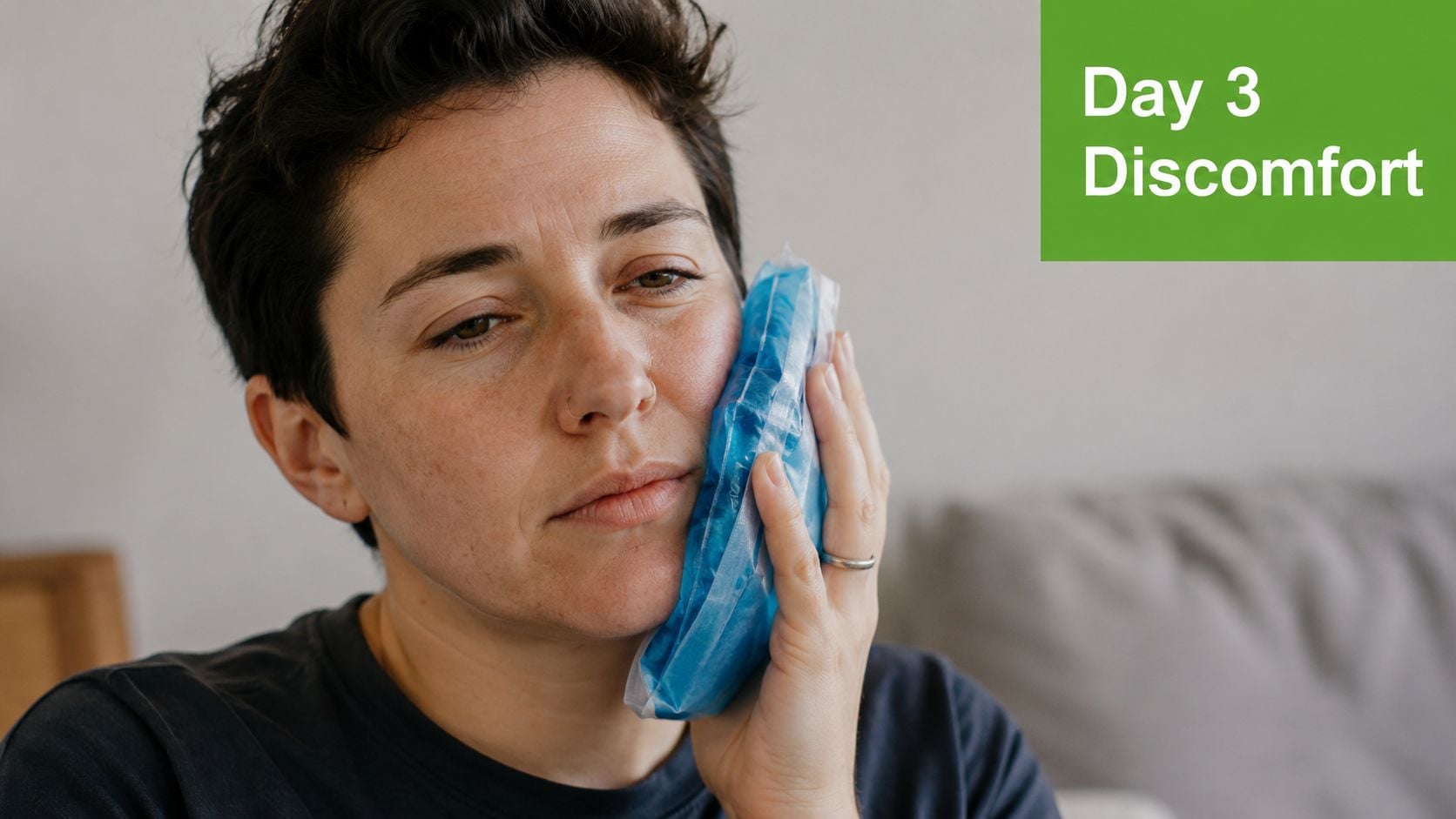
By day three, I expect to see the socket still vulnerable, the surrounding gum still irritated, and the jaw muscles still guarding. That last point gets missed in many aftercare instructions. If your mouth was held open for a long procedure, the chewing muscles and TMJ can stay sore even when the extraction itself is healing normally. Patients often describe this as pressure near the joint, stiffness with opening, or fatigue when talking and chewing.
What usually fits a normal day-three picture?
- Swelling that is still present, especially in the cheek, jawline, or gum near the extraction
- An aching or throbbing soreness that remains manageable with the plan your dentist gave you
- A visible socket or dark opening where the tooth was removed
- Jaw stiffness or limited opening, especially after wisdom tooth or surgical extraction
- Tender chewing muscles from clenching, guarding, or keeping the mouth open during treatment
- Reduced appetite because chewing still feels inconvenient or uncomfortable
If your procedure involved bone removal, stitches, or a lower wisdom tooth, recovery often feels heavier on day three. Patients recovering from wisdom tooth removal commonly notice more swelling, more muscle tightness, and a slower return to normal chewing.
A simple rule helps here. Day three can still be uncomfortable, but the symptoms should remain understandable. Soreness, stiffness, and swelling usually match the procedure you had. Pain that suddenly becomes sharp, foul-tasting drainage, worsening swelling, or trouble opening because of increasing pressure deserves closer attention.
The other point to understand is mechanical stress. The clot is still protecting the site, but your jaw is also trying to resume normal function. That creates a trade-off. Gentle movement helps prevent the jaw from getting more rigid, while heavy chewing, wide opening, smoking, straw use, or forceful rinsing can irritate the tissues and slow healing. For a practical overview of applying heat or ice for pain, that guide explains why the timing of your comfort measures matters.
Managing Your Pain and Swelling on Day Three
You wake up on day three, look in the mirror, and your face still looks puffy. Your jaw feels sore, and opening wide is not comfortable. That can still fall within a normal recovery pattern.
Switch your approach
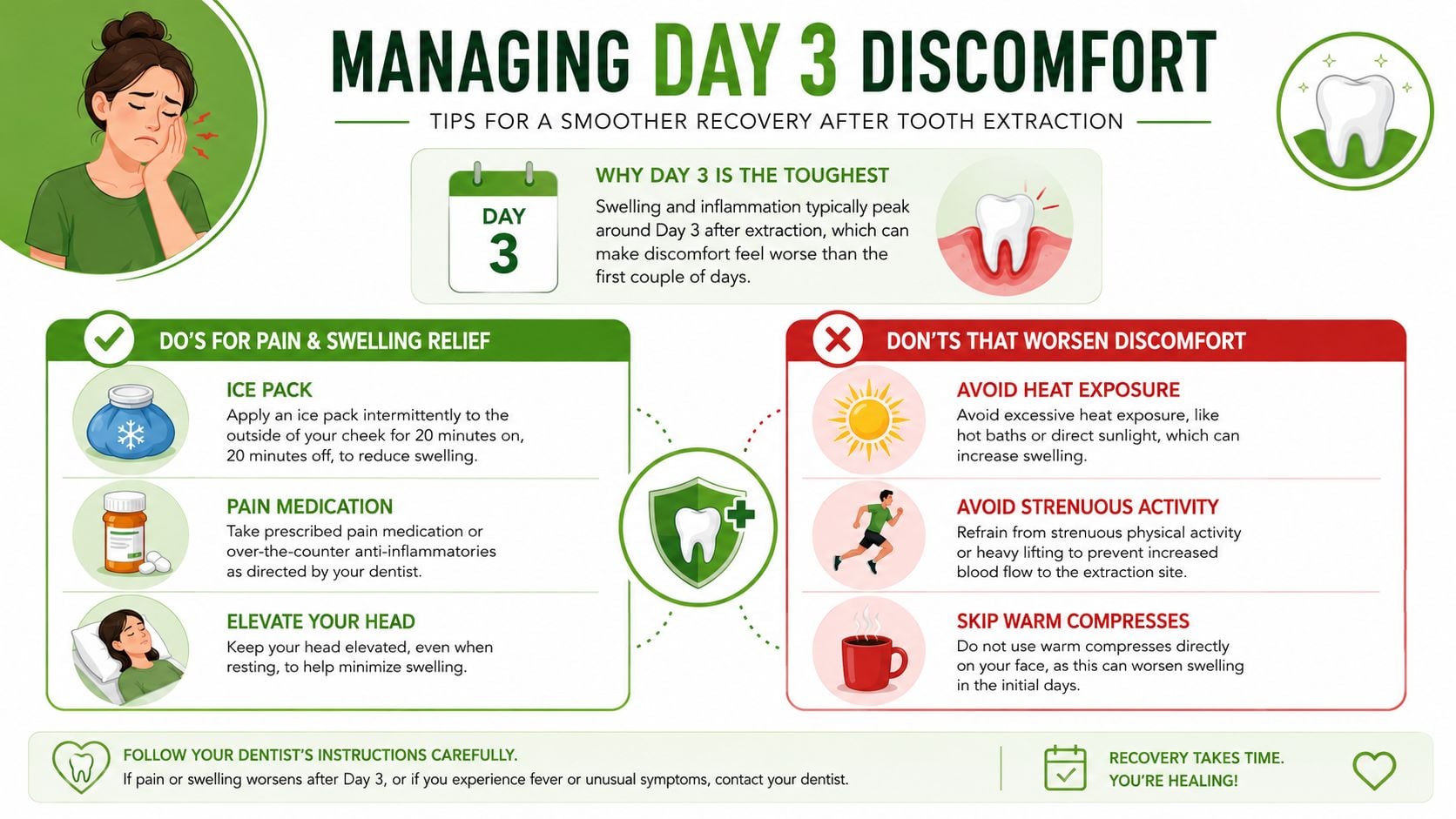
By day three, the goal usually shifts from limiting fresh swelling to helping your body clear what is already there. Ice is often less helpful now. Warm, moist heat placed on the outside of the face is usually the better comfort measure because it helps relax tight chewing muscles and eases that heavy, stiff feeling around the jaw.
Use gentle warmth for about 15 to 20 minutes at a time. The skin should feel comfortably warm, not hot. If heat makes the area throb more, stop and return to the instructions your surgeon gave you.
If you want a practical overview of applying heat or ice for pain, that guide explains why the timing matters.
Stay ahead of pain
Pain control works better when it is steady. Waiting until the soreness spikes often leads to a harder day, especially if you are also guarding the jaw and clenching without realizing it.
If ibuprofen or another anti-inflammatory was recommended, use it exactly as directed by your dentist or oral surgeon. If you were prescribed something stronger, take it only as instructed and pay attention to food, driving, and drowsiness precautions. Patients who want a clearer sense of typical medication after wisdom tooth extraction can review that guide, but your own post-op sheet still takes priority.
One practical point gets missed. Some of the discomfort on day three is not only from the socket. It also comes from the jaw joints and chewing muscles after staying open during treatment, especially after a difficult lower extraction or wisdom tooth surgery. Warm compresses, scheduled medication, and gentle resting jaw posture can reduce that strain.
What usually makes swelling and soreness drag on
A few habits slow the recovery rhythm:
| Habit | Why it backfires |
|---|---|
| Lying completely flat for long stretches | Fluid can collect more in the face, which increases pressure and puffiness |
| Heavy exercise or strenuous chores | Higher blood flow can increase throbbing and make swelling linger |
| Holding the jaw tight or clenching | The chewing muscles fatigue, and TMJ soreness becomes more noticeable |
| Very hot showers, heating pads that are too hot, or long heat sessions | Excess heat can irritate tissues instead of calming them |
| Skipping doses, then taking pain medicine late | Pain becomes harder to settle once inflammation has already built up |
A better Day 3 routine
Use warm, moist heat on the outside of the jaw for a short session. Rest with your head slightly raised. Take medication on schedule if that was part of your instructions. Keep your teeth apart when you are not chewing, with your lips closed and tongue resting lightly against the palate. That jaw position reduces muscle tension and gives irritated TMJ structures a chance to settle.
Do not keep checking the site with your tongue or fingers. Patients do this to reassure themselves, but it often irritates tissue that is trying to close and can make the whole area feel more inflamed.
Safe Eating and Oral Hygiene for Day Three
Day 3 is when patients get tempted to "eat a little more normally." That's often where setbacks start. The clot is still vulnerable, and your job is to protect it while keeping the mouth reasonably clean.
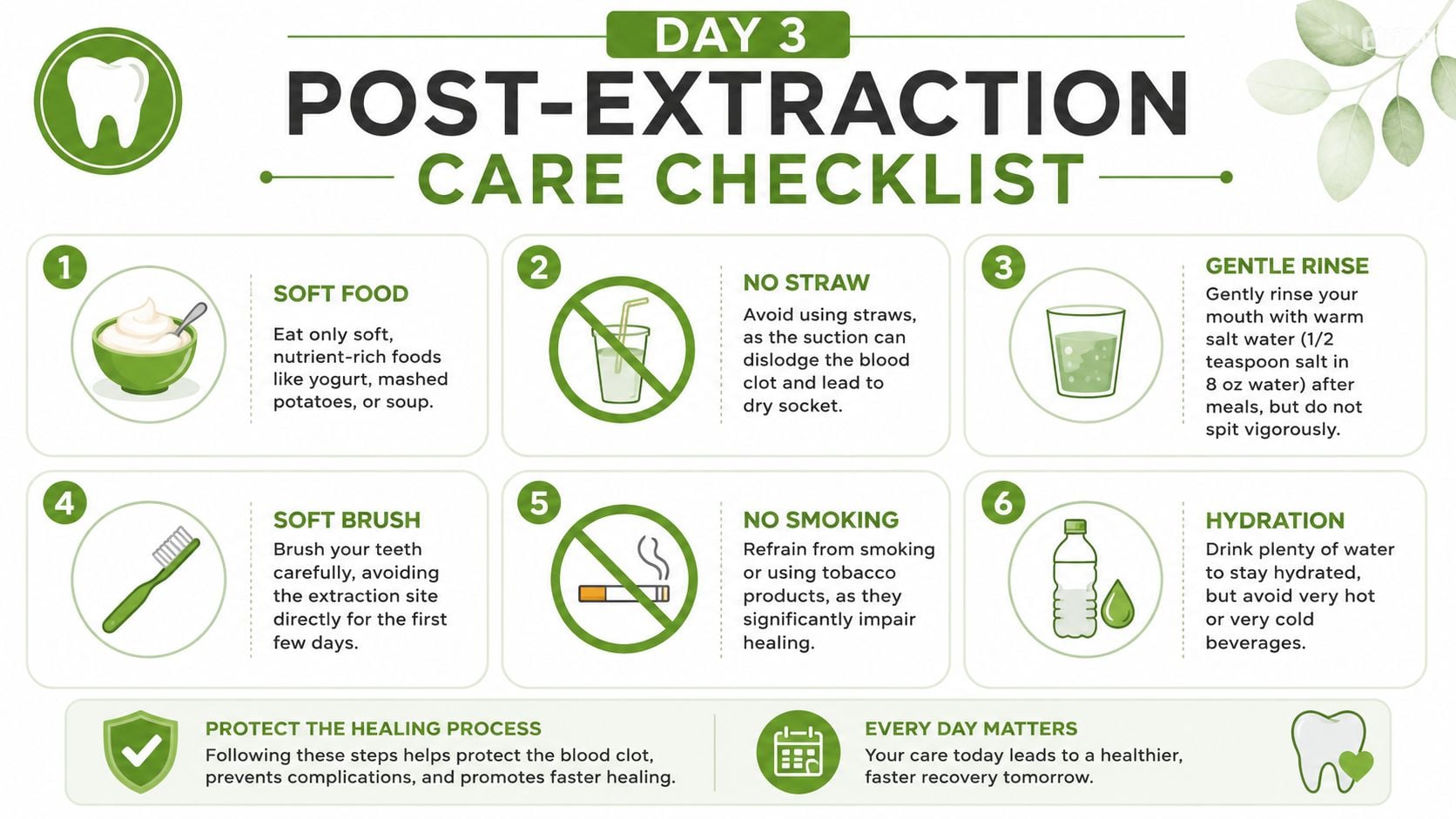
What to eat and what to skip
Soft foods are still the safest choice. Good options include yogurt, scrambled eggs, mashed potatoes, soup that's warm rather than hot, oatmeal if it's soft, smoothies eaten with a spoon, and protein shakes sipped carefully without a straw. If you need ideas, this guide to wisdom teeth recovery food gives practical examples that also fit many standard extraction recoveries.
Avoid foods that are crunchy, chewy, sharp, spicy, or packed with small particles. Chips, popcorn, seeded foods, crusty bread, and tough meats can all irritate the site or get trapped in the socket.
The Day 3 rinse that helps, not harms
Day 3 care includes starting gentle isotonic rinsing with 1 tsp salt in 8 oz warm water, used 3 to 4 times daily, while continuing the "no-straw, no-spit, no-smoke" protocol. Smoking can reduce oxygen delivery to healing tissue by 40 to 50%, according to post-operative extraction instructions from PNW Oral & Maxillofacial Surgery.
That information matters because many patients hear "salt water rinse" but do it too forcefully.
Use this method:
- Mix it correctly by using 1 tsp salt in 8 oz warm water
- Take a small sip and let it bathe the area gently
- Move your head, not your cheeks, if you want the liquid to circulate
- Let the rinse fall out into the sink instead of spitting hard
If you're wondering whether the rinse was "strong enough," that's usually the wrong question. Gentle is the point.
Brushing without disrupting the site
You still need to clean your mouth. Plaque doesn't take a recovery break.
Use a soft toothbrush on the other teeth and be careful near the extraction area. Don't scrub directly over the socket. If you use an electric toothbrush, keep it away from the extraction site until the tissue has closed over more fully. The issue isn't cleanliness alone. It's mechanical disturbance.
One more practical point. Day 3 isn't the time to "catch up" on chewing because you're tired of soft food. The more pressure you place on the healing side, the more swelling, soreness, and jaw guarding you're likely to feel by evening.
How to Spot a Dry Socket or Infection
You may wake up on day 3 expecting a little less soreness, then notice the pain feels sharper, deeper, or more spread out than it did yesterday. That change in pattern matters more than the raw pain score.
A normal day-3 recovery usually trends in the right direction, even if the area is still tender. Trouble signs are pain that is getting worse instead of gradually settling, swelling that is increasing rather than easing, fever, pus, or a foul taste that does not improve with gentle cleaning. The Cleveland Clinic's guidance on dry socket also notes that dry socket pain often starts 1 to 3 days after the extraction and can radiate toward the ear.
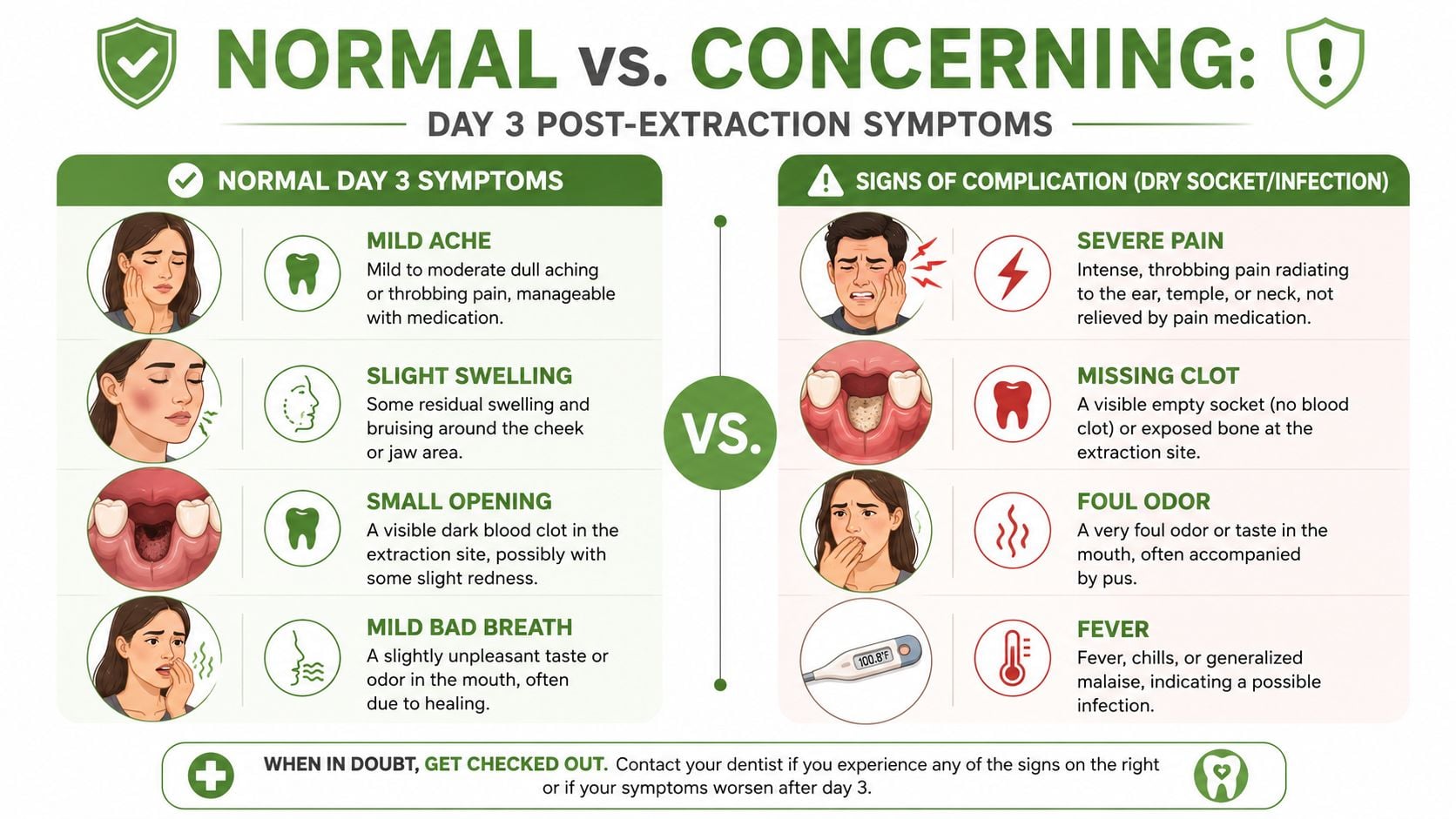
Normal versus concerning
Use the overall pattern, not one isolated detail.
| Expected on Day 3 | Concerning on Day 3 or after |
|---|---|
| A sore, bruised, swollen feeling | Pain that intensifies instead of easing |
| Tender chewing and jaw stiffness | Throbbing pain that radiates toward the ear |
| A socket that still looks dark or protected by healing tissue | An empty-looking socket with increasing pain |
| A mild bad taste that improves after gentle cleaning | A foul taste or odor that persists or worsens |
| No fever | Fever or feeling unwell overall |
Dry socket and infection are different problems, but patients often confuse them because both can cause significant pain. Dry socket usually involves loss or breakdown of the protective clot, which leaves bone and nerve endings exposed. Infection is more likely when swelling, heat, drainage, fever, or a feeling of being sick joins the local pain.
For a patient-friendly overview of preventing dry socket, that resource pairs well with the signs listed here.
A short visual explanation can also help if you're unsure what those warning signs look like in real life.
When the pattern changes
Here is the practical test I use with patients. Ask whether each day looks slightly calmer than the one before. If the answer is no, slow down and pay attention.
Call your dentist if pain suddenly becomes harsher, ibuprofen or other prescribed pain control stops helping the way it did before, or swelling starts climbing after it had leveled off. Do the same if you develop fever, drainage, or a bad taste that keeps returning. Jaw pain also needs context. Some day-3 soreness comes from muscle strain or TMJ irritation after holding the mouth open for treatment, but jaw stiffness alone should not cause an empty-looking socket, foul drainage, or escalating throbbing pain.
Recovery should look imperfect but gradually steadier. A late jump in pain, odor, swelling, or illness points to a problem worth checking.
What not to do if you're worried
If you suspect a problem, avoid home fixes that can make the area worse:
- Don't poke the socket with a cotton swab, toothpick, or finger
- Don't rinse forcefully
- Don't place aspirin directly on the gum
- Don't keep testing the area by touching it with your tongue
- Don't assume bad breath alone means infection
Bad taste and odor can happen during ordinary healing. The concern rises when they come with worsening pain, swelling, fever, drainage, or a visible change in the socket.
Protecting Your Jaw and Easing Back into Activity
Most instructions after an extraction focus on the socket. Fewer talk about the jaw joint and surrounding muscles, even though they often contribute to how you feel on Day 3.
Many post-op guides mention avoiding long conversations, but they don't address the risk of TMJ strain and jaw fatigue, especially in people who already have jaw dysfunction, as noted in this discussion of speaking after extraction. That's an important gap.
Why your jaw may feel worse than expected
During an extraction, your mouth stays open for a prolonged stretch. Afterward, many patients unconsciously tighten the jaw, chew on the unaffected side, or hold tension in the face because they don't want to disturb the area. That pattern can leave the jaw muscles tired and the TMJ irritated even when the socket itself is healing normally.
If you already deal with clenching, popping, limited opening, or facial muscle tension, Day 3 may feel less like "tooth pain" and more like a mix of tooth soreness and jaw fatigue.
Jaw-friendly ways to move through the day
Try these adjustments:
- Rest the jaw between meals by keeping lips together and teeth apart instead of clenching
- Break up long conversations rather than talking continuously
- Avoid huge bites and wide yawns that overstretch healing tissues and the joint
- Choose softer foods that don't demand forceful chewing
- Return to exercise gradually rather than jumping back into hard workouts while swelling is still active
A useful self-check is simple. If speaking for a while makes your face feel more tired, tight, or achy, your jaw needs less load, not more practice.
This root-cause view matters because some patients think something is wrong with the extraction when the underlying issue is muscular guarding around the jaw. Support both, and recovery usually feels smoother.
When to Call Your Dentist and Your Next Steps
Day 3 should feel more predictable. You may still be sore, but the pattern should be gradually improving, not getting sharper, deeper, or harder to control.
Call your dentist or oral surgeon if pain is increasing instead of easing, especially if it starts to radiate into the ear, jaw, or temple. Contact the office if swelling keeps building, you develop a fever, you notice discharge or a bad taste that does not clear, or the area feels distinctly unwell rather than normally tender. Those changes can point to dry socket, infection, or a bite and jaw pattern that is putting too much strain on the healing area.
Jaw symptoms matter here too. If your mouth is becoming harder to open, your jaw starts locking, or facial muscle pain is escalating while the socket itself looks fairly quiet, let your dentist know. After an extraction, patients sometimes protect the site by clenching, shifting chewing to one side, or tightening the face all day. That can irritate the TMJ and surrounding muscles enough to slow recovery and confuse the picture.
If healing is on track, the next step is simple. Stay consistent for several more days. Keep meals soft, keep the mouth clean as instructed, take medication on schedule if you still need it, and avoid testing the area with hard foods just because you feel a little better. The gum usually continues to close over time, while deeper bone healing takes much longer, so early improvement does not mean the site is ready for full force.
For practical support for at-home recovery, set up your environment so healing is easier to stick with. Keep water nearby, rest with your head slightly raised if that reduces pressure, and choose a routine that does not require long meals, heavy chewing, or unnecessary talking. Patients who recover best usually do the basics well and avoid pushing through jaw fatigue.
If something feels off, call. A quick post-op check is better than waiting another two or three days and giving a small problem time to grow.
If jaw tension, TMJ pain, facial soreness, or post-procedure muscle guarding are making recovery harder than expected, Pain and Sleep Therapy Center offers root-cause care focused on TMJ disorders, facial pain, and related dysfunction. Their team helps patients who need more than standard advice, especially when tooth pain and jaw pain start to overlap.