It's 2 a.m. and your tooth won't let you sleep. Maybe a filling came out during dinner. Maybe you took an elbow to the mouth at a weekend game and now a front tooth feels loose. In that moment, it's difficult to think clearly. You're trying to figure out one thing. Who can help right now?
A 24 hour emergency dentist fills that gap between “this can't wait” and “this probably doesn't belong in a hospital unless something more serious is happening.” That need is real. The American Dental Association estimates about 2 million emergency department visits each year are for dental pain, and CDC data shows tooth disorders account for an average of 1.9 million ED visits annually in the United States, according to the CDC dental pain emergency visit data brief.
Pain matters, but speed matters too. The right first move can mean the difference between saving a tooth, controlling an infection early, or turning a manageable problem into a bigger one. If you're trying to sort out what to do next, practical local guidance can help. For example, this resource on finding an emergency dentist in Sydney shows the kind of step-by-step, after-hours approach patients should look for in any city.
Your Action Plan for a Dental Emergency
When people panic, they either freeze or rush to the wrong place. A better response is simple and fast.
Start with three questions
Ask yourself:
- Can I breathe and swallow normally
- Is there heavy bleeding that won't stop
- Did a tooth break, come out, or become painful enough that I can't wait until morning
If breathing, swallowing, or bleeding is the issue, treat it as a medical emergency. If the problem is centered on a tooth, gum, crown, filling, swelling, or bite pain, an emergency dentist is often the right first stop.
Practical rule: Your first job isn't to diagnose yourself perfectly. It's to get to the right kind of care without losing time.
Do this in the next 15 minutes
- Call a real clinic, not just a directory. Ask whether a dentist is available now, not just “on call.”
- Control the situation at home. Use a cold compress on the outside of the face if there's swelling or throbbing.
- Protect anything that came out. A crown, bridge piece, or tooth fragment may help the dentist repair the problem more predictably.
- Don't use harmful home tricks. Don't place aspirin on the gum. Don't scrub an injured tooth. Don't ignore swelling.
Focus on relief and the reason it happened
Emergency care should do two things. First, it should reduce pain, bleeding, pressure, or infection risk. Second, it should point to the actual cause.
That second part gets missed all the time. A cracked tooth may be just a cracked tooth. But repeated night pain, jaw locking, morning headaches, or clenching can signal a deeper bite, joint, or sleep-related problem. Immediate relief matters. Lasting relief depends on what comes after.
Should You Go to the ER or an Emergency Dentist
This is the decision that saves the most time. Many dental problems are urgent. Not all are hospital problems.
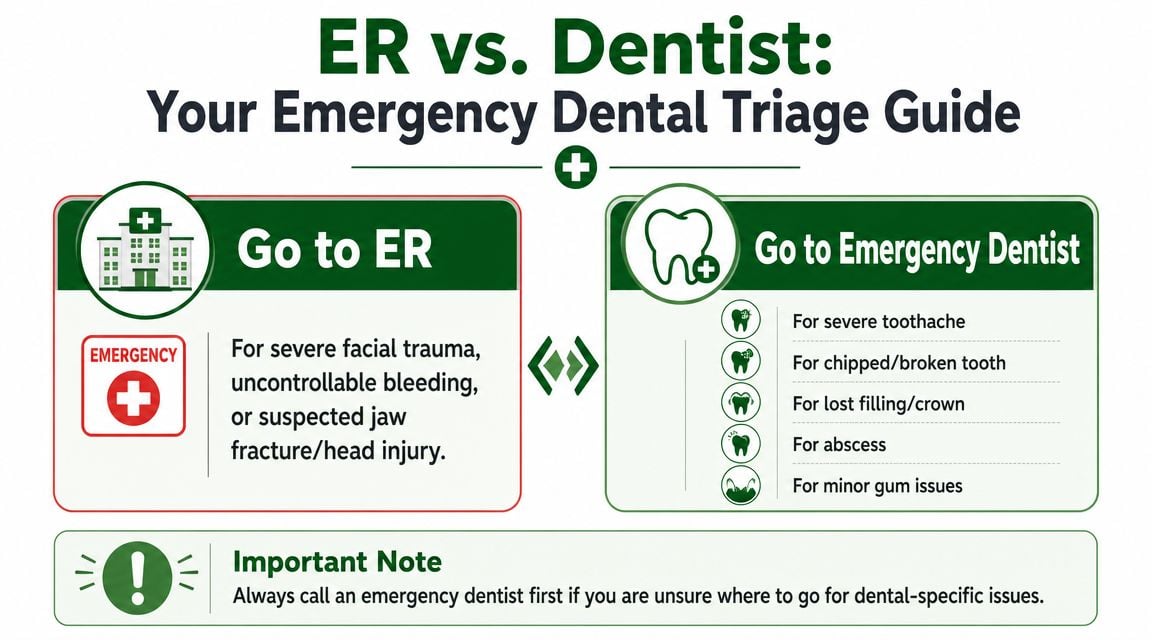
UT Dentistry advises that inability to swallow, inability to breathe, severe swelling, or uncontrollable bleeding require immediate ER care or a 911 call, as noted in its guidance on emergency and urgent dental care.
ER vs Emergency Dentist where to go
| Symptom | Go to Emergency Dentist | Go to Hospital ER |
|---|---|---|
| Severe toothache without breathing trouble | Yes | No |
| Chipped or broken tooth | Yes | No |
| Lost filling or crown with pain | Yes | No |
| Gum swelling or suspected abscess without airway symptoms | Yes | No |
| Knocked-out tooth | Yes | No |
| Uncontrollable bleeding from the mouth | No | Yes |
| Severe facial swelling affecting breathing or swallowing | No | Yes |
| Major facial trauma | Sometimes after ER care | Yes |
| Suspected jaw fracture or head injury | No | Yes |
A nearby hospital-based provider may also need to get involved when trauma goes beyond the tooth itself. If the injury includes the face, jaw, or surrounding bone, specialty care such as facial trauma surgery may become part of treatment after emergency evaluation.
What the ER usually can and can't do
The ER is the right place for airway, major bleeding, serious trauma, or medical instability. It is not usually the best place for a routine tooth extraction, crown repair, root canal access, or bite adjustment.
An emergency dentist is set up for dental procedures. That means the office can often numb the area, stabilize a broken tooth, place a temporary restoration, adjust a sharp edge, evaluate an abscess, or decide whether you need endodontic, surgical, or restorative follow-up.
If your throat feels tight, your face is rapidly swelling, or you can't swallow normally, skip the debate and go to the ER.
If you're unsure
Call the emergency dental office first and describe the symptoms clearly. Use plain language:
- “My face is swelling and it's getting worse.”
- “The bleeding hasn't stopped.”
- “I can breathe fine, but the tooth pain is severe and constant.”
- “I think my jaw may be injured from trauma.”
That phone call should help sort the path quickly. A good office won't try to force a dental visit when the signs point to the hospital.
For a quick visual summary, this overview may help:
Immediate First Aid for Dental Pain and Injury
The hour before you're seen matters. Good first aid won't replace treatment, but it can protect the tooth, limit swelling, and prevent you from making the situation worse.

If a permanent tooth gets knocked out
This is the most time-sensitive dental injury most patients will ever see. Guidance from this knocked-out tooth emergency protocol notes that the highest chance of survival occurs if the tooth is replanted within 30 to 60 minutes.
Hold the tooth only by the crown, not the root. Rinse it gently without scrubbing. If possible, place it back in the socket. If not, keep it in milk or saliva and get to a dentist immediately.
Do not wrap the tooth in dry tissue. Do not scrape it clean. Do not delay while searching online for every possible option.
If you have a severe toothache or swelling
What helps:
- Rinse gently with warm salt water. This can clear debris and soothe irritated tissue.
- Use a cold compress outside the cheek. This may reduce swelling and dull throbbing.
- Keep your head raised. Lying flat can make pressure feel worse.
- Take medication only as directed. If you've been prescribed pain medication before and need plain-language safety information, this patient guide to acetaminophen codeine is a useful overview.
What doesn't help:
- Aspirin on the gum. It can irritate or burn tissue.
- Heat over active swelling. That can make some situations feel worse.
- Waiting for visible swelling to “drain on its own.” Infection needs professional evaluation.
If a tooth is chipped, cracked, or broken
Save every piece you can find. Rinse your mouth gently. If a broken edge is cutting your tongue or cheek, cover the sharp area temporarily with dental wax if you have it.
Then pay attention to the pattern of pain. A crack that hurts when you bite and releases when you stop biting often behaves differently than a cavity or gum irritation. That distinction matters because emergency treatment may stabilize the tooth first, then restore it later with a filling, crown, root canal, or extraction plan depending on the damage.
If a filling or crown falls out
This often feels less dramatic than a broken tooth, but it can become miserable fast. The exposed tooth may react sharply to air, cold, sweets, or pressure.
- Keep the crown if you have it.
- Avoid chewing on that side.
- Brush gently but don't skip cleaning the area.
- Call promptly if the bite feels “high” or the tooth is sensitive to every touch.
Fast treatment often means simpler treatment. Delay gives cracks, decay, and inflammation more time to spread.
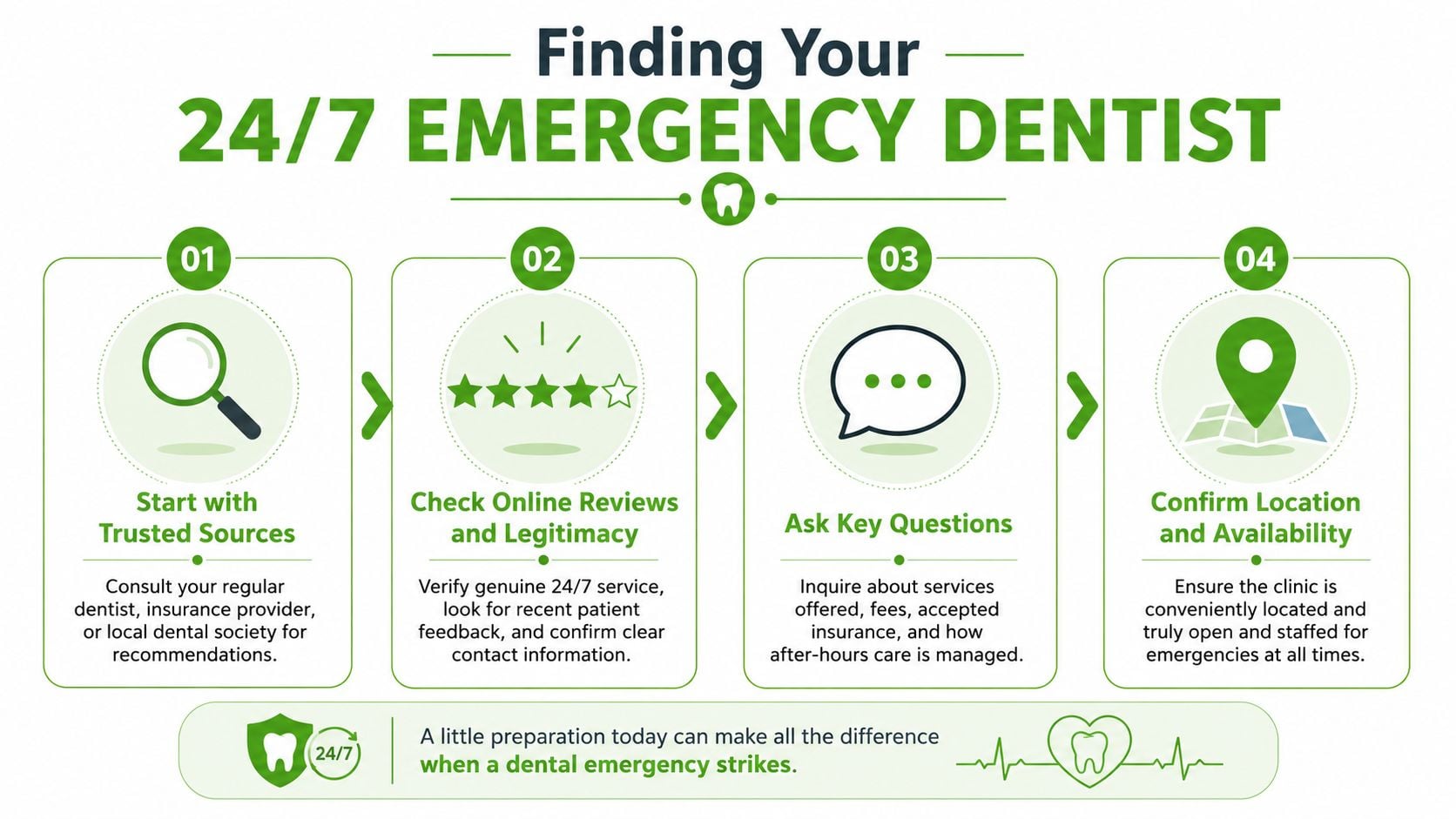
How to Find a Reputable 24 Hour Emergency Dentist
A search result isn't the same thing as care. Some listings route to a call center. Some offices say “emergency” but only answer messages after hours. You need to know whether a clinician can help tonight.
Start with the most reliable paths
A smart search order looks like this:
- Your regular dentist first. Many practices have an after-hours line or on-call arrangement.
- Your insurance directory next. It may narrow the list to offices already in network.
- Local dental society or established clinics. These are often more trustworthy than random lead-generation pages.
- Specialty backup when needed. If your emergency may involve surgery or complex extractions, regional providers such as oral surgeons in Charlotte NC that accept Medicaid can be useful to know about.
Questions to ask on the phone
Don't ask only, “Are you open?” Ask questions that reveal whether the office is equipped and available.
- “Are you seeing patients right now, or are you taking messages?”
- “Is a dentist physically available tonight?”
- “Do you treat broken teeth, swelling, abscesses, or knocked-out teeth?”
- “What should I do before I arrive?”
- “What should I bring?”
- “How is payment handled for after-hours visits?”
Look for signs the office is organized
A reputable emergency setup usually has:
- Clear contact instructions
- A real location
- Specific emergency conditions listed
- Recent patient feedback that mentions after-hours care
- A plan for triage, not just marketing copy
Some clinics now use digital systems to handle this better. When after-hours intake is organized with tools such as HIPAA-compliant AI solutions, patients can get faster symptom routing and clearer next steps instead of a dead-end voicemail.
A good emergency office doesn't just promise access. It tells you exactly who will call back, when you'll be seen, and what to do until arrival.
Search terms that work better
Try combinations that match the exact problem:
- 24 hour emergency dentist near me
- same day dentist for toothache
- emergency dentist broken tooth
- urgent dental care abscess
- after-hours dentist knocked-out tooth
That tends to pull up more useful results than broad searches alone.
Preparing for Your Emergency Dental Visit
Once you've secured an appointment, the next goal is simple. Show up ready, not rushed and scattered. Most emergency visits move quickly, and the information you bring affects both safety and treatment choices.
What to bring
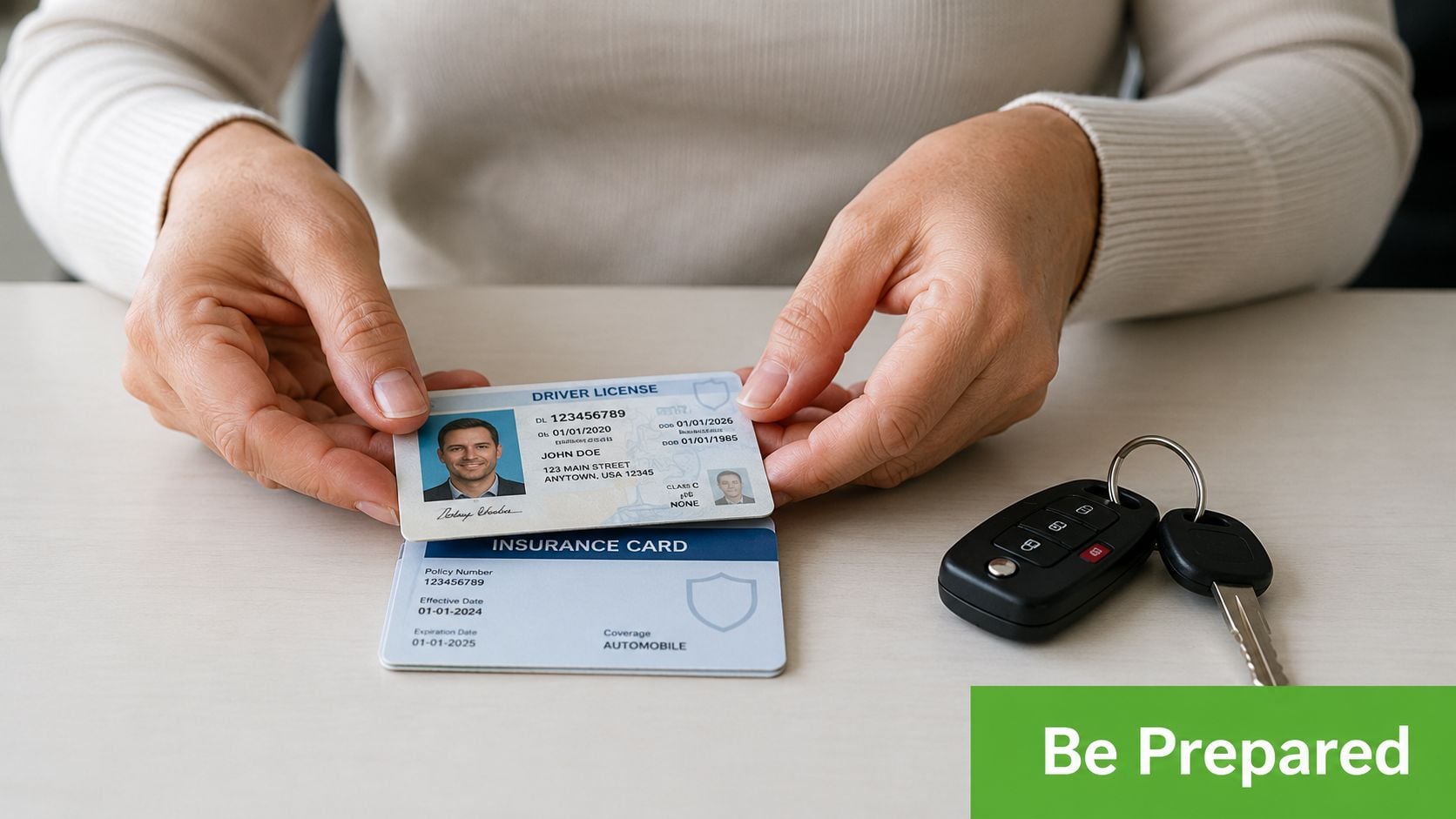
Bring the basics, even if the office says “just come in”:
- Photo ID
- Insurance card if you have one
- A list of medications
- Allergy information
- Any dental piece that came out, including a crown, filling fragment, retainer part, or broken tooth segment
- A brief timeline of when the pain or injury started
If sedation or a procedure becomes part of the visit, treatment planning may overlap with issues usually discussed in oral surgery anesthesia. That's another reason medication history and recent food intake matter.
What usually happens in the chair
A typical emergency visit starts with a short review of the problem in plain language. Then the team checks the painful area, the bite, surrounding gums, and nearby structures. X-rays may be recommended if they're needed to locate decay, fracture, infection, root problems, or bone involvement.
The main objective is usually stabilization, not perfect final dentistry in one sitting. That may mean numbing the area, draining pressure, smoothing a broken edge, prescribing a short-term plan, placing a temporary material, or determining whether the tooth is restorable.
What many patients misunderstand
People often arrive expecting the final crown, final root canal, or complete reconstruction on the spot. Sometimes that happens. Often it doesn't.
Emergency care is more commonly about:
- Stopping pain
- Reducing infection risk
- Protecting the tooth or surrounding tissue
- Creating a safe next step
That's not incomplete care. That's appropriate triage.
The best emergency visits leave you with less pain, a clear diagnosis, and a scheduled plan. If you leave with only temporary relief and no follow-up path, the problem often returns.
Before you walk out
Ask three things before checkout:
- What exactly caused this
- What is temporary and what still needs definitive treatment
- What signs mean I should call back immediately
Those questions reduce confusion later, especially once the numbness wears off and you're trying to remember details.
After the Emergency The Importance of Follow-Up Care
The pain stopping isn't the same as the problem being solved. That's the mistake that keeps people trapped in repeat emergencies.
One emergency dentistry report summarized in same-day treatment and follow-up data showed that treatment acceptance at the emergency visit was about 93.3%, but only 43% of initially seen patients returned for further definitive care within 30 days. That pattern is common in real life. Patients feel better, get busy, and postpone the next step until the tooth flares again.
Why emergencies keep repeating
Sometimes the cause is straightforward. A deep cavity needs root canal treatment or extraction. A broken tooth needs a crown or replacement plan. An abscess needs full resolution, not just temporary pain control.
But some late-night “tooth emergencies” aren't purely tooth problems. Guidance on dental emergencies and chronic pain patterns notes that pain that becomes unbearable at night can be tied to TMJ dysfunction or sleep-disordered breathing, both of which need specialized follow-up if you want to prevent another crisis.
Clues that the emergency may be part of a bigger pattern
Watch for these signs after the urgent issue settles:
- Morning jaw soreness
- Headaches on waking
- Clenching or grinding
- Jaw clicking, locking, or limited opening
- Neck and facial muscle tension
- Snoring, poor sleep, or waking unrefreshed
- Repeated cracked teeth, failed fillings, or bite pain
Those patterns change the conversation. The question is no longer just, “How do we stop this tooth from hurting today?” It becomes, “Why is your mouth under this kind of stress in the first place?”
What effective follow-up looks like
Good follow-up is specific. It should answer:
- Does this tooth need definitive restoration
- Is there a bite issue contributing to overload
- Is jaw joint or muscle dysfunction part of the pain
- Are airway or sleep problems increasing clenching and inflammation
- Do you need restorative, endodontic, surgical, or TMJ-focused care
That approach is how people break the cycle. Temporary care has a place. It just can't be the whole plan.
Relief is the first win. Root-cause diagnosis is what keeps you from ending up back in the same chair on another sleepless night.
If your “dental emergency” keeps returning as jaw pain, facial tension, headaches, clenching, or poor sleep, a more complete evaluation may be the missing piece. Pain and Sleep Therapy Center focuses on TMJ disorders, facial pain, and sleep-related breathing issues that often sit underneath repeat urgent visits. When pain relief alone isn't enough, root-cause care can change the pattern.