

When your search for a "tongue tie release near me" leads you to our door, it's usually because you're dealing with a real-life challenge. Maybe it's a stressful breastfeeding journey, or perhaps you're trying to figure out the root cause of unexplained speech or sleep issues.
Here at the Pain and Sleep Therapy Center in Charlotte, NC, we focus on providing clear answers and effective, gentle solutions. We combine a modern laser frenectomy with comprehensive, supportive care to ensure you get lasting relief and a better quality of life.
Your Guide To Expert Tongue Tie Release In Charlotte

A tongue tie, known in clinical terms as ankyloglossia, is so much more than just a little piece of tissue. Think of the small band under your tongue (the lingual frenulum) as an anchor. For most people, this anchor is long and flexible, giving the tongue the freedom to move as it should.
But when that anchor is too short, thick, or tight, it essentially tethers the tongue, restricting its range of motion. This isn't just a minor quirk; it can get in the way of fundamental functions at every stage of life. The problems just look a little different as a person gets older.
How Tongue Tie Impacts Different Age Groups
For an infant, a functional tongue is absolutely critical for creating a proper seal to breastfeed effectively. When the tongue can't lift and move correctly, it can set off a frustrating cascade of problems for both the baby and the mother.
In older children and adults, the effects of that same tethered anchor shift. An inability to touch the roof of the mouth or move from side to side can interfere with speech clarity, chewing, and even the resting posture of the tongue—something we now know is directly linked to airway health and sleep quality.
The key isn't just seeing if a frenulum is there. It's all about understanding its functional impact.
The core issue isn't the existence of the tissue itself, but how that tissue restricts the tongue's ability to perform vital functions like eating, speaking, and breathing correctly. That’s why a functional diagnosis is far more important than a visual one.
A Roadmap To Finding A Solution
This guide is your starting point for navigating this complex issue right here in the Charlotte area. We want to give you a clear roadmap that covers every step of the process, making sure you feel confident and informed from day one. Our goal is to move past temporary fixes and truly address the root cause of the problem.
We’ll explore:
- Identifying the Signs: Pinpointing specific symptoms in infants, children, and adults that often point to a restrictive tongue tie.
- The Diagnostic Process: Understanding what a thorough, function-based evaluation involves and why it’s so crucial for success.
- Modern Treatment: Explaining the gentle, precise laser frenectomy process and how it’s a world apart from older, more invasive methods.
- Post-Procedure Care: Highlighting the essential role of therapy in achieving long-term success and preventing the tissue from reattaching.
This journey is all about restoring function and improving health. It starts with finding a trusted local expert who understands the whole picture.
To help you see the connections, we've put together a quick overview of how tongue tie can show up at different life stages and what a modern, comprehensive approach to fixing it looks like.
Common Tongue Tie Issues and Modern Solutions
| Affected Group | Key Symptoms | Potential Long-Term Issues | Effective Treatment Approach |
|---|---|---|---|
| Infants | Painful nursing, poor latch, slow weight gain, clicking sounds, reflux symptoms | Failure to thrive, early weaning, maternal nipple pain, bonding issues | Laser Frenectomy paired with support from a lactation consultant (IBCLC) and bodywork like craniosacral therapy. |
| Children | Picky eating, speech articulation issues (l, r, s, th), messy eating, gagging | Dental crowding, narrow palate, mouth breathing, sleep-disordered breathing | Laser Frenectomy combined with myofunctional therapy to retrain oral muscles for proper speech, chewing, and swallowing. |
| Adults | Headaches, neck/shoulder tension, snoring, sleep apnea, speech difficulties | Chronic pain, TMJ disorders, compromised airway, poor sleep quality | Laser Frenectomy integrated with myofunctional therapy and, if needed, collaboration with a sleep specialist or physical therapist. |
As you can see, the symptoms evolve, but the underlying issue of restricted function remains the same. A successful outcome depends on releasing the restriction and retraining the body to use its newfound freedom correctly.
Recognizing the Signs of a Tongue Tie
A tongue tie isn't just a small piece of tissue—it's more like a tightly held anchor. This anchor, called the lingual frenulum, can stop the tongue from doing all of its important jobs. The problems this causes often look different depending on someone's age, but the root issue is always the same: the tongue simply can't function the way it's supposed to.
For a newborn, a restricted tongue can immediately throw a wrench in the mechanics of feeding. A baby needs to lift and extend their tongue to create a good seal and draw out milk, but a tight frenulum gets in the way. This can kick off a domino effect of issues that cause a ton of stress for both the baby and their parents.
It's not just babies, either. Older children and adults can spend their whole lives compensating for a tongue that can't move freely, leading to problems that are often overlooked or blamed on something else entirely.
Telltale Signs in Infants and Babies
Catching a potential tongue tie early can make a massive difference in a baby's development and a parent's feeding journey. The tricky part is that many of the signs are subtle and can easily be mistaken for other common baby issues, like colic or reflux. If you're noticing several of these symptoms together, it’s a strong signal that a professional evaluation is needed.
Common Infant Symptoms Include:
- Difficulty Latching: The baby just can't seem to get a deep latch, or they constantly slip off the breast or bottle.
- Clicking or Smacking Sounds: If you hear noises during feeding, it often means the baby is losing suction over and over because their tongue can't hold a proper seal.
- Maternal Nipple Pain: A shallow latch forces the baby to chew or clamp down on the nipple, which can cause serious pain, cracking, or even bleeding for a nursing mom.
- Slow Weight Gain: When a baby can't transfer milk efficiently, they may struggle to gain weight. This is sometimes referred to as "failure to thrive."
- Frequent or Long Feedings: Does it feel like your baby is always on the breast? A baby with a tongue tie might feed for very long stretches (think over 40 minutes) but still act hungry and fussy afterward.
A key sign of a restricted tongue is increased oral tension. Many of these babies are particularly "chompy" when a finger is placed in their mouth, a compensation for the tongue's inability to function correctly.
If these patterns sound familiar, you can learn more about how to tell if your baby has a tongue tie and why a professional assessment is so important.
Uncovering Symptoms in Children and Adults
As a person gets older, the effects of a tethered tongue shift from feeding challenges to other functional problems. These issues can impact everything from how clearly someone speaks to their dental health, sleep quality, and even chronic pain. Many adults live with these symptoms for decades without ever realizing the underlying cause.
Signs in Older Children and Adults Often Involve:
- Speech Articulation Issues: Trouble making sounds that require the tongue to lift, like 't', 'd', 'l', 'n', 'r', and 's'.
- TMJ Pain and Headaches: The tongue is connected to a whole network of muscles in the face and neck. When it can't move right, other muscles have to overcompensate, which can lead to chronic tension, jaw pain, and nagging headaches.
- Sleep-Disordered Breathing: A tongue that can't rest properly on the roof of the mouth is more likely to fall back and block the airway during sleep. This can contribute to snoring and even sleep apnea.
- Picky or Messy Eating: Difficulty moving food around in the mouth can lead to problems with certain textures, messy eating habits, and even frequent gagging.
Recognizing these signs is the first, most critical step toward finding a real solution. When you're searching for a "tongue tie release near me," you are looking for an expert who can connect these dots and figure out if a restricted frenulum is truly at the heart of the problem.
Why a Comprehensive Evaluation Is a Critical First Step
A diagnosis should never be a rushed decision made from a quick peek under the tongue. When you start looking for a “tongue tie release near me,” you’ll find that the most important part of the journey isn't the procedure itself—it’s the detailed evaluation that comes first. This initial step is designed to prevent unnecessary treatments and ensure that if a release is recommended, it’s for all the right reasons.
Think of it like being a detective. Simply seeing a frenulum (the small band of tissue under the tongue) isn’t enough to solve the case. The real question is: how is that tissue impacting function? A true diagnosis has to focus on the patient’s real-world symptoms and limitations, not just what’s visible. We treat the person, not just the tissue.
More Than Just a Visual Check
A proper assessment goes far beyond a quick look. It's a careful, multi-layered investigation to understand the complete picture of your or your child's health.
This in-depth approach includes:
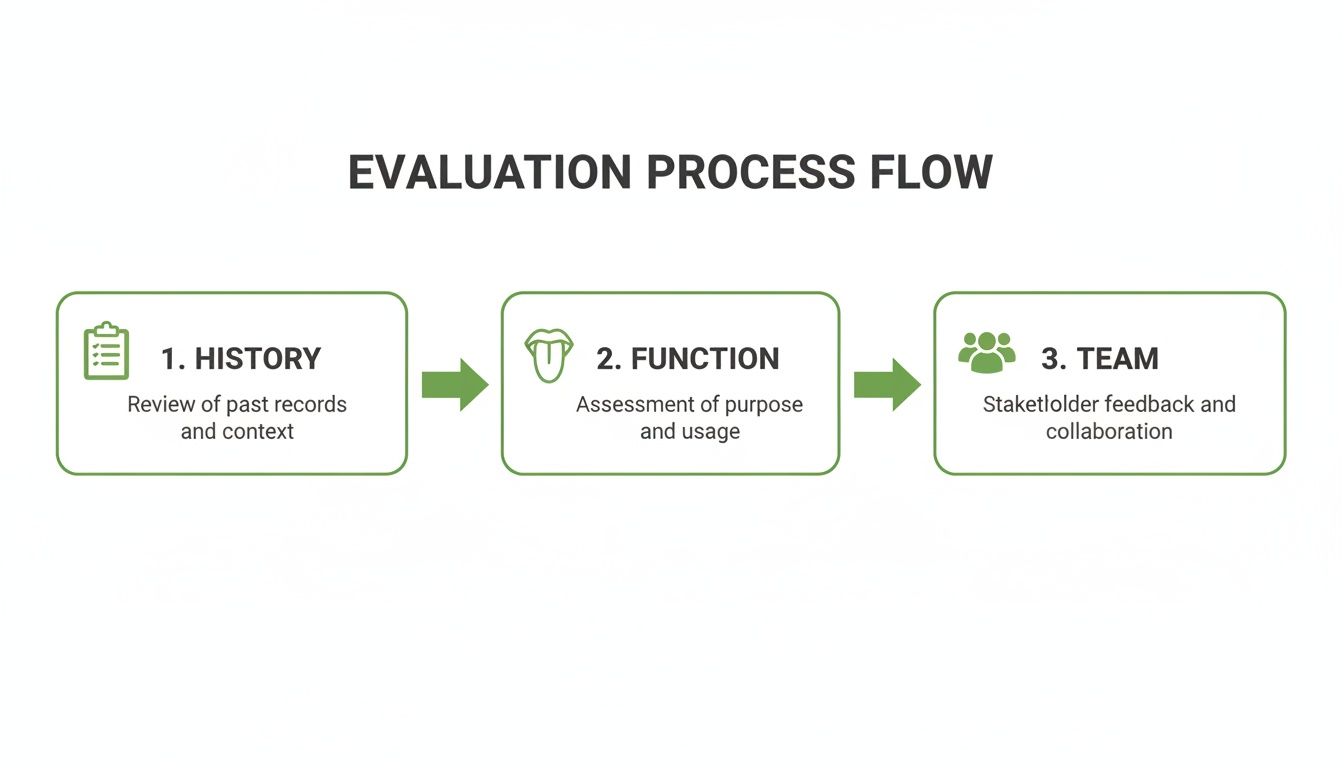
- A Detailed Patient History: For an infant, this means talking through the entire feeding journey—the quality of their latch, any pain mom is feeling, weight gain patterns, and fussiness. For adults, it’s about exploring chronic issues like headaches, TMJ pain, speech difficulties, or poor sleep.
- Functional Mobility Analysis: The provider will manually assess the tongue's actual range of motion. Can it lift to the roof of the mouth? Can it sweep from side to side without strain? This hands-on analysis reveals how much the frenulum is actually restricting movement.
- Interdisciplinary Collaboration: The best experts know they’re part of a team. This often means consulting with specialists like International Board-Certified Lactation Consultants (IBCLCs), speech-language pathologists (SLPs), or orofacial myofunctional therapists who can offer crucial insights into feeding, speech, and muscle function.
Preventing Unnecessary Procedures
This function-first philosophy is essential for building trust and ensuring the best outcomes. It acknowledges that not every visible tongue tie is problematic or needs a surgical fix. In many cases, a thorough evaluation actually helps families avoid a procedure they don’t need.
An accurate diagnosis must be based on a combination of anatomical findings, functional limitations, and a detailed history of related symptoms. Without all three, a recommendation for release is premature.
Recent research really drives this point home. One study, for example, found that a staggering 62.6% of infants referred for a frenectomy didn't actually need one after they had a full feeding assessment with a multidisciplinary team. They were able to achieve successful breastfeeding without any surgical intervention at all. You can learn more about these findings on the importance of comprehensive evaluations.
This is exactly why we are so committed to a meticulous diagnostic process—it ensures that when a tongue tie release is performed, it’s genuinely necessary for improving function and quality of life.
What to Expect During a Laser Frenectomy
The thought of any kind of procedure, especially for a little one, can feel a bit overwhelming. But when it comes to tongue tie release, the modern laser frenectomy has really become the gold standard—and for good reason. It’s gentle, incredibly quick, and highly effective.
Honestly, it's a world away from the old-school surgical methods that used scalpels and stitches. Understanding what the process actually looks like, step-by-step, can help replace that apprehension with a feeling of confidence. The entire experience is built around comfort and safety, whether we're treating a newborn or an adult.
The Gold Standard Laser Approach
So, how does it work? Unlike a traditional scalpel, a specialized CO2 laser doesn't "cut" in the way you might think. Instead, it uses a very precise beam of light to vaporize and release the tight tissue. This high-tech approach gives us some major advantages:
- Pinpoint Precision: The laser lets us release the exact amount of tissue needed to restore full function, without ever touching the surrounding areas.
- Minimal to No Bleeding: As the laser works its magic, it also seals the tiny blood vessels along the way. This means the procedure is virtually bloodless.
- Reduced Discomfort: That same sealing action applies to nerve endings, which dramatically minimizes pain both during the release and afterward.
For infants, we typically only need a topical numbing gel, and the procedure itself is often over in less than 60 seconds. It’s a remarkably fast and gentle process.
The goal of a modern laser frenectomy isn't just to snip the tissue. It's to do it with the least possible impact, which encourages rapid healing and an immediate return to function—like a baby being able to breastfeed comfortably just moments after the procedure.
Before we even get to that point, a thorough, function-based assessment is key. We only recommend treatment after a complete review of a patient's history, a hands-on functional assessment, and collaboration with a broader care team.
Your Step-by-Step Experience
Knowing what to expect on the day of the appointment makes everything feel much more manageable. While every person is different, the core steps stay the same.
- Final Consultation and Consent: We'll start by sitting down with you to review the findings from the evaluation one more time. We’ll answer any last-minute questions you have and make sure you feel completely informed and ready to move forward.
- Getting Ready: For an infant, we’ll gently swaddle them (sometimes called a "blue burrito") to help them feel secure and calm. For every patient, we use special eyewear to protect their eyes from the laser light.
- The Gentle Release: With the help of a trained assistant, the provider will carefully lift the tongue to make the frenulum visible. Then, the laser is used to perform the release. You might hear the quiet hum of the laser and suction, but it's all over in just a few moments.
- Immediate Aftercare: For babies, the best next step is often to nurse right away. This is incredibly soothing for them and also lets them start using their newly freed tongue immediately. We will give you specific, easy-to-follow instructions for post-procedure stretches. These are absolutely vital for preventing reattachment and ensuring the best possible outcome.
The Crucial Role of Post-Procedure Therapy

A laser frenectomy is fantastic at releasing the physical restriction, but the procedure itself is really just the first step. True, lasting success comes from the critical work that follows.
Think of it like this: releasing a tongue tie is like taking a cast off a broken arm. The limb is finally free, but the muscles are weak, uncoordinated, and have no idea how to function in this new, unrestricted way. They have to be retrained.
This is why post-procedure therapy isn't just a suggestion—it's non-negotiable. Without it, the body’s natural healing process can cause the released tissue to reattach, essentially undoing all the benefits of the procedure. More importantly, the brain and muscles have to unlearn old habits and form entirely new patterns for something as basic as swallowing.
Building New Habits With Myofunctional Therapy
This essential retraining happens through orofacial myofunctional therapy (OMT). You can think of OMT as highly specialized physical therapy, but for your mouth, jaw, and tongue. A trained therapist walks patients through targeted exercises designed to build strength, improve coordination, and establish correct functional habits.
The main goals here are pretty straightforward:
- Preventing Reattachment: Gentle stretches and specific exercises make sure the wound heals openly, preserving the tongue's new and improved range of motion.
- Establishing Correct Oral Rest Posture: We train the tongue to rest gently on the roof of the mouth. This is vital for proper jaw development and keeping the airways open.
- Retraining Swallowing Patterns: It’s crucial to correct the dysfunctional swallowing habits that almost always develop as a compensation for the tongue tie.
The release procedure gives the tongue the potential to function properly. Post-procedure therapy is what turns that potential into a reality, ensuring the benefits stick around for good.
When you're searching for a "tongue tie release near me," it is absolutely vital to choose a provider who makes this therapy a core part of their treatment plan from the very beginning.
The results of this combined approach speak for themselves. One study found that when surgical release was paired with therapy, a remarkable 96% of participants achieved full correction in just 45 days, reporting significant improvements in speech, swallowing, and even sleep-disordered breathing. You can dive into the research highlighting these positive outcomes to see the data for yourself.
Our team can help you learn more about what orofacial myofunctional therapy involves and why it’s the key to turning a simple procedure into a life-changing improvement.
How to Choose the Right Provider in Charlotte
When you're searching for "tongue tie release near me," you're really looking for a provider you can trust with your own health or your child's. This isn't just a simple procedure—the provider's philosophy and skill make all the difference in the final outcome.
The best providers don't just look at the piece of tissue under the tongue; they look at the bigger picture of function. They should be deeply experienced with precise tools like the CO2 laser, which ensures a gentle and accurate release. But the technology is only one piece of the puzzle. The most effective clinics are the ones that work as an integrated team.
Key Qualifications to Look For
As you evaluate specialists in the Charlotte area, here are a few non-negotiables to look for:
- A Commitment to Functional Diagnosis: Their evaluation should be comprehensive, assessing mobility, symptoms, and function—not just a quick peek in the mouth.
- An Interdisciplinary Team: The best outcomes happen when the provider works hand-in-hand with lactation consultants, speech pathologists, or orofacial myofunctional therapists. This is a huge sign they're invested in long-term success.
- Emphasis on Post-Procedure Care: There must be a clear, non-negotiable plan for stretches and therapy after the release. This is absolutely critical for preventing reattachment and making sure the results stick.
Questions to Ask During Your Consultation
Don't be afraid to ask questions. A confident, experienced provider will welcome them and have clear answers ready.
- What does your evaluation process actually involve?
- How do you collaborate with other therapists, like lactation or speech?
- What is your protocol for post-procedure stretches and therapy?
- What type of laser do you use, and why did you choose it?
Choosing the right expert means finding a true partner in health—someone dedicated to restoring function and improving your or your child's quality of life. To see what this team-based approach looks like in practice, you can learn more about our providers at the Pain and Sleep Therapy Center and our deep commitment to collaborative care. It’s this holistic perspective that ensures every patient gets the comprehensive support they need to truly thrive.
Your Tongue Tie Release Questions Answered
When you're exploring the world of tongue ties, it's natural to have a lot of questions. Whether you’re a new parent trying to figure out the best path for your baby, or an adult who’s finally found a potential answer to lifelong issues, you need clear, straightforward information.
Here in our Charlotte clinic, we hear a lot of the same questions from families just like yours. We’ve put together some honest answers to help you feel confident and informed as you weigh your options.
Is a Tongue Tie Release Painful for My Baby?
This is usually the very first question parents ask, and it’s an important one. We use a modern laser for our frenectomies, which is designed to be incredibly gentle. Before we even begin, we apply a strong topical numbing gel to the area.
The procedure itself is surprisingly fast—often taking less than a minute. One of the biggest benefits of the laser is that it seals nerve endings as it goes, which keeps discomfort to a minimum. Most babies are able to breastfeed right after the procedure, which is not only comforting for them but also helps them start using that new range of motion right away.
Will My Insurance Cover a Tongue Tie Release?
This is a tricky one, as insurance coverage for frenectomies can be all over the map. Some plans will cover a portion of the procedure, but others won't, so it's never a guarantee. The best first step is to call your insurance provider directly to understand your specific benefits.
Our team here at the center is happy to give you the exact billing codes and documentation you’ll need to submit a claim for potential reimbursement.
How Quickly Will We See Improvements After the Procedure?
The timeline really depends on the person’s age and the specific symptoms they were having.
For infants struggling to feed, the improvement in their latch can be almost immediate. For older kids and adults with speech or functional issues, the release is what enables improvement, but the real progress comes from the therapy that follows.
Orofacial myofunctional therapy is the key to retraining the muscles. It’s what helps establish new, correct habits, with steady improvements becoming more noticeable over the following weeks.
Ready to take the next step? If you're wondering if a tongue tie release is the right solution for you or your child, our team at Pain and Sleep Therapy Center is here to help. We provide comprehensive, function-based evaluations to get to the root of the problem and guide you through every stage of the process.