You got the diagnosis. You may already have a CPAP on the nightstand, still in the box, or you’ve tried it and learned quickly that “effective” and “easy to live with” aren’t always the same thing. Maybe your partner hears the snoring, you wake with a dry mouth or headache, and by midafternoon you feel like your brain is pushing through mud.
That’s where many people get stuck. They assume the only real choices are to force themselves to tolerate equipment or to do nothing and hope fatigue, jaw tension, and restless sleep somehow improve on their own. In practice, there’s a middle path. Several obstructive sleep apnea home remedies can reduce airway collapse, improve nasal airflow, and support better sleep quality at home.
CPAP still matters. For many people, especially with moderate to severe OSA, it remains the most reliable way to keep the airway open. But home strategies often make a major difference in how you feel, how well you sleep, and how successful any professional treatment becomes. Some address mechanics, like tongue posture, mouth breathing, and sleep position. Others reduce contributors such as congestion, inflammation, or weight-related airway narrowing.
The most useful mindset is this: don’t chase a single hack. Build a system. If your airway collapses because of poor nasal breathing, a low tongue posture, and back sleeping, one remedy alone usually won’t solve the whole problem. Layered changes work better.
If you’re also exploring effective CPAP alternatives, use this guide as a practical starting point. These aren’t gimmicks. They’re the at-home strategies I’d want a patient to understand clearly, including what helps, what doesn’t, and where the trade-offs are.
1. Nasal Breathing Exercises and Buteyko Breathing Technique
Mouth breathing is common in people with OSA, but that doesn’t make it harmless. When the mouth hangs open at night, the tongue tends to sit lower, the jaw can fall backward, and the upper airway becomes less stable. Nasal breathing does the opposite. It supports better tongue posture and makes airflow more controlled.
That’s why breathing retraining deserves more attention than it gets in typical lists of obstructive sleep apnea home remedies.
How Buteyko helps the airway
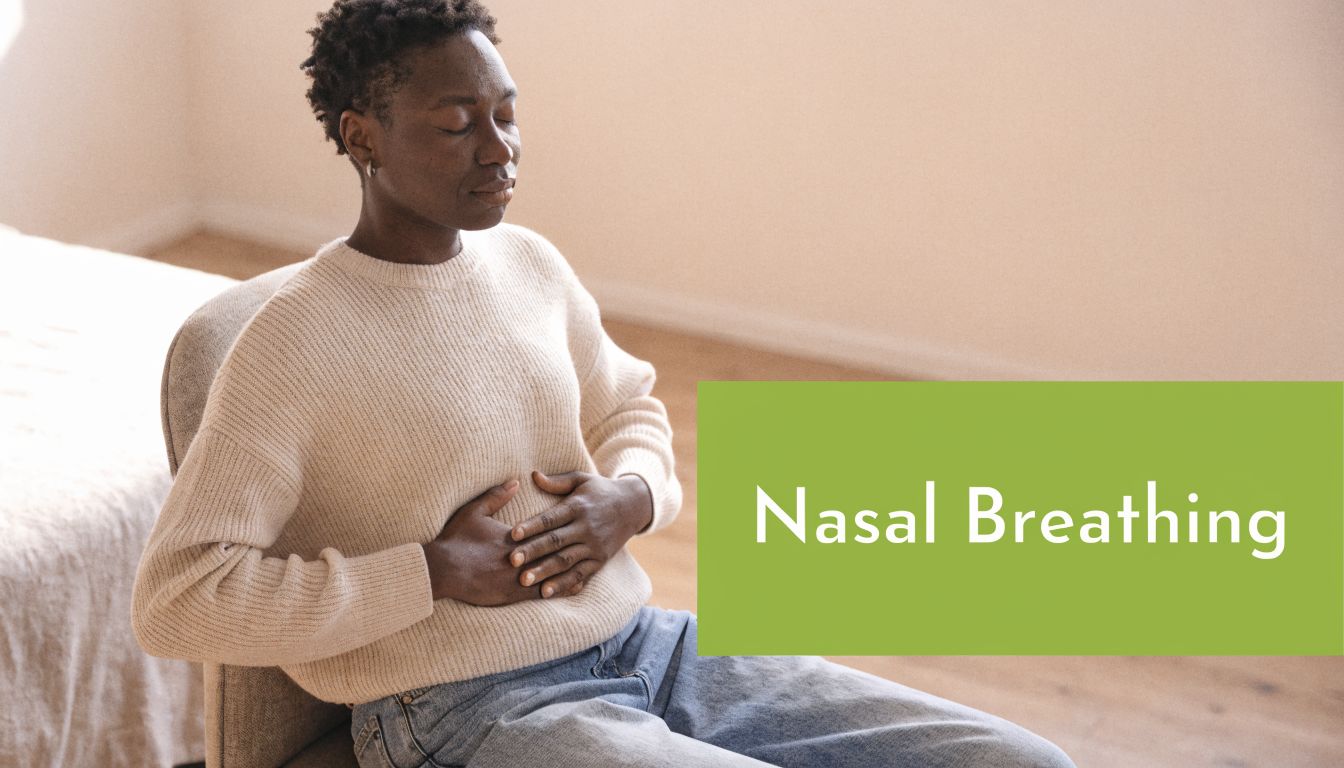
Buteyko breathing emphasizes quiet nasal breathing, smaller breaths, and better tolerance of normal carbon dioxide levels. In practical terms, it teaches you to stop overbreathing. People who chronically breathe through the mouth often feel “air hungry,” but the answer usually isn’t bigger breaths. It’s calmer, more efficient breathing through the nose.
Start while you’re awake. Sit upright, close your mouth, rest the tongue gently on the palate, and breathe softly through your nose. Keep the shoulders relaxed. If you can’t do that comfortably for a few minutes during the day, it’s unrealistic to expect your body to maintain it all night.
A simple home sequence works well:
- Begin small: Practice gentle nasal breathing for a short daily session, then add brief sessions during walking, desk work, or driving.
- Clear the pathway first: If congestion is the obstacle, pair breathing work with saline rinsing and the guidance in these breathing exercises for nasal congestion.
- Track patterns: Use a sleep diary to note dry mouth, morning headaches, snoring comments from a partner, and whether you wake with less chest tension.
Practical rule: If nasal breathing feels forced, painful, or impossible, don’t “push through.” Persistent blockage often means swelling, allergy burden, a deviated septum, enlarged turbinates, or another structural issue that needs evaluation.
What works and what doesn’t
What works is repetition. Patients do best when they make nasal breathing their daytime default first. That rewires the habit. In my experience, the people who improve fastest stop treating breathing exercises like a bedtime-only trick and start using them throughout the day.
What doesn’t work is trying to tape over severe congestion or using aggressive breath holds without guidance. Buteyko should feel controlled, not stressful. If you have asthma, panic symptoms, or significant nasal obstruction, get individualized instruction instead of copying internet videos at random.
This remedy is especially useful when OSA overlaps with snoring, jaw tension, dry mouth, or a history of chronic mouth breathing.
2. Positional Therapy and Sleep Position Modification
Some people only snore a little louder on their back. Others experience a very different airway there. Gravity pulls the tongue and soft palate backward, and the airway narrows enough to create repeated obstruction. If that sounds familiar, side sleeping can be one of the highest-yield changes you make.
This is one of the simplest obstructive sleep apnea home remedies, but simple doesn’t mean automatic. Most patients know they “should” sleep on their side. The point is whether their setup effectively keeps them there.
Build a side-sleeping setup that lasts all night
A body pillow behind your back often works better than relying on willpower. It creates resistance when you start to roll supine. A pillow between the knees can also reduce hip and low back strain, which is why some people stay on their side longer once they’re physically comfortable.
If shoulder pain makes side sleeping hard, elevation can help. A wedge pillow or adjustable bed may reduce the sense of collapsing backward, even if you aren’t perfectly on your side. Good pillow height matters too. If the neck bends sharply up or down, the airway and jaw can both feel worse by morning.
A few practical combinations tend to work well:
- Body pillow plus knee pillow: Best for people who can side sleep but keep rolling back.
- Wedge plus side sleeping: Helpful for reflux, congestion, or people who feel worse fully flat.
- Positional feedback device: Useful for restless sleepers who need a physical reminder, not just more pillows.
Sleeping on your side isn’t a cure for every case of OSA, but it can be a meaningful reducer of nighttime airway collapse in people whose events cluster when they sleep supine.
Real trade-offs to expect
The downside is adherence. Positional therapy fails when the position isn’t sustainable. If your mattress is unsupportive, your shoulder hurts, or your pillow pushes your head too far forward, you’ll drift back to old habits.
That’s why comfort products matter more than people think. The right pillow can support the neck and jaw instead of fighting them. If you’re reworking your setup, this ultimate guide to bedding comfort is a useful reference for side-sleeper pillow features.
What doesn’t help much is stacking a pile of random pillows and hoping for the best. Usually that creates neck flexion, jaw strain, or a position that collapses halfway through the night. The goal isn’t to look side-sleeping. It’s to stay there comfortably.
3. Orofacial Myofunctional Therapy OMT
If your tongue rests low in the mouth, your lips stay apart, or you clench and mouth breathe, the airway often pays the price. Orofacial myofunctional therapy targets those patterns directly. It trains the muscles of the tongue, lips, cheeks, and throat to support a more stable airway.
This is the root-cause strategy many people haven’t heard of until they’ve already tried generic advice for years.
Why muscle patterning matters
OSA isn’t only about body size or snoring volume. Muscle tone and resting posture matter. A tongue that sits against the palate helps support the upper airway. A tongue that drops low, especially during sleep, is more likely to contribute to collapse.
The underserved angle here is important. A review of overlooked home approaches notes that online guidance often skips step-by-step myofunctional work, even though it may reduce AHI by 50% in mild OSA cases when combined with lifestyle changes, according to SleepApnea.org’s discussion of home remedies and OMFT.
That doesn’t mean everyone should self-prescribe a handful of random tongue exercises. Technique matters. The muscles have to be trained in the right sequence.
To see what guided care can look like, review this page on myofunctional therapy for sleep apnea.
A realistic home routine
Most adults do better with short, repeatable sessions than with one long session they quit after a week. A home routine may include tongue-to-palate holds, lip seal work, controlled swallowing practice, cheek activation, and oral rest posture drills. Mirrors help early on because many patients think they’re doing the movement correctly when they’re compensating with the jaw or neck.
A few signs you’re practicing the right thing:
- Tongue stays up without jaw strain: You shouldn’t need to clench your molars to keep the tongue on the palate.
- Lips rest together lightly: Lip seal should feel gentle, not forced.
- Swallowing gets quieter: Less facial grimacing and less chin overuse usually mean coordination is improving.
Later in the routine, this demonstration can help visualize the type of work involved:
What works is consistency and progression. What doesn’t is skipping straight to advanced exercises or turning every repetition into a jaw workout. Patients with TMJ pain especially need careful form, because poor technique can aggravate symptoms even when the therapy itself is appropriate.
4. Weight Management and Targeted Exercise
Weight loss advice is often delivered so vaguely that patients tune it out. That’s a mistake, because body weight can change OSA in a very real way. Excess tissue around the neck and airway increases collapsibility, and insulin resistance and poor sleep can feed the cycle.
This is one area where long-term data matters. In a large randomized study of patients with obesity, diabetes, and sleep apnea, intensive lifestyle intervention produced a 34.4% remission rate at 10 years, compared with 22.2% with diabetes support and education alone, as summarized by the Cleveland Clinic Journal of Medicine review. The same review notes that losing 10% of body weight can reduce the number of apnea episodes.
Focus on airway benefit, not just the scale
Patients often ask whether exercise helps only if they lose a lot of weight. Not necessarily. Better conditioning can improve sleep quality, energy, and adherence to other therapies. But the biggest OSA shifts usually happen when exercise and nutrition create sustained weight change.
That means avoiding extreme plans. Crash dieting can worsen sleep, increase cravings, and lead to rebound weight gain. A durable plan is usually more boring than people want to hear: regular walking, resistance training, protein-forward meals, fewer liquid calories, fewer late-night snacks, and a repeatable eating structure.
For exercise ideas with an airway focus, this guide to the best exercises for sleep apnea is a practical starting point.
What to do at home
A home program works better when it has clear anchors:
- Choose repeatable cardio: Brisk walking, cycling, swimming, or another activity you’ll do most days.
- Add strength training: Whole-body resistance work supports metabolism and makes weight maintenance easier.
- Protect the evening window: Large late meals often worsen reflux, nasal congestion, and sleep fragmentation.
- Watch the sleep-weight loop: Poor sleep increases appetite and lowers recovery, which is why this article on sleep's role in losing weight is worth reading alongside nutrition changes.
If a patient tells me they’re “trying to lose weight” but they’re sleeping four broken hours, mouth breathing all night, and waking exhausted, I don’t treat that as a motivation problem. I treat it as a physiology problem.
What doesn’t work is treating weight management as your only plan if your airway is clearly collapsing now. It’s powerful, but it takes time. Use it alongside other airway-focused remedies, not instead of them.
5. Nasal Saline Irrigation and Decongestive Measures
If your nose is blocked, your body usually finds another route. That route is the mouth, and mouth breathing often makes OSA worse. Saline irrigation is one of the least glamorous home tools, but it’s often one of the most useful.
It doesn’t “treat sleep apnea” directly. It removes one of the reasons your breathing pattern gets worse at night.
How to use saline without irritating the nose
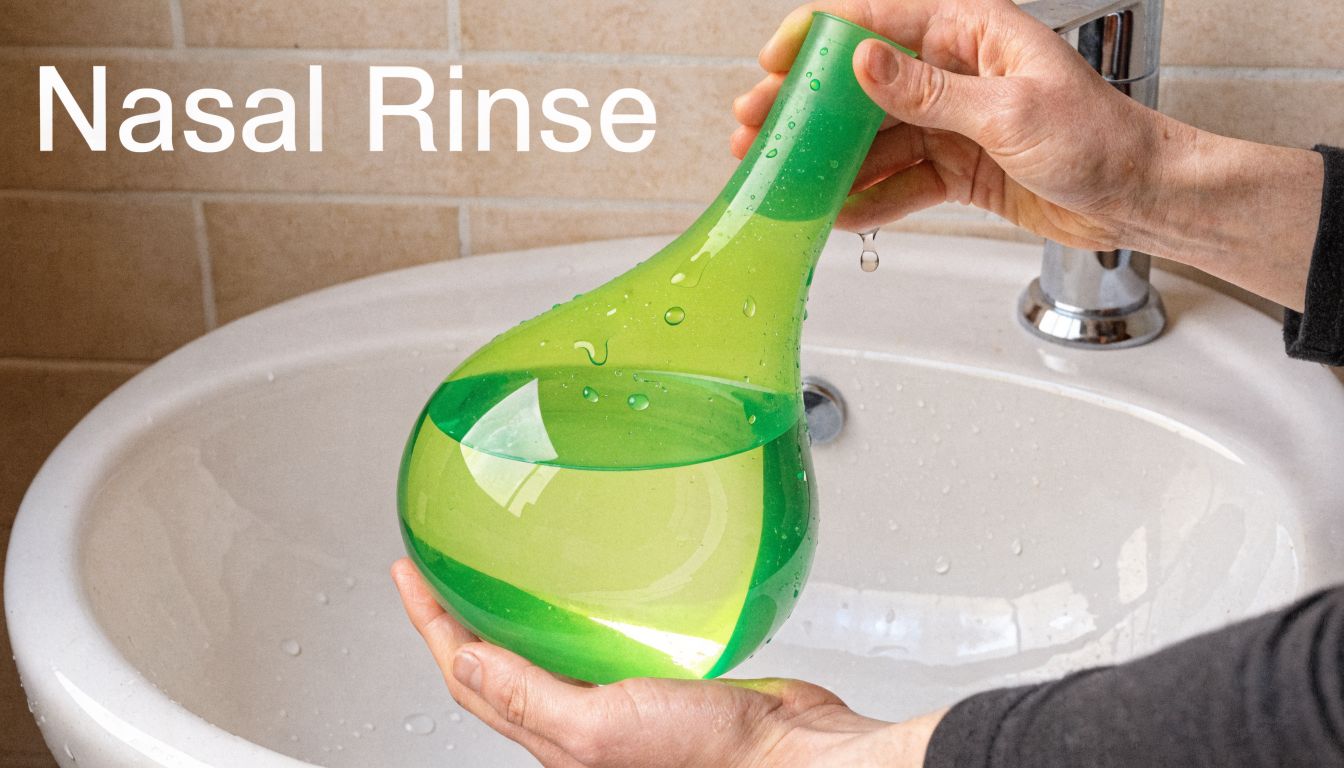
Use sterile, distilled, or previously boiled and cooled water. That part matters. Mix with a prepackaged saline packet or a properly measured saline recipe. Lukewarm solution is usually more comfortable than cold.
Lean over the sink, angle the head slightly, and let the rinse flow gently through one side and out the other. Don’t blast it. Forceful irrigation can irritate already inflamed tissue and leave you feeling more congested, not less.
The best timing is usually later in the day and before bed, especially if allergies, dust exposure, or dry indoor air are triggers.
When it helps most and when it won’t
Saline is especially helpful for allergic rhinitis, seasonal congestion, dusty work environments, and postnasal drainage. It also pairs well with Buteyko and OMT because those techniques depend on reasonable nasal airflow.
Useful add-ons at home include:
- Medical-grade nasal strips: They can mechanically widen the nasal valve area and make night breathing easier.
- Bedroom allergen control: Wash bedding, reduce dust, and keep pets out of the bedroom if they worsen congestion.
- Medication review: Sedatives and some antihistamines may relax throat muscles and worsen OSA symptoms. A review of this issue from the Center for Sleep & TMJ highlights the importance of discussing medication timing and alternatives with your clinician.
What saline won’t fix is a structural bottleneck like a severe deviated septum, major turbinate enlargement, or nasal polyps. If you rinse consistently and still can’t breathe through your nose at night, stop assuming the problem is just “allergies.” That’s when an airway-focused exam becomes worthwhile.
6. Sleep Environment Optimization and Sleep Hygiene
People hear “sleep hygiene” and think of generic advice they can ignore. For OSA, the sleep environment matters because fragmented, shallow sleep tends to magnify everything else. Congestion feels worse. Jaw clenching increases. You wake more often, and each awakening can feed more unstable breathing.
This section isn’t about perfection. It’s about making your bedroom less likely to work against your airway.
What home testing changed for many patients
At-home diagnosis and treatment access have grown quickly. The global Home Sleep Apnea Testing market is projected to expand from USD 1.44 billion in 2025 to USD 2.28 billion by 2030, according to Mordor Intelligence’s HSAT market analysis. That growth reflects a broader shift toward managing sleep-disordered breathing in the home environment, not only in clinics.
Modern home setups matter because your actual night-to-night conditions matter. Noise, dryness, bedroom overheating, inconsistent sleep timing, and screen use right before bed can sabotage progress even when the main treatment is sound.
The bedroom changes that actually help
The best changes are mechanical and repeatable:
- Keep lights low before bed: Bright overhead light and phone scrolling delay sleep onset for many people.
- Protect a consistent schedule: Your airway doesn’t like whiplash from wildly changing bedtimes.
- Reduce bedroom noise: White noise can prevent minor sounds from triggering awakenings.
- Watch alcohol timing: Evening alcohol often worsens snoring and airway instability.
The right bedroom doesn’t cure OSA. It gives every other remedy a better chance to work.
What doesn’t help is obsessing over expensive gadgets while ignoring basics. A premium mattress won’t undo late-night alcohol, chronic mouth breathing, or sleeping flat on your back with severe congestion. Start with schedule consistency, darkness, quiet, and air quality. Then add tools if they solve a specific problem.
7. Anti-Inflammatory Diet and Nutritional Support
An inflamed airway is a narrower airway. That’s one reason food choices can influence how you breathe at night, even before weight loss becomes obvious. Patients often notice that some meals leave them stuffier, more reflux-prone, or more likely to wake with dry mouth and swelling.
Here, diet becomes more than a calorie conversation.
Eat to reduce swelling and late-night airway irritation
An anti-inflammatory eating pattern usually looks familiar. More vegetables, berries, legumes, olive oil, nuts, seeds, fish, and minimally processed proteins. Less added sugar, less ultra-processed snack food, fewer heavy late dinners, and fewer foods that trigger reflux or congestion for you personally.
The value isn’t just “eating clean.” It’s reducing the tissue irritation and fluid shifts that can make nighttime breathing worse. For some people, that also means cutting back on large salty evening meals, which can leave them puffy and more congested by bedtime.
A practical home approach:
- Build dinner earlier: Finish your last substantial meal well before lying down.
- Favor protein and fiber: These make appetite control easier when poor sleep is pushing cravings higher.
- Watch reflux triggers: Spicy, acidic, greasy, or very large meals often worsen nighttime airway symptoms.
- Hydrate earlier in the day: Good hydration helps mucus stay thinner, but heavy fluid loading right before bed can backfire.
Use supplements carefully
Magnesium, vitamin D, and omega-3s come up often. They can be useful in the right patient, but supplements shouldn’t be random. If someone is deficient, correcting it may support muscle function, sleep quality, or inflammation control. If they aren’t deficient, more isn’t automatically better.
I’d rather see a patient keep a food-and-symptom log for two weeks than buy a shelf full of supplements on day one. Often the pattern becomes obvious. Processed evening snacks, alcohol, and reflux-triggering meals are common culprits. Fixing those basics usually delivers more than chasing trendy powders.
What doesn’t work is expecting an “anti-inflammatory diet” to overcome severe anatomical obstruction. It’s a support strategy. A very useful one. But still a support strategy.
8. Humidification and Moisture Support During Sleep
Dry air irritates the nose and throat. When the airway dries out, tissues become more reactive, mucus thickens, and nasal breathing often gets harder. In winter, in heated homes, or in naturally dry climates, that can turn a manageable airway into a noisy, inflamed one.
Humidification is one of those remedies that doesn’t sound dramatic but can change comfort quickly.
Why moisture matters at home
Homecare already dominates the sleep apnea device market, with over 60% share in 2023, according to Grand View Research’s sleep apnea devices market report. That preference makes sense. People sleep better when care fits their real environment, and moisture control is part of that environment.
Humidification is especially useful for people who wake with dry mouth, crusted nasal passages, winter congestion, or CPAP intolerance related to dryness. It also pairs well with saline irrigation and nasal breathing retraining. Better hydration of the nasal passages often makes those other strategies easier to sustain.
How to use a humidifier without creating new problems
A bedroom humidifier should improve air quality, not create a mold issue. Use distilled water if possible, replace the water daily, and clean the unit regularly according to the manufacturer’s instructions. A hygrometer helps because too much humidity can be just as problematic as too little.
A few practical rules matter:
- Place it near, not on, the bed: Close enough to affect the room, far enough to avoid damp bedding.
- Start before bedtime: Running it shortly before sleep can make the room feel more comfortable from the start.
- Pair it with nasal care: Saline rinse plus humidification often works better than either one alone.
- Check the room itself: If windows sweat or the room smells musty, humidity is probably too high.
What doesn’t help is buying a humidifier and never cleaning it. Dirty tanks aerosolize irritants you don’t want to breathe. The best setup is simple, clean, and consistent.
8-Point Comparison of Obstructive Sleep Apnea Home Remedies
| Intervention | Implementation Complexity 🔄 | Resource Requirements & Cost ⚡ | Expected Outcomes 📊 | Ideal Use Cases 💡 | Key Advantages ⭐ |
|---|---|---|---|---|---|
| Nasal Breathing Exercises & Buteyko Technique | Moderate, daily practice and initial instruction required | Low, no equipment; optional instructor or nasal strips may cost | Moderate, 4–12 weeks to see improvements; can reduce AHI in mild–moderate cases (reported 30–60%) | Mouth‑breathers, mild–moderate OSA, those preferring non‑invasive care | Addresses root breathing patterns; non‑pharmacologic; improves daytime alertness |
| Positional Therapy & Sleep Position Modification | Low, habit change; may need devices to maintain position | Low, pillows or vibratory positional devices; inexpensive | High for positional OSA, immediate reductions in AHI (50–70%) in positional cases | Patients with supine‑predominant apnea; travelers; those avoiding CPAP | Rapid, low‑risk, cost‑effective; works well as adjunct |
| Orofacial Myofunctional Therapy (OMT) | High, intensive, structured exercises; therapist guidance advised | Moderate–High, certified therapist, substantial daily practice time | Moderate, 30–40% AHI reduction with consistent practice over months | Tongue‑related collapse, dysfunctional oral posture, adjunct to other therapies | Targets anatomical causes; long‑term muscle tone improvement; non‑surgical |
| Weight Management & Targeted Exercise | High, sustained lifestyle change and behavior modification | Variable, may need dietitian, gym, programs; potential cost | Significant, ~25–30% AHI reduction per 5–10% weight loss; exercise benefits independent of weight loss | Overweight/obese patients; metabolic comorbidities; long‑term risk reduction | Broad health benefits; reduces multiple disease risks; cumulative effects |
| Nasal Saline Irrigation & Decongestive Measures | Low, simple daily routine but technique‑dependent | Low, neti pot/squeeze bottle and saline packets; inexpensive | Small–Moderate, immediate nasal patency; ~15–20% AHI reduction in rhinitis patients; effects last hours | Allergic rhinitis, chronic nasal congestion, to support nasal breathing exercises | Fast relief, safe, inexpensive, improves response to other airway therapies |
| Sleep Environment Optimization & Hygiene | Low–Moderate, behavioral changes and some environment tweaks | Low–Moderate, many interventions free; some purchases (curtains, humidifier) | Small–Moderate, improves sleep continuity; ~10–15% AHI reduction in some cases within 1–2 weeks | Anyone with fragmented sleep, CPAP users, shift workers, comorbid insomnia | Enhances overall sleep quality; synergistic with other treatments |
| Anti‑Inflammatory Diet & Nutritional Support | Moderate, requires meal planning and habit change | Variable, higher food costs or dietitian/supplements possible | Moderate, reduces inflammation markers and can lower AHI (varies; 15–30% reported) | Patients with systemic inflammation, vitamin deficiencies, or weight concerns | Reduces airway inflammation, supports metabolic health, aids weight management |
| Humidification & Moisture Support | Low, setup and routine cleaning; monitor humidity | Low–Moderate, humidifier purchase and maintenance, electricity | Small, immediate improvement in dryness and nasal patency; helps CPAP tolerance | Dry climates, winter heating, CPAP users with mucosal dryness | Improves comfort and nasal breathing quickly; inexpensive adjunct |
When Home Remedies Aren't Enough Your Path to Lasting Relief
Home care can do a lot. It can reduce congestion, improve tongue posture, make side sleeping sustainable, and help patients build a more stable airway night after night. For some people with mild disease or strong positional and breathing components, these changes can be surprisingly effective.
But there’s an important limit. Home remedies don’t replace diagnosis, and they shouldn’t be used to downplay persistent symptoms. If you still wake exhausted, if your partner hears frequent choking or gasping, if your blood pressure is difficult to control, or if you’re struggling with concentration, morning headaches, or daytime sleepiness, you need more than trial-and-error.
That’s especially true if you suspect moderate to severe OSA. In those cases, home strategies should support formal treatment, not stand in for it. The goal isn’t to be “natural” at all costs. The goal is to keep your airway open, protect your brain and cardiovascular system, and help you feel well again.
Testing has become easier to access in many settings. Home-based screening tools and portable devices have made evaluation more practical for many adults, which means there’s less reason to delay if symptoms are ongoing. If your airway problem is being driven by anatomy, medication effects, tongue posture, nasal obstruction, jaw position, or a mix of several factors, the treatment plan should match that reality.
At Pain and Sleep Therapy Center in Charlotte, NC, Dr. Greg D. Larson and our interdisciplinary team focus on that root-cause approach. We look beyond snoring volume or one-size-fits-all recommendations. For the right patient, that may include detailed airway evaluation, home sleep testing, custom oral appliance therapy, or a guided plan that combines Buteyko breathing, orofacial myofunctional therapy, nasal breathing support, and sleep-position strategies.
That integrated approach matters for patients with overlapping problems. Many adults with OSA also deal with TMJ pain, clenching, facial tension, headaches, tongue-tie history, poor oral posture, or chronic mouth breathing. Those issues don’t sit in separate boxes at night. They interact. When treatment addresses only one piece, progress often stalls.
The encouraging part is that you don’t have to fix everything at once. Start with the changes you can control tonight. Open the nose. Support side sleeping. Clean up the sleep environment. Stop treating low tongue posture and mouth breathing like minor quirks. If weight is part of the picture, work on it steadily. If symptoms persist, escalate care instead of waiting until exhaustion becomes your normal.
Better sleep usually comes from better mechanics, not better guessing. That’s true whether you use home remedies alone, pair them with CPAP, or move toward oral appliance therapy and guided rehabilitation. The right plan is the one that matches your airway, your anatomy, and your life.
If snoring, fatigue, jaw pain, or suspected sleep apnea are still disrupting your nights, Pain and Sleep Therapy Center can help you get to the root cause. Their Charlotte team combines airway-focused diagnostics, custom treatment planning, myofunctional therapy, Buteyko breathing, and non-surgical sleep solutions to build a plan that fits your symptoms and your anatomy.