Obstructive sleep apnea (OSA) affects millions, often leading to a reliance on CPAP machines as the primary solution. While effective, CPAP therapy primarily manages symptoms without addressing the underlying anatomical issue: a collapsible airway. What if you could strengthen and retrain the very muscles responsible for keeping your airway open while you sleep? A growing body of research and clinical practice highlights a powerful, non-invasive approach that does just that.
This comprehensive guide explores the best exercises for sleep apnea, providing a detailed roadmap to improve muscle tone in the tongue, soft palate, and throat. By doing so, you can directly combat the root cause of airway collapse. We will move beyond generic advice and dive into seven specific, evidence-backed techniques that offer a proactive path toward lasting relief.
You will learn actionable strategies, including:
- Orofacial Myofunctional Therapy (OMT)
- The Buteyko Breathing Method
- Targeted pharyngeal strengthening exercises
Each section provides step-by-step instructions, recommended frequencies, and the science behind why it works. These exercises are designed to normalize breathing patterns, enhance airway stability, and help you reclaim restorative sleep. Whether you're seeking to complement your current treatment, reduce your dependence on a device, or explore effective alternatives to CPAP, this article provides the tools and knowledge to strengthen your airway from the inside out. This approach offers a foundation for reducing symptoms, improving sleep quality, and enhancing your overall well-being.
1. Orofacial Myofunctional Therapy (OMT)
Orofacial Myofunctional Therapy (OMT) is a highly specialized exercise program designed to retrain the muscles of the mouth, tongue, and face. It functions much like physical therapy for your airway, addressing the root causes of obstruction by correcting improper muscle function and encouraging healthy habits like nasal breathing and correct tongue posture.
For individuals with Obstructive Sleep Apnea (OSA), OMT targets the weak or improperly functioning muscles that contribute to airway collapse during sleep. By strengthening the tongue and pharyngeal muscles, it helps keep the airway open, directly impacting the severity of sleep-disordered breathing.
How OMT Works for Sleep Apnea
The primary goal of OMT is to establish neuromuscular re-education. A certified therapist guides you through a series of exercises to achieve several key outcomes:
- Correct Tongue Posture: Training the tongue to rest gently against the roof of the mouth (the palate) instead of falling back into the throat.
- Strengthened Pharyngeal Muscles: Toning the muscles in the throat to resist collapse during sleep.
- Established Nasal Breathing: Promoting breathing through the nose rather than the mouth, which is crucial for filtering and humidifying air and maintaining an open airway.
- Improved Chewing and Swallowing: Correcting dysfunctional patterns that can be linked to poor muscle tone in the orofacial complex.
Key Insight: Think of OMT as building a muscular "scaffold" for your airway. Strong, properly positioned muscles are less likely to collapse and cause apneas, making this one of the best exercises for sleep apnea because it addresses the functional cause of the problem.
Implementing Orofacial Myofunctional Therapy
Consistency is the cornerstone of a successful OMT program. A therapist will create a personalized plan, but here are some common tips for implementation:
- Practice Daily: Aim for two sessions per day, typically in the morning and evening, for 5-10 minutes each.
- Use a Mirror: Visual feedback is essential to ensure you are performing the exercises with the correct form and engaging the right muscles.
- Track Your Progress: Document your adherence in a log. Consider using home sleep testing devices between professional visits to monitor changes in your AHI.
- Integrate with Breathing: Combine OMT with techniques like Buteyko breathing to enhance nasal airway function and breathing efficiency. For those seeking non-CPAP solutions, understanding how these therapies work together is crucial. You can learn more about this integrated approach to sleep apnea treatment without CPAP.
Evidence and Expected Benefits
Research strongly supports OMT as a valuable therapy for mild to moderate OSA. Multiple studies have shown it can reduce the Apnea-Hypopnea Index (AHI) by 30-50%. For example, patients at dedicated clinics like Pain and Sleep Therapy Center have demonstrated an average 40% reduction in AHI. This translates to fewer breathing interruptions, reduced snoring, and better overall sleep quality.
When to Seek Professional Guidance
While some basic exercises can be found online, OMT should be performed under the guidance of a certified orofacial myofunctional therapist. A professional can accurately diagnose dysfunctional patterns, create a customized treatment plan, and ensure you are performing exercises correctly to avoid developing incorrect muscle habits. This is particularly important for complex cases, such as pediatric patients with tongue-tie or individuals with co-existing TMJ disorders. A therapist will provide the structure and accountability needed for lasting results.
2. Buteyko Breathing Method
The Buteyko Breathing Method is a form of breathing retraining focused on normalizing breathing volume and restoring nasal breathing patterns. Developed by Dr. Konstantin Buteyko, it operates on the principle that many health issues, including Obstructive Sleep Apnea (OSA), are exacerbated by chronic over-breathing (hyperventilation) and mouth breathing.
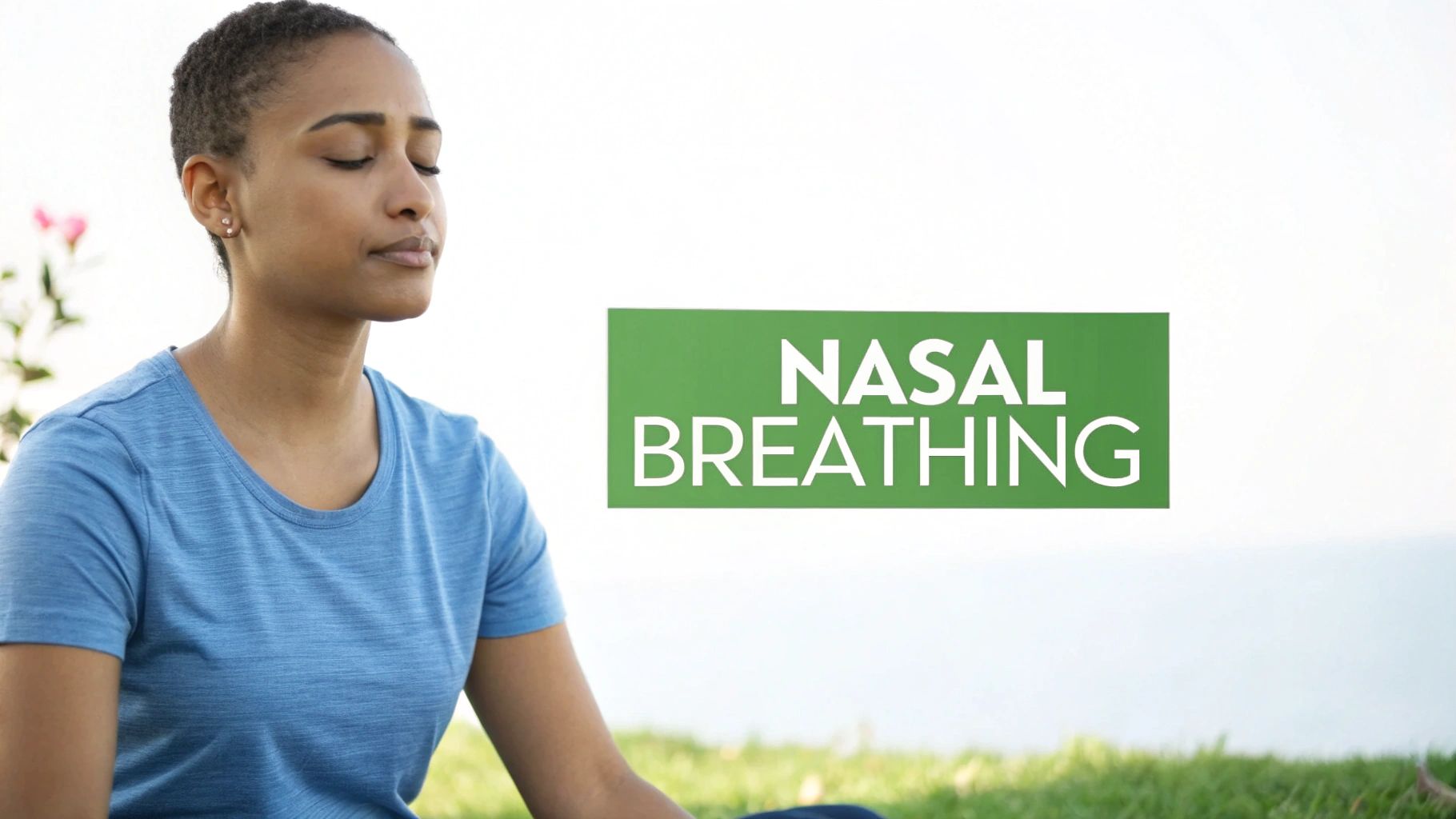
For individuals with sleep apnea, the method addresses dysfunctional breathing habits that contribute to airway instability. By correcting these patterns, it helps reduce the frequency of airway collapse, stabilize blood gases, and improve sleep quality, making it one of the foundational exercises for sleep apnea management.
How Buteyko Breathing Works for Sleep Apnea
The core goal of the Buteyko Method is to reverse chronic hidden hyperventilation and re-establish a healthy tolerance for carbon dioxide (CO2). A Buteyko coach guides you through exercises to achieve several key objectives:
- Promote Nasal Breathing: Training you to breathe exclusively through your nose, both day and night. The nose filters, warms, and humidifies air, and nasal breathing increases nitric oxide production, which helps open the airways.
- Reduce Breathing Volume: Using gentle breath-hold exercises to calm the respiratory center in the brain, reducing the impulse to over-breathe.
- Increase CO2 Tolerance: Restoring optimal carbon dioxide levels, which helps to dilate airways and improve oxygen delivery to tissues. Over-breathing depletes CO2, which can constrict smooth muscle in the airways.
- Strengthen the Diaphragm: Emphasizing calm, light, diaphragmatic breathing to replace inefficient upper-chest breathing patterns.
Key Insight: The Buteyko Method treats the dysfunctional breathing pattern that drives sleep apnea. By learning to breathe lightly and through your nose, you create a more stable, resilient airway that is less prone to collapsing during the vulnerable states of sleep.
Implementing the Buteyko Breathing Method
Success with Buteyko Breathing depends on consistent, conscious practice until new habits become automatic. A certified instructor will provide a structured program, but these general tips are essential:
- Start with Daytime Nasal Breathing: Before tackling nighttime breathing, make a conscious effort to keep your mouth closed and breathe only through your nose during the day.
- Clear Nasal Passages: If congestion is an issue, use a saline rinse or hypoallergenic nasal strips to ensure your nasal passages are open and functional.
- Practice Control Pauses: Regularly perform gentle breath-hold exercises (Control Pauses) to measure and improve your CO2 tolerance.
- Integrate Mindfully: Begin practicing during low-stress activities like reading or watching TV, then gradually apply the principles to more demanding situations like exercise.
Evidence and Expected Benefits
Clinical application and research support Buteyko Breathing as an effective complementary therapy for OSA. Studies and clinical reports indicate it can lead to a 20-30% reduction in AHI by restoring proper nasal breathing. Clinics like Pain and Sleep Therapy Center have successfully integrated Buteyko coaching into their treatment protocols, observing significant improvements in sleep quality, reduced snoring, and better daytime energy in their patients. Pediatric patients with sleep-disordered breathing often show rapid progress with early intervention.
When to Seek Professional Guidance
While the principles of nasal breathing are simple, the Buteyko Breathing Method should be learned from a certified practitioner or coach. A professional can accurately assess your breathing patterns, measure your Control Pause, and create a tailored plan with appropriate exercises. Self-teaching can be difficult and may lead to improper technique. A coach provides the necessary structure, feedback, and progression to ensure you safely and effectively retrain your breathing for lasting relief from sleep apnea symptoms.
3. Pharyngeal Strengthening Exercises (Oropharyngeal Exercises)
Pharyngeal strengthening exercises, often called oropharyngeal exercises, are a targeted approach to toning the muscles in the back of your throat, including the soft palate, uvula, and pharynx. These specific muscles are often weak and overly relaxed in individuals with Obstructive Sleep Apnea (OSA), leading to airway collapse during sleep.
The core principle behind these exercises is to increase the baseline tone and stiffness of the pharyngeal tissues. Just as weightlifting strengthens your arm muscles, these exercises build endurance and strength in your airway muscles, making them more resistant to collapsing under the negative pressure created when you breathe in during sleep.
How Pharyngeal Exercises Work for Sleep Apnea
The primary goal of oropharyngeal exercises is to improve the structural integrity of the upper airway. Pioneered by researchers like Dr. Geraldo Lorenzi-Filho in Brazil, this approach directly combats the physical mechanism of airway obstruction. A structured routine achieves several key outcomes:
- Toned Soft Palate: Strengthening the muscles of the soft palate reduces the vibration that causes snoring and prevents the palate from falling backward.
- Strengthened Pharyngeal Walls: Toning the side walls of the throat helps maintain a wider, more stable airway diameter.
- Improved Uvula Control: Exercises can help reduce the size and improve the position of the uvula, another common source of obstruction.
- Enhanced Muscle Endurance: Consistent practice builds muscle endurance, helping the airway stay open throughout all stages of sleep.
Key Insight: Think of your pharynx as a soft, muscular tube. These exercises transform it from a flimsy, easily collapsible structure into a firmer, more resilient passageway. This makes pharyngeal training one of the best exercises for sleep apnea because it directly reinforces the area most prone to collapse.
Implementing Pharyngeal Strengthening Exercises
Consistency is crucial for seeing measurable results from pharyngeal exercises. A famous Italian study demonstrated that performing a specific set of exercises three times daily can produce significant improvements. Here are some tips for implementation:
- Practice Daily: Dedicate 8-10 minutes, three times per day (morning, afternoon, and evening), to your routine.
- Use a Mirror: Watch your soft palate and uvula as you perform the exercises to ensure you are engaging the correct muscles.
- Start Simple: Begin with basic palatal lifts and tongue presses before moving to more complex movements.
- Make it Fun: Incorporate activities like singing or humming. Research has shown that intensive singing training can strengthen pharyngeal muscles and reduce snoring and AHI.
Evidence and Expected Benefits
The efficacy of oropharyngeal exercises is well-supported by scientific research. A landmark study published in the American Journal of Respiratory and Critical Care Medicine found that a 3-month program of oropharyngeal exercises reduced the severity of moderate OSA by approximately 39%. Patients experienced significant reductions in AHI, snoring frequency, and daytime sleepiness, along with improved sleep quality. These results highlight the potential of this therapy as a viable non-invasive treatment option.
When to Seek Professional Guidance
While many oropharyngeal exercises are described in research studies, professional guidance is highly recommended for optimal results. A sleep-focused physical therapist or a myofunctional therapist can create a personalized protocol based on your specific airway anatomy and needs. They can ensure you are performing the exercises with correct form, preventing you from reinforcing improper muscle patterns. This is particularly important for integrating these exercises with other treatments, like CPAP or OMT, for a comprehensive approach to managing your sleep apnea.
4. Positional Therapy and Sleep Posture Correction
Positional Therapy is a behavioral strategy designed to train individuals to avoid sleeping on their back (supine position). This approach is based on the well-documented fact that for many people, sleep apnea is significantly worse when sleeping face-up due to gravity causing the tongue and soft palate to collapse and obstruct the airway.
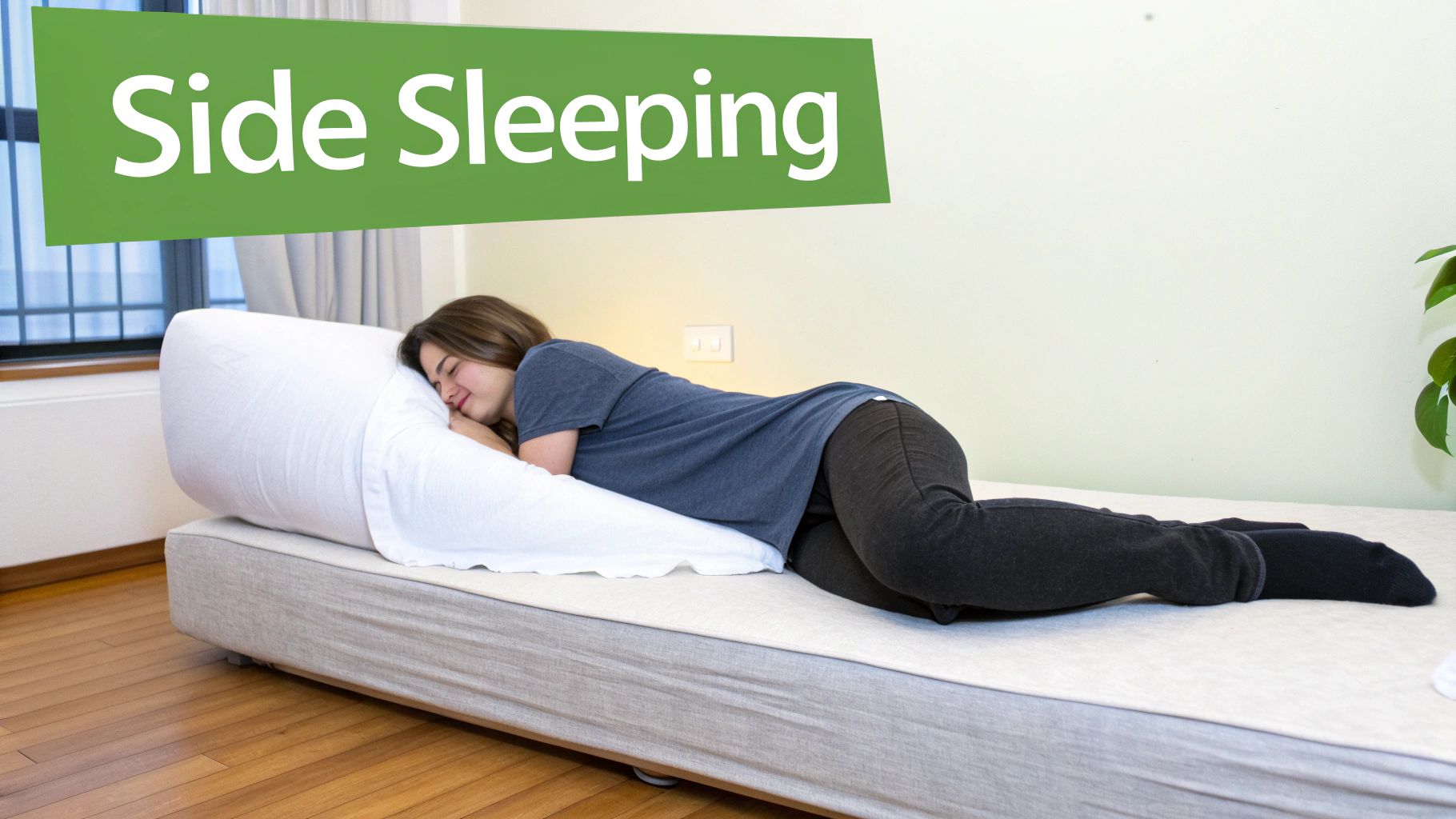
For those with position-dependent Obstructive Sleep Apnea (OSA), simply changing sleep posture from the back to the side can dramatically reduce the frequency and severity of apnea events. It is a simple yet powerful mechanical intervention that leverages body positioning to maintain an open airway during sleep, making it a foundational exercise in managing sleep apnea.
How Positional Therapy Works for Sleep Apnea
The primary mechanism of positional therapy is to counteract the effects of gravity on the upper airway. By training the body to remain in a lateral (side-sleeping) position, this therapy achieves several key outcomes:
- Maintains Airway Patency: Side sleeping helps prevent the tongue and soft tissues from falling backward and blocking the throat.
- Reduces Apnea-Hypopnea Index (AHI): Clinical data shows that patients with position-dependent OSA can see AHI reductions of 70% or more by avoiding the supine position.
- Improves Oxygen Saturation: With fewer airway collapses, blood oxygen levels remain more stable throughout the night, reducing physiological stress.
- Decreases Snoring: An open airway vibrates less, leading to a significant reduction in the intensity and frequency of snoring.
Key Insight: Think of positional therapy as using gravity to your advantage instead of letting it work against you. For many, simply avoiding back-sleeping is one of the most effective "exercises" for sleep apnea, offering immediate improvement with a non-invasive change in habit.
Implementing Positional Therapy and Sleep Posture Correction
Successfully adopting a new sleep position requires consistency and the right support. While the concept is simple, a structured approach yields the best results:
- Confirm Positional Dependency: First, review your sleep study results with a professional to confirm if your OSA is significantly worse when you are on your back.
- Use Supportive Pillows: A memory foam lateral sleep pillow can support proper neck alignment, while a body pillow placed between the knees and hugged to the chest helps maintain a stable side-sleeping posture.
- Try Low-Tech Reminders: The classic "tennis ball technique," where a ball is sewn onto the back of a pajama shirt, provides a physical reminder that prevents you from rolling onto your back.
- Consider Smart Devices: Modern positional therapy devices like Zzoma or NightBalance use gentle vibrations to cue you to roll back onto your side if you move onto your back during sleep.
Evidence and Expected Benefits
The effectiveness of positional therapy is well-established, particularly for patients with mild to moderate position-dependent OSA. Studies on smart positional devices have demonstrated an average AHI reduction of over 60%. This substantial improvement translates directly to better sleep quality, reduced daytime sleepiness, and improved cardiovascular health markers. It is often recommended as a first-line treatment or as an adjunctive therapy alongside other treatments like CPAP or oral appliances.
When to Seek Professional Guidance
While you can implement basic positional strategies on your own, professional guidance is crucial for proper diagnosis and selecting the most effective approach. A sleep specialist can analyze your sleep study data to determine the extent of your positional dependency and recommend the right tools, whether it's specialized pillows, a wearable device, or a combination of strategies. This ensures you are not just changing positions but are doing so in a way that provides a therapeutic benefit and addresses the specific nature of your sleep apnea.
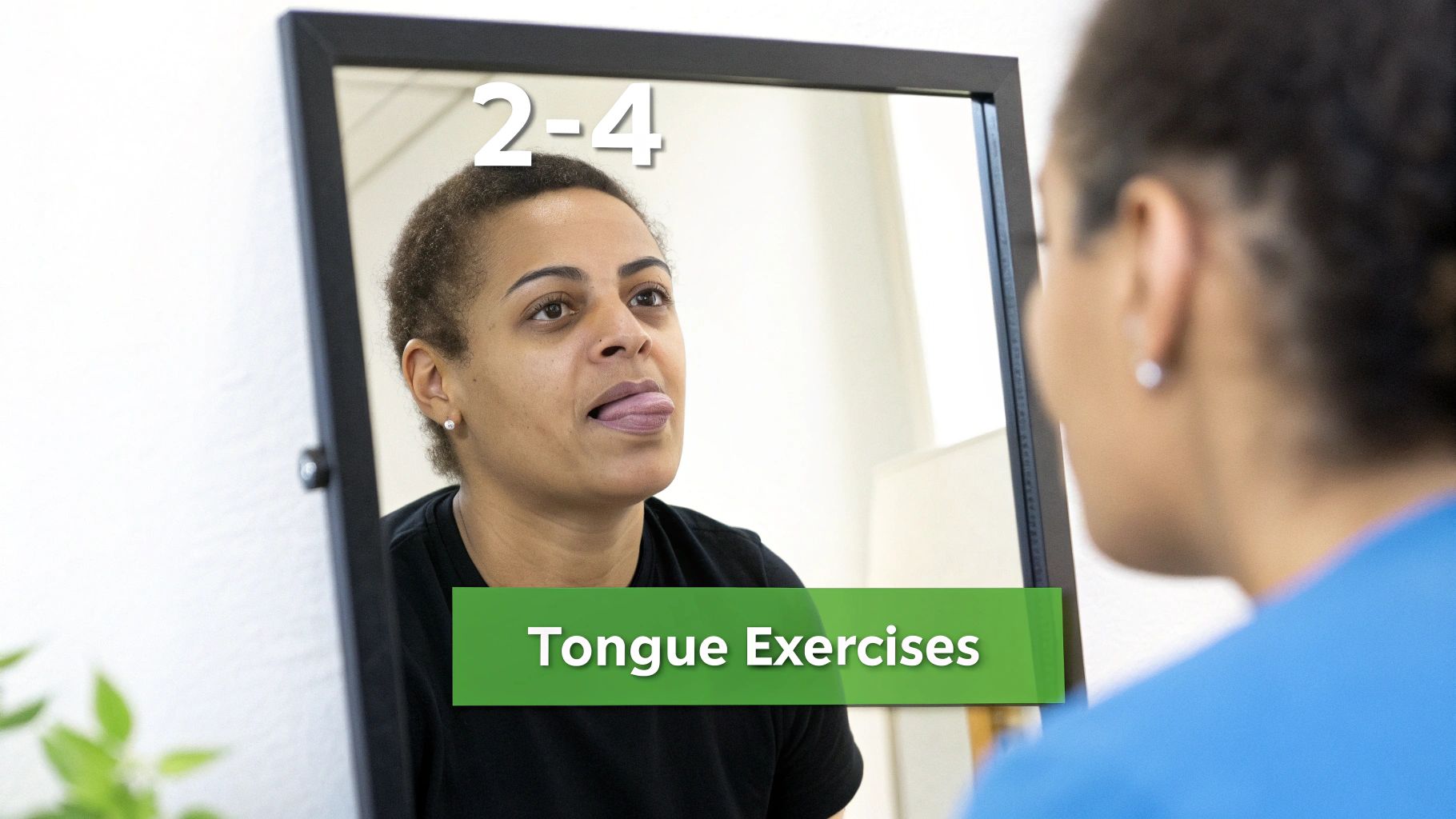
5. Tongue Strengthening and Protrusion Exercises
Tongue strengthening and protrusion exercises are targeted movements designed to increase the muscle tone, strength, and motor control of the tongue. These exercises specifically focus on the genioglossus muscle, the primary muscle responsible for protruding the tongue, which plays a critical role in preventing the tongue from collapsing backward into the airway during sleep.
For individuals with OSA, a weak or improperly positioned tongue is a major contributor to airway obstruction. By isolating and strengthening these crucial lingual muscles, you can directly improve airway patency and reduce the frequency and severity of apneic events. This makes dedicated tongue training one of the best exercises for sleep apnea.
How Tongue Strengthening Works for Sleep Apnea
The core principle behind these exercises is preventing the posterior tongue base from relaxing and obstructing the pharynx. By consistently training the tongue muscles, you achieve several key objectives:
- Increased Muscle Tone: A stronger tongue is less likely to become flaccid and fall backward during the deep relaxation of sleep.
- Improved Motor Control: Enhanced control allows the tongue to maintain a forward, neutral position, away from the posterior pharyngeal wall.
- Enhanced Endurance: Building muscle endurance helps the tongue maintain its position throughout the entire night, not just for the first few hours of sleep.
- Neuromuscular Re-education: The brain learns to activate these muscles reflexively, creating a new default position that supports an open airway.
Key Insight: Think of your tongue as a gatekeeper for your airway. If the gatekeeper is weak, it can easily fall back and block the passage. Tongue strengthening exercises build a stronger, more reliable gatekeeper that stays in position, keeping your airway clear all night.
Implementing Tongue Strengthening Exercises
Consistency is crucial for building lingual muscle strength. While a therapist can provide a comprehensive plan, here are some fundamental exercises and tips for implementation:
- Tongue Protrusion Hold: Stick your tongue out as far as you can without straining. Hold this position for 5-10 seconds, gradually working up to 20 seconds. Repeat 5 times.
- Tongue Press: Press the tip of your tongue firmly against the roof of your mouth (the hard palate) and hold for 10 seconds. Relax and repeat 5-10 times.
- Use Resistance: Gently bite down on a tongue depressor or your own teeth while pushing your tongue out to add resistance and increase the exercise intensity.
- Practice Daily: Perform these exercises 1-2 times per day, especially in the evening, to prime the muscles for sleep. Using a mirror helps ensure you are achieving full protrusion and correct form.
Evidence and Expected Benefits
Research published in journals like the Journal of Clinical Sleep Medicine and Sleep and Breathing confirms the effectiveness of isolated tongue exercises. Studies show that consistent practice can lead to measurable reductions in the Apnea-Hypopnea Index (AHI) and decreased snoring volume. Patients following tongue strengthening protocols often report improved sleep quality, reduced daytime sleepiness, and a better overall sense of well-being.
When to Seek Professional Guidance
While these exercises are generally safe, professional guidance is recommended to ensure proper form and to address underlying issues. A myofunctional therapist can assess your specific needs and create a tailored program. This is particularly important if you suspect a physical restriction, such as a tongue-tie, which can prevent the tongue from functioning correctly. A professional evaluation can determine if a restriction is limiting your progress. If you're concerned about this, it's helpful to understand how to check for tongue-tie. A therapist at a specialized clinic like Pain and Sleep Therapy Center can provide a definitive diagnosis and a comprehensive treatment plan, including post-frenectomy rehabilitation exercises for optimal airway development.
6. Nasal Breathing Retraining and Airway Patency Exercises
Nasal Breathing Retraining is a foundational practice aimed at reconditioning the body to use the nose, not the mouth, as its primary breathing pathway. The nose is specifically designed to filter, warm, and humidify air, but it also plays a critical role in maintaining an open airway. By producing nitric oxide, nasal breathing improves oxygen absorption and helps maintain positive airway pressure, reducing the likelihood of throat collapse.
For individuals with sleep apnea, habitual mouth breathing is a significant contributing factor. It bypasses the natural airway support mechanisms of the nose, leading to a drier, more collapsible airway. Restoring nasal breathing as the default pattern, both day and night, is one of the most effective ways to stabilize the airway and improve sleep architecture.
How Nasal Breathing Retraining Works for Sleep Apnea
The core principle is to restore the natural physiological process of respiration. Chronic mouth breathing is often a learned habit that can be unlearned through consistent, conscious practice. Retraining focuses on several key outcomes:
- Increased Nitric Oxide Production: Nasal breathing stimulates the paranasal sinuses to release nitric oxide, a vasodilator that improves blood flow and oxygenation.
- Reduced Airway Collapse: The gentle resistance of breathing through the nostrils creates a slight positive pressure that helps "stent" the upper airway open.
- Improved Air Quality: The nose acts as a natural filter, removing allergens and particulates that can cause inflammation and congestion in the airway.
- Optimal Diaphragmatic Function: Nasal breathing encourages slower, deeper breaths that fully engage the diaphragm, promoting a more relaxed nervous system state conducive to sleep.
Key Insight: Shifting from mouth to nasal breathing is like upgrading your body's operating system. It restores a fundamental biological function that directly supports airway stability, making it one of the best exercises for sleep apnea because it addresses both physiological and habitual causes of obstruction.
Implementing Nasal Breathing Retraining
Success depends on building a new habit through consistent, gentle practice. While a therapist at a facility like Pain and Sleep Therapy Center can provide a coordinated plan, here are some tips to get started:
- Practice During the Day: Begin by consciously breathing through your nose during calm activities like reading or watching TV. The goal is to make it your automatic default.
- Clear the Passages: Use a daily saline nasal rinse to clear debris and reduce inflammation. A humidifier at night can also prevent nasal passages from drying out.
- Perform Nasal Humming: Humming for a few minutes daily has been shown to significantly increase nitric oxide levels in the nasal sinuses, which can improve airflow.
- Consider Gentle Taping at Night: Under professional guidance, some individuals use a small piece of hypoallergenic mouth tape at night to encourage nasal breathing during sleep. This should only be attempted once daytime nasal breathing is comfortable and consistent.
Evidence and Expected Benefits
The benefits of nasal breathing are well-documented, with proponents like author James Nestor popularizing its importance in his book 'Breath'. Studies on mouth taping for mild OSA have shown it can lead to a 10-15% reduction in AHI in compliant patients. Clinically, when integrated into a comprehensive airway-focused model, the results are often more significant. Patients frequently report less snoring, deeper sleep, reduced daytime fatigue, and improved oxygen saturation levels.
When to Seek Professional Guidance
If you have chronic nasal congestion, a deviated septum, or other structural issues, consult an ENT or a specialized therapist before starting an intensive retraining program. A professional can help identify and address the root cause of your mouth breathing. They can also provide a structured protocol, such as those used in Buteyko breathing, and safely guide more advanced techniques like sleep-time mouth taping to ensure it is appropriate and effective for your specific condition.
7. Jaw and TMJ Positioning Exercises for Airway Alignment
Jaw and TMJ Positioning Exercises are a targeted approach to correct poor posture of the jaw and neck that directly contributes to airway narrowing. Many people with Obstructive Sleep Apnea (OSA) also exhibit forward head posture or have an improperly aligned temporomandibular joint (TMJ), both of which can significantly reduce the space in the pharyngeal airway.
These exercises work by reestablishing proper alignment between the jaw, neck, and spine. By strengthening deep neck flexor muscles and retraining the resting position of the mandible (lower jaw), this therapy helps to naturally open the airway, particularly during sleep. For patients with coexisting TMJ dysfunction and sleep apnea, this integrated approach addresses both conditions simultaneously.
How Jaw and TMJ Exercises Work for Sleep Apnea
The goal of these exercises is to correct the biomechanical issues that lead to airway collapse. A therapist focuses on specific movements and postural corrections to achieve several key outcomes:
- Correct Forward Head Posture: Training the neck muscles to retract the head into a neutral position over the shoulders, which widens the back of the throat.
- Restore Mandibular Posture: Teaching the jaw muscles to maintain a slightly forward and relaxed position, preventing the jaw from falling back and obstructing the airway during sleep.
- Strengthen Cervical Muscles: Building endurance in the muscles that support proper head and neck alignment.
- Improve TMJ Function: Alleviating strain on the temporomandibular joint, which can contribute to muscle tension that affects airway patency.
Key Insight: Think of your head and jaw position as the gatekeeper to your airway. If your head is forward and your jaw is recessed, the gate is partially closed. These exercises retrain your body to keep the gate open, making them one of the best exercises for sleep apnea because they address the structural framework around the airway.
Implementing Jaw and TMJ Positioning Exercises
Achieving lasting postural change requires consistent practice and awareness throughout the day. A physical or myofunctional therapist can create a personalized plan, but common implementation strategies include:
- Perform Chin Tucks: Gently pull your chin back as if making a double chin, holding for 5-10 seconds. Aim for 10-15 repetitions, 2-3 times daily, to strengthen deep cervical muscles.
- Use Cervical Support: Sleep on a cervical support pillow that maintains a neutral neck alignment, preventing the head from tilting forward or backward.
- Practice Jaw Positioning: During the day, consciously practice resting your tongue on the roof of your mouth and keeping your jaw slightly forward to train muscle memory for sleep.
- Combine with Stretching: Incorporate shoulder and chest stretches to counteract the rounded posture that often accompanies forward head position.
Evidence and Expected Benefits
Research clearly links cervical posture to OSA severity. Correcting forward head posture has been shown to be a critical component of a comprehensive treatment plan. For instance, studies on forward jaw positioning combined with positional therapy have demonstrated AHI improvements of 40-50%. At specialized clinics like the Pain and Sleep Therapy Center, clinicians have seen patients reduce forward head posture by 2-3 inches, correlating with significant airway improvement.
When to Seek Professional Guidance
While basic postural exercises can be beneficial, individuals with chronic TMJ pain, significant postural deviations, or moderate to severe OSA should seek professional evaluation. A therapist trained in TMJ disorders and sleep apnea can accurately diagnose the underlying musculoskeletal imbalances. They can integrate these exercises with other treatments, like dental sleep appliances, for optimal airway expansion. If you experience jaw clicking, pain, or headaches, it's crucial to get a proper diagnosis to ensure the exercises are appropriate for your condition. You can explore a range of non-surgical TMJ treatment options with a qualified professional.
7-Exercise Comparison for Sleep Apnea
| Intervention | Implementation complexity 🔄 | Resource requirements ⚡ | Expected outcomes ⭐ / 📊 | Ideal use cases 💡 | Key advantages ⭐ |
|---|---|---|---|---|---|
| Orofacial Myofunctional Therapy (OMT) | Moderate–High: trained therapist + supervised 6–12 week program 🔄 | Therapist sessions, daily 5–10 min home practice; low equipment ⚡ | ⭐⭐⭐⭐ — ~25–50% AHI reduction in mild–moderate OSA; gradual improvement 📊 | Mild–moderate OSA, CPAP-intolerant patients, pediatric cases, TMJ comorbidity 💡 | Non‑invasive, treats root cause of airway collapse, improves oral posture ⭐ |
| Buteyko Breathing Method | Moderate: learning curve; needs coaching initially 🔄 | Instructor/coaching, consistent practice (4–6 weeks), no special equipment ⚡ | ⭐⭐⭐ — ~20–30% AHI reduction reported; improves oxygenation and sleep fragmentation 📊 | Habitual mouth‑breathers with preserved anatomy; adjunct to CPAP or standalone for mild cases 💡 | Restores nasal breathing, low cost, improves daytime alertness ⭐ |
| Pharyngeal Strengthening Exercises | Moderate: daily routines, technique-focused but self‑performable 🔄 | Therapist guidance optional; 5–10 min/day; no equipment ⚡ | ⭐⭐⭐⭐ — ~30–39% average AHI reduction in studies; improves airway stability 📊 | Mild–moderate OSA driven by pharyngeal collapse; combination therapy candidates 💡 | Directly strengthens airway muscles; measurable AHI improvements ⭐ |
| Positional Therapy & Sleep Posture Correction | Low: easy to implement but adherence varies 🔄 | Low-cost devices/pillows or smart positional alarms; minimal training ⚡ | ⭐⭐⭐⭐⭐ — immediate AHI reductions 50–90% in position‑dependent OSA; rapid effect 📊 | Position-dependent OSA (side‑sleepers), first‑line conservative therapy 💡 | Immediate impact, low risk, inexpensive, works well with other therapies ⭐ |
| Tongue Strengthening & Protrusion Exercises | Low–Moderate: simple exercises but require precision & consistency 🔄 | Minimal equipment; 5+ min/day; initial instruction recommended ⚡ | ⭐⭐⭐ — ~20–40% AHI reduction documented; measurable strength gains in 2–4 weeks 📊 | Tongue‑base obstruction, adjunct to myofunctional therapy, pediatric post‑frenectomy 💡 | Targets primary tongue-collapse mechanism, simple and effective adjunct ⭐ |
| Nasal Breathing Retraining & Airway Patency | Moderate: habit change plus possible ENT care for obstructions 🔄 | Saline rinses, nasal strips, possible medical/ENT intervention; 4–8 week retraining ⚡ | ⭐⭐⭐ — improves oxygen delivery (15–25%) and modest AHI gains (varies; ~10–15% in some studies) 📊 | Chronic mouth‑breathers, nasal obstruction cases after clearance, complements other therapies 💡 | Increases nitric oxide/oxygenation, reduces turbulence, low cost, broad health benefits ⭐ |
| Jaw & TMJ Positioning Exercises | Moderate: requires posture training and possible dental input 🔄 | Postural exercises, cervical pillows, possible dental appliance or therapist ⚡ | ⭐⭐⭐ — variable; reported 40–50% AHI improvement when combined with positional therapy 📊 | Patients with TMJ dysfunction, retrognathia, forward head posture; combined therapy candidates 💡 | Addresses TMJ co‑morbidities, mechanically increases pharyngeal space, reduces neck/head pain ⭐ |
Integrating Exercises Into Your Care Plan: The Path Forward
Navigating the landscape of obstructive sleep apnea (OSA) can feel overwhelming, but as we've explored, you possess a powerful toolkit for taking proactive control of your sleep health. The exercises detailed in this guide, from Orofacial Myofunctional Therapy (OMT) to the Buteyko Breathing Method and specific pharyngeal strengthening techniques, represent a fundamental shift in managing sleep-disordered breathing. They move beyond simply accommodating the symptoms and instead target the root causes: weak airway muscles, improper tongue posture, and dysfunctional breathing patterns.
The journey to better sleep through these methods is not about a quick fix. It's about a dedicated, consistent practice of retraining your body. Think of it like physical therapy for your airway. Just as you would strengthen a weak knee with specific, repetitive movements, you can recondition the muscles of your tongue, soft palate, and throat to maintain an open, stable airway during sleep. This is the core principle that unites all the best exercises for sleep apnea.
Key Takeaways: From Knowledge to Action
To truly benefit from this information, it's crucial to distill the core principles into an actionable strategy. Here are the most important takeaways to guide your next steps:
- Consistency is Non-Negotiable: Performing tongue stretches or breathing exercises sporadically will yield minimal results. The goal is neuromuscular re-education, which requires daily repetition to build muscle memory and strength. Lasting change comes from making these exercises a habitual part of your routine.
- Synergy Maximizes Results: While each exercise category offers unique benefits, their true power is often unlocked when combined. For example, integrating the nasal breathing principles of Buteyko with the tongue posture corrections of OMT creates a more comprehensive and effective approach than either one alone.
- Awareness is the First Step: The most significant change begins with conscious awareness during your waking hours. Pay attention to your posture, notice if your mouth is open, and observe where your tongue rests. Correcting these daytime habits is a foundational step that makes nighttime improvements possible.
The Critical Role of Professional Guidance
While the exercises we've discussed are powerful, self-diagnosis and self-treatment for a complex medical condition like sleep apnea come with significant risks. An untrained individual may not be able to identify the specific anatomical or functional issues causing their airway collapse. Performing exercises incorrectly could be ineffective at best and potentially strain your jaw or neck muscles at worst.
A proper diagnosis from a sleep specialist is the essential starting point. Following that, working with a qualified therapist, such as a certified orofacial myofunctional therapist or a Buteyko practitioner, is crucial for several reasons:
- Personalized Programming: A professional can assess your unique orofacial structure, muscle tone, and breathing habits to design a targeted program. They can identify which exercises will be most impactful for you and in what sequence.
- Correct Technique and Form: A therapist ensures you are performing each movement with the correct form, duration, and intensity to maximize effectiveness and prevent injury.
- Accountability and Progression: Working with a specialist provides structure and accountability, helping you stay motivated. They will also know when and how to progress the exercises as your muscle strength and coordination improve.
Ultimately, integrating the best exercises for sleep apnea into your life is a commitment to your long-term health. It’s an empowering approach that can reduce your AHI (Apnea-Hypopnea Index), lessen snoring, and enhance your overall quality of life, often complementing traditional treatments like CPAP. By embracing this active role, you are not just managing a condition; you are restoring a fundamental biological function: the ability to breathe freely and sleep soundly.
Ready to move beyond generic advice and start a structured, professionally guided exercise program for sleep apnea? The expert team at the Pain and Sleep Therapy Center, led by Dr. Greg D. Larson, specializes in creating individualized, non-surgical treatment plans that integrate myofunctional therapy, advanced breathing techniques, and TMJ alignment to address the root causes of your sleep-disordered breathing. Schedule your comprehensive evaluation today at the Pain and Sleep Therapy Center and take the first definitive step toward reclaiming your nights.