When your jaw suddenly won't close, the fear is immediate. You aren't thinking about anatomy in that moment. You're thinking, “Why is this happening?” “Did I break something?” and “Will this go back to normal?”
That reaction makes sense. A true TMJ dislocation can feel dramatic and very unsettling. The mouth may be stuck open, speech becomes difficult, swallowing feels awkward, and the muscles around the joint start tightening as panic sets in. Good treatment for TMJ dislocation starts with getting you safe and calm, but it shouldn't stop there. The bigger goal is long-term stability, so the same event doesn't keep interrupting your life.
Understanding a Dislocated Jaw
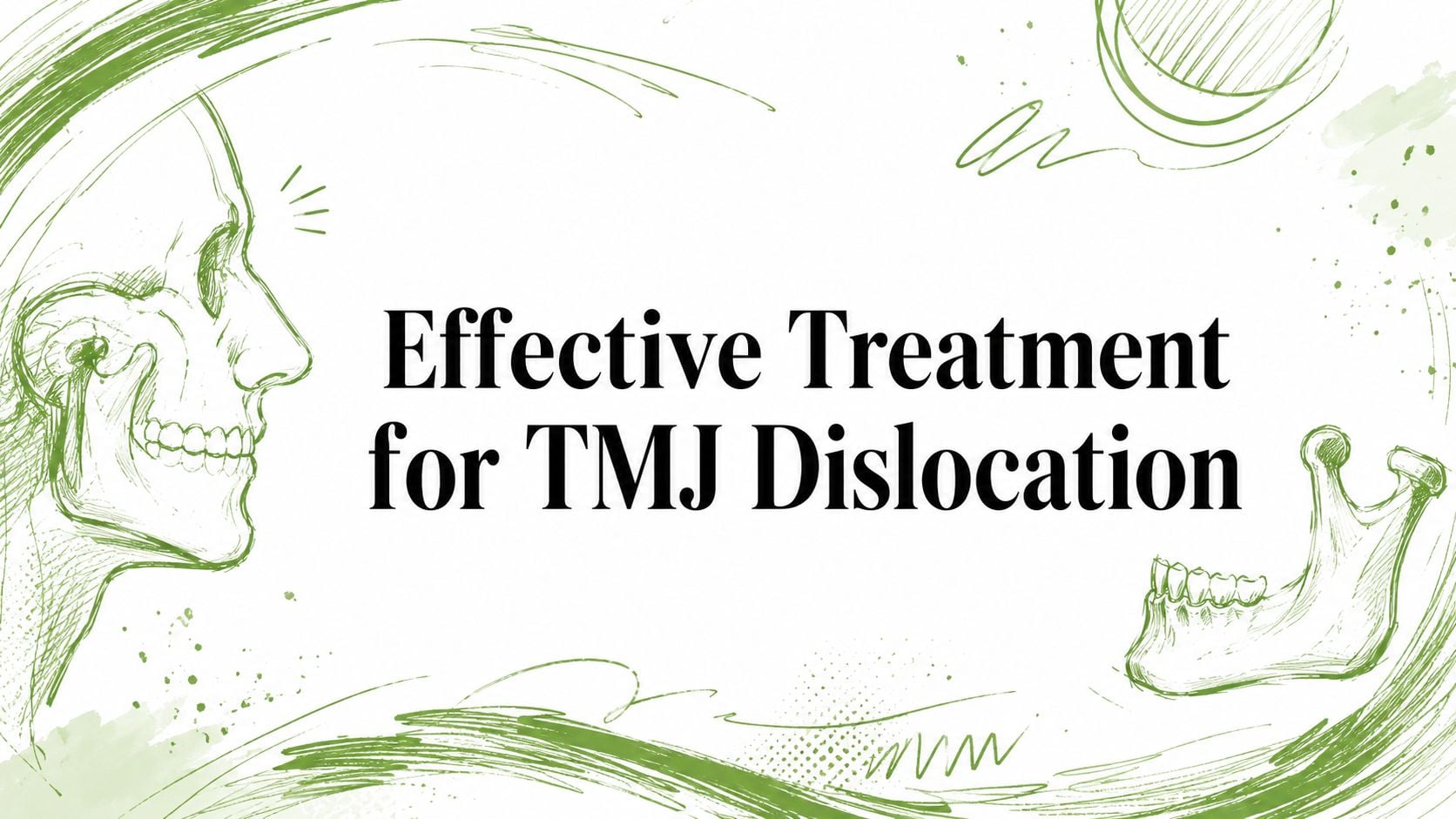
A dislocated jaw often starts with an ordinary moment. You yawn, laugh, take a large bite, or sit through a long dental appointment, and suddenly the mouth stays open and will not come back into place. That usually means the rounded end of the lower jaw, called the mandibular condyle, has moved too far forward and become caught in front of the joint's normal resting position.
In practical terms, the joint is no longer gliding in a controlled path. It has slipped past the point where the muscles and ligaments can guide it back on their own. That is why the jaw can feel fixed in place instead of sore or tight.
What it feels like in real life
Patients usually describe a very specific pattern. The jaw gets stuck open. The bite feels wrong. Speech becomes difficult because the lower jaw cannot return to its normal position, and swallowing can feel awkward or messy.
That is different from other problems people call a "locked jaw." Muscle spasm, disc displacement, and painful catching can all limit motion, but a true dislocation is a mechanical problem. The joint has moved out of position and is being held there.
In some cases, people first seek help through an emergency dentist for a jaw that is stuck open because the event feels so sudden and alarming.
Why it happens
A dislocation does not always mean severe injury. Many cases happen during routine opening in a joint that is already vulnerable.
The usual pattern involves more than one factor. The supporting ligaments may be loose. The muscles may be pulling unevenly. The joint shape may allow too much forward travel. If this has happened before, the tissues may already be stretched, which makes another episode easier to trigger.
That distinction matters in treatment. Reducing the jaw back into place is only the first step. If the joint remains unstable, the same problem can return during another yawn, meal, or dental visit.
Recurrent dislocation often points to an underlying stability problem, not just a one-time accident.
Why the experience feels so intense
Once the condyle slips forward, the surrounding muscles often tighten in response. That guarding is part of why patients feel the jaw is locked and impossible to control. Anxiety adds even more tension, which can make the episode feel worse minute by minute.
A few signs strongly point to dislocation:
- Mouth stuck open: You cannot comfortably bring the teeth together.
- Pain near the ears or cheeks: The strain is usually centered around the joint.
- Speech changes: Words may sound strained or unclear.
- Drooling or trouble swallowing: Saliva control becomes harder when the mouth will not close.
Understanding the mechanism helps shift the moment from panic to action. It also sets up the larger goal of care. In my view, the best treatment plan does more than close the jaw today. It should also reduce the chances that this becomes a repeating problem.
What to Do Immediately After a Dislocation
The first priority is to protect the joint and avoid making the situation worse. The wrong reaction is often to force the jaw closed. That can increase pain, worsen muscle spasm, and make professional reduction more difficult.
What to do right away
Use this short checklist:
- Support the jaw gently. Place your hands or a soft towel under the jaw so it feels steadier.
- Stay as calm as you can. Slow breathing helps reduce muscular guarding.
- Apply a cold pack. Keep it outside the joint area to help with swelling and pain.
- Avoid talking, chewing, or testing movement. Repeated attempts usually irritate the joint further.
- Get urgent evaluation. A same-day medical or dental assessment is appropriate.
If you need immediate local help, an emergency dentist in Charlotte can be one route for urgent guidance and direction.
What not to do
Some mistakes are common because people are understandably desperate for relief.
- Don't force the mouth shut. The joint is mechanically blocked, not just “tight.”
- Don't ask a friend or family member to push on it. Untrained reduction can injure tissues and teeth.
- Don't keep opening wider to “reset” it. That usually increases the problem.
- Don't delay for days if the jaw is clearly dislocated. Earlier treatment gives more conservative options.
Practical rule: If your jaw is stuck open and won't return to normal, treat it like an urgent joint problem, not a wait-and-see annoyance.
Where to go
The right destination depends on the situation. If the dislocation follows major facial trauma, a vehicle accident, a fall, or there's concern about fracture, emergency medical care is the safest choice. If it appears to be an isolated jaw dislocation without major trauma, urgent dental or TMJ-focused care may be appropriate.
A specialist's job in those first hours is not just to “pop it back in.” Proper care includes identifying whether the problem is a dislocation, whether one or both sides are involved, and whether the surrounding tissues have become unstable enough to make recurrence likely.
That last part often gets missed. Emergency care solves the immediate crisis. It doesn't always address why the joint slipped in the first place.
Your First Visit With a Specialist
Walking into a specialist visit after your jaw has locked open is unsettling. Patients are often worried about two things at once. How the jaw will be put back in place, and whether it could happen again.
A well-run first visit answers both.
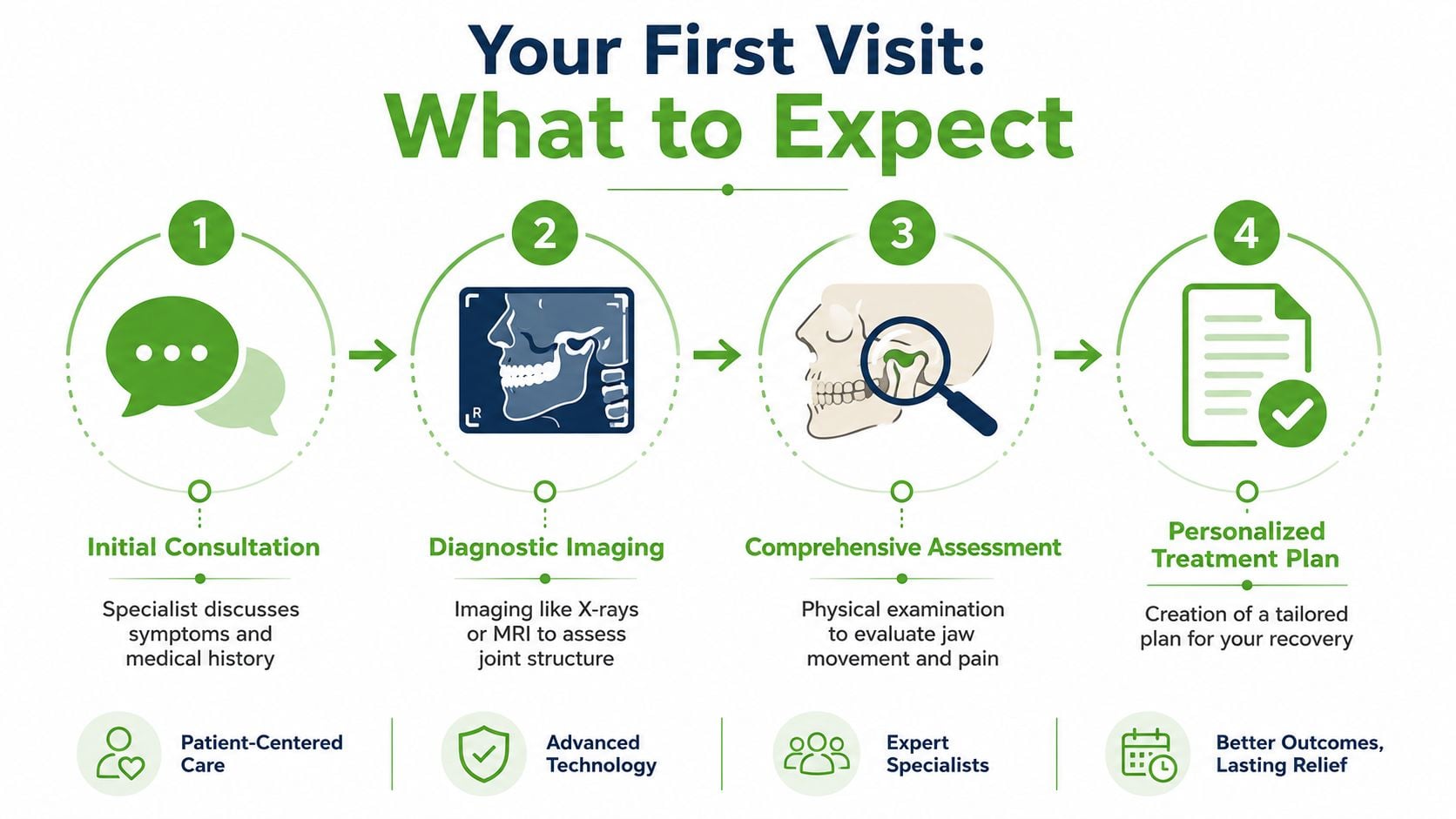
Early in the appointment, I want a clear timeline. Did the jaw slip during a yawn, a meal, dental treatment, or after a prior episode of clicking and catching? Was there trauma, a history of hypermobility, or repeated partial slips that seemed to self-correct? Those details matter because a first-time acute dislocation is evaluated differently from a joint that has been unstable for months.
The exam is focused and practical. I assess jaw position, whether one or both joints are involved, how much muscle guarding is present, whether the bite has shifted, and how tender the joint and surrounding muscles are. I also look for signs that the problem is larger than a simple dislocation, such as swelling patterns, bruising, or findings that suggest fracture or internal joint damage.
This visual captures the overall flow many patients can expect.
How the diagnosis is confirmed
Imaging is used selectively. If the story and exam fit a straightforward recent dislocation, the diagnosis is often clear without extensive testing. If the injury followed facial trauma, the jaw has been out for an extended period, or the joint has been slipping repeatedly, imaging can help identify fracture, confirm joint position, and show structural wear that affects treatment choices.
That distinction shapes the whole visit. The immediate goal is reduction when reduction is still appropriate. The larger goal is deciding whether this was an isolated event or the start of a recurrent instability problem.
What manual reduction actually involves
Manual reduction is controlled, deliberate, and usually much gentler than patients expect. The clinician guides the lower jaw in a specific direction to release the condyle from where it is stuck and then return it to a stable position in the socket. In plain language, the jaw often has to move slightly downward before it can come back.
That is why forcefully trying to snap the mouth shut at home usually fails and can increase pain.
The Merck Manual description of mandibular reduction explains the mechanics well and outlines why muscle relaxation and patient positioning make the technique more successful. Some patients need only reassurance and careful handling. Others need medication to reduce pain, anxiety, or spasm before the joint can be repositioned safely.
Here is a short visual resource that helps some patients understand the joint mechanics before or after treatment.
What happens after the jaw is reduced
Relief is often immediate, but the appointment should not end with, "It went back in, so you're done." Recurrent dislocation usually has a reason behind it. Loose supporting tissues, poor muscle coordination, a wide-opening habit, connective tissue laxity, and untreated clenching patterns can all keep the joint vulnerable.
This is the part many emergency visits do not have time to address.
A specialist visit should close that gap. Patients need clear instructions on diet, opening limits, short-term support for inflammation and spasm, and whether they are a candidate for guided rehab such as jaw strengthening and control exercises for TMJ stability. Education also matters here. Many people coming in for reduction have also been dealing with clicking, locking, or chronic symptoms for months, and resources on managing TMJ pain can help frame the broader treatment picture.
One more point is important. If the jaw has remained dislocated for too long, reduction becomes harder and sometimes stops being the right next step. In those cases, treatment shifts from simple repositioning toward a more involved plan. Early specialist care gives you the best chance of avoiding that path and preserving non-surgical options.
Building Long-Term Stability With Non-Surgical Therapies
Getting the joint back into place is only the beginning. If the tissues are loose, the muscles are unbalanced, or your jaw habits keep driving the condyle too far forward, the same problem can return. That's why the most thoughtful treatment for TMJ dislocation doesn't end with reduction. It shifts into stability work.
The real question after reduction
After the immediate crisis, I want patients thinking less about “Is it back in?” and more about “Why did it come out?” That's where non-surgical care has real value. It gives the joint a chance to recover while reducing the forces that triggered the event.
Several tools often work together rather than alone:
- Custom oral appliances: A well-designed splint can help unload the joint and discourage unstable motion patterns.
- Targeted physical therapy: Therapy can improve coordination, reduce guarding, and retrain movement.
- Orofacial myofunctional therapy: This addresses tongue posture, swallowing mechanics, lip seal, and oral habits that keep straining the system.
Exercises matter when the jaw is recurrently unstable
For patients with repeat dislocations, exercise-based care isn't a minor add-on. It's part of standard conservative treatment. A review in the emergency medicine literature notes that Rocabado's “666 exercise protocol” is utilized as a standard conservative treatment for recurrent TMJ dislocation, helping restore muscle balance and joint stability without invasive surgery, as summarized in this TMJ dislocation treatment review.
That matters because recurring dislocation usually isn't just a “joint problem.” It's also a control problem. The muscles that guide opening and closing have to work in a coordinated way. If they don't, the condyle keeps drifting into the same risky path.
If you want a patient-friendly starting point, these jaw strengthening exercises are useful to review alongside professional guidance.
How the pieces fit together
A stable jaw usually needs more than one intervention. Here's how the common conservative tools compare:
| Approach | Main purpose | Best use |
|---|---|---|
| Splint therapy | Protects the joint and moderates harmful mechanics | Patients who clench, overload the joint, or need positional support |
| Physical therapy | Restores controlled movement and reduces guarding | Patients with weak coordination, stiffness, or muscle overuse |
| Myofunctional therapy | Corrects oral posture and functional habits | Patients with tongue thrust, mouth breathing, or poor swallowing patterns |
Patients often do better when these therapies are coordinated instead of used in isolation. A splint may reduce irritation, but it won't retrain a dysfunctional swallow. Exercises may improve control, but they won't help much if nighttime clenching keeps reloading the joint. Long-term success comes from combining protection, retraining, and habit correction.
A helpful outside resource on managing TMJ pain can also give broader context for how conservative care fits into chronic jaw conditions.
Non-surgical care works best when it answers a specific mechanical question. Which structure is overloaded, which muscle pattern is wrong, and which habit keeps reproducing the problem?
What tends not to work well
Patients are often told to “be careful” or “eat soft foods for a while.” That advice has value, but by itself it's incomplete. Passive caution doesn't create stability. Neither does repeatedly reducing the jaw without any follow-up strategy.
If recurrence is part of your history, conservative care should be active. That means guided movement, habit correction, appliance support when indicated, and monitoring until the joint behaves predictably again.
Advanced Regenerative Options to Heal the Joint
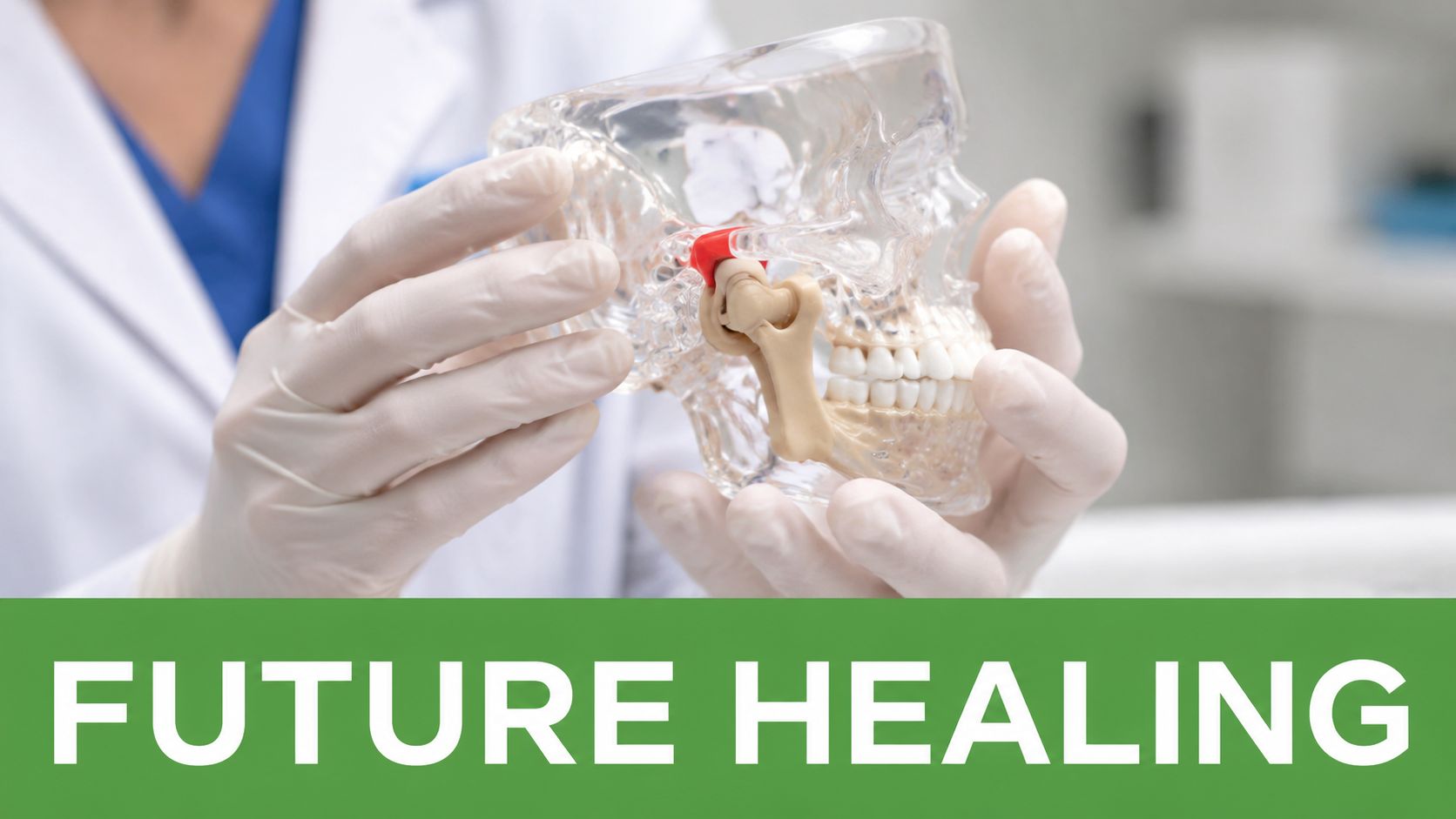
For some patients, stabilization alone isn't enough. The jaw may stay vulnerable because the supporting tissues have been strained, inflamed, or weakened by repeated episodes. That's where regenerative care can be a meaningful next step.
What regenerative treatment is trying to do
Traditional conservative care often focuses on symptom control and movement management. Regenerative treatment tries to improve the quality of the tissues themselves. In practical terms, the goal is to help a stretched, irritated, unstable joint become more resilient.
Think of the difference this way:
- A splint can protect the joint
- Exercise can retrain the joint
- Regenerative care may help repair and strengthen the joint environment
Common options used in TMJ care
Three approaches are frequently discussed in this category.
Prolotherapy is used to stimulate a healing response in lax or weakened connective tissue. In the right patient, that can support ligament stability around the joint.
Platelet-Rich Fibrin, or PRF, uses components from your own blood that contain growth factors. The idea is to support tissue healing in a way that is biologically familiar to the body, especially when soft tissue irritation keeps lingering.
Cold laser therapy is often used to reduce inflammation and encourage cellular repair. Patients usually like it because it is noninvasive and easy to tolerate.
For readers exploring these biologic approaches, orthobiologic therapy offers a helpful overview of how regenerative options are used in joint-focused care.
Why this can matter in recurrent cases
A recurrent dislocation often leaves the joint in a frustrating middle ground. It may not be bad enough for surgery. It may not be healthy enough to stay stable with basic self-care alone. Regenerative treatment can be appealing in that gap because it aims at the tissue quality problem, not just the motion problem.
This doesn't mean every unstable jaw needs injections or laser therapy. It means the treatment plan should match the biology. If the joint is repeatedly slipping because the support structures are weak and irritated, healing those tissues may be more useful than endlessly reacting to each new flare.
Some patients don't need a more aggressive procedure. They need a stronger joint.
The trade-off to understand
Regenerative care is not an overnight fix. It still requires diagnosis, follow-up, and a coordinated rehabilitation plan. If poor mechanics continue, even a biologically smart treatment can be undermined by the same harmful patterns.
The strongest non-surgical plans usually combine regenerative support with movement retraining and behavior change. That's how you move from short-term relief to actual durability.
Understanding When Surgery Is Necessary
Most patients hope to avoid surgery, and in many cases that's appropriate. Still, it helps to know when surgical care becomes the rational next step rather than a last-minute surprise.
When conservative care is no longer enough
Surgery enters the conversation when the joint remains chronically unstable despite thorough non-surgical care, or when the anatomy itself keeps blocking normal function. It may also be necessary after significant trauma or when the joint has become permanently locked in an abnormal position.
One important threshold involves recurrent history. According to Medscape's review of TMJ dislocation treatment, for chronic or recurrent TMJ dislocation that fails conservative management, eminectomy achieves a 95% success rate in preventing recurrence and is typically indicated for patients with a history of three or more dislocation events where the joint becomes permanently locked.
What eminectomy actually does
An eminectomy removes or reduces the articular eminence, the bony barrier that the condyle keeps slipping over and getting trapped in front of. If that barrier is the reason the jaw repeatedly locks out, changing it can stop the cycle.
This is not the first answer for an isolated acute episode. It is a structural solution for a structural problem.
Here's the decision logic in simple terms:
| Situation | Typical direction |
|---|---|
| First-time acute dislocation | Manual reduction and stabilization |
| Recurrent episodes with manageable function | Conservative and regenerative treatment |
| Chronic locked pattern or repeated failure of non-surgical care | Surgical evaluation |
What patients should know before fearing surgery
Surgery sounds intimidating because it feels final. In reality, good surgical decision-making is selective. A surgeon should be able to explain why the joint is failing, what procedure matches that failure pattern, and why less invasive options are no longer likely to solve it.
That clarity matters. Some patients are referred too early. Others stay in repetitive temporary care too long. The right timing depends on whether the jaw still has a realistic path to durable non-surgical stability.
Surgery is usually not the starting point for TMJ dislocation. It is the next step when the joint keeps proving that simpler treatment isn't enough.
What doesn't make sense
What rarely works well is bouncing between repeated emergency reductions without a broader plan. If the same dislocation keeps happening, the treatment goal has to shift from rescue to prevention. Sometimes prevention is conservative. Sometimes it's regenerative. In a smaller group of patients, prevention is surgical.
The key is being honest about which category you're in.
Your Recovery and How to Prevent Future Dislocations
The unsettling part for many patients starts after the jaw is put back in place. You can leave the emergency visit relieved, then feel sore, guarded, and strangely unsure every time you chew or yawn. That does not mean the reduction failed. It usually means the joint and the tissues around it are still recovering from being overstretched.
Recovery often takes longer than patients expect. The jaw may be aligned again, but the capsule, ligaments, and surrounding muscles need time to calm down and regain control. During that period, the goal is not only to get through the soreness. The goal is to keep the joint from slipping into the same pattern again.
What recovery usually involves
The first phase is protection. Right after reduction, the joint is still vulnerable, so daily habits matter more than patients realize.
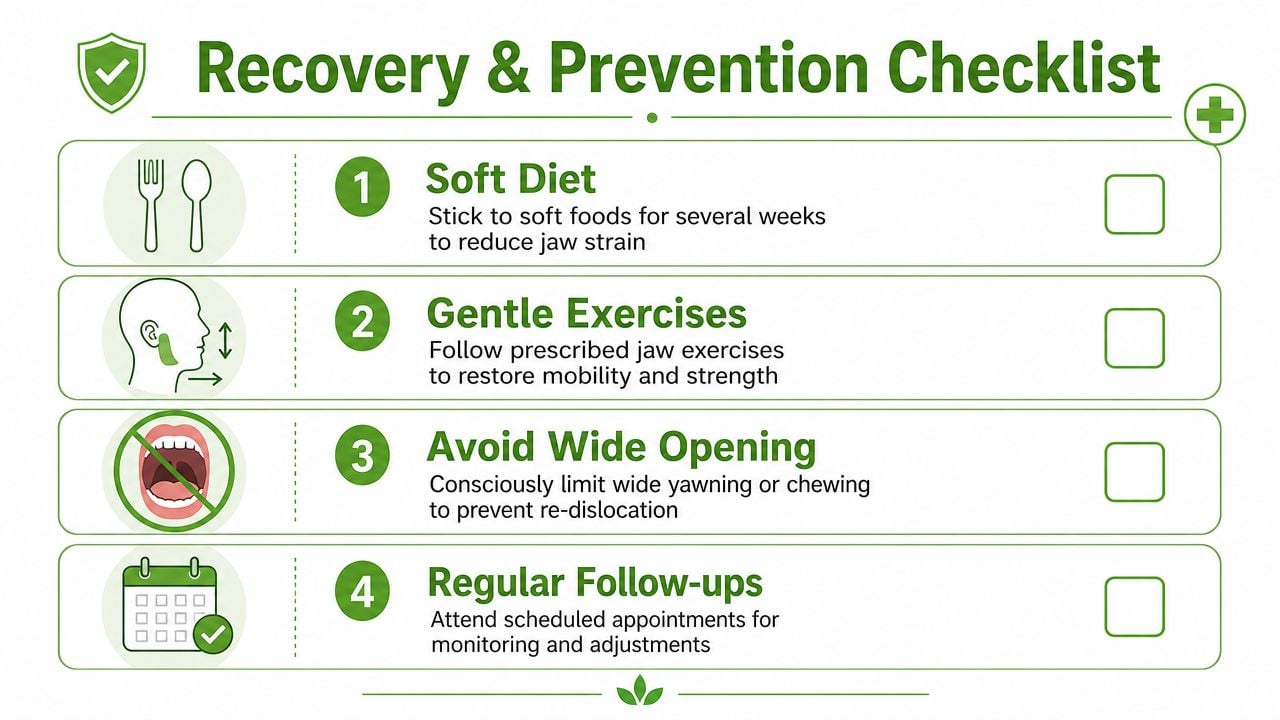
A practical home plan usually includes:
- Soft foods: Choose meals that require minimal chewing and no wide biting.
- Controlled jaw movement: Use only the exercises your clinician gives you. Random stretching can irritate an already unstable joint.
- Swelling care: Ice and anti-inflammatory measures may help when they fit your medical history.
- Opening limits: Be careful with yawning, large bites, singing, and long dental visits that require you to hold the mouth open.
Some stiffness is common. Sharp catching, repeated slipping, or growing fear of normal jaw movement deserves attention sooner rather than later.
Daily habits that lower the chance of recurrence
Preventing another dislocation usually comes down to reducing repeated strain while the joint heals, then improving how the system functions long term.
- Watch mouth opening: Support the chin during yawns if needed and avoid testing how wide you can open.
- Correct oral posture problems: Tongue posture, swallowing pattern, and mouth-breathing habits can keep loading the joint in the wrong direction.
- Address clenching: Daytime tension and sleep-related grinding can keep the joint irritated and unstable.
- Keep follow-up appointments: Early adjustments are easier than treating another full dislocation.
This is also where many patients benefit from the non-surgical work discussed earlier. If the jaw has a history of slipping, waiting and hoping is rarely enough. Muscle retraining, bite and airway evaluation, and regenerative treatment in the right patient can help the joint become more stable instead of just temporarily quiet.
When to get re-evaluated
I tell patients to pay attention to patterns, not just pain. A jaw can be unstable even if it is not severely painful.
Seek specialist care if:
- The joint feels like it is sliding forward
- You have had more than one dislocation or near-dislocation
- Chewing makes you worry the jaw will lock again
- Your bite keeps changing after reduction
- You are still limited after the expected healing period
A good recovery plan should restore confidence along with function. The best treatment for TMJ dislocation does more than rescue the joint in the moment. It helps you eat, speak, yawn, and live without feeling like one ordinary movement could send you back to the emergency room.
If you're dealing with a recent jaw dislocation, repeat lockouts, or a TMJ that still feels unstable after emergency care, Pain and Sleep Therapy Center can help you pursue a more complete plan. Their team evaluates the full picture, including joint mechanics, muscle balance, airway and oral posture factors, and regenerative options when appropriate, so you're not just getting through the episode but working toward lasting stability.