If your jaw aches by lunchtime, your temples feel tight by dinner, and you've already tried night guards, soft foods, ibuprofen, massage, or “just give it time,” you're not alone. TMJ and orofacial pain rarely stay in one lane. They can show up as jaw clicking, ear pressure, facial soreness, headaches, tooth sensitivity, neck tension, and the frustrating sense that nothing fully settles the area down.
That's where cold laser therapy often enters the conversation. Patients usually expect something dramatic when they hear the word “laser.” In reality, this is a gentle treatment designed to support healing, calm irritated tissue, and reduce pain without cutting, burning, or damaging the area. For jaw joints, overworked chewing muscles, and inflamed facial tissues, that matters.
Many people looking into jaw pain care have already seen how light-based tools are used in dentistry more broadly. If you want a patient-friendly overview of that bigger picture, Laser dentistry for Katy patients offers useful context on how lasers can be used in modern dental care.
A Modern Approach to Healing Chronic Pain
Chronic facial pain has a way of shrinking daily life. You may stop chewing certain foods, avoid long conversations, wake up clenching, or feel your jaw tighten every time stress rises. What makes TMJ pain especially draining is that the source is often layered. A joint may be irritated while the surrounding muscles are guarding, and the nerves in the area become more sensitive over time.
Cold laser therapy gives us a way to address that pattern without asking the body to tolerate another aggressive intervention. It's often used when the goal is to quiet inflammation, support tissue repair, and reduce pain in a region that's already reactive.
Why this feels different from symptom masking
Pain medication can be helpful in the short term. A splint can also play an important role for the right patient. But neither of those automatically improves the cellular environment inside strained muscles or inflamed soft tissue.
Cold laser therapy is different because it aims to stimulate healing behavior inside the tissue itself. That distinction is why it can fit well into a broader TMJ and orofacial pain plan rather than acting as a stand-alone quick fix.
Many patients don't need more force. They need the irritated tissue to calm down enough that normal function can return.
Where it fits in real practice
For jaw and facial pain, this treatment is often considered when someone has:
- Muscle tenderness in the masseter, temporalis, or surrounding facial muscles
- Joint irritation around the TMJ with pain during chewing or opening
- Post-strain flare-ups after clenching, dental procedures, or prolonged tension
- Persistent soreness that keeps cycling even after basic self-care
That doesn't mean cold laser therapy works for every pain pattern. If the main issue is structural instability, airway-related clenching, or a habit pattern that keeps overloading the jaw, those drivers still have to be addressed. The light can help create a better healing environment. It doesn't replace diagnosis.
The Science of Healing with Light Energy
In TMJ care, the goal is not to flood the area with force. The goal is to give irritated muscle, tendon, and joint tissue a better biologic environment so it can settle and recover.
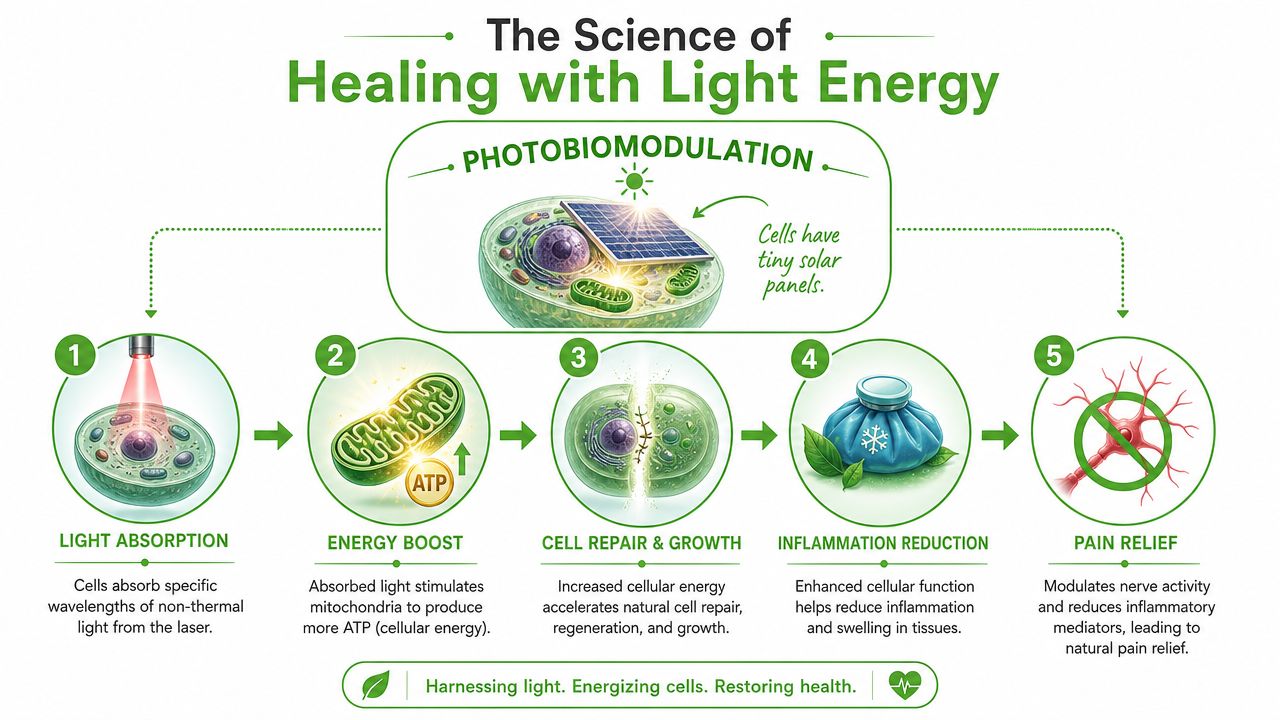
Cold laser therapy, also called low-level laser therapy or photobiomodulation, does that by delivering specific wavelengths of light to tissue. That light is absorbed by parts of the cell involved in energy production, especially the mitochondria. As noted in this clinical overview of cold laser therapy, the response can increase ATP production and support normal cellular metabolism without a heat-based effect. If you want a practical look at the equipment side, this overview of a cold laser therapy machine is a useful companion.
Why that matters for jaw and facial pain
The jaw is a demanding area to treat. The tissues are small, the nerves are sensitive, and pain often involves more than one structure at the same time. A patient may have a tender masseter, an irritated joint capsule, and surrounding protective muscle spasm all in the same flare.
That is one reason cold laser has a useful role in orofacial pain care. It gives us a non-thermal way to target tissue that is inflamed, strained, or slow to recover, especially when the area is too reactive for a more aggressive approach.
What the light is doing inside the tissue
A simple way to picture it is this. The light acts like a signal, not a mechanical treatment. It does not push the jaw into position or physically break up tissue. It encourages cells to shift toward repair.
In clinical terms, that can support processes tied to healing, including collagen production, fibroblast activity, microcirculation, and inflammatory regulation. For a TMJ patient, the practical result may be less tenderness with chewing, easier opening, or a calmer response after a clenching flare. It does not fix every cause of pain, but it can reduce the biochemical noise that keeps tissue stuck in an irritated state.
This is also where I separate cold laser from injections such as PRF or Prolotherapy. PRF and Prolotherapy are useful when I want a stronger regenerative signal or I am treating a problem that involves laxity, degeneration, or a tissue that needs more structural support. Cold laser is often the gentler choice when the tissue is inflamed, the face is sensitive, or the patient needs a lower-intervention option first.
Clinical takeaway: Cold laser therapy helps create conditions that favor repair. In TMJ and facial pain care, that makes it a strong fit for reactive tissue, post-strain soreness, and inflammatory flare-ups.
Photobiomodulation is used in other settings as well. Patients comparing scalp devices sometimes review resources on laser therapy for men's hair loss, which reflects how broadly light-based therapy is being studied and applied.
What to Expect During Your Treatment Session
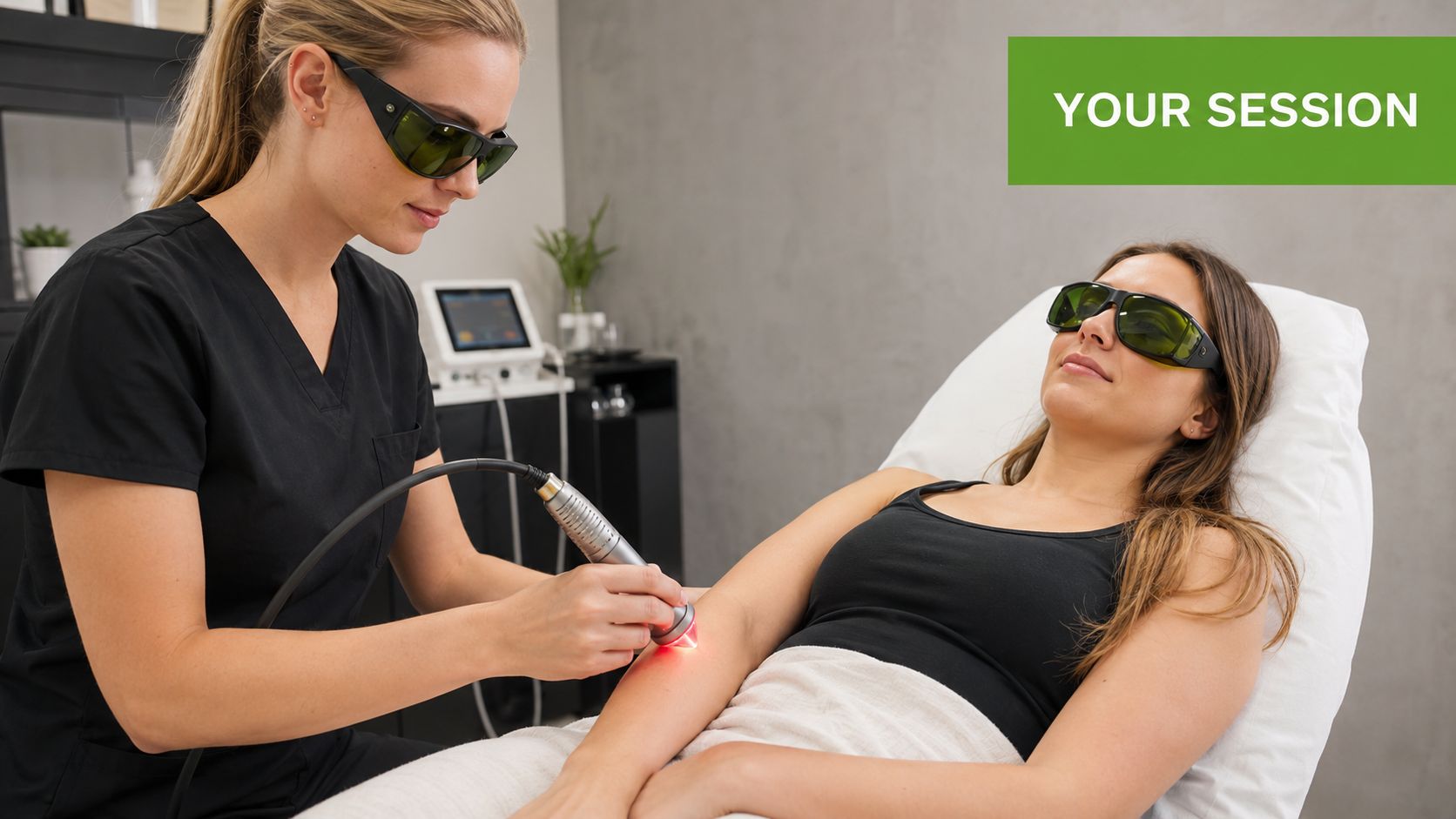
Most first-time patients are surprised by how simple the session feels. There's no drilling, no vibration, and no recovery room. In a TMJ or facial pain visit, the treatment is usually done with a handheld device directed at specific areas of the jaw joint, chewing muscles, or nearby tender tissue.
What happens before the laser turns on
The appointment usually starts with a focused exam. The clinician identifies where the pain is coming from and whether the main target is the joint, the surrounding muscles, tendon attachments, or irritated soft tissue. That matters because accurate placement is part of what makes treatment useful.
You'll usually be seated or reclined comfortably. Protective eyewear may be used depending on the device and treatment area. The goal is precision, not intensity.
What you'll feel during the session
Many individuals experience very little sensation. Some feel nothing at all. Others notice mild warmth, light pressure from the handpiece, or a subtle soothing sensation in the treated area.
Treatment is typically short. For jaw and facial pain, the clinician often moves methodically over key points rather than sweeping the area randomly.
A typical session often involves:
- Targeting the painful structures rather than treating the whole face broadly
- Applying the handheld laser over selected points around the jaw, temple, cheek, or neck as indicated
- Monitoring your response during and after the session to guide future visits
What happens afterward
You can usually return to normal activity right away. There's no sedation and no downtime in the usual sense. Some patients feel looser or less sore the same day. Others notice change more gradually after a sequence of treatments.
This short video gives a helpful visual sense of how laser therapy is delivered in a clinical setting:
What doesn't help
Cold laser therapy works best when it's part of a diagnosis-driven plan. It's less useful when applied as a generic add-on without understanding why the jaw is overloaded in the first place. If the patient keeps clenching heavily at night, has unstable bite function, poor oral posture, or untreated airway-related strain, those contributors still need attention.
Clinical Applications for Facial Pain and TMJ
A common TMJ visit sounds like this: the jaw feels tight in the morning, chewing sets off pain near the joint, and the temple starts aching by late afternoon. In that setting, the problem is rarely one structure alone. The joint lining may be irritated, the masseter and temporalis may be guarding, tendon attachments may stay sore, and the local nerves may become more sensitive than they should be.
That layered pain pattern is why cold laser therapy can be useful in orofacial care. It is not aimed at one symptom in isolation. It is used to calm irritated soft tissue, reduce inflammatory activity, and make pain signaling less amplified in a region where small changes can make a patient feel meaningfully better.
Why it can help jaw and facial pain
Clinical summaries of photobiomodulation describe three main effects that matter here: less edema and inflammation, changes in pain signaling that may reduce C-fiber irritability while supporting endorphin and serotonin activity, and lower activity of chemical irritants such as bradykinin around nerves. One review reports 50 to 70% reduction in inflammation-related enzyme activity within 24 hours in this overview of cold laser therapy. The same review notes that some studies found measurable improvement after 3 to 5 sessions.
In practice, those mechanisms matter because the jaw is crowded anatomy. The muscles that close the mouth, the joint itself, and nearby nerve branches all influence one another. A modest reduction in irritation can mean less pain with chewing, fewer flare-ups with talking, and less guarding through the side of the face.
For patients with TMJ or orofacial pain, the treatment goals are usually straightforward:
- Settle overworked jaw muscles that feel tight, heavy, or tender
- Reduce inflammation around the joint and surrounding soft tissue
- Lower pain reactivity so normal functions such as chewing, yawning, and speaking are less provocative
Conditions where clinicians often consider it
Cold laser therapy is commonly considered for:
- TMJ-related pain with tenderness at or around the joint
- Myofascial facial pain involving the jaw, cheek, temple, or upper neck
- Headache patterns linked to clenching or chronic facial muscle overload
- Soft-tissue irritation after dental procedures or prolonged mouth opening
- Pain flares related to parafunction, including daytime clenching and nighttime grinding
If you are trying to sort out whether your symptoms fit a jaw pain pattern, this guide on what is TMJ disorder gives a clear overview of the clinical picture.
Why specialty context matters
Laser treatment in the mouth and face is not one category. The same broad technology can be used for very different purposes depending on the wavelength, settings, and tissue target. For example, Ultra Smile DentalSpa's laser gum treatment refers to a soft-tissue dental application, not a pain-modulation approach for TMJ.
From a practitioner's perspective, that distinction matters. In myofascial and TMJ care, I use cold laser when the goal is to calm pain and support healing without needles. If the main problem is ligament laxity, disc instability, or a tissue injury that needs a stronger regenerative push, I may look at PRF or Prolotherapy instead. Cold laser fits best when the tissues are irritated, overloaded, and still recoverable with a non-invasive signal to heal.
Comparing Cold Laser with Other Regenerative Therapies
Patients often ask which regenerative treatment is “best.” That's usually the wrong question. The better question is which treatment matches the tissue problem in front of us.
Cold laser therapy, PRF, and Prolotherapy all aim to support healing. They do it in very different ways. One is non-invasive and light-based. The others involve injection-based regenerative strategies.
The short version
Cold laser therapy is often attractive when pain is driven by inflamed soft tissue, overworked muscles, or a healing response that needs support without introducing needles. PRF is often considered when a clinician wants to place concentrated healing factors into a specific site. Prolotherapy is typically used when ligamentous or tendon support is part of the problem and tissue strengthening is the goal.
That means these therapies aren't direct substitutes in every case. Sometimes they're alternatives. Sometimes they're complementary.
Regenerative Therapy Comparison
| Therapy | Mechanism | Best For | Invasiveness |
|---|---|---|---|
| Cold Laser Therapy | Light-based photobiomodulation intended to stimulate cellular activity and support healing without heat | Inflamed soft tissue, facial muscle pain, TMJ flare-ups, patients who want a non-invasive option | Non-invasive |
| PRF | Uses the patient's own blood-derived fibrin and growth factors placed into a targeted area | Tissue support where a more direct regenerative approach is appropriate | Minimally invasive |
| Prolotherapy | Injection-based treatment used to stimulate a healing response in connective tissue | Ligament and tendon-related pain patterns, joint support cases | Minimally invasive |
How I think about the trade-offs clinically
A patient with a highly reactive jaw, significant muscle guarding, and fear of injections may start with cold laser therapy because it's gentle and easy to tolerate. A patient with a more specific connective tissue problem may need something more targeted than light alone.
PRF and Prolotherapy can be powerful tools, but they ask more of the patient. They involve injection planning, procedural tolerance, and post-treatment expectations. Cold laser therapy doesn't carry that same procedural load, which makes it useful early in care or alongside other interventions.
The right therapy depends on the tissue target. Muscle, joint lining, tendon attachment, and ligament don't all respond the same way.
When combination care makes sense
Combination care can be reasonable when one therapy reduces irritation and another addresses tissue integrity more directly. That's part of why multidisciplinary clinics often offer several regenerative options instead of forcing every case into one lane. For patients comparing those options, this overview of orthobiologic therapy explains how regenerative treatments can be selected based on diagnosis and tissue type.
One practical note matters here. Pain and Sleep Therapy Center offers cold laser therapy, PRF injections, and Prolotherapy as part of its treatment mix for selected TMJ and facial pain cases. That doesn't mean everyone needs all three. It means the clinic can match the tool to the problem rather than trying to make one treatment do everything.
Safety Profile and Treatment Considerations
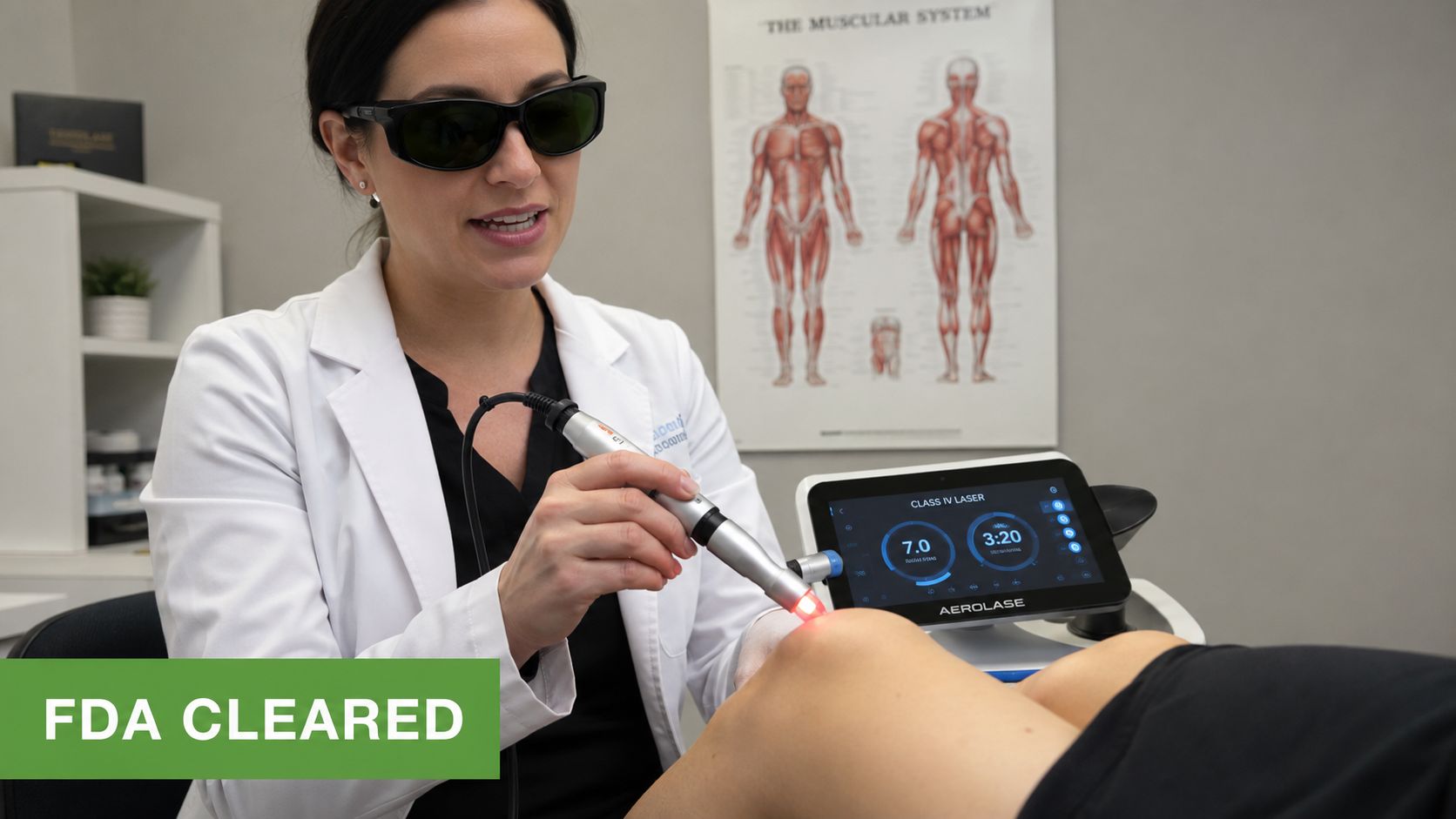
Cold laser therapy has a strong reputation for safety when trained professionals use it appropriately. That's one reason many patients consider it when they want to avoid medication dependence, more invasive procedures, or treatment approaches that feel too aggressive for an already sensitive jaw.
Why the safety profile is favorable
The basic mechanism helps explain the safety profile. Cold laser therapy is intended to stimulate tissue without generating the kind of heat associated with cutting lasers. In practical terms, that means the goal is biologic signaling, not tissue destruction.
Clinicians still have to apply it responsibly. A safe treatment is not the same as a casual treatment.
Situations that require caution
Common professional precautions include avoiding treatment:
- Directly over the eyes, because focused light can injure delicate eye structures
- Over cancerous lesions, because abnormal tissue shouldn't be stimulated
- During pregnancy in certain areas, where clinicians use extra caution
A qualified provider also considers the device being used, the treatment location, and the patient's medical history before recommending care.
What patients should know before saying yes
Cold laser therapy is a good option when the goal is conservative care with low treatment burden. It may be less appealing if a patient expects one visit to solve a chronic mechanical problem. Like other non-surgical treatments, it works best when the diagnosis is solid and the treatment plan addresses the reason the pain developed.
A safe therapy still needs the right indication. Good outcomes come from matching the treatment to the problem, not from using the newest device on every patient.
Your Questions About Cold Laser Therapy Answered
Does cold laser therapy hurt
Usually, no. Most patients feel little to nothing during treatment. Some notice light pressure from the device or a mild sensation in the area, but it isn't meant to be painful.
How many sessions will I need and how often
That depends on the diagnosis, how long the problem has been present, and whether the issue is mostly muscular, joint-related, or part of a bigger pattern such as clenching or airway strain. Some patients notice change quickly, while others need a series of visits to build momentum. Your clinician should give you a plan based on the tissue involved rather than a one-size-fits-all schedule.
Is it covered by insurance
Coverage varies. Some practices bill it differently, and some plans treat it as a non-covered adjunctive service. The practical move is to ask for a clear fee explanation before starting so there are no surprises.
How should I prepare for my appointment
Come in with a short history of your symptoms. Note where the pain is, what triggers it, whether chewing or talking makes it worse, and whether you wake up with tension. If you use a splint or night guard, bring it. If another provider has taken imaging or given you a diagnosis, that information can help.
Can I combine it with other treatments
Often, yes. Cold laser therapy is commonly paired with broader conservative care such as jaw exercises, bite appliance therapy, habit modification, manual treatment, and other regenerative options when appropriate. The key is making sure each part of the plan has a purpose.
Who's a good candidate
People with TMJ pain, myofascial facial pain, localized inflammation, or post-strain flare-ups often ask about it first. The best candidates are those who want a non-invasive treatment and are open to a diagnosis-driven plan rather than a quick temporary patch.
If jaw pain, facial tension, headaches, or TMJ symptoms are disrupting your daily life, Pain and Sleep Therapy Center evaluates the full picture and offers treatment options that may include cold laser therapy as part of a personalized plan. A focused consultation can help determine whether your pain is primarily muscular, joint-related, airway-influenced, or driven by another underlying issue.