
Some nights it feels like your toddler changed overnight. Last week they went down easily, slept in long stretches, and followed a routine you could count on. Now they’re standing in the crib, crying when you leave, skipping naps, or popping awake just when you finally sat down.
If that’s your house right now, you’re not doing anything wrong. A 17 month old sleep regression can feel sudden and personal, especially when you had started to trust your evenings again. Parents often assume they must have missed a cue, caused a bad habit, or lost progress. In most cases, that’s not what’s happening.
This stage is confusing because it sits right at the intersection of development, biology, and behavior. Your toddler may be learning quickly, feeling separation more intensely, shifting toward one nap, and dealing with a later internal sleep rhythm all at once. The result can look like bedtime chaos.
The good news is that this phase usually makes more sense once you understand the why behind it. And when sleep problems don’t fit the usual regression pattern, there are clear signs that can point to something deeper, including airway-related concerns.
You Had a Great Sleeper Until Now
One family I often think about had a toddler who used to wave goodnight, cuddle a stuffed animal, and fall asleep without much fuss. Then, around 17 months, bedtime turned into a long negotiation. He wanted one more book, one more song, one more drink of water. When his parent left the room, he cried hard. If they stayed, he played. If they came back later, he was standing in the crib, wide awake.
That kind of shift is exhausting because it doesn’t just take away sleep. It takes away your confidence. You start replaying the day in your head. Was nap too late? Did teething start this? Should you rock longer, leave sooner, change bedtime, bring them into your bed?
If this sounds familiar, pause there for a second. A rough stretch at this age usually does not mean your toddler forgot how to sleep. It also doesn’t mean you failed to set good habits. More often, it means your child is moving through a busy developmental window and sleep is showing the strain.
Why this feels so intense
Sleep disruption at this age hits the whole family. Toddlers get overtired fast. Parents lose patience faster than they want to. Normal decisions start to feel loaded. Even a simple question like “Do I go back in again?” can feel impossible at 2 a.m.
You’re not looking at a broken child or broken routine. You’re looking at a developing toddler whose brain and body are asking for an update.
What parents often get wrong
The biggest mistake isn’t being too soft or too strict. It’s assuming every sleep problem at this age has a purely behavioral cause. Sometimes behavior is only the surface. Underneath it, your toddler may be coping with a changing body clock, stronger emotions, and a growing need for predictability.
That’s why a calmer, more effective response starts with understanding what this regression really is.
What Is the 17 Month Sleep Regression
The term 17 month sleep regression describes a temporary period when a toddler who had been sleeping fairly well starts resisting sleep, waking more, or napping poorly. It isn’t an official diagnosis, and it isn’t a sign that sleep is permanently getting worse. It’s a label parents use for a real pattern that shows up during a major stretch of development.
This phase is commonly observed between 16 and 24 months, and it’s often linked to rapid language growth, more physical independence, and a biological shift toward a later sleep rhythm, according to Tiny Transitions’ guide to navigating the 17-month sleep regression. That same source notes that it typically lasts 2 to 6 weeks, as long as new sleep habits that aren’t sustainable don’t take over.
What it usually looks like
A toddler in this phase may:
- Fight bedtime even though they seem tired
- Wake overnight after previously sleeping better
- Resist naps or take shorter naps
- Need more reassurance when a parent leaves the room
- Seem extra alert at night despite a full day of activity
For many parents, the hardest part is the contradiction. Your child looks exhausted, but acts wired. They cling to you, but also push for independence. They need sleep, but protest it.
What it does not mean
This regression does not automatically mean you need a complete sleep overhaul. It also doesn’t mean every rough night should be handled with more and more help until sleep returns. During short-term disruptions, simple support can help you get through the night without creating a routine you don’t want to maintain long term. If you need a practical reset for your own survival, these tips for handling sleepless nights can help you think through the basics.
Practical rule: Name the phase, but don’t hand it all the power. “Regression” explains the pattern. It doesn’t mean every sleep decision has to change.
The key is to respond in a way that supports your child without accidentally teaching them that they now need completely new conditions to fall asleep every night.
Why Your Toddler Suddenly Hates Sleep Key Causes
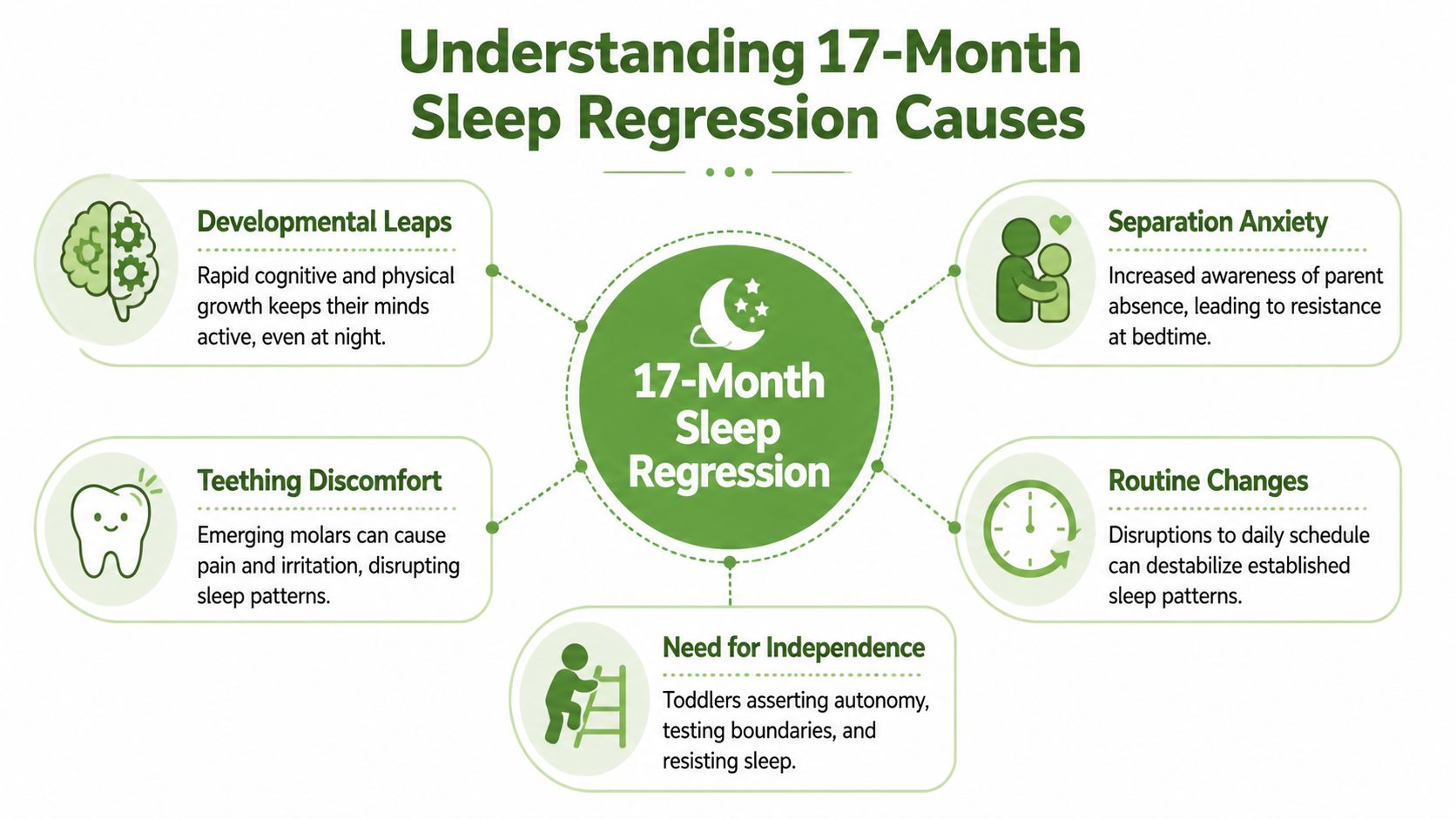
At 17 months, several forces can collide at once. Parents often look for one clear cause, but toddlers usually don’t offer that kind of simplicity. A bedtime battle might reflect brain development, emotional growth, schedule mismatch, and physical discomfort all at the same time.
The 14 to 18 month range is a common period for sleep disruption, largely because toddlers are moving toward one nap, developing quickly, testing boundaries, and experiencing a circadian rhythm shift of about one hour later, according to Huckleberry’s overview of regressions and sleep pattern shifts.
Their brain is busy at bedtime
Language is taking off. Motor skills are improving. Awareness is sharper. Your toddler notices more, remembers more, and has stronger opinions about what should happen next.
That sounds exciting, because it is. It also means the brain doesn’t always power down smoothly at night. A child who spent the day learning, climbing, naming, pointing, and protesting may look physically tired but still struggle to settle.
Separation feels bigger now
Around this age, toddlers understand more about your absence. That’s why some children who were content at bedtime suddenly panic when a parent walks away. They’re not “manipulating.” They’re reacting to a stronger sense that separation is real.
This often shows up as:
- Protesting the crib as soon as the routine ends
- Calling for one specific parent over and over
- Waking and checking for proximity instead of resettling alone
The schedule may no longer fit
The one-nap transition can be especially messy. Some toddlers are ready. Others are almost ready. Many land in the frustrating middle where two naps interfere with bedtime, but one nap leaves them cranky and overtired by dinner.
If your child is also cutting molars, that can muddy the picture even more. If you’re trying to sort out whether discomfort is adding to the sleep struggle, this guide to 2-year molar symptoms can help you think through common signs.
For parents who want a broad, reassuring read on rough sleep stretches across stages, this article on support for exhausting baby sleep periods can be a helpful companion.
Independence can look like sleep refusal
A toddler who says no to pajamas, books, or lying down isn’t necessarily fighting sleep itself. Often they’re testing control. Bedtime is one of the few times in the day when adults set a firm limit, so it becomes a natural place for toddlers to push back.
That doesn’t mean the answer is to win a power struggle. It means bedtime works better when parents give small choices inside a clear boundary.
Regression Signs vs Airway Red Flags
Most 17 month old sleep regression symptoms are temporary and developmentally driven. But not every night waking belongs in that category. Some toddlers have signs that suggest poor sleep quality from another cause, including airway resistance, breathing-related sleep disruption, or pain.
Parents often face a common hurdle. If a child is crying at bedtime and waking overnight, it’s easy to assume “just a regression.” But breathing clues matter. So does how the sleep disruption sounds, looks, and persists over time.
Is It a Regression or Something More?
| Common Regression Signs (Usually Temporary) | Potential Red Flags for Airway or Other Issues |
|---|---|
| Bedtime protest that seems tied to parent leaving | Habitual snoring |
| More clinginess at sleep times | Mouth breathing during sleep |
| Night waking with a need for reassurance | Gasping, choking, or labored breathing |
| Nap resistance during developmental leaps | Very restless sleep that looks uncomfortable |
| Sleep disruption that gradually improves with consistent routines | Sleep problems that continue despite a steady routine |
What normal regression often looks like
A typical regression pattern tends to center on transitions. Your toddler may resist being put down, cry when you walk out, or wake and want help reconnecting. The behavior is frustrating, but it usually fits the story of development, routine shifts, and emotional intensity.
In those cases, a sleep diary can be surprisingly useful. Write down bedtime, how long it takes to fall asleep, night waking patterns, nap timing, and anything unusual like illness or travel. Patterns become easier to spot when you’re not trying to remember them at dawn.
When breathing concerns deserve attention
Breathing red flags don’t usually look like classic bedtime drama. They often show up as noisy sleep, open-mouth sleeping, unusual positions, repeated movement, or signs that your child doesn’t seem rested even after enough time in bed.
If your toddler snores often, breathes through the mouth at night, or seems to work hard to breathe while asleep, it’s worth taking that seriously.
If those signs are part of the picture, learning about pediatric sleep apnea treatment options can help you understand what a more targeted evaluation may involve.
Parents don’t need to diagnose this at home. You just need to notice what doesn’t fit the usual regression pattern.
Practical Strategies to Manage the Regression
When sleep gets choppy, parents often feel pressure to choose between “fixing it fast” and comforting their child. In reality, the most effective approach usually combines warmth with consistency. You want to reduce stimulation, protect the schedule, and avoid making big changes in a tired panic.

Research cited in toddler sleep literature indicates that a toddler’s circadian rhythm can shift about one hour later than the earlier infant bedtime, and an evidence-based response is to watch for the child’s sleep-ready window and move bedtime 30 to 60 minutes later, which can reduce bedtime protests and night waking within 2 to 4 weeks, according to Baby Sleep Science’s explanation of the toddler 18-ish month regression.
Watch the child, not just the clock
A toddler can be tired and still not biologically ready for sleep at the old bedtime. That’s why forcing an earlier time sometimes backfires. Instead of assuming the previous schedule still fits, look for the actual sleep-ready window.
Helpful signs include:
- Yawning or eye rubbing
- A drop in play intensity
- Less interest in interaction
- A calmer body after active play ends
If your child is cheerful and energized at bedtime every night, a small shift later may work better than doubling down on the old routine.
Keep the routine simple and repeatable
At this age, sleep routines work best when they’re predictable and low drama. Use the same sequence in the same order. Bath, pajamas, books, cuddles, bed is a common example. The exact routine matters less than the repetition.
Try to avoid adding new habits in the middle of the regression that you won’t want next month. If you suddenly start driving your toddler to sleep, lying beside them for long periods, or offering frequent overnight feeds just to get through the week, those can outlast the regression itself.
For families looking to improve the overall sleep environment, including calming sensory cues, some of these Ocodile tips for baby sleep success may offer useful ideas to consider.
A broader guide to natural ways to improve sleep quality can also help you think through habits that support more settled nights.
This video offers a quick visual refresher on toddler sleep struggles and calming routines:
Respond without escalating
When your toddler wakes, aim for calm, brief, boring reassurance. Comfort matters. So do boundaries.
A few examples:
- If they cry when you leave, return briefly, offer a short phrase, and leave again.
- If they stand and protest, help them lie down once, then keep your response minimal.
- If nap was short, protect bedtime from becoming too late.
A steady response usually works better than a dramatic one. Toddlers settle faster when parents act predictable, not urgent.
When to Call a Professional for Your Toddler's Sleep
Some sleep regressions pass with patience and a few schedule adjustments. Others keep dragging on, or they come with signs that don’t match a normal developmental phase. That’s when getting help can save everyone a lot of distress.
From a developmental neurology perspective, it’s important to separate regression-related waking from waking driven by pain or upper airway resistance, such as snoring or mouth breathing. A sleep specialist may reserve airway or pain-focused interventions for patterns that last beyond 6 weeks or show up with respiratory signs, according to Taking Cara Babies’ discussion of the 18-month regression.
Start with your pediatrician when
A pediatrician is a good first stop if your toddler’s sleep changed suddenly and you suspect illness, reflux, ear pain, constipation, or teething-related discomfort. They can also help rule out common medical issues if your child is unusually irritable, not eating well, or seems uncomfortable beyond bedtime.
Consider sleep-focused support when
If the issue looks mostly behavioral or schedule-related, a pediatric sleep professional may help you tighten routines, handle night wakings more consistently, and work through the one-nap transition without making the situation worse.
This can be especially helpful when parents feel stuck between two approaches and need a plan that fits their child’s temperament.
Seek a more specialized evaluation when
Some signs deserve deeper attention, especially if they continue past the expected regression window. These include:
- Snoring that happens regularly
- Mouth breathing during sleep
- Gasping, choking, or labored breathing
- Very restless sleep
- Sleep that never seems restorative
If those are present, the goal isn’t to blame every sleep problem on the airway. It’s to avoid missing a root cause while assuming it’s all developmental. Children with breathing-related sleep disruption often need a different kind of assessment than children who only need routine support.
Parents know when something feels off. If you’ve been told to “just wait it out,” but your child’s sleep sounds strained, noisy, or persistently disrupted, it’s reasonable to ask more questions.
Frequently Asked Questions About the 17-Month Regression
Should I bring back night feeds?
If your toddler had already moved beyond needing to eat overnight, be cautious about reintroducing feeding as the default answer to every waking. During a regression, a child may want extra comfort, but that doesn’t always mean hunger is driving the wake-up. If you’re unsure, talk with your pediatrician and look at the full pattern.
What if my toddler shares a room?
Keep the routine as predictable as possible and use the same sleep cues each night. If one child wakes the other, do your soothing quickly. Room sharing doesn’t cause the regression, but inconsistency during room sharing can make it harder for everyone to resettle.
How do I handle travel during this stage?
Travel can amplify a regression because routines, light exposure, and sleep timing all change. Keep the bedtime sequence familiar, even in a new place. Bring the same books, sleep sack, lovey, or white noise machine if you use one.
Should I move bedtime earlier or later?
It depends on the pattern. If your toddler seems overtired after a rough nap, an earlier bedtime may help that day. If bedtime has become a nightly battle with lots of energy and long settling, a later bedtime may fit better. Watch behavior, not just habit.
If your toddler’s sleep struggles seem to go beyond a typical regression, Pain and Sleep Therapy Center offers a root-cause approach that looks beyond bedtime behavior alone. Their team evaluates sleep-related breathing concerns, oral function, and other underlying issues that can affect sleep quality, helping families understand whether a child needs routine support, airway-focused care, or a more specialized next step.