You turn off the light, settle into bed, and expect sleep to come. Instead, your jaw stays tight, your chest feels busy, and your thoughts keep looping. Many people in that moment try harder to sleep, but effort usually backfires. The body doesn't drift off because you demand it. It falls asleep when the nervous system gets the signal that it's safe to power down.
That's where sleep breathing exercises can help. Done well, they're not just a distraction from stress. They're a direct way to change the state of your body before sleep, especially when tension, shallow breathing, or bedtime anxiety keeps you alert.
How Your Breath Can Unlock Better Sleep Tonight
When your mind is racing, your breathing usually changes with it. It gets faster, higher in the chest, and less efficient. That pattern nudges the body toward alertness, which is the opposite of what sleep needs.
Slow, controlled breathing works in the other direction. It helps shift the autonomic nervous system away from a fight-or-flight state and toward a rest-and-digest state. That shift matters because sleep isn't just a mental event. It's a physiologic one.
A 2025 systematic review in Frontiers in Sleep examined six key studies and concluded that controlled breathing, including diaphragmatic, deep, and mindful breathing, can improve sleep quality through stress reduction and autonomic nervous system regulation. That's why these techniques matter. They help create the internal conditions that make sleep more likely.
What controlled breathing changes
A useful bedtime breath usually does three things:
- It slows your pace so your body stops acting like it needs to respond to a threat.
- It lengthens the exhale which often helps reduce arousal and muscular guarding.
- It gives your attention a job so your thoughts have less room to spiral.
Sleep breathing exercises work best when you treat them as a downshift, not a performance.
If you're also trying to improve your bedroom setup, bedtime habits, and overall routine, this guide on achieving natural, restful sleep gives a useful broader framework. Breathing works better when the rest of the sleep environment supports it.
What to expect tonight
Don't expect a single exercise to knock you out on command. That mindset creates pressure. Expect something more realistic and more useful. Your shoulders may drop, your jaw may unclench, and the gap between thoughts may get a little wider.
That's often enough to break the cycle of trying, monitoring, and staying awake.
Master the Fundamentals Nasal and Diaphragmatic Breathing
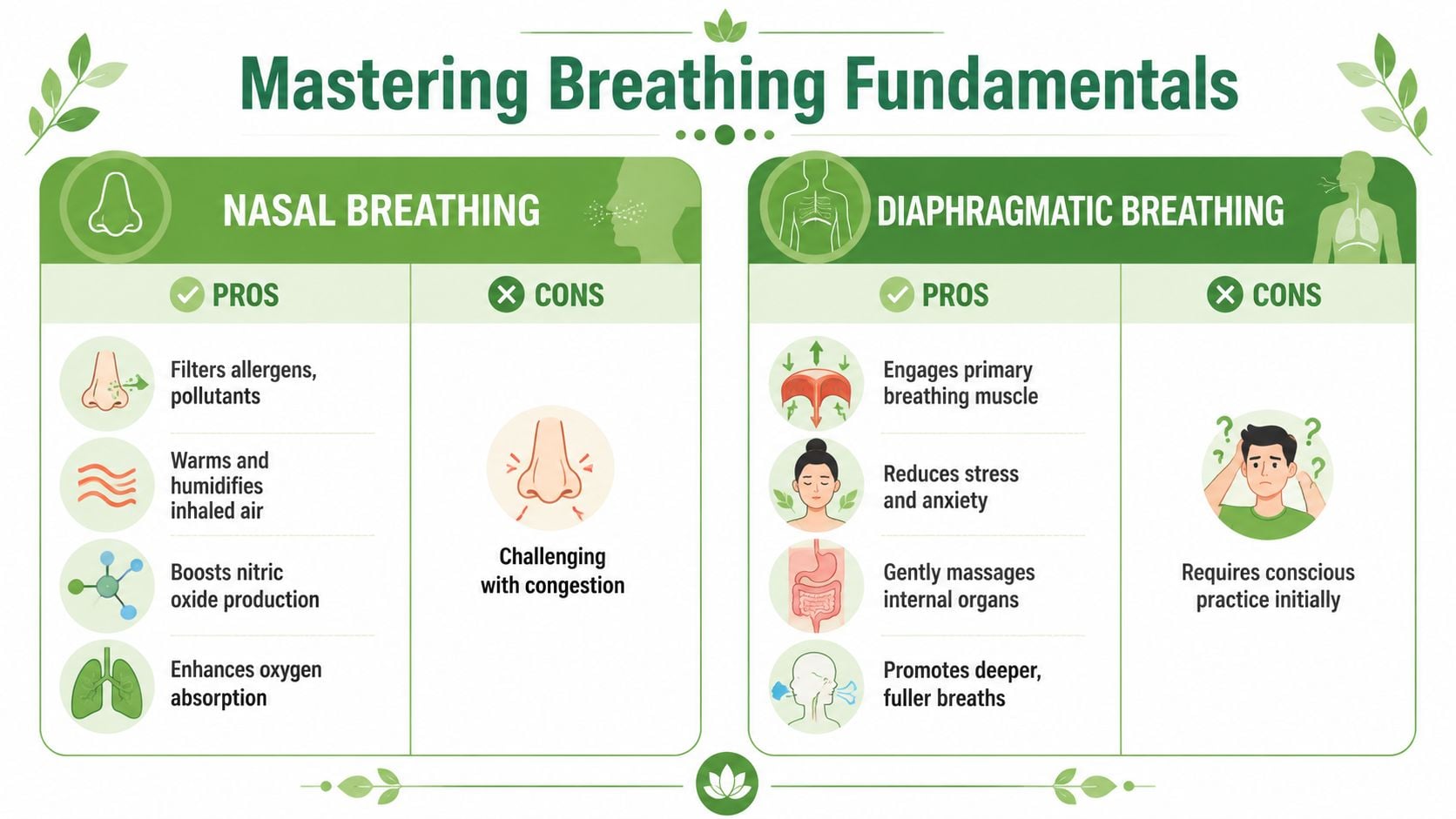
Many people jump straight into a named technique and miss the foundation that makes it effective. Before counts and breath holds, two basics matter most. Breathe through your nose when you can, and learn to let the diaphragm do the work.
Why nasal breathing matters
Nasal breathing is usually the better default for relaxation and sleep preparation. The nose filters incoming air, helps humidify it, and supports a steadier, quieter breathing pattern. Mouth breathing often goes with dryness, noisier airflow, and more visible upper chest effort.
If nasal breathing feels unfamiliar, that alone is useful information. Congestion, habitual mouth breathing, oral posture issues, or airway restriction may be contributing. This practical guide on how to breathe through your nose can help you troubleshoot the basics.
If allergies are part of the picture, your breathing work may stall unless the room air is also cleaner. Advice from Purified Air Duct Cleaning experts can be useful if nighttime stuffiness keeps pushing you toward mouth breathing.
How to learn diaphragmatic breathing
Diaphragmatic breathing is often called belly breathing, but that phrase can be misleading. You're not forcing the belly out. You're letting the diaphragm descend so the lower ribs and abdomen move naturally.
Use this setup:
- Get comfortable: Lie on your back with knees bent, or sit with your back supported.
- Place your hands: Put one hand on your chest and the other on your belly.
- Inhale through the nose: Let the lower hand rise first.
- Keep the upper chest quiet: A little motion is fine, but the chest shouldn't lead.
- Exhale slowly: Let the belly soften without pushing hard.
The hand placement gives immediate feedback. If the top hand jumps first, you're probably breathing from the upper chest. If the lower hand moves more than the upper one, you're closer to the pattern you want.
What people get wrong
The most common mistake is taking a giant breath. Bigger isn't better at bedtime. Oversized breaths can create tension in the neck, chest, and throat.
A second mistake is trying to “sit up straight” so hard that the ribs lock. Good breathing needs posture, but not stiffness.
Practice cue: Think “low and easy,” not “deep and dramatic.”
In a study of healthy adults, a natural deep-breathing program significantly improved sleep quality, increased total sleep time, and reduced the time it took to fall asleep, showing that structured breathing can measurably affect sleep architecture. That matters because a foundational pattern can do more than help you feel calm. It can influence how sleep unfolds.
Use the 4-7-8 Method to Calm a Racing Mind
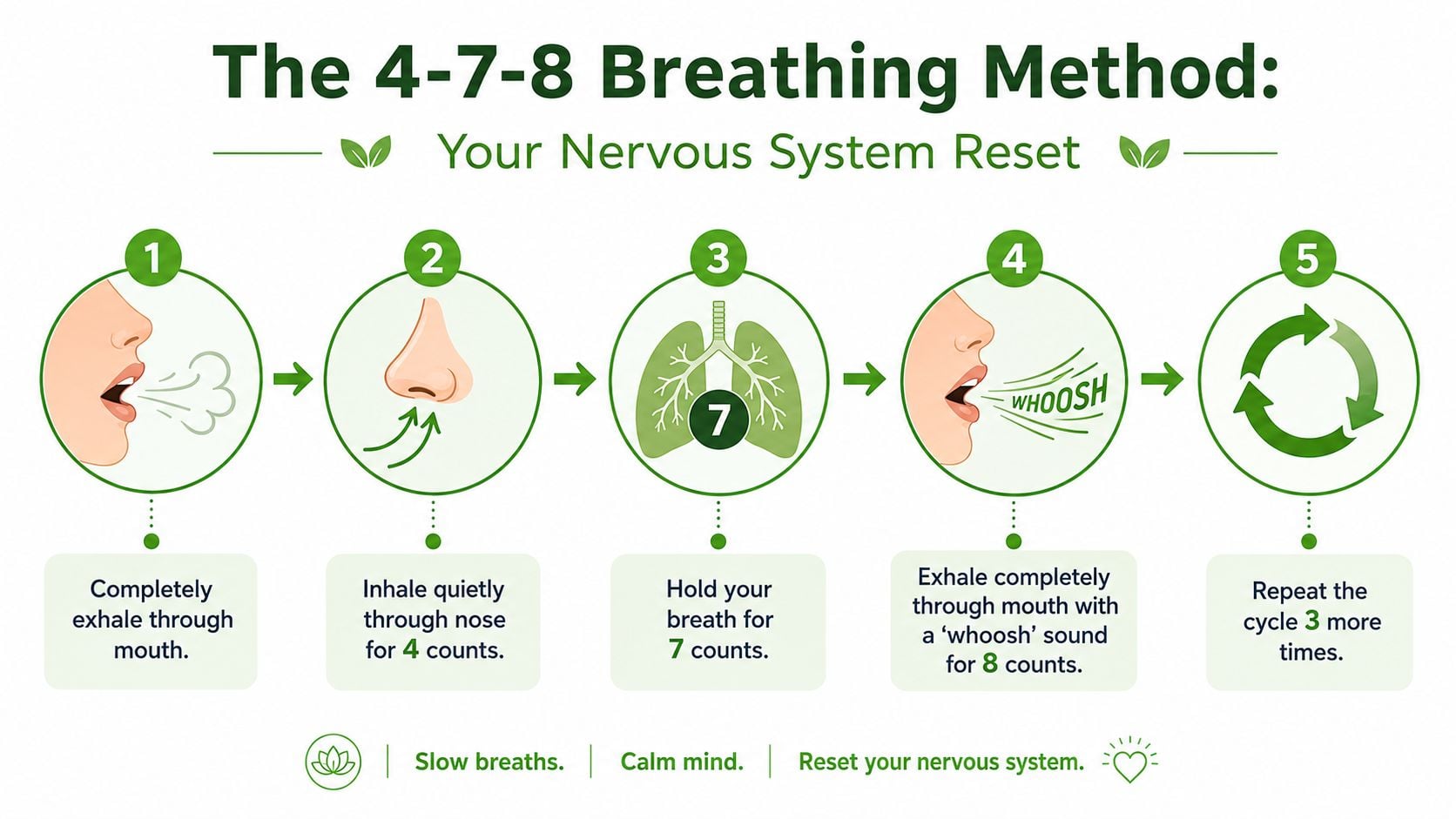
Some nights you don't need a long practice. You need a simple pattern that interrupts mental overdrive. The 4-7-8 method is useful for that kind of bedtime agitation because it gives the breath a clear structure and puts extra emphasis on a slow exhale.
Use it seated, propped up in bed, or lying on your back if that feels comfortable. If lying flat makes you feel air hungry, sit up. Bedtime breathing should reduce strain, not add it.
Empty the lungs, inhale quietly through the nose for 4 counts, hold for 7 counts, exhale slowly for 8 counts, and repeat for about 6 cycles before returning to normal breathing.
That sequence matches the practical workflow described by the Sleep Foundation's guide to breathing exercises for sleep. The long exhale is the feature that many people feel most strongly. It often helps the body release tension instead of preparing for action.
Here's a quick visual walkthrough if you want to follow along with a paced example later in the evening.
How to make it easier
If the full hold feels uncomfortable, shorten the counts while keeping the same shape. Keep the inhale shorter than the exhale. Keep the effort low. The method should feel controlled, not punishing.
A few adjustments help:
- Soften the inhale: Quiet breaths are better than dramatic ones.
- Relax the jaw: If your lips, tongue, or throat brace, the exercise becomes work.
- Stop if you feel lightheaded: Return to easy nasal breathing and try again later.
For some readers, bedtime anxiety is part of a bigger pattern of panic, medication questions, or rebound symptoms. In that case, information on safe anxiety relief alternatives may help you put breathing exercises in a broader context.
When this method works best
The 4-7-8 pattern is especially useful when the main problem is mental activation. You're tired, but your brain won't stop scanning, planning, or replaying. It's less useful when the problem is a blocked nose, noisy airway, or repeated awakenings from snoring or gasping.
That distinction matters more than most bedtime articles admit.
Retrain Your Breathing with Buteyko Principles
A lot of people hear “deep breathing” and immediately start pulling in large breaths. For sleep, that can be the wrong move. If you already tend to over-breathe when stressed, bigger breaths may leave you feeling more restless, not less.
Buteyko-style breathing re-education offers a different lens. Instead of chasing a huge inhale, it encourages a quieter, smaller, more efficient pattern. Less effort. Less noise. Less air hunger created by the exercise itself.
Why less can work better
At bedtime, you don't need to ventilate like you're exercising. You need to reduce unnecessary respiratory drive. Many tense sleepers breathe as if they're still on duty. Their shoulders lift, their mouth opens, and each breath looks urgent.
Buteyko principles challenge that habit. The aim is not sedation through force. The aim is normalization.
Quiet, slow, silent breathing is often a better sleep signal than a dramatic “cleansing breath.”
That's especially helpful for people who sigh often, yawn repeatedly, or feel like they can never quite get a satisfying breath at night. Those patterns can become self-reinforcing. The more you chase air, the less settled you feel.
A simple light breath practice
The introductory light breath sequence is very specific. According to guidance from the Buteyko Clinic, you sit upright or lie comfortably, inhale gently through the nose for 3 to 4 seconds using a slightly smaller-than-usual breath, exhale softly through the nose for 4 to 6 seconds, then add a short relaxed pause after the exhale. Typical practice windows are 2 to 5 minutes, with the key benchmark being quiet, slow, silent breathing.
A practical way to feel this:
- Make the inhale modest: You should feel like you could have taken a little more air, but chose not to.
- Let the exhale fade out softly: Don't squeeze it out.
- Pause without strain: The pause should feel calm, not like a breath-holding contest.
Who tends to benefit
This style often suits people who don't like breath holds, don't tolerate big diaphragmatic breaths, or notice that “relaxation breathing” makes them feel too stimulated. It can also be a useful later-stage practice after you've already learned basic nasal and diaphragmatic control.
What it does not do is fix a collapsing airway. If your sleep disruption comes from loud snoring, waking up choking, or repeated airflow blockage, breathing re-education can support calm but won't substitute for diagnosis.
Building a Consistent Pre-Sleep Breathing Practice
The best sleep breathing exercises are the ones you'll repeat. A complicated routine isn't generally necessary. Instead, a short, predictable, and easy-to-use sequence is required for when tired.
Consistency beats intensity here. A modest nightly practice builds familiarity. Familiarity lowers resistance. Over time, your body starts associating a certain breathing pattern with the transition into sleep.
A beginner routine that takes about five minutes
Try this if you're new to breathwork or tend to get frustrated with techniques that feel too structured.
- First phase: Spend a few minutes with relaxed nasal diaphragmatic breathing.
- Second phase: Finish with a small number of 4-7-8 cycles.
- Final minute: Stop controlling the breath and let it settle on its own.
That final minute matters. You don't want to stay in “doing mode” once your body has already downshifted.
A longer routine for people who like structure
If you already tolerate breath practice well, try a slightly more layered approach.
| Part | Focus | What to notice |
|---|---|---|
| Opening | Nasal diaphragmatic breathing | Belly and lower rib movement |
| Middle | Slow, paced breathing | A smoother rhythm and less muscular effort |
| End | 4-7-8 or light breath | Which pattern makes you feel quieter |
If you like pacing, some people find a guided rhythm around 6 breaths per minute useful for settling into a slower cadence before bed.
What makes the habit stick
A few practical rules help more than motivation does:
- Tie it to a cue: Do it after brushing your teeth or after the bedroom lights go low.
- Keep the room supportive: If you're overheated, congested, or scrolling your phone, breathing won't carry the whole load.
- Use the same posture at first: Familiarity reduces decision fatigue.
The routine should feel boring in the best way. Predictable, simple, and easy to repeat.
If a technique makes you feel tense, dizzy, or overly focused on whether you're “doing it right,” simplify it. Better to do a gentle routine nightly than a perfect routine twice a month.
When to See a Specialist for Your Sleep Breathing
Breathing exercises can calm the nervous system. They cannot hold open an airway that repeatedly collapses during sleep.
That's the line many wellness articles blur, and it's a serious mistake. A major gap in online advice, as noted in Healthline's overview of breathing exercises for sleep, is the failure to distinguish between breathing for relaxation and breathing problems caused by a potential airway disorder such as obstructive sleep apnea.
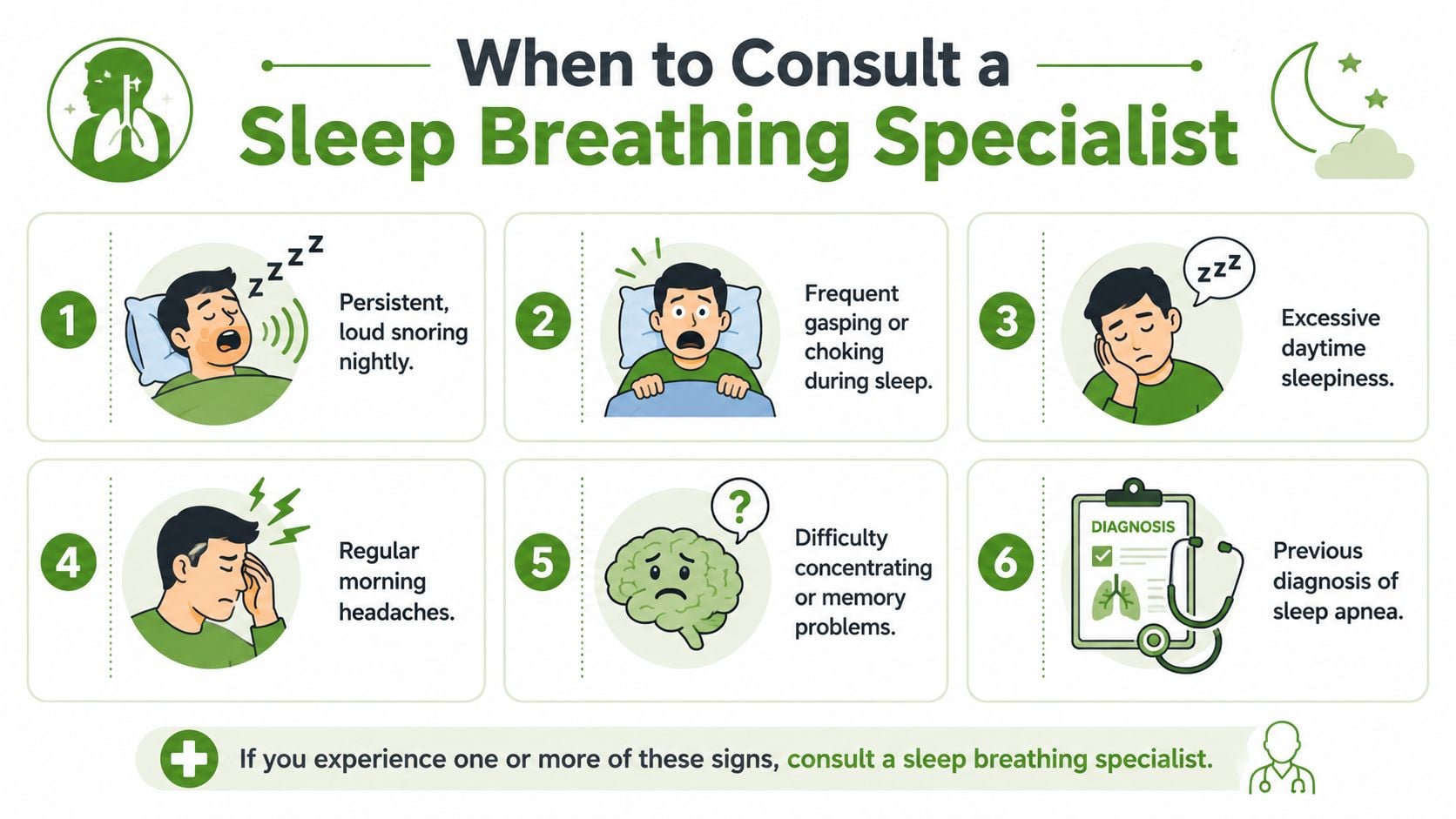
Red flags you shouldn't self-treat away
If any of these sound familiar, don't assume bedtime breathwork is enough:
- Loud habitual snoring: Not occasional light snoring. A repeated, disruptive pattern.
- Waking up gasping or choking: This points to airflow trouble, not simple bedtime stress.
- Witnessed pauses in breathing: If a partner notices this, take it seriously.
- Persistent daytime sleepiness: Especially when you think you spent enough time in bed.
- Morning headaches or brain fog: These can show up when sleep quality is poor despite hours in bed.
A person with insomnia can feel wired and tired. A person with an airway problem may also feel exhausted, but the mechanism is different. One pattern is mostly about arousal. The other may involve repeated breathing disruption throughout the night.
Why the distinction matters
Relaxation exercises can make you feel calmer before bed, and that's useful. But if the airway physically narrows or collapses, calmness doesn't solve the mechanical problem.
That's why someone can say, “The breathing exercise helps me fall asleep,” and still wake up unrefreshed, snore heavily, or startle awake. The exercise may have improved the pre-sleep state without fixing what happens after sleep begins.
For evaluation, one option is a clinic focused on airway-related sleep issues, TMJ, and functional breathing patterns, such as Pain and Sleep Therapy Center. The key is getting assessed by a professional who can tell the difference between stress-driven breathing habits and sleep-disordered breathing.
If you're waking up fighting for air, the next step isn't a new relaxation trick. It's a proper airway evaluation.
Self-help has a role. So does diagnosis. Knowing which lane you're in is the safest and most effective move.
If your nights involve snoring, jaw tension, morning headaches, broken sleep, or concern about possible sleep apnea, Pain and Sleep Therapy Center offers evaluation and treatment focused on airway health, sleep-related breathing issues, TMJ disorders, and functional breathing patterns. That kind of assessment can help clarify whether sleep breathing exercises are the right tool, or only one part of a larger plan.