Pain in the jaw, face, temple, ear, or even the teeth can send people in circles for months. One doctor looks for a tooth problem. Another checks the sinuses. Someone else suggests stress. You might get a night guard, a muscle relaxer, or advice to “watch it,” yet the pain keeps showing up when you chew, talk, yawn, wake up, or try to sleep.
That pattern is common in orofacial pain. The symptoms are real, but the source isn’t always obvious. A joint problem can feel like an ear problem. Muscle tension can feel like tooth pain. A sleep-related breathing issue can keep fueling jaw strain and headaches. When the problem crosses between teeth, muscles, joints, nerves, and airway, a narrow exam often misses the full picture.
The Search for an Answer to Complex Facial Pain
Many patients arrive after a long stretch of being told different things by different offices. One person has “TMJ.” Another is told it’s migraines. Another has clean dental imaging but still hurts every day when chewing or waking up. Some have already tried a splint, softer foods, anti-inflammatory medication, or physical therapy without a clear explanation of why the pain started in the first place.
That frustration matters because orofacial pain is not rare. Nationally representative surveys show that about 5% of U.S. adults, or 11.8 million people, reported orofacial pain in the preceding three months, and more than 9.7 million people with these symptoms go untreated according to USC Ostrow’s overview of orofacial pain prevalence. The same source notes that women are affected disproportionately.
When people start searching for answers, they often begin with the symptom itself. If you’re sorting through possibilities, this overview of what causes facial pain can help you see how many different structures can produce similar symptoms.
Why general exams sometimes miss the cause
Facial pain can come from several systems at once:
- Joint sources such as the temporomandibular joints
- Muscle sources involving the jaw, temples, neck, and face
- Nerve-related sources that create burning, electric, or sharp pain
- Sleep and airway contributors that drive clenching, poor recovery, and morning pain
A routine exam may rule out infection or a cracked tooth, which is important. But if nobody maps how your pain behaves, what triggers it, where it travels, how your jaw moves, and whether breathing or sleep is involved, treatment can stay stuck at the symptom level.
Many people don’t need “more treatment.” They need the right diagnosis.
That’s where an orofacial pain specialist often becomes the missing link. This specialty exists for pain that lives at the intersection of dentistry, neurology, musculoskeletal medicine, and sleep-related function.
What Exactly Is an Orofacial Pain Specialist
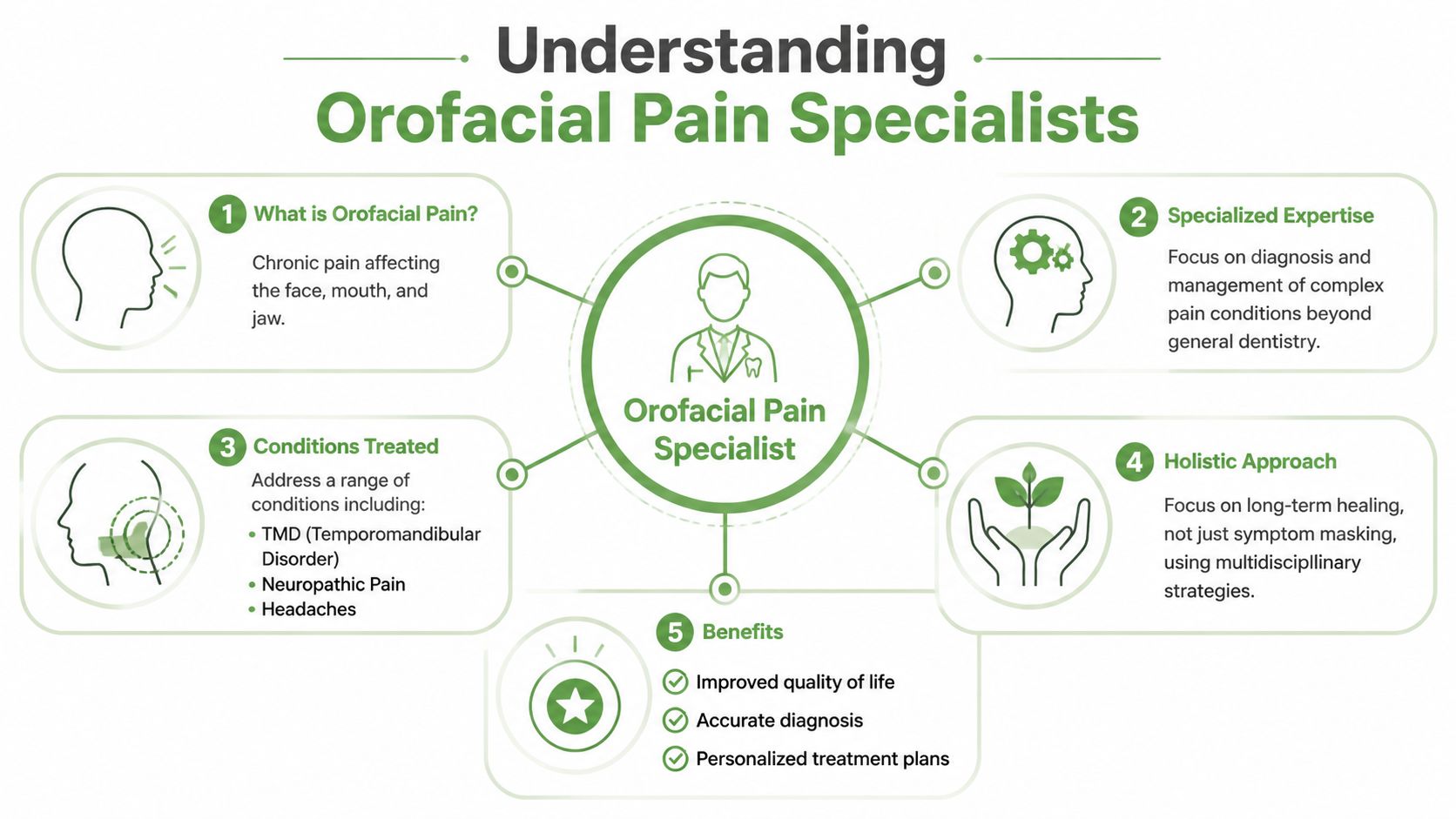
An orofacial pain specialist is a dentist with advanced training focused on diagnosing and treating pain disorders involving the jaw, mouth, face, head, and neck. Think of this clinician as a detective for the face. The job isn’t just to ask where it hurts. The job is to determine what structure is generating the pain, what keeps it going, and which treatment fits that mechanism.
On March 31, 2020, the National Commission on Recognition of Dental Specialties and Certifying Boards officially recognized orofacial pain as the 12th dental specialty in the United States, formalizing a field that had been built over more than 30 years, as described in the Journal of Oral Medicine and Pain article on specialty recognition.
What makes this different from general dental care
A general dentist is trained to diagnose tooth decay, infection, bite issues, and many routine oral health concerns. An ENT looks at ears, nose, and throat. A neurologist evaluates neurologic disease. An orofacial pain specialist is trained to sort out problems that don’t fit neatly into only one of those categories.
That includes:
- Pain that mimics dental pain even when the tooth isn’t the source
- Jaw dysfunction involving muscles, joints, or both
- Headaches linked to jaw mechanics
- Neuropathic pain that behaves very differently from inflammatory pain
- Sleep-related contributors that strain the masticatory system
If you want a broader sense of why practices add focused expertise in areas like this, this discussion of the benefits of specialized dental services is useful because it highlights how specialty care can improve diagnosis and patient fit.
The training matters
Orofacial pain specialists go beyond basic dental training because these cases are often diagnostic puzzles. They learn to evaluate pain patterns, function, and related systems with a level of precision that most routine dental visits aren’t built for.
For a plain-language overview, this page on what orofacial pain is is a helpful starting point if you’re new to the term.
Practical rule: If your pain has lasted, migrated, returned after treatment, or doesn’t match what standard dental exams show, specialty evaluation is reasonable.
Common Conditions an Orofacial Pain Specialist Treats
The people who seek this care don’t all have the same diagnosis. What they usually share is persistent pain, confusing symptoms, or repeated treatment that hasn’t solved the problem.
According to New York TMJ’s description of common complaints seen by orofacial pain specialists, common reasons patients seek this care include jaw and neck pain with a 60% prevalence among patients, tension-type headaches or migraines secondary to TMD at 40%, and neuropathies such as trigeminal neuralgia.
Joint and muscle disorders
Some of the most familiar diagnoses fall under temporomandibular disorders, often shortened to TMD. That can include joint irritation, disc displacement, inflammation, overworked jaw muscles, protective guarding, or a mixed picture.
Patients often describe:
- Clicking or popping
- Pain with chewing
- Limited opening
- Morning soreness
- Temple, cheek, or neck tightness
Muscle-driven pain is especially easy to miss because it can refer into the teeth, ear, or side of the head.
Headaches and nerve pain
Not every “TMJ headache” is the same. Some headaches begin with overloaded jaw muscles. Others are part of a broader headache disorder that jaw dysfunction aggravates. Some patients also have facial pain that feels burning, electric, stabbing, or shock-like. That pattern raises concern for neuropathic pain rather than a simple muscle or joint problem.
A careful clinician separates these because treatment differs. A stabilization appliance may help one patient and do little for another whose symptoms are primarily neuropathic.
Sleep-related contributors
Jaw pain doesn’t only come from chewing forces. Sleep quality, breathing pattern, oral posture, and clenching behavior can all influence the masticatory system. People who wake with jaw pain, headaches, dry mouth, or heavy facial fatigue often need someone to ask whether the airway is part of the problem.
Here’s the practical insight: if a treatment only addresses the jaw but ignores breathing and function, progress may stall. In many adults, pain improves more reliably when treatment accounts for how the jaw works during the day and how the airway behaves at night.
The Diagnostic Process What to Expect on Your Visit
The first visit should feel less like a quick dental check and more like a structured investigation. That matters because facial pain diagnoses depend on history, pattern recognition, function, and exam findings. If the visit is rushed, important clues get lost.

Orofacial pain specialists receive CODA-accredited advanced training in neuroanatomy and physiology, which supports the use of diagnostic systems like the International Classification of Orofacial Pain (ICOP) to distinguish dental, muscular, and neuropathic pain sources, as outlined by the American Academy of Orofacial Pain resource on specialist training and diagnosis.
History comes first
A strong evaluation starts before anyone touches the jaw. The history often includes:
- Pain behavior. When it started, how often it occurs, whether it’s constant or intermittent, and what makes it flare.
- Pain quality. Aching, pressure, throbbing, burning, stabbing, or electric sensations point in different directions.
- Functional triggers. Chewing, talking, yawning, exercise, stress, sleep position, or waking symptoms.
- Medical overlap. Headaches, prior dental work, trauma, sleep issues, airway symptoms, and medication use.
This is also where communication matters. If a patient speaks a different primary language, uses an interpreter, or has complex medical history from multiple providers, details can easily get distorted. That’s one reason resources like Translators USA’s guide on medical translation dangers are worth reading. In pain care, one misunderstood symptom description can send diagnosis in the wrong direction.
The exam looks beyond the teeth
A proper orofacial pain exam may include jaw range of motion, joint sounds, loading tests, muscle palpation, bite assessment, cranial nerve screening, oral habits, and airway-related observations. The goal is to answer three practical questions:
- What tissue is involved
- What mechanism is driving the pain
- What factors are maintaining it
Some practices also use tools such as CBCT imaging, joint sound assessment, or sleep-related screening when the case warrants it.
Before moving into treatment options, it helps to hear a clinician discuss these problems visually and verbally:
What patients often find surprising
The diagnosis is not always a single label. You may have joint irritation plus myofascial pain. Or a nerve pain condition plus sleep-disordered breathing that amplifies nighttime clenching. Good care doesn’t force everything into one box.
Bring a timeline of your symptoms, previous scans, dental history, and anything that makes the pain better or worse. That information often speeds diagnosis more than people expect.
Modern Treatments That Focus on Healing Not Masking
A lot of people with jaw and facial pain have already learned what doesn’t work well for them. Short courses of medication may calm a flare but not change the condition underneath it. A generic splint may protect teeth while doing little for an unstable joint, overactive muscles, or poor breathing mechanics. Repeatedly chasing symptoms can leave patients discouraged.
A better treatment plan starts with a simple principle. Match the treatment to the mechanism. If the issue is inflammation and overload, calm and unload it. If the issue is tissue instability, support healing. If poor oral posture, mouth breathing, or dysfunctional swallowing keeps re-triggering the problem, retrain function.

A significant education gap still exists around regenerative options. The overview from OFP Center of South Florida notes that studies show regenerative therapies such as Prolotherapy and PRF injections can yield 70-85% improvement in chronic TMJ pain, yet many clinic websites and patient resources don’t explain these non-surgical options.
What root-cause care often includes
Not every patient needs the same combination, but modern non-surgical care may involve:
- Custom appliances when the goal is to reduce joint loading, protect teeth, or improve jaw position during healing
- Targeted physical rehabilitation for mobility, symmetry, and muscular control
- PRF or prolotherapy when tissue healing and stability are central concerns
- Myofunctional therapy to improve tongue posture, swallowing patterns, and oral rest posture
- Breathing retraining when mouth breathing, poor rib mechanics, or dysfunctional breathing patterns are part of the pain picture
Regenerative treatment is not the same as pain suppression
Trade-offs are a key factor. Regenerative therapies such as Platelet-Rich Fibrin (PRF) and prolotherapy aim to support healing response in tissues that may be strained, unstable, or not recovering well. They are not a magic shortcut, and they’re not appropriate for every diagnosis. But for the right patient, they address something symptom-only care does not.
That distinction is important. A patient with chronic joint irritation from instability may feel temporary relief from anti-inflammatory medication. That can be useful. It does not necessarily improve the tissue environment that allowed the problem to persist.
For readers looking into these options in more detail, this explanation of regenerative medicine for joint pain gives a patient-friendly overview of where these treatments may fit.
Function matters as much as the procedure
An injection alone rarely solves a mechanically driven problem. If you keep sleeping with your jaw strained, clenching heavily, breathing through your mouth, or overusing the same guarded muscles, the cycle can continue.
That’s why integrated care often works better than single-tool care. At Pain and Sleep Therapy Center, treatment options include regenerative therapies, cold laser therapy, and exercise-based programs that address nasal breathing, oral posture, and swallowing function. That kind of combination makes sense when pain isn’t just a sore spot, but a system problem involving joint load, muscle behavior, and airway function.
Clinical judgment matters: The right plan is usually layered. Calm the pain, reduce the strain, improve function, and support healing.
Special Considerations for Children and Infants
Children don’t always describe pain clearly. Some complain of headaches, jaw fatigue, chewing difficulty, or trouble sleeping. Others show signs indirectly. Open-mouth posture, restless sleep, noisy breathing, speech difficulty, or feeding struggles can point to an orofacial issue long before a child ever says, “My jaw hurts.”
Early function shapes later comfort
In infants, restricted oral function can affect latch, feeding efficiency, and caregiver stress. In older children, poor oral posture and compensatory muscle use can influence facial development, swallowing habits, and how the jaw works over time. That doesn’t mean every child with these signs will develop TMJ problems later. It does mean early dysfunction deserves thoughtful evaluation.
A careful pediatric approach usually looks at:
- Feeding and latch patterns in infants
- Tongue mobility and oral coordination
- Breathing habits, especially mouth breathing
- Sleep behavior, including snoring or restless sleep
- Jaw function and facial growth patterns
Treatment should be collaborative
For infants and children, the right answer is often a team approach. That may involve pediatric dental care, lactation support, myofunctional therapy, airway-focused evaluation, and in selected cases, laser frenectomy.
The key point for parents is this: don’t wait for a severe pain complaint before asking questions. Many pediatric orofacial problems show up first as function problems, not pain problems. When clinicians address the function early, they may reduce the chance that a child compensates for years with muscle tension, poor breathing mechanics, or unhealthy oral habits.
How to Choose the Right Orofacial Pain Specialist
Not every provider who treats jaw pain practices the same way. Some focus mainly on appliances. Some center everything on medication. Some are excellent at diagnosis but don’t address airway or functional contributors. Some don’t offer options beyond standard conservative care. That doesn’t make them wrong. It does mean you should ask direct questions before you commit to treatment.
Questions worth asking at the first call
Use this checklist when comparing providers:
| Question | Why it matters |
|---|---|
| Is the clinician board-certified in orofacial pain or closely related specialty areas? | Training depth affects diagnostic accuracy in complex cases. |
| How do you determine whether pain is joint, muscle, nerve, or sleep-related? | The answer shows whether the practice works from mechanism, not guesswork. |
| Do you evaluate breathing, oral posture, and sleep contributors? | These factors often keep symptoms going even after basic treatment. |
| What non-surgical options do you offer besides a night guard? | A narrow treatment menu can limit care. |
| Do you offer regenerative options such as PRF or prolotherapy, when appropriate? | Some patients want healing-focused options beyond symptom control. |
| How do you coordinate with other providers? | Complex pain often needs interdisciplinary management. |
Watch for red flags
A careful specialist won’t promise the same answer for everyone. Be cautious if a clinic:
- Diagnoses immediately without a meaningful history
- Pushes a single treatment for nearly every patient
- Dismisses nerve pain, headache patterns, or sleep symptoms
- Can’t explain why a recommendation fits your specific pain mechanism
What strong care sounds like
Good answers tend to be specific. You should hear language about differential diagnosis, contributing factors, functional habits, and treatment sequencing. You should also feel that the clinician is trying to understand your case, not fit you into a script.
A trustworthy orofacial pain specialist can explain not just what they want to do, but why your symptoms point to that plan and what trade-offs come with it.
If you’re in the Charlotte area, look for a provider who can assess jaw pain, headache patterns, airway factors, and healing-focused treatment options in the same clinical conversation. That combination is often what patients have been missing.
Frequently Asked Questions About Orofacial Pain Treatment
Do I need a referral
Not always. Many patients schedule directly, especially when they’ve already seen a dentist or physician and still don’t have answers. Some insurance plans or medical systems may still require a referral, so it’s smart to check before the visit.
Will insurance cover treatment
Coverage varies by diagnosis, provider type, and which part of care is being billed. Exams, imaging, appliances, injections, and therapy services may not all be handled the same way. Ask the office how they structure billing and what documentation they provide for reimbursement.
How long does treatment take
That depends on the diagnosis and how long the problem has been active. A short-term muscle flare can improve much faster than a mixed case involving joint irritation, sleep-disordered breathing, and habit retraining. Most patients do better when they understand that lasting relief usually requires a sequence, not a single intervention.
Is a night guard enough
Sometimes. Often not. A guard can be useful if the main goal is unloading, stabilization, or tooth protection. It’s usually incomplete if the primary drivers include airway issues, dysfunctional oral posture, chronic muscle guarding, or tissue instability.
How can I tell whether a practice is serious about patient education
Look at how clearly they explain diagnosis, options, risks, and next steps. Practices that invest in communication tend to publish clearer materials, answer practical questions well, and avoid one-size-fits-all recommendations. Even outside clinical care, the same principle shows up in how offices present themselves. This review of dental practice marketing strategies is a useful reminder that the best patient communication is specific, transparent, and easy to understand.
What should I bring to my first appointment
Bring prior imaging if you have it, a medication list, your dental history, and a short symptom timeline. If your pain changes during stress, sleep disruption, chewing, or exercise, write that down. Those details often help more than patients expect.
If you’re tired of treating the same pain over and over without a clear explanation, Pain and Sleep Therapy Center offers evaluation and non-surgical care for TMJ disorders, facial pain, headache-related jaw dysfunction, sleep-related breathing issues, and pediatric oral function concerns. The focus is on finding the source of the problem, then building a treatment plan that fits the joint, muscles, nerves, and airway involved.