Imagine trying to get through your day with a phone that never charges past 20%. That’s the reality for millions living with undiagnosed obstructive sleep apnea (OSA)—a constant, draining battle with exhaustion, no matter how much you think you’ve slept. The link between chronic fatigue and sleep apnea isn't just about feeling tired; it’s a vicious physiological cycle that robs your body of its ability to repair and recharge.
The Unseen Connection Between Constant Tiredness and Sleep Apnea
For so many people, unrelenting fatigue is just a part of life. They wake up feeling like they never went to bed, power through the day in a mental fog, and chalk it all up to stress, aging, or a demanding schedule. But often, the real culprit is hiding in plain sight: obstructive sleep apnea, a condition where your breathing repeatedly stops and starts all night long.
This is far more than just loud snoring. Think of it as a smoke detector going off in your brain—not once or twice, but dozens or even hundreds of times every hour. Each time you stop breathing, your brain panics and sends an emergency signal to jolt your body awake just enough to gasp for air. You won't remember these "micro-arousals," but they completely demolish your sleep quality.
Why Your Sleep Isn't Restorative
Your body is designed to cycle through different stages of sleep to repair muscle tissue, consolidate memories, and balance hormones. The deepest, most restorative stages are where the real work gets done. But sleep apnea is a constant saboteur, violently interrupting this process and preventing you from ever reaching or staying in those crucial deep-sleep states.
This leads to a cascade of problems that all feed into chronic fatigue:
- Fragmented Sleep: Instead of long, healing blocks of rest, your night is shattered into hundreds of tiny, useless pieces.
- Oxygen Deprivation: The repeated pauses in breathing cause your blood oxygen levels to plummet, putting immense stress on your heart, brain, and entire body.
- Hormonal Disruption: These constant "fight or flight" jolts flood your system with stress hormones like cortisol, throwing your body's natural rhythms completely out of whack.
Living with untreated sleep apnea is like trying to fill a bucket that has a giant hole in it. You can pour eight hours of "sleep" in the top, but the constant interruptions drain away any real benefit, leaving you completely empty by morning.
This guide is your roadmap to understanding this critical connection. We'll walk through the subtle signs of OSA, demystify how it's diagnosed, and explore modern, effective treatments that go far beyond the traditional CPAP machine. Our goal is to empower you to move from unexplained exhaustion to a clear diagnosis—and finally, to reclaim the energy you’ve been missing. You don't have to accept being tired all the time as your new normal.
How Sleep Apnea Hijacks Your Energy Reserves
To get a real handle on the link between chronic fatigue and sleep apnea, think of it this way: your brain has a fire alarm that’s only supposed to go off in a real emergency. But with obstructive sleep apnea (OSA), that alarm gets pulled over and over—sometimes hundreds of times—every single night.
Each time your airway closes off and you stop breathing, your brain hits the panic button. This triggers a jolt just strong enough to wake you up so you can gasp for air.
You won’t have any memory of these frantic, split-second awakenings, which are called micro-arousals. But they absolutely wreck your sleep quality. They systematically block you from getting into the deep, restorative stages of sleep—the very stages where your body does its most important overnight work, like repairing tissue, locking in memories, and balancing hormones.
This constant state of disruption sets off a powerful and damaging chain reaction that completely drains your energy.
The Triple Threat to Your Vitality
It's not just the broken sleep that leads to such bone-deep fatigue. Every time you stop breathing, you're unleashing a cascade of internal stressors that assault your body all night long. This process is a triple threat to your physical and mental stamina.
First, there’s oxygen desaturation. When your breathing stops, the oxygen levels in your blood plummet. Your heart, brain, and other vital organs are temporarily starved of the fuel they need to work properly, putting a massive strain on your whole cardiovascular system. This repeated oxygen debt is a huge reason you feel so completely wiped out.
Next up is the hormonal surge. That panic signal from your brain floods your system with stress hormones like cortisol and adrenaline.
Imagine putting your body through a high-intensity stress drill for eight hours straight. Instead of resting, your system is stuck in "fight or flight" mode, a state biologically designed to burn through massive amounts of energy.
Finally, this nightly cycle of oxygen loss and stress hormones triggers widespread systemic inflammation. Chronic inflammation is tied to a long list of health problems, and it’s a direct contributor to feelings of malaise, brain fog, and physical exhaustion.
This concept map breaks down how sleep apnea’s core problems drain your energy.
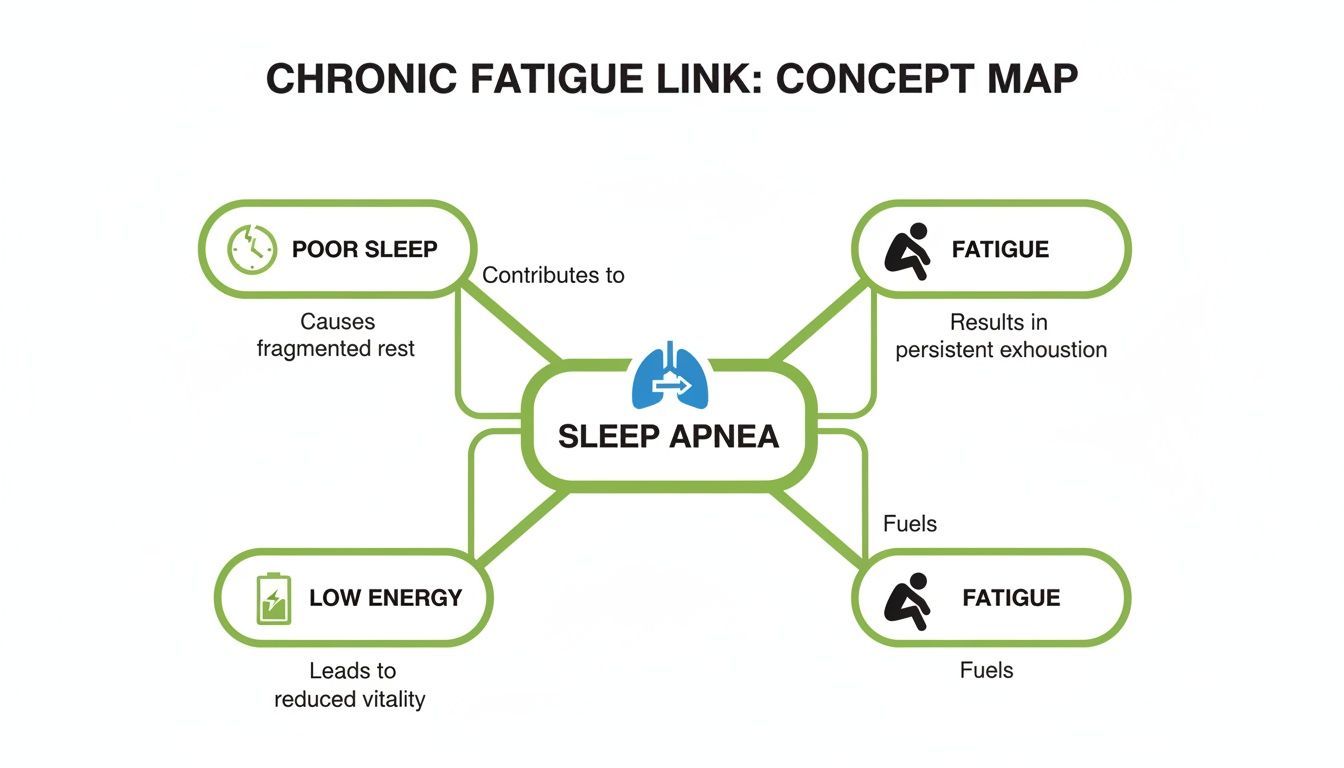
As you can see, the breathing interruptions at the heart of sleep apnea shatter your sleep quality. That, in turn, depletes your energy and leads directly to profound, chronic fatigue.
More Than Just Feeling Tired
The result of this nightly battle is an exhaustion that goes far beyond just feeling a bit tired. The fatigue from sleep apnea is a deep, cellular-level exhaustion that a cup of coffee or even a long nap can’t touch. It’s a persistent drain that tanks your mood, your ability to focus, and your overall quality of life.
This is exactly why spotting the connection between chronic fatigue and sleep apnea is so critical. The debilitating tiredness isn't a personal failing or just a normal part of getting older. It's a key symptom of a serious medical condition that's actively sabotaging your body's ability to rest and recover.
Without getting to the root cause, the cycle of poor sleep and profound exhaustion will just keep going, leaving you feeling perpetually drained.
Identifying Warning Signs Beyond Simple Fatigue
It’s one thing to feel wiped out after a long week, but the bone-deep exhaustion from obstructive sleep apnea (OSA) is in a completely different league. This isn't the kind of tired that a good night's sleep or an extra cup of coffee can fix. The connection between chronic fatigue and sleep apnea shows up as a cluster of symptoms that go far beyond just feeling sleepy.
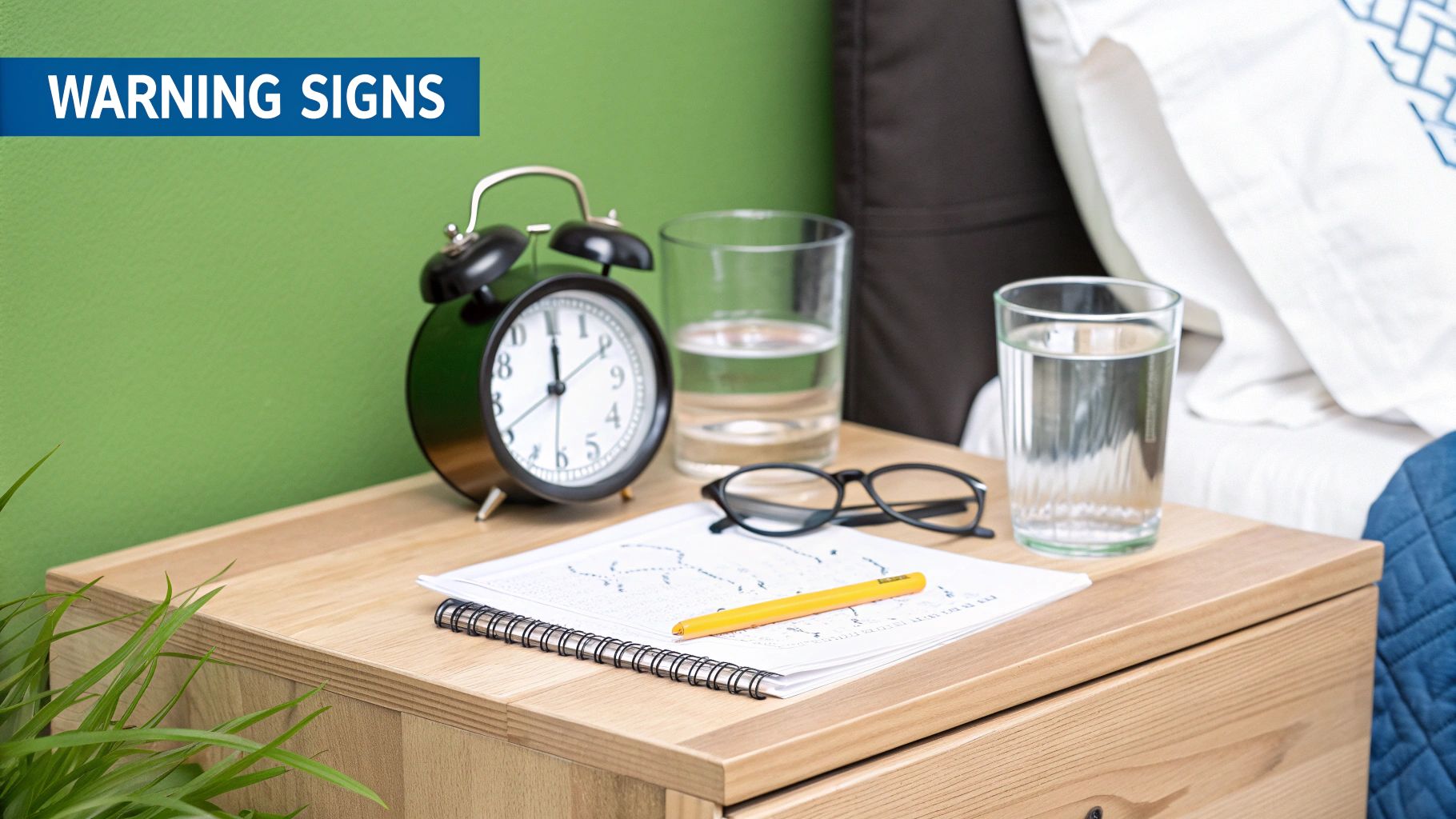
Learning to spot these warning signs is the critical first step toward getting help. Even if you don't remember waking up dozens or even hundreds of times a night, your body is keeping score. Paying attention to these clues can help you figure out if you're dealing with normal tiredness or a much more serious underlying problem.
What to Watch for When You Wake Up
Often, the first clues that something is wrong appear the moment your alarm goes off. Because your body has been fighting for oxygen all night long, you might notice physical symptoms that don't seem connected to your sleep at all.
These morning red flags often include:
- Frequent Headaches: Waking up with a dull, pounding headache is a classic sign of OSA. It's usually caused by the drop in oxygen and buildup of carbon dioxide in your blood overnight.
- Dry Mouth or Sore Throat: If you constantly wake up feeling like you swallowed a desert, it could be from mouth breathing as your body desperately tries to get more air.
- Waking Up Gasping or Choking: You might not remember it clearly, but you could find yourself waking up suddenly, gasping for breath as your body's survival instincts kick in.
Daytime Symptoms That Signal a Deeper Problem
The fallout from a night of shattered sleep doesn't just disappear when you get out of bed; it follows you all day. The constant oxygen deprivation and micro-arousals take a heavy toll on your brain function and emotional stability, making even simple tasks feel like climbing a mountain.
Beyond just feeling groggy, you might also struggle with unexplained irritability, mood swings, or a complete lack of motivation. When your body is stuck in a constant state of high alert, your emotional fuse gets incredibly short. For a more complete picture, our guide on the signs and symptoms of sleep apnea offers a deeper dive.
Clues Your Partner Might Notice First
More often than not, the most undeniable evidence of sleep apnea comes from the person sleeping next to you. Since you're asleep during these episodes, your bed partner is in a unique position to observe the most telling—and often frightening—signs.
Key things they might notice include:
- Loud, Persistent Snoring: We're not talking about a gentle rumble. This is typically loud, disruptive snoring that’s often interrupted by periods of complete silence.
- Pauses in Breathing: This is the most alarming sign—witnessing moments where breathing stops entirely, often for 10 seconds or more.
- Choking or Gasping Sounds: These jarring sounds happen when breathing violently restarts after the airway reopens.
When you combine these observations with your own feelings of chronic exhaustion, it paints a pretty clear picture that something serious is happening while you sleep.
Sleep Apnea Fatigue vs. Normal Tiredness
It can be hard to tell the difference between being truly exhausted and just needing more rest. This table breaks down the key distinctions.
| Symptom | Normal Tiredness | Potential Sleep Apnea Fatigue |
|---|---|---|
| Feeling in the Morning | You feel refreshed after a full night's sleep. | You wake up feeling just as tired, if not more so, than when you went to bed. |
| Effect of Naps | A short nap helps you feel recharged and more alert. | Naps offer little to no relief; you still feel groggy afterward. |
| Mental State | You might feel a bit slow, but you can still focus on tasks. | You experience persistent brain fog, memory issues, and an inability to concentrate. |
| Duration | Tiredness is temporary and linked to a specific cause (e.g., a late night). | The exhaustion is chronic, relentless, and present almost every single day. |
| Associated Symptoms | None, other than feeling sleepy. | Often accompanied by morning headaches, irritability, and loud snoring. |
If your experience lines up more with the right-hand column, it’s a strong signal that what you're feeling isn't just "normal" tiredness. It's your body's way of telling you it needs help.
The Diagnostic Journey to Reclaiming Your Energy
Getting a proper diagnosis is the first real step toward taking your life back from constant exhaustion. If the connection between chronic fatigue and sleep apnea feels familiar, the next part of the process is thankfully straightforward. It all starts with a simple conversation about your symptoms, which then leads to an evaluation of what’s really happening while you sleep.
The good news? This entire diagnostic process is completely non-invasive. It’s all about gathering the right data to create a clear picture of your sleep and breathing patterns. This allows a specialist to finally pinpoint the root cause of your fatigue and map out a treatment plan that actually works for you.
Uncovering What's Happening With a Sleep Study
To confirm sleep apnea, your doctor will recommend a sleep study. This isn't nearly as intimidating as it might sound, and modern medicine offers two main ways to get it done: an in-lab study or a convenient at-home test.
- In-Lab Polysomnography (PSG): This is considered the gold standard for diagnosing sleep disorders. You’ll spend the night in a comfortable, private room at a sleep center where trained technicians monitor your brain waves, heart rate, breathing, oxygen levels, and body movements using small, painless sensors. This gives them an incredibly detailed picture of your complete sleep architecture.
- Home Sleep Apnea Test (HSAT): For many people who are suspected of having moderate to severe obstructive sleep apnea, a home test is a much simpler—and still highly effective—option. You’ll use a portable monitoring device that you wear overnight in your own bed. It’s designed to track key metrics like your airflow, breathing effort, and oxygen saturation to identify apnea events.
While an in-lab study collects more comprehensive data, an HSAT offers unbeatable convenience and comfort. The right choice really depends on your specific symptoms and medical history. You can learn more about how to diagnose sleep apnea at home in our detailed guide.
Understanding Your Diagnosis
The results from your sleep study will give you an Apnea-Hypopnea Index (AHI) score. This number measures the average number of breathing pauses you experience per hour of sleep. It’s what doctors use to classify the severity of your OSA, and it’s the key to unlocking the right treatment.
A diagnosis isn't a label; it’s a launchpad. It’s the moment you stop guessing about why you feel so drained and start taking targeted action to restore your energy and health.
Getting this diagnostic step right is so important because millions of cases go completely unrecognized, fueling a silent epidemic of fatigue. A groundbreaking study revealed that OSA may affect a staggering 936 million adults worldwide—which is nearly 10 times the previous estimates.
Here in the U.S. alone, an estimated 80-90% of cases remain undiagnosed. This not only contributes to profound chronic fatigue and sleep apnea but also costs an estimated $150 billion annually in lost productivity. You can discover more insights about these global sleep apnea findings here.
Once you have a clear diagnosis, you and your specialist can explore the full range of modern treatments designed to restore your breathing and, most importantly, give you back your energy.
Effective Treatments Beyond the CPAP Mask
When you’re crushed by chronic fatigue and sleep apnea, the thought of strapping on a CPAP mask every night can feel like just another burden. For many, that image of a bulky mask and a humming machine is enough to keep them from seeking help at all. But I want to be clear: the world of sleep apnea treatment has grown far beyond that single device.
While Continuous Positive Airway Pressure (CPAP) therapy is still the go-to for severe sleep apnea, it's certainly not the only path back to restful nights and energetic days. Getting to know the full range of modern treatments is the key to finding what truly works for your body, your lifestyle, and your specific needs. This personalized approach is what makes the difference between just getting by and actually getting better.
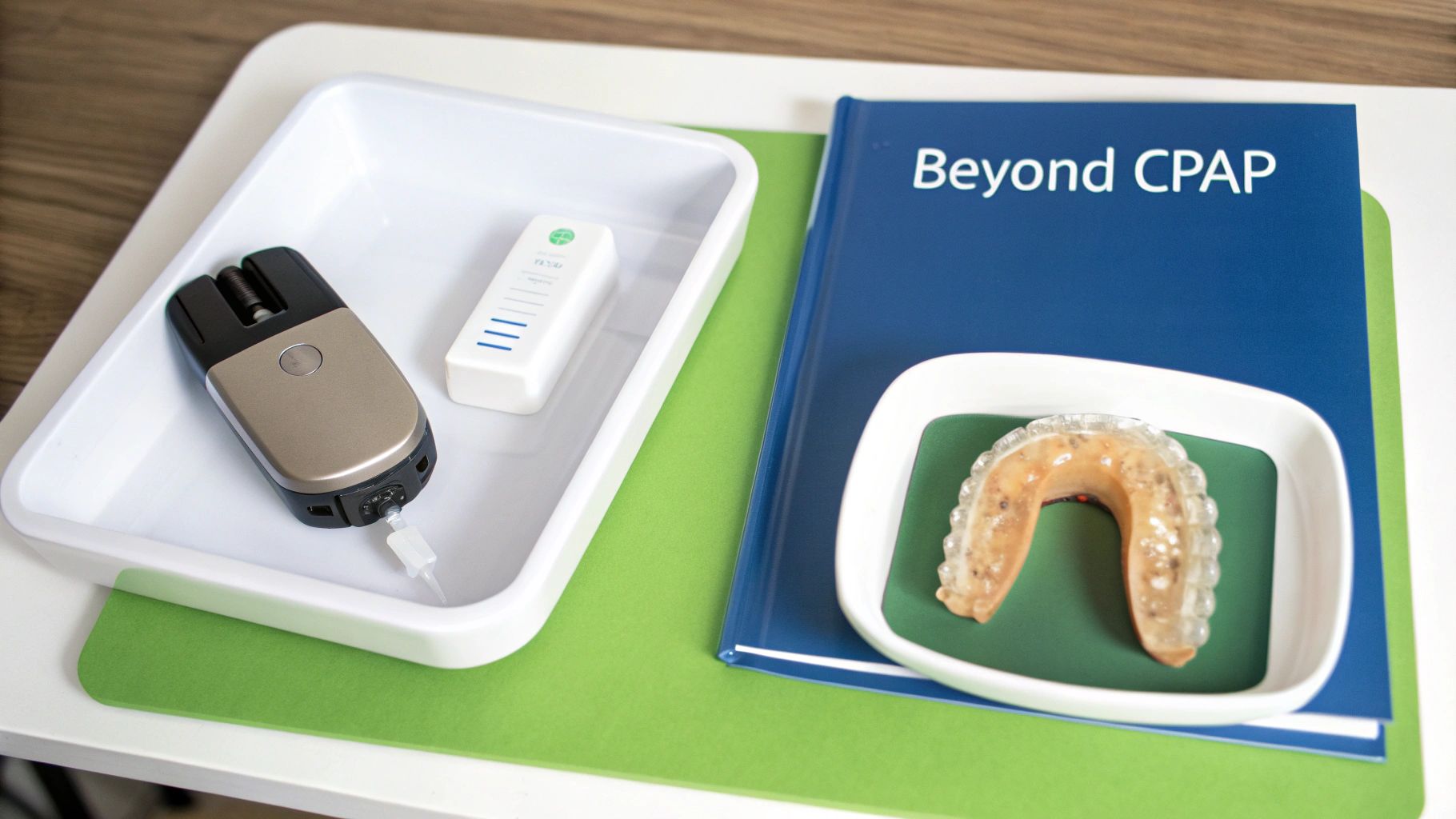
Oral Appliance Therapy: A Comfortable Alternative
One of the most effective and popular alternatives to CPAP is Oral Appliance Therapy (OAT). Picture a custom-made mouthguard, but one designed with incredible precision. Its job is to gently hold your lower jaw in a slightly forward position as you sleep.
This subtle shift is often all it takes to keep your tongue and soft tissues from collapsing into your airway. By keeping things open naturally, you can breathe freely all night long without those constant, exhausting interruptions. For anyone with mild to moderate obstructive sleep apnea, the American Academy of Sleep Medicine actually recognizes OAT as a first-line treatment.
Some of the biggest benefits include:
- Comfort and Portability: It's small, silent, and easy to pack for travel. It fits into your life, not the other way around.
- High Compliance: Let's be honest—people find oral appliances much easier to stick with than a CPAP mask. Consistent use means better results.
- Non-Invasive: OAT offers a simple, mechanical solution without electricity, pressurized air, or surgery.
Retraining Your Body for Better Breathing
Beyond devices, some of the most exciting therapies focus on retraining the muscles and mechanics of breathing itself. These methods get to the root of the problem—the functional issues that lead to airway collapse in the first place. This is where a more holistic approach to chronic fatigue and sleep apnea can make a profound impact.
Orofacial Myofunctional Therapy (OMT) is essentially physical therapy for your mouth, tongue, and face. Think of it as taking your tongue to the gym. A trained therapist guides you through specific exercises to strengthen the tongue and throat muscles, correct your tongue's resting posture, and encourage proper breathing through your nose.
By fixing these dysfunctional muscle habits, OMT helps your body keep the airway open on its own. It’s about empowering your body to do the job it's supposed to.
In a similar vein, Buteyko Breathing Retraining tackles the common problem of chronic over-breathing (hyperventilation). This technique teaches you how to breathe more slowly, lightly, and through your nose. This can help reduce airway inflammation and make your body more efficient at using oxygen, restoring healthier breathing patterns day and night.
A Personalized Strategy for Lasting Energy
The truth is, there's no magic bullet for treating sleep apnea-related fatigue. The best outcomes almost always come from a personalized plan that combines different strategies. For some people, an oral appliance is the perfect fix. For others, pairing it with myofunctional therapy or breathing retraining delivers even stronger, more lasting results. Our guide on sleep apnea treatment options without CPAP dives deeper into these alternatives.
The statistics show just how widespread this issue is. While fatigue affects around 18.3-23.1% of the general adult population, that number jumps to an alarming 38.6-56% for those seeking help for sleep problems. Among patients aged 50-69 with severe OSA, it’s even higher at 55.8%. You can learn more about these fatigue findings from the original study.
The ultimate goal is finding a comfortable, sustainable treatment you can actually stick with. By looking beyond the CPAP mask, you open the door to a more tailored and effective plan for resolving your sleep apnea and finally shaking off the chronic fatigue that's been holding you back.
Your First Step Toward a More Energetic Life
The journey from relentless exhaustion to renewed energy starts with one simple realization: you don’t have to live this way. The draining connection between chronic fatigue and sleep apnea isn’t a life sentence. It’s a treatable condition, and understanding that is the first real step toward getting your life back.
You’ve probably blamed your fatigue on stress, age, or just a packed schedule. But now you know that the bone-deep exhaustion could be your body’s cry for help—a direct result of the shattered sleep and oxygen loss caused by sleep apnea. This knowledge completely changes the game, shifting you from resignation to empowerment.
From Diagnosis to a New Beginning
Getting a sleep apnea diagnosis isn’t the end of the road; it’s the starting line for your recovery. It’s the moment you stop guessing what’s wrong and start taking targeted, effective action. Thankfully, modern medicine offers a whole range of solutions that go far beyond a one-size-fits-all approach, meaning there’s a comfortable and sustainable path forward for you.
The most important thing to remember is this: A diagnosis opens the door to treatment. Treatment restores your body’s fundamental ability to rest and repair itself. This is how you reclaim your energy.
Armed with this understanding, you are now in the driver's seat. The power to break the cycle of fatigue is truly within your grasp, and the next steps are clear, simple, and completely achievable.
Your Action Plan for Reclaiming Vitality
It's normal to feel a bit overwhelmed, but moving forward doesn't have to be complicated. Here are your immediate, actionable next steps to start your journey toward a more energetic life:
- Document Your Symptoms: Take a few minutes to jot down everything you're experiencing. Note the morning headaches, the brain fog, the irritability, and anything your partner has mentioned about your snoring or breathing at night.
- Talk to a Professional: Schedule an appointment with your primary care doctor or a sleep specialist. Bring your notes with you to have a clear, productive conversation about the possibility of sleep apnea.
- Embrace the Diagnostic Process: If a sleep study is recommended, see it for what it is—the key to unlocking your treatment plan. Whether it’s an at-home test or in a lab, this step provides the concrete answers needed to finally move forward.
This isn’t just about sleeping better. It’s about living better. It’s about having the energy for your family, your career, and your passions. Your journey back to health starts right now.
Got Questions? We've Got Answers.
As you start to connect the dots between chronic fatigue and sleep apnea, a few key questions usually come up. After learning about the signs, diagnosis, and treatments, you might still be wondering about the specifics. Here are some clear, straightforward answers to the questions we hear most often.
Can I Have Sleep Apnea if I’m Not Overweight?
Yes, absolutely. While excess weight is a major risk factor for obstructive sleep apnea (OSA), it’s far from the only cause. Plenty of people we see with a sleep apnea diagnosis have a normal Body Mass Index (BMI).
At its core, sleep apnea is an issue with the structure and function of your airway. Several factors that have nothing to do with weight can cause the airway to collapse during sleep, including:
- Jaw Structure: A naturally smaller or recessed lower jaw can make the airway narrower.
- Large Tonsils or Adenoids: These can physically block airflow, which is a common culprit in children and younger adults.
- Tongue Size: A larger tongue is more likely to fall back and obstruct the throat while you sleep.
- Genetics: The simple truth is that the shape and size of your airway can be inherited from your parents.
Because of this, anyone can develop sleep apnea, regardless of what the scale says.
Will Treating My Sleep Apnea Completely Cure My Chronic Fatigue?
For the vast majority of people whose exhaustion is driven mainly by OSA, effective treatment can feel life-changing. When your body finally gets the deep, restorative sleep and steady oxygen it's been craving, energy levels often bounce back in a big way, resolving that deep-seated fatigue.
But what if you're treating your sleep apnea and still feel exhausted? That’s a clear sign that other factors may be at play. It's important to work with your doctor to explore other potential causes.
Think of it like a car that won't start. If the battery was dead (sleep apnea), replacing it should solve the problem. But if the engine still sputters, you might also have a fuel line issue—like a nutritional deficiency or a hormonal imbalance—that needs its own fix.
Successful sleep apnea treatment is a massive step forward, but taking a holistic view is key to fully reclaiming your energy.
Are CPAP Alternatives Like Oral Appliances Really Effective?
Yes, and for the right person, they are a game-changer. Custom-made oral appliances are not only highly effective but are also recognized by the American Academy of Sleep Medicine as a first-line treatment for mild to moderate obstructive sleep apnea.
These aren't your average, one-size-fits-all mouthguards. They are precision medical devices, designed and fitted by a dental sleep medicine expert to gently guide your lower jaw forward. This subtle shift is just enough to keep your airway open all night, preventing the collapses that define an apnea event.
Many patients prefer an oral appliance for a few key reasons:
- Comfort: It's far less cumbersome than wearing a mask and dealing with a hose.
- Silence: There’s no machine humming away, so you and your partner can sleep peacefully.
- Convenience: The small size makes it incredibly easy to travel with and simple to clean.
For the right candidate, an oral appliance is an excellent and highly effective way to treat sleep apnea and finally put chronic fatigue behind you.
At the Pain and Sleep Therapy Center, we specialize in getting to the root cause of your fatigue and creating personalized, effective treatment plans that go beyond a one-size-fits-all approach. If you're ready to get your energy back and finally sleep better, schedule a consultation with our expert team today.