That nagging ache, the frustrating click, and the constant tension of TMJ pain can feel overwhelming. The good news is that meaningful relief often starts at home, with simple, foundational habits you can build today.
It's all about combining gentle movement, smart pain control, and a few key lifestyle tweaks. Think of this as your starting point for taking back control and finding comfort.
Starting Your At-Home TMJ Pain Management Plan
If you're dealing with jaw discomfort, you are definitely not alone. Temporomandibular joint disorders (TMD) are incredibly common, affecting a staggering 34% of the global population.
That makes TMD one of the most widespread musculoskeletal conditions out there, yet it’s often misunderstood or dismissed. The data, detailed on Wikipedia, also shows that women face a disproportionately higher risk—up to 1.75 times more than men.
An effective tmj home care plan doesn’t have to involve complicated routines or expensive gadgets. It starts with understanding the basics and applying them consistently. The real goal here is to break that vicious cycle of pain and inflammation, giving your jaw muscles and the joint itself a chance to heal.
The Three Pillars of Initial Relief
Your path to feeling better rests on three core pillars. Each one targets a different part of the problem, and when you put them together, they create a powerful strategy for managing your symptoms.
- Gentle Movement: This isn't about aggressive stretching. It’s about specific, controlled exercises that help restore your jaw's mobility, lubricate the joint, and ease muscle tension without making things worse.
- Pain and Inflammation Control: Using simple tools like heat and ice, you can effectively calm down a flare-up, reduce swelling, and soothe those irritated muscles.
- Lifestyle Adjustments: Small, conscious changes in your daily life—from the foods you eat to how you sit at your desk—can dramatically reduce the strain on your jaw joint.
Here’s a quick-reference table to help you get started with these core components.
Your Initial TMJ Home Care Action Plan
Use this table as a quick reference for the core components of your at-home care routine. These are your first steps toward managing jaw pain effectively.
| Care Component | Actionable Tip | Primary Goal |
|---|---|---|
| Gentle Movement | Perform controlled jaw opening/closing exercises without pain. | Restore mobility and lubricate the joint. |
| Pain Control | Alternate between moist heat and a cold pack (15 min each). | Reduce inflammation and soothe muscle tension. |
| Dietary Changes | Stick to soft foods like yogurt, soups, and smoothies. | Minimize chewing stress on the jaw joint. |
| Posture Awareness | Sit up straight with your shoulders back and relaxed. | Reduce strain on neck and jaw muscles. |
| Habit Modification | Avoid clenching, chewing gum, and biting nails. | Decrease unnecessary load on the TMJ. |
Think of these actions as the building blocks of a sustainable routine that provides consistent relief and helps prevent future flare-ups.
By focusing on these areas, you empower yourself to take control of your symptoms. The aim isn't to find a magic cure but to build a sustainable routine that provides consistent relief and prevents future flare-ups.
This initial approach sets the stage for a more detailed self-care regimen. But before you dive into specific exercises, it's a good idea to make sure you're on the right track. If you're unsure whether your symptoms line up with TMD, our guide on the symptoms of temporomandibular joint dysfunction is a great place to get more clarity. This foundational knowledge will help you apply the following strategies much more effectively.
Gentle Jaw Exercises That Actually Bring Relief
When your jaw is throbbing, the idea of exercising it probably sounds like the worst advice you could get. I get it. But we're not talking about forcing anything—the goal is to use specific, controlled movements as a cornerstone of effective TMJ home care.
Think of it less as a workout and more as physical therapy for your jaw. These gentle motions help re-educate muscles stuck in a painful cycle of clenching and guarding. It's all about smooth, controlled, and pain-free movement, which is exactly what helps break the pattern of tension.
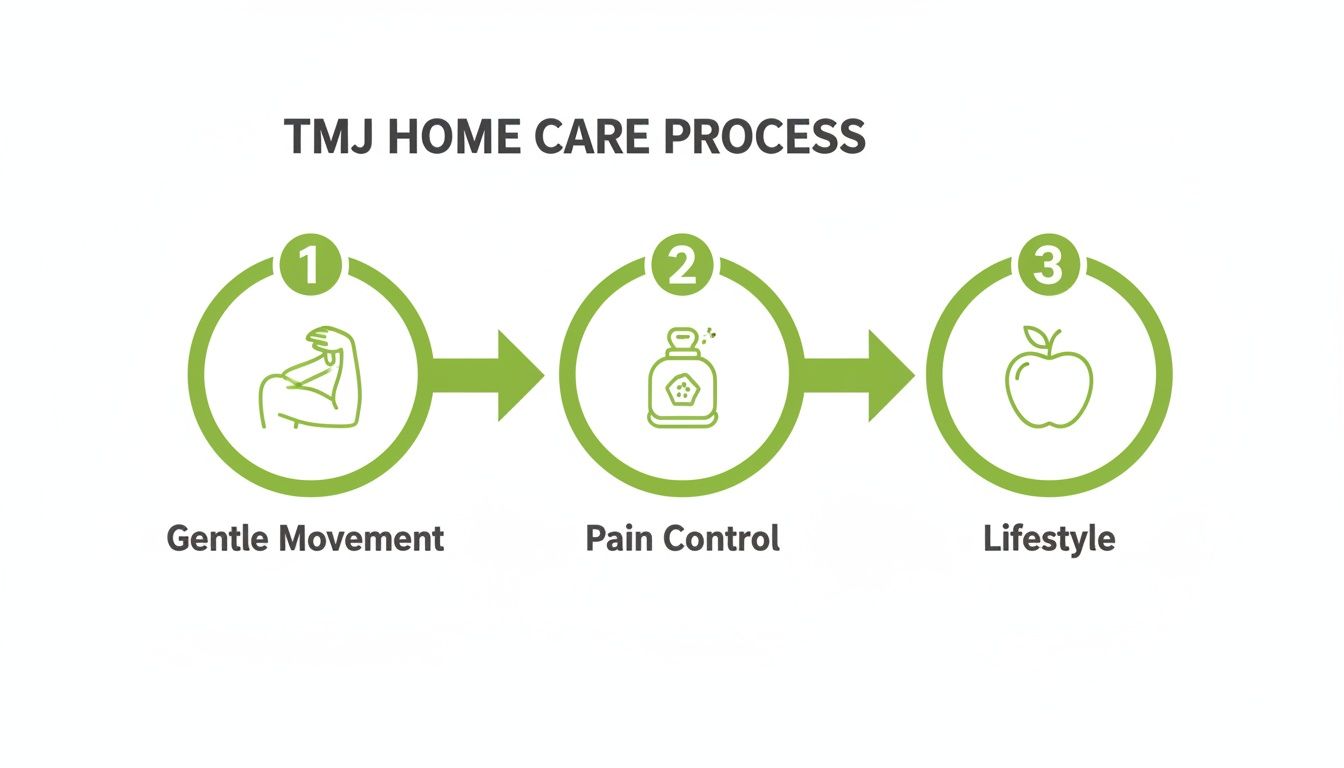
As you can see, this home care process is a three-part approach. It starts with gentle movement, followed by managing the immediate pain, and finally, making those long-term lifestyle shifts that bring lasting relief.
Foundational Movements for Jaw Mobility
First things first, find a comfortable position. Posture is a huge piece of the puzzle here, so sit or stand with your head aligned directly over your shoulders—no "tech neck" jutting forward.
Before you start, get your tongue into its natural resting spot: gently placed on the roof of your mouth, just behind your front teeth. This simple trick helps keep the jaw muscles from tensing up.
A great place to begin is with the controlled jaw opening.
- With your tongue still on the roof of your mouth, slowly open your jaw as far as you can without pain and without your tongue dropping.
- Pause for a second at the widest comfortable point.
- Slowly and smoothly bring your teeth back together.
Try to repeat this 10-15 times. The magic is in the control and in stopping before you feel any sharp pain. A mild stretch is okay, but if you hear a loud pop or feel a jolt, ease up. You’ve pushed it a little too far.
A simple motto I tell my patients is, "motion is lotion." Gentle movement helps circulate the synovial fluid inside the joint, which is nature's lubricant. More movement means less friction and stiffness.
Adding Gentle Resistance and Directional Stretches
Once the basic open-and-close feels comfortable, you can start working on improving your jaw's full range of motion. Smooth, side-to-side movements are perfect for this.
- Side-to-Side Glides: Open your mouth just a little and gently slide your lower jaw to the left. Hold for a couple of seconds, then return to the center. Now, do the same thing to the right. The key is a smooth, gliding motion, not a jerky one.
- Forward Protrusion: Gently push your lower jaw forward until your bottom teeth are in front of your top teeth. Hold for a moment, then slide it back to the starting position.
If you feel ready for a little more, adding light resistance can help strengthen the muscles that support the jaw. Try placing your thumb under your chin and applying a bit of upward pressure as you slowly open your mouth. You can also place your fingers on the side of your jaw to provide gentle resistance to the side-to-side glides.
For a more detailed guide on technique, exploring different TMJ pain treatment exercises can give you more variations to add to your routine. Just remember, consistency is everything. Doing these a few times a day is what will get you the best results over the long haul.
Getting a Handle on Pain and Inflammation at Home
When a TMJ flare-up hits, the first thing on your mind is getting relief—and fast. A solid tmj home care plan starts with knowing how to control pain and inflammation. It’s about moving past generic advice and learning how to use simple tools to break that frustrating pain cycle.
The right approach doesn't just provide immediate comfort; it creates a better healing environment for your jaw. It's all about being strategic.

The Heat vs. Cold Dilemma—Solved
It’s the age-old question: ice or heat? The answer is simple once you know what each one does. Think of them as two different tools for two different jobs in your TMJ first-aid kit.
Go for a Cold Pack for Acute Pain and Swelling
When you’re dealing with that sharp, throbbing pain or noticeable swelling, cold is your best friend. A cold pack constricts blood vessels, which dials down inflammation and numbs the area for some quick relief.
- How to do it: Wrap a gel pack or even a bag of frozen peas in a thin towel. Never put ice directly on your skin.
- How long: Apply it to the painful spot for 15 minutes at a time. Be sure to take at least a 45-minute break before applying it again.
Use Moist Heat for That Deep Ache and Tightness
For the dull, persistent ache and muscle stiffness that just won't quit, moist heat is what you need. It boosts blood flow, helping those tight jaw muscles relax and easing that chronic soreness.
- How to do it: A warm, damp washcloth or a microwaveable moist heat pack works perfectly.
- How long: Apply for 15-20 minutes. This is a great thing to do right before you start any gentle jaw exercises to help loosen things up.
Targeted Self-Massage Techniques
So much of TMD is a muscular issue, which is why direct massage can make a world of difference. In fact, muscle pain (myalgia) is the single most common TMD symptom, affecting an incredible 37.2% of people worldwide. This really drives home how critical it is to address muscle tension. You can read more about these findings in the Journal of Public Health.
You'll want to focus your efforts on two key muscles:
- The Masseter Muscle: This is the big, powerful chewing muscle on the side of your jaw. To find it, place your fingertips just in front of your earlobe and clench your teeth—you'll feel it pop out. Use firm, slow circles to work through any tender spots.
- The Temporalis Muscle: Located on your temples, this fan-shaped muscle also gets a workout when you chew. Massage it with your fingertips using that same circular motion, gently searching for any knots or sore points.
Here's a pro tip: You're not trying to be aggressive. The goal is to find that "good pain"—that feeling of release in a tight spot, not a sharp or radiating pain. If an area feels too sensitive, just work on the muscles around it first.
For so many people, the root of this muscle pain comes from clenching and grinding during sleep. Learning how to manage that specific habit is another crucial piece of the puzzle.
Our guide on how to stop teeth grinding at night offers a ton of strategies that work perfectly alongside these pain control techniques. When you combine them, you have a powerful, multi-faceted approach to finding lasting comfort.
Simple Lifestyle Changes for a Healthier Jaw
Real, lasting TMJ home care isn't just about exercises or occasional pain relief. It’s about looking at the small, unconscious habits that put unnecessary strain on your jaw every single day. Tweaking these simple parts of your routine can have a profound impact on your long-term comfort.
Often, the source of jaw strain is hiding in plain sight. It could be the way you slump at your desk, the crunchy snack you grab, or even how you sleep at night. Making conscious choices here gives your temporomandibular joint a much-needed break and a chance to heal.

Adopt a Jaw-Friendly Diet
What you eat directly translates to how hard your jaw has to work. During a flare-up especially, switching to a soft-food diet is one of the quickest and most effective changes you can make.
Think of it as giving your jaw muscles a vacation. Instead of forcing them to grind through tough, chewy foods, you’re providing nourishment that requires minimal effort.
Foods to Enjoy:
- Soups and broths: These are nutrient-dense and require zero chewing.
- Smoothies and yogurt: An easy way to get protein and vitamins without any strain.
- Scrambled eggs and mashed potatoes: Soft, comforting classics that are gentle on your jaw.
- Steamed vegetables and flaky fish: Healthy options that break apart easily.
Foods to Avoid:
- Hard nuts and raw carrots: These require a significant amount of force to break down.
- Chewy items like bagels, steak, and gum: The constant grinding motion is exactly what overworks your jaw muscles.
- Crunchy snacks such as chips and popcorn: Those sharp, hard textures can easily aggravate a sensitive joint.
Fine-Tune Your Posture and Sleep Habits
Your jaw doesn't exist in a vacuum; it’s directly connected to the muscles in your neck, shoulders, and back. Poor posture—especially the "forward head posture" so common from staring at screens—creates a chain reaction of tension that travels right up to your jaw.
Setting up an ergonomic workspace is a great first step. Make sure your computer monitor is at eye level so your head can rest naturally over your shoulders. I also recommend setting a timer to get up, stretch, and reset your posture every hour.
Your sleeping position is just as important. Sleeping on your stomach is one of the worst offenders, as it forces your head and neck into a twisted position for hours, putting immense pressure on the TMJ. Training yourself to sleep on your back is the gold standard for neutral alignment.
It’s easy to dismiss TMD as a minor issue, but it's the second most common orofacial pain after toothaches, impacting around 12% of the U.S. population. With numbers like that, proactive home care isn't just a good idea—it's an essential first line of defense against chronic pain. Simple strategies can make a huge difference, especially in combating the stress-induced clenching that drives so many cases. You can read more about these important TMD findings.
By mindfully adjusting your diet, posture, and sleep habits, you create an environment where your jaw can finally rest and recover, paving the way for lasting relief.
Knowing When Home Care Isn't Enough
A consistent tmj home care routine can be a game-changer for managing jaw pain, but it's important to know its limits. While these self-care strategies resolve many common symptoms, you also have to recognize the signs that mean it's time for a professional evaluation.
Ignoring these red flags can let simple problems snowball into more complex issues. The goal isn't to scare you, but to give you the confidence to know when it's time to call for backup.
Clear Signs to Seek Professional Help
If you've been sticking to a solid home care plan for several weeks without any real improvement—or worse, your symptoms are escalating—that's a clear signal to see a specialist. Your body is telling you the root cause might be more than just muscle fatigue.
Some symptoms are much more urgent than others and should prompt you to make an appointment right away. These aren't the kind of issues you should try to tough out on your own.
Keep an eye out for these specific warning signs:
- A Locked Jaw: This is when your jaw gets stuck open or closed. It’s a definite sign of a significant joint problem that home care simply can't address.
- Severe, Unrelenting Pain: If the pain is so bad it disrupts your sleep, makes eating a nightmare, or doesn't respond to any self-care, you need a professional diagnosis.
- Sudden Bite Changes: Does it suddenly feel like your teeth don't fit together properly? This could point to a structural change in the joint itself.
- Grating or Popping with Pain: While many people have harmless clicking noises, a harsh grinding sound (crepitus) or a loud pop followed by intense pain needs a closer look.
It's a common myth that all TMJ problems just go away on their own. While many do improve with conservative care, persistent or severe symptoms often point to underlying joint damage or inflammation that requires targeted medical intervention.
Understanding the Next Level of Care
Deciding to see a professional doesn't mean your home care efforts were a waste. In fact, they provide the perfect foundation for more advanced treatments. A specialist, like the team at Pain and Sleep Therapy Center, will use your experience to get a head start on diagnosing your condition.
Professional help can open the door to solutions like:
- Advanced Diagnostics: Using imaging like CBCT scans to get a crystal-clear picture of your jaw joint's health.
- Custom Oral Appliances: A custom-fit orthotic or night guard is worlds away from a one-size-fits-all device from the drugstore.
- Targeted Physical Therapy: Guided exercises that go beyond general stretches to address your specific muscle and joint issues.
- Regenerative Therapies: Innovative treatments like Prolotherapy or PRF injections can actually help heal damaged joint tissues from the inside out.
Making the call to see a specialist is a proactive step toward finding a real, long-term solution. It’s how you bridge the gap between self-management and expert medical care, ensuring you get the comprehensive support you need.
Answering Your Questions About TMJ Home Care
As you start navigating TMJ self-care, a lot of practical questions are bound to pop up. Knowing what to expect, what to avoid, and how to tweak your daily habits is the key to making any at-home plan actually work. Let’s tackle some of the most common concerns to help you feel more confident on your path to relief.
How Long Until I Feel Better?
Consistency is everything. When it comes to TMJ home care, you can't just do the exercises when you feel a flare-up coming on.
Many people notice some initial relief from that sharp, acute pain and muscle tightness within the first one to two weeks of really sticking to a routine. This means consistently doing your gentle exercises, using heat or cold therapy, and being mindful of your diet.
But for more significant, lasting improvements in jaw function and a real drop in chronic pain, you need to give it more time. Plan on committing to a solid routine for at least four to six weeks. That’s the timeframe your muscles and joints really need to adapt and start healing.
Think of home care less as a quick fix and more as an ongoing management strategy. TMJ disorders are often chronic, and flare-ups can happen. If your symptoms don't improve—or get worse—after a month of consistent effort, that's a clear sign it's time to see a professional.
Are Over-the-Counter Mouth Guards a Good Idea?
It’s incredibly tempting to grab a cheap "boil-and-bite" mouth guard from the drugstore, but this is one shortcut you absolutely want to avoid. In my experience, these generic guards often make TMJ pain worse, not better.
Because they aren’t custom-molded to your unique bite, they can easily shift your jaw into an awkward or unstable position while you sleep. This can crank up the muscle strain and joint pressure, leaving you in more pain than when you started.
A professionally made oral appliance from a TMJ specialist is a completely different tool. It's designed with precision to place your jaw in a specific therapeutic position that helps decompress the joint and allows tight muscles to finally relax. To avoid making things worse, always consult a specialist for a custom-fit solution.
Can I Still Work Out During a TMJ Flare-Up?
Yes, you can and you should stay active! You just need to be a bit more mindful of your movements. During a flare-up, it’s best to steer clear of high-impact activities that cause jarring or encourage you to clench your jaw—think running, heavy weightlifting, or intense HIIT workouts.
Instead, shift your focus to low-impact exercises that promote relaxation and smooth, fluid movement.
- Walking: It's simple, but it’s a fantastic way to get your body moving without stressing the jaw.
- Swimming: The water supports your body, which minimizes impact and helps promote a relaxed state.
- Yoga or Tai Chi: These practices are amazing for TMJ because they emphasize controlled breathing and body awareness, which can help you consciously relax your jaw.
No matter what you're doing, make a conscious effort to keep your teeth slightly apart and your jaw muscles soft. If any movement causes your jaw pain to spike, listen to your body. Modify what you're doing or switch activities until the flare-up calms down.
What’s the Best Sleeping Position for Jaw Pain?
The way you sleep has a huge impact on your jaw. The hands-down best position for minimizing TMJ pain is sleeping on your back. This posture keeps your head, neck, and spine in a neutral line and, most importantly, prevents any direct pressure on the sides of your face and jaw.
Stomach sleeping is by far the worst position for TMJ. It forces you to twist your neck, which can put a ton of strain on your jaw muscles all night long.
If you’re a die-hard side-sleeper, try using a supportive pillow that keeps your head and neck aligned with your spine. And be careful not to rest your head on your hand or arm, as that can apply direct pressure right onto the joint.
At Pain and Sleep Therapy Center, we know that effective TMJ care has to go beyond temporary fixes. If home care isn't giving you the relief you deserve, our team is here to help you uncover the root cause of your pain with advanced diagnostics and personalized treatment plans. Find out how we can help you achieve lasting comfort by visiting us at our Charlotte office.