The most popular advice about home sleep tests is also the most dangerous: “A negative result means you don't have sleep apnea.” That conclusion is too absolute. A home sleep apnea test can be useful, convenient, and clinically persuasive in the right patient, but it can also underestimate breathing problems or create false reassurance when the result doesn't fit the symptoms.
Home sleep study accuracy isn't one fixed number. It changes with the device, the scoring method, the apnea threshold being used, the quality of the recording, and the patient's sleep pattern. The right question isn't whether a home test is accurate. It's whether this test was appropriate for this patient and whether the result answers the clinical question that matters.
Why a Negative Home Sleep Test May Not Mean What You Think
A negative home sleep apnea test can mean that obstructive sleep apnea wasn't detected. It doesn't always mean that obstructive sleep apnea is absent. Home devices often estimate respiratory event burden from recording time rather than confirmed sleep time, and that distinction matters when you spend part of the night awake, restless, or disconnected from the sensors.
If you lie awake for a long period, the device may divide breathing events across a longer interval than the time you were asleep. That can lower the calculated index and make the condition appear milder than it is. The AASM-linked review describes this as a reason HSAT may underestimate severity and reports false negative rates as high as 17% in some contexts (AASM-linked review of HSAT limitations).
Mild disease is easier to miss
A negative result deserves more scrutiny when symptoms are persistent but the suspected disease is mild, inconsistent, or strongly position-dependent. A patient may have fewer events on the recorded night, sleep differently than usual, or spend less time in the sleep stage or position where breathing worsens. A home test also generally doesn't measure sleep stages, so it can't always distinguish quiet wakefulness from actual sleep.
Recent guidance makes the practical point clearly: HSAT can support an obstructive sleep apnea diagnosis, but it can't reliably rule out OSA in every symptomatic patient. In one retrospective review cited by the guidance, 71% of 75 patients who returned for confirmatory testing after a negative HSAT were later diagnosed with OSA by AHI or RDI criteria (AAST technical guideline).
Clinical rule: If the symptoms, examination, or risk profile still point strongly toward sleep-disordered breathing, treat a negative HSAT as provisional.
Some patients with snoring, disrupted sleep, fatigue, or flow limitation may also have conditions that a basic home test isn't designed to characterize, including upper airway resistance syndrome. That possibility is worth discussing through a broader sleep and airway assessment rather than stopping at a reassuring-looking home report.
Understanding the Numbers Behind Home Sleep Study Accuracy
A home sleep test can look highly accurate on paper and still provide false reassurance to the wrong patient. Sensitivity measures how often a test detects disease that is present. Specificity measures how often it remains negative when disease is absent. Neither figure alone establishes whether a negative result is dependable in an individual case.
A 2022 home sleep apnea testing study reported 94.9% sensitivity, 62.5% specificity, and 91.0% overall accuracy for obstructive sleep apnea syndrome. Performance was weaker when the test had to classify moderate-to-severe disease precisely, with 80.0% sensitivity, 74.1% specificity, and 77.6% accuracy (2022 HSAT study). The findings support home testing as an initial screen, while also supporting confirmatory polysomnography after a home-based diagnosis when treatment depends on accurate severity grading.
The threshold changes the answer
The apnea-hypopnea index, or AHI, does not have one universal diagnostic target. Results shift according to whether the threshold is intended to identify any clinically relevant apnea or more established disease.
A 2014 validation study of a simple three-channel portable monitor found 93% sensitivity and 71% specificity at an AHI cutoff of 5 events per hour. At a cutoff of 15 events per hour, both sensitivity and specificity reached 94% (portable monitor validation study and review). Across level 3 portable tests and different AHI cutoffs, the review found summary sensitivity ranging from 0.79 to 0.97 and specificity from 0.60 to 0.93.
A separate meta-analysis reported mean sensitivity and specificity of 0.88 and 0.93 at PSG AHI greater than 5, 0.85 and 0.97 at AHI greater than 1, and 0.65 and 1.00 at AHI greater than 10 (type 3 HSAT meta-analysis). HSAT generally performs better when breathing disruption is obvious. Mild, intermittent, or borderline disease is easier to miss, especially when the device records time in bed rather than confirmed sleep.
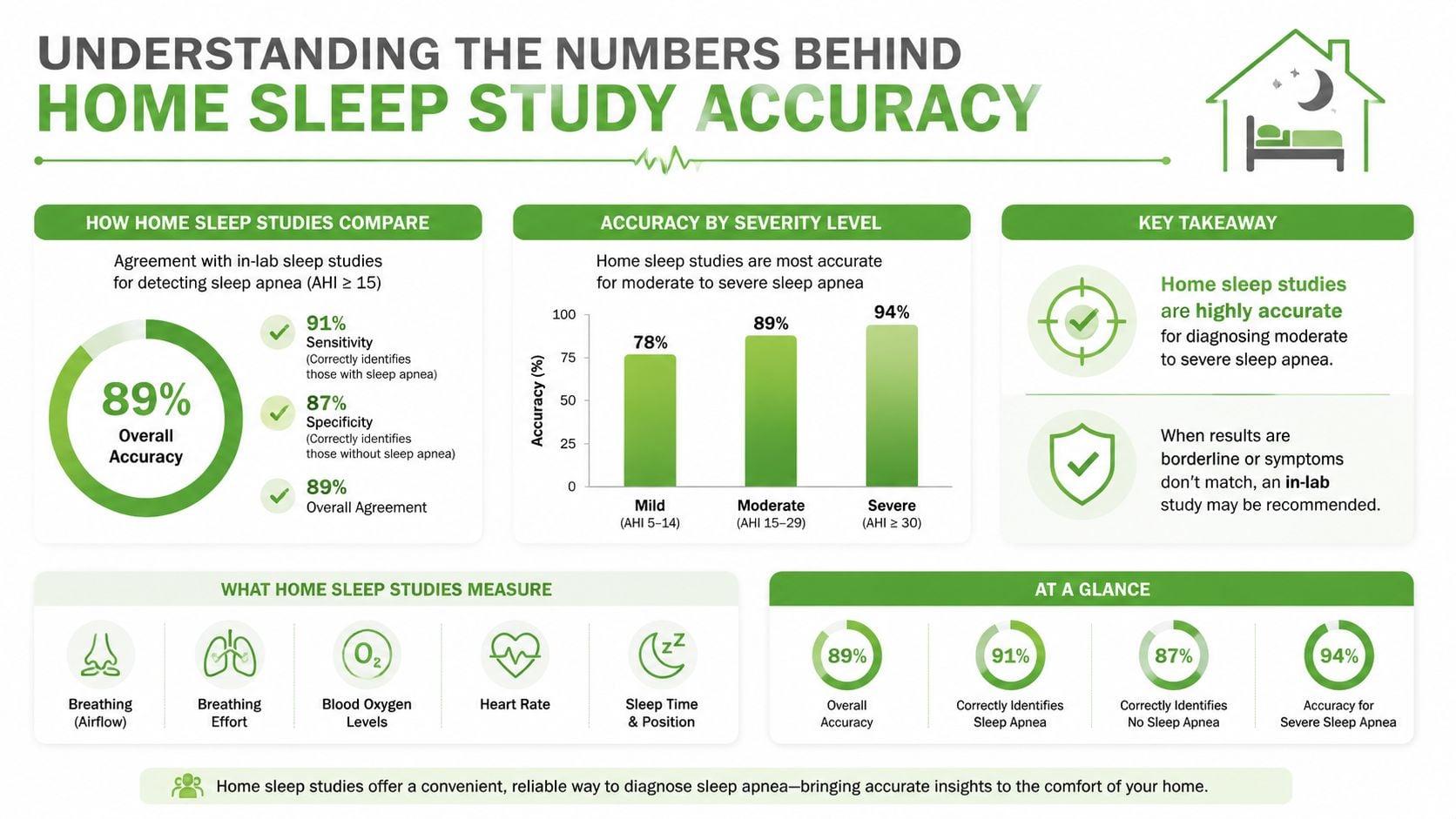
A headline accuracy figure is not a personal guarantee. A positive result in a patient with a high clinical probability may provide a practical route to treatment. A negative result in a highly symptomatic patient deserves a fuller sleep quality assessment, particularly if the device type, scoring rules, or recorded night may have understated the breathing problem.
How Home Testing Compares to In-Lab Polysomnography
Home sleep apnea testing trades breadth for practicality. It usually focuses on respiratory signals, oxygenation, heart rate, and breathing effort, while attended polysomnography adds brain-wave recording, eye movements, muscle activity, and direct assessment of sleep stages. A technologist can also identify technical problems during the night and preserve a more complete picture of what happened.
That difference doesn't make HSAT useless. It makes HSAT purpose-specific. For a patient with a strong clinical likelihood of uncomplicated obstructive sleep apnea, a portable test may provide enough information to move care forward. For a patient with insomnia, unusual movements, suspected central events, or another complex condition, the missing channels can become the most important part of the evaluation.
A practical comparison
| Feature | Home Sleep Test (HSAT) | In-Lab Polysomnography (PSG) |
|---|---|---|
| Primary purpose | Evaluates suspected obstructive sleep apnea through unattended respiratory monitoring | Provides comprehensive assessment of sleep and breathing |
| Sleep staging | Usually limited because brain waves and eye movements aren't recorded | Measures sleep stages directly |
| Event context | Estimates respiratory burden from available signals and recording time | Relates respiratory events to confirmed sleep and stage |
| Other sleep disorders | Limited ability to evaluate non-respiratory disorders | Better suited to movement, neurological, parasomnia, and complex breathing evaluations |
| Patient experience | Conducted in the patient's own bedroom with portable sensors | Conducted overnight with attended monitoring |
| Main trade-off | More convenient, but less comprehensive | More detailed, but more involved |
The home setting may reduce disruption from an unfamiliar laboratory, but comfort doesn't compensate for an inappropriate test choice. An in-lab study is often the safer diagnostic route when the clinician needs to distinguish obstructive from central breathing patterns or evaluate symptoms that aren't explained by apnea alone.
The tests aren't interchangeable. They overlap for selected obstructive sleep apnea cases, but they answer different levels of clinical detail.
If your symptoms are complex or your first test doesn't match your experience, a consultation with a sleep-disorder specialist can help determine whether the next step should be repeat testing, PSG, or evaluation for another condition.
Key Factors That Drive Accuracy Up or Down
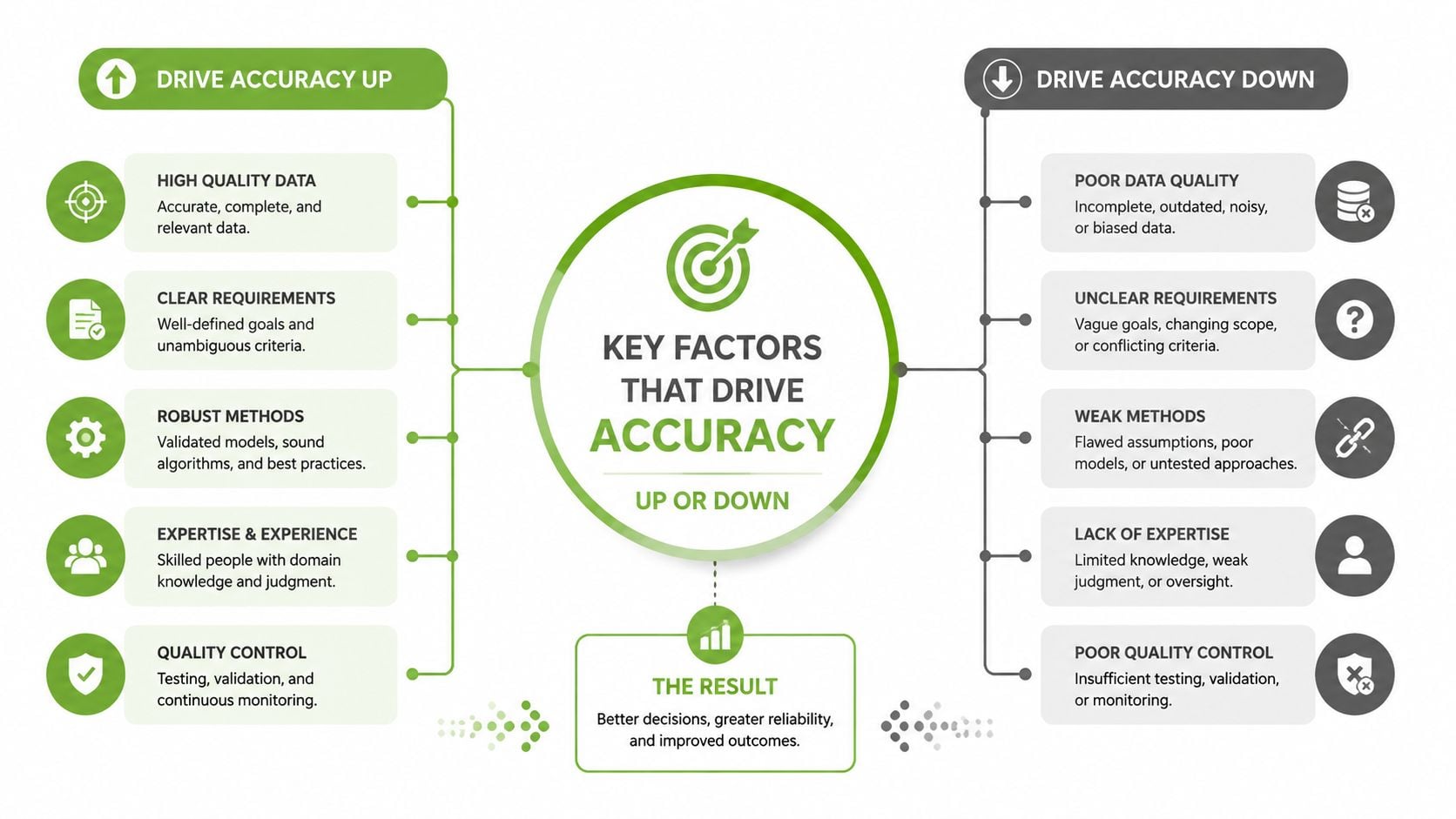
A negative home sleep test can provide false reassurance. Accuracy depends on the device, sensor quality, scoring rules, and whether the recorded night reflects the patient's usual sleep. A weakness in any link can lower the reported event rate or make the result harder to interpret.
The device and its sensors
Portable monitors do not all collect the same signals. One may measure airflow, respiratory effort, oxygen saturation, and pulse, while another uses a different combination or identifies events through a different method. These differences affect what the test can detect.
Sensor placement matters just as much. A nasal sensor that shifts, a loose effort belt, or an oximeter disturbed by movement can create gaps and artifacts. The report may still look complete enough to read, yet the recording may not answer the clinical question reliably. A portable sleep test review found wide performance ranges across devices and thresholds, supporting professional device selection and review.
The denominator problem
Many HSAT systems use recording time rather than confirmed sleep time to estimate the respiratory event index. If insomnia, anxiety, fragmented sleep, or repeated awakenings reduce actual sleep, the denominator becomes too large. The calculated event rate can then appear lower than the patient's true burden during sleep.
That is the hidden risk of a negative or borderline result. When symptoms and test findings disagree, the result deserves reconsideration rather than automatic reassurance.
Scoring rules still matter
A 2024 review described false negatives, false positives, and meaningful variability among products and scoring approaches (2024 review of HSAT variability). The same raw signals can produce different results depending on how an algorithm defines and counts respiratory events.
The most dependable interpretation considers the signals, technical quality, scoring method, and patient's symptoms together. A clean-looking report can still understate disease, particularly when sleep time is uncertain or the device cannot characterize the suspected breathing pattern. Persistent symptoms after a negative HSAT should prompt discussion of repeat testing or in-lab polysomnography.
Who Is an Ideal Candidate for Home Sleep Testing
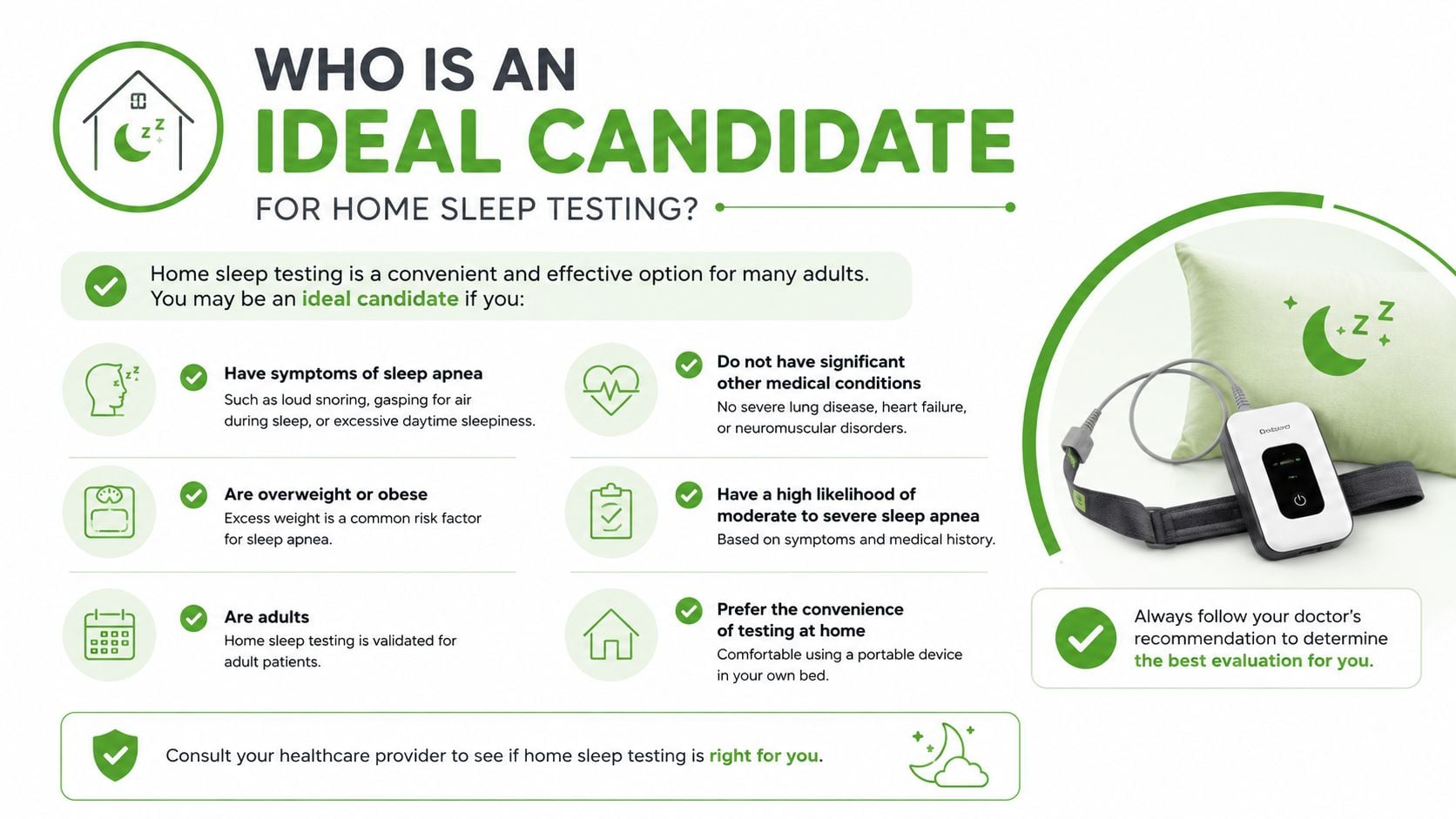
A home sleep apnea test is appropriate when the clinical question is narrow: does this patient have likely moderate-to-severe uncomplicated obstructive sleep apnea? The symptoms, examination, and medical history should point toward obstructive breathing events, without another disorder that requires broader physiologic monitoring.
Home testing may fit a patient with loud snoring, witnessed pauses, gasping, or persistent daytime sleepiness who has no strong indication of central apnea, a significant movement disorder, or another complex diagnosis. It also requires practical reliability. The patient must be able to apply the sensors correctly and record a reasonably typical night.
A useful screening checklist
- Strong respiratory symptoms: Snoring, witnessed pauses, gasping, or choking support suspicion of obstructive sleep apnea.
- A straightforward clinical picture: HSAT is better suited to suspected obstruction than unexplained insomnia, unusual nighttime behaviors, or neurological symptoms.
- Stable medical status: Significant cardiopulmonary disease, neuromuscular weakness, or suspected central sleep apnea may make attended PSG the safer choice.
- Usable sleep conditions: Severe insomnia or markedly fragmented sleep can reduce the value of a recording-time estimate, particularly when a negative result would otherwise seem reassuring.
- A follow-up plan: A negative, borderline, or technically inadequate study needs a defined next step, rather than being treated as a final answer.
Device capability matters. Some home systems record airflow, respiratory effort, and oxygen, while others provide fewer signals. The device may therefore miss a breathing pattern that an in-lab study could characterize. Scoring rules also influence whether borderline events are counted.
Heart failure warrants particular caution because sleep-disordered breathing may involve more than simple upper-airway obstruction. This overview of sleep apnea and CHF risks can help patients and clinicians decide whether home testing provides enough information.
The poor candidate is often someone who can operate the equipment but needs information it cannot collect. For that patient, proceeding directly to PSG can prevent a false-negative home result from delaying diagnosis.
Practical Steps to Maximize Your Home Sleep Test Results
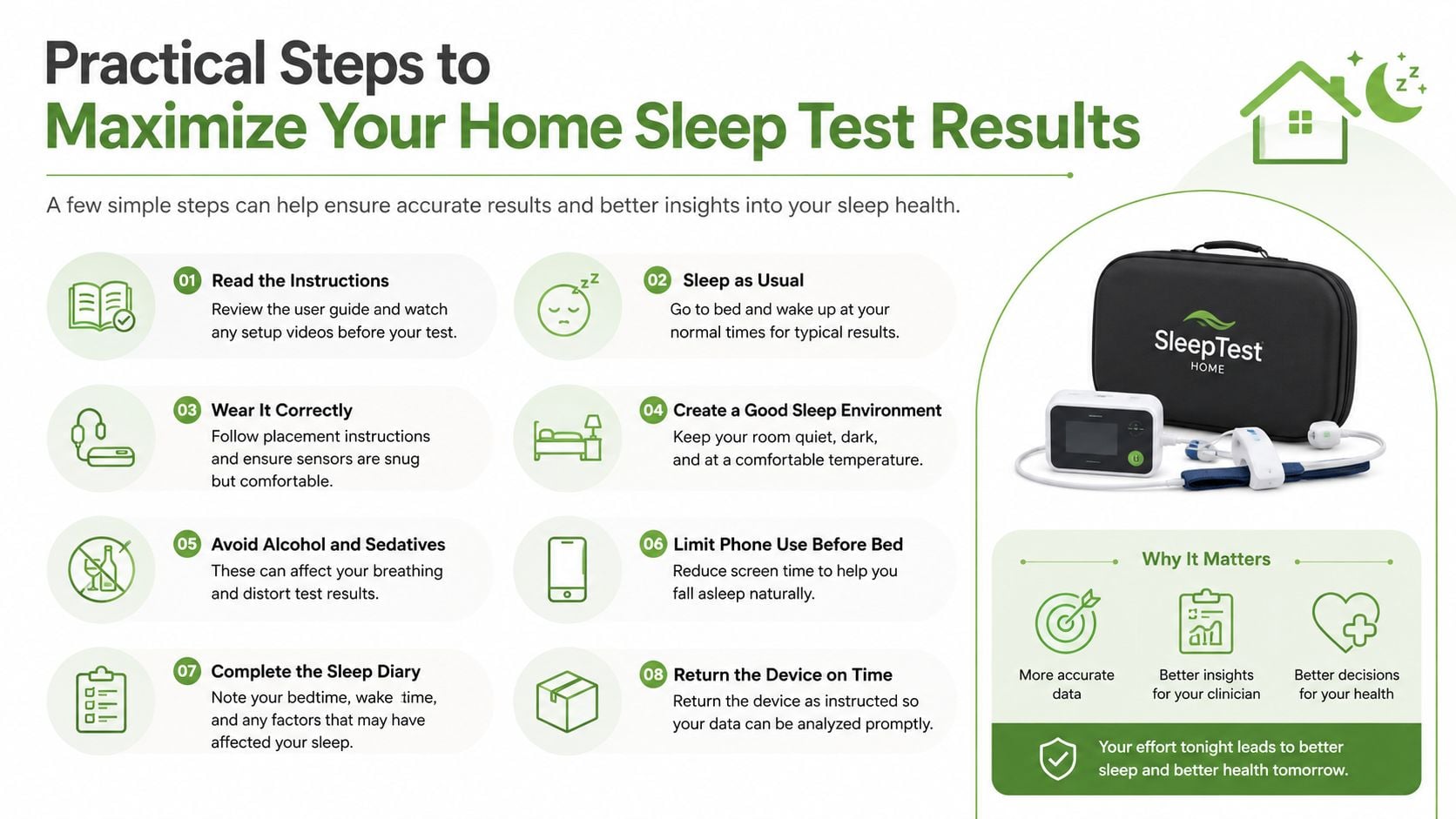
A negative home test can reflect a poor recording rather than normal breathing. Start by asking the technologist to demonstrate every sensor, including the airflow sensor, effort belt, and oxygen probe. Follow the placement instructions exactly. If a lead feels uncomfortable, ask how to adjust it instead of improvising.
Keep the night representative of your usual sleep. Do not shorten your sleep or alter bedtime to make apnea appear. Avoid adding alcohol or sedatives unless your prescribing clinician specifically instructed you to take them. Record bedtime, awakenings, unusual stress, illness, and sensor problems in a brief sleep diary. That context helps the interpreting clinician judge whether the recording reflects a typical night.
What to do if the equipment shifts
If a sensor detaches, reconnect it according to the instructions and note the approximate time. Report partner movement, bathroom trips, room temperature, noise, or other disruptions that may have fragmented sleep.
Use the device only as directed. Do not cover sensors, alter wires, or remove a probe without documenting the interruption. A technically limited study may require repetition. Repeating it is safer than accepting incomplete information as evidence that breathing was normal.
Good sleep habits can make the recording more representative, but do not introduce new routines for the test. Patients seeking broader sleep strategies from Trim can use those ideas as general preparation. Keep any changes gradual and familiar so an unusual test night does not create false reassurance.
Interpreting Results and Deciding on Next Steps
A positive HSAT that matches the symptoms and shows technically adequate data can give a clinician a reasonable basis for discussing obstructive sleep apnea treatment. The treatment decision still depends on the patient's health, the severity pattern, oxygen findings, and whether the device may have underestimated the burden.
A negative or borderline test requires more judgment. If the patient feels well and the clinical suspicion was low, the result may be reassuring. If snoring, witnessed pauses, gasping, daytime impairment, anatomy, or comorbid risk remain concerning, the next step should usually be confirmatory in-lab PSG rather than reassurance.
The decision tree is straightforward:
- Positive and clinically consistent: Discuss treatment and follow-up.
- Negative but symptoms remain strong: Treat the HSAT as provisional and request PSG.
- Borderline or technically poor: Review the raw data, consider repeating testing, or proceed to PSG.
- Symptoms not explained by apnea: Investigate other sleep disorders, including upper airway resistance or non-respiratory conditions.
Ask your clinician, “Did this test record actual sleep?” and “Does the result explain my symptoms?” Those questions keep home sleep study accuracy connected to the decision that follows.
Pain and Sleep Therapy Center evaluates snoring, obstructive sleep apnea, airway function, and related sleep concerns using individualized assessment and available home or in-lab testing pathways. Visit Pain and Sleep Therapy Center to discuss symptoms that persist after a negative home test and determine whether further sleep evaluation is appropriate.