The only way to truly stop grinding your teeth at night is to figure out why it's happening in the first place, all while protecting your teeth from further damage. It usually takes a multi-pronged approach, combining stress management, a few key lifestyle changes, and sometimes professional help like a custom night guard.
Recognizing the Subtle Signs of Nighttime Grinding

That dull headache you wake up with almost every morning? Or the new sensitivity in your teeth that seems to have come out of nowhere? These aren't just minor annoyances. Often, they’re the quiet, sneaky signals of nighttime teeth grinding, a condition we call sleep bruxism.
Most people have no idea they're doing it until a sleeping partner points out the noise or their dentist flags the damage during a check-up.
This is more than just a quirky habit—it's your body's way of telling you it's under some kind of duress. The forces your jaw exerts during sleep grinding are massive, and they can set off a whole chain of symptoms that might seem completely unrelated at first. Understanding this connection is the first real step toward getting lasting relief.
Beyond Worn Teeth: Symptoms to Watch For
While flattened or chipped teeth are the most obvious signs, bruxism often sends out less obvious warning signals through your head, neck, and even your shoulders. Learning to spot these clues can help you catch the problem much earlier.
It's a huge surprise for many of my patients when they learn their chronic morning discomfort is directly linked to jaw clenching they do in their sleep. This is way more common than people think. In fact, sleep bruxism affects a staggering 21% of the global population, and in North America, that number jumps to 31%.
This nighttime habit is a major driver of TMJ disorders, facial pain, and headaches that can affect up to 85-90% of grinders at some point. If you want to dive deeper, a recent meta-analysis really breaks down these extensive bruxism findings.
Key Takeaway: Waking up with unexplained pain isn't normal. If you have persistent jaw soreness, earaches, or tension headaches, your body is trying to tell you something is wrong while you sleep.
Listening to Your Body’s Clues
The key is to start recognizing the pattern. Does your jaw feel tight and tired after a particularly stressful day? Do your temples ache the moment you wake up? These symptoms aren't random—they are pieces of a puzzle.
Consider these common, yet often overlooked, signs of sleep bruxism:
- Dull, nagging headaches, especially when they're focused in your temples.
- Sore facial muscles or a general feeling of fatigue in your jaw when you wake up.
- Pain that feels like an earache but there's no sign of an actual ear infection.
- Increased tooth sensitivity to hot, cold, or even sweet things.
- Little scalloped indentations along the sides of your tongue.
- Pain or difficulty when you try to open your mouth wide.
Once you start identifying these symptoms, you can shift from just unknowingly suffering to proactively finding solutions.
Actionable Strategies for Immediate Jaw Relief
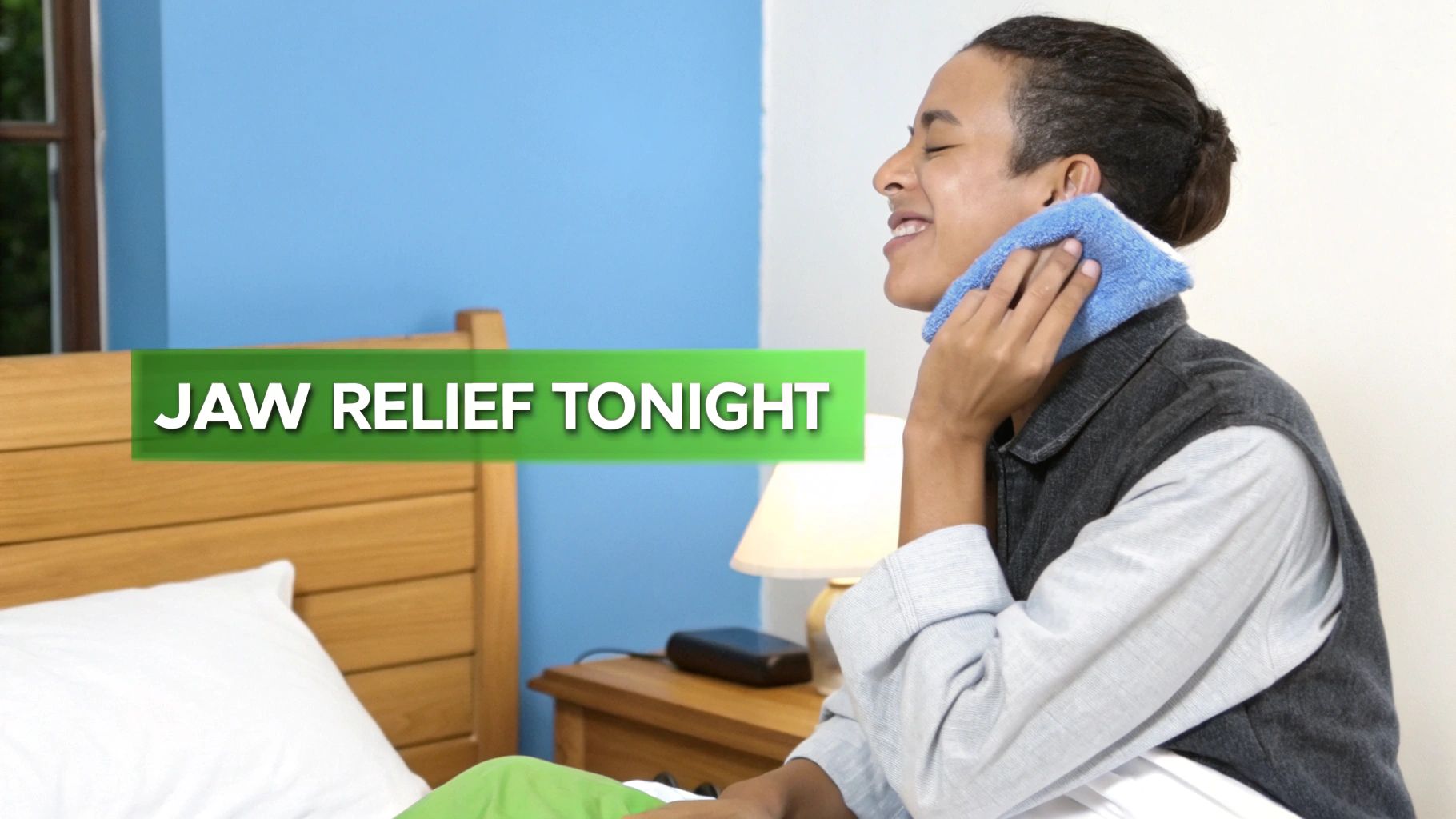
When your jaw is aching and your head is pounding from a long night of grinding, you need relief now—not weeks from now. The great news is there are immediate, practical steps you can take tonight to calm those overactive jaw muscles and interrupt the tension cycle.
Think of your jaw muscles like any other muscle after a hard workout. They’re fatigued, tight, and inflamed. Applying moist heat is a fantastic way to soothe this tension. Just soak a washcloth in warm water, wring it out, and hold it against the sides of your face for about 15 minutes before bed. This gentle heat boosts blood flow and helps the muscles finally relax.
Gentle Stretches Before Bed
Just like you’d stretch your legs after a run, your jaw benefits from gentle movement to release all that pent-up tension. The goal here is a light, comfortable stretch, not to force anything. You're just reminding your muscles how to let go.
Try working these simple exercises into your nightly routine:
- The Soft Open: Slowly open your mouth as wide as you comfortably can without pain. Hold it for five seconds, then slowly close. Repeat this 5-10 times.
- Jaw Massage: Use your fingertips to gently massage the powerful masseter muscles—the ones on your cheeks right in front of your ears. Use a circular motion to work out any knots or tender spots you find.
- Tongue Placement: Rest the tip of your tongue against the roof of your mouth, just behind your top front teeth. This simple move naturally relaxes your jaw and keeps your teeth slightly apart, which is their ideal resting position.
These are a great start, but for a more detailed guide, you can learn more about specific techniques for how to stop jaw pain. The key to retraining these muscles is consistency.
Expert Tip: Grab a few sticky notes and put them where you'll see them during the day—on your computer monitor or car dashboard—with a simple reminder: "Relax Jaw." This little cue helps you become aware of daytime clenching, which so often carries over into the night.
Mindful Relaxation to Unwind
Stress is one of the biggest triggers for bruxism. When your mind is racing, your body follows suit, and for many of us, that tension goes straight to the jaw.
A simple mindfulness practice before sleep can make a huge difference. Before you turn off the lights, take five minutes for deep breathing. Inhale slowly through your nose for a count of four, hold for four, and then exhale slowly through your mouth for a count of six. As you breathe, consciously focus on relaxing your facial muscles—unclench your jaw, soften your forehead, and let your shoulders drop. This sends a powerful signal to your nervous system that it’s time to rest, not fight.
Improving Your Sleep Hygiene and Daily Habits
What you do all day—and especially in the hours before bed—has a massive impact on whether your jaw clenches up at night. Once you have some immediate relief strategies in place, the next step is to look at sustainable lifestyle changes that get to the root of the tension.
Honestly, one of the most powerful tools you have is simply building a solid sleep hygiene routine. This is all about creating a consistent, relaxing wind-down period that tells your body and mind it’s time to rest and recover, not carry the day's stress into your sleep.
Crafting a Relaxing Bedtime Ritual
Think of this as creating a buffer zone between your busy, screen-filled day and a peaceful night's sleep. An effective bedtime ritual doesn't need to be complicated, but it does need to be consistent.
For about 30-60 minutes before you want to be asleep, put away the screens and do something genuinely calming.
This could be:
- Reading a physical book (the blue light from phones and tablets really can mess with your sleep hormones).
- Listening to quiet music or a relaxing podcast.
- Soaking in a warm bath with Epsom salts, which is fantastic for relaxing tense muscles all over your body.
- Journaling to get any racing thoughts or worries out of your head and onto paper.
The specific activity isn't as important as the routine itself. When you do the same calming things in the same order every night, you're training your brain to associate them with sleep. You might also find that specific exercises can prepare your jaw for rest. You can learn more about improving muscle function with these orofacial myofunctional therapy exercises.
Managing Daytime Stress for Nighttime Calm
Stress is a huge driver for bruxism. For so many of us, the jaw becomes the go-to release valve for anxiety and pressure. It’s not just a personal feeling, either—the numbers are pretty staggering. While about 21% of people globally experience sleep bruxism, that rate can jump to 25% for those in high-stress urban jobs.
This widespread, often subconscious habit leads to an estimated $1.2 billion in annual productivity loss in the U.S. alone from related fatigue and pain. You can see the full breakdown in this research paper on bruxism prevalence.
The key is to fight back by weaving small stress-management practices into your daily life. This could be a five-minute meditation in the morning, a quick walk on your lunch break, or just pausing to take a few deep, diaphragmatic breaths when you feel overwhelmed. These small actions prevent stress from piling up, so there’s less for your body to process at night.
A Practical Tip: I often recommend the "4-7-8" breathing technique. Inhale quietly through your nose for a count of 4, hold your breath for a count of 7, and then exhale completely through your mouth for a count of 8. It's a simple trick that can quickly calm your nervous system.
Sleep Hygiene Impact on Teeth Grinding
Your environment and what you consume play a direct role in how well you sleep and how tense your muscles are. The table below breaks down how common habits can either contribute to or help reduce teeth grinding.
| Habit/Factor | Negative Impact (Increases Grinding Risk) | Positive Impact (Reduces Grinding Risk) |
|---|---|---|
| Caffeine/Alcohol | Stimulants and alcohol disrupt deep sleep cycles, leading to more muscle activity and potential grinding. | Avoiding caffeine after 2 PM and limiting alcohol allows for deeper, more restorative sleep stages. |
| Screen Time | Blue light from phones, tablets, and TVs suppresses melatonin, making it harder to fall asleep and stay asleep. | Putting screens away 30-60 minutes before bed helps the brain signal it's time for rest. |
| Bedroom Environment | A room that is too warm, bright, or noisy prevents the body from fully relaxing into deep sleep. | A cool, dark, and quiet room supports uninterrupted sleep and muscle relaxation. |
| Evening Routine | An inconsistent or stimulating pre-bed routine keeps the mind and body in an alert state. | A consistent, calming ritual (reading, warm bath) signals to the body that it's time to wind down. |
Paying attention to these small details can make a significant difference over time. Optimizing your environment is a key piece of the puzzle. Make sure your bedroom is cool, dark, and quiet—whatever that takes. Blackout curtains or a white noise machine can be game-changers.
And finally, be mindful of stimulants like caffeine and alcohol, especially in the evening. While a glass of wine might feel relaxing at first, it actually disrupts your sleep architecture later in the night, which can easily trigger more muscle activity and grinding.
Knowing When to Seek Professional Guidance
While self-care strategies are powerful first steps, there comes a point where they just aren’t enough to solve the underlying problem.
If you've been consistent with relaxation techniques and sleep hygiene but still wake up with a sore jaw or tension headaches, it’s a clear signal. Something deeper needs attention, and this is when professional guidance becomes essential.
Ignoring persistent symptoms can lead to significant long-term damage. Chronic jaw pain, also known as Temporomandibular Joint Disorder (TMJD), can worsen over time. Your teeth can become visibly worn down, chipped, or even fractured.
And if your grinding is so loud that it’s waking up your partner? That’s more than a minor annoyance—it’s a sign of powerful, potentially destructive muscle activity happening while you sleep.
Recognizing the Red Flags for Expert Help
Knowing when to switch from self-care to a professional consultation is key. You really shouldn't wait until the damage is severe. Think of it as a proactive step to protect your health, not a last resort.
Here are the definitive signs that it’s time to book an appointment with a specialist:
- Chronic Jaw Pain: Your jaw consistently feels stiff, sore, or makes painful clicking and popping sounds.
- Persistent Headaches: You find yourself waking up with dull headaches or even migraines day after day.
- Visible Tooth Wear: Your dentist points out that your teeth are getting flat, or you notice new chips yourself.
- Disrupted Sleep: The grinding is loud enough to wake you or your partner, which points to severe clenching.
- Limited Jaw Movement: You struggle to open your mouth wide, or your jaw feels like it's "locking."
This decision tree can help you start incorporating positive daytime habits to reduce two of the most common triggers for nighttime grinding: stress and stimulants.
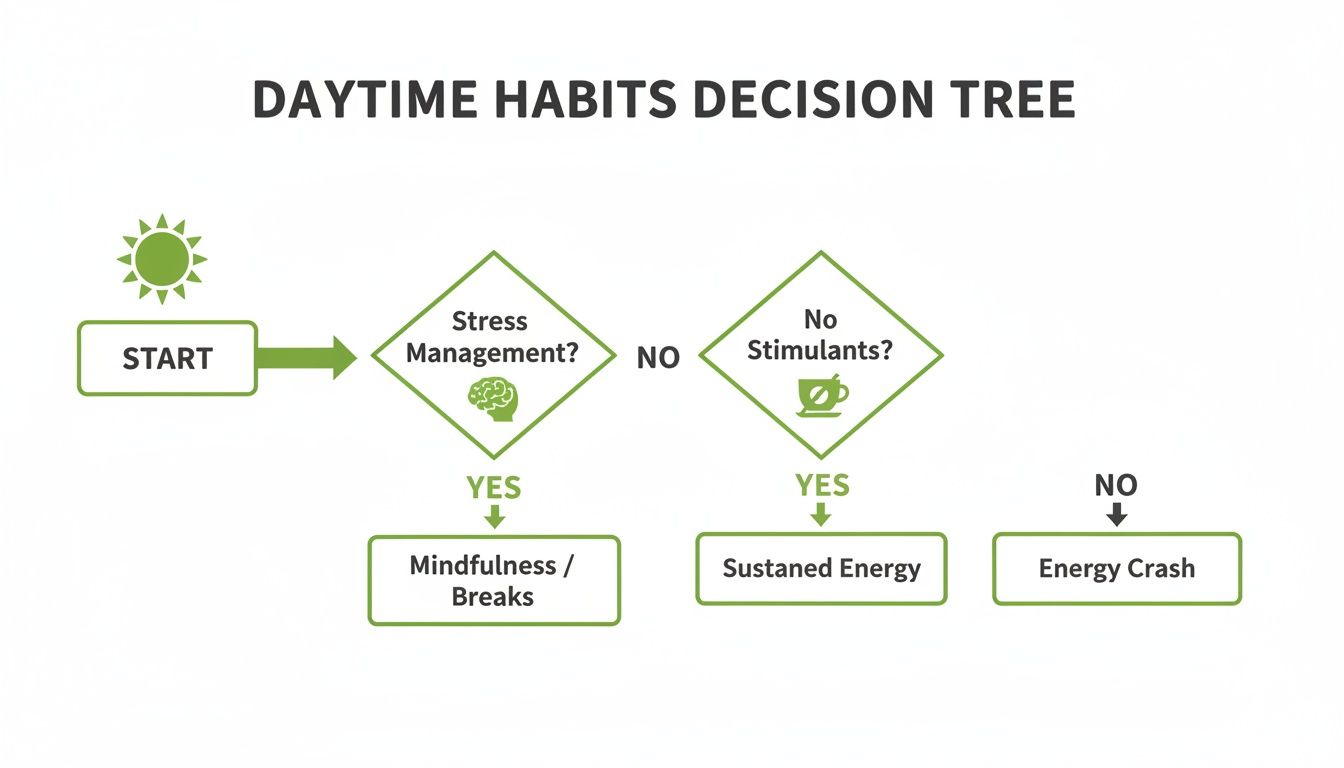
Making conscious choices during the day can significantly calm your nervous system, which in turn reduces the likelihood of clenching and grinding at night.
Demystifying Professional Treatments
Consulting an expert opens the door to targeted solutions that get to the real root cause of your bruxism. While it's estimated that 8-31% of adults grind their teeth, the actual figure is likely much higher since many people don't even know they're doing it. More accurate measurements suggest the prevalence could be as high as 43%, which is why a professional diagnosis is so crucial for preventing long-term damage. You can explore more data about bruxism prevalence on Wikipedia.
A specialist can offer several highly effective interventions:
- Custom-Fit Occlusal Appliances: These are far superior to the boil-and-bite guards from the drugstore. A custom appliance is precisely molded to your teeth to not only protect your enamel but also help guide your jaw into a more relaxed position, reducing muscle strain.
- Orofacial Myofunctional Therapy (OMT): Think of this as physical therapy for your mouth, tongue, and facial muscles. OMT uses specific exercises to correct improper muscle function and poor oral habits—often major contributors to bruxism.
- Comprehensive Airway Assessment: Here’s something that surprises many of my patients: sometimes, nighttime grinding is your body’s subconscious attempt to open a partially blocked airway during sleep. A specialist can evaluate your breathing to see if an underlying issue like sleep apnea is the true culprit.
Key Insight: Many people are surprised to learn that teeth grinding is often linked to sleep-disordered breathing. Your body may be clenching your jaw to prevent your airway from collapsing, making an airway evaluation a critical diagnostic step.
If a breathing issue is suspected, your provider might recommend a sleep study. This is essential for diagnosing conditions that require specific treatment. You can learn more about what is obstructive sleep apnea and see how it connects to other health issues. By working with the right team, you can uncover the true source of the problem and find a lasting solution that goes far beyond a simple night guard.
Advanced Treatments That Address the Root Cause

True, lasting relief from teeth grinding often means looking beyond the mouth to find the real source of the problem. While protecting your teeth is an important first step, the most effective solutions target the why behind the clenching. This is where we move into advanced, evidence-based treatments that offer a path to genuine healing, not just a temporary fix.
Many of our patients are surprised when we explain that nighttime grinding is frequently linked to sleep-disordered breathing. It’s a bit of a protective reflex. When your airway narrows or collapses during sleep, your body’s subconscious response can be to clench the jaw. This action actually tightens the throat muscles to help keep that airway open.
This connection is exactly why a simple night guard, while great for preventing tooth damage, often fails to solve the underlying issue. To truly figure out how to stop teeth grinding at night, we often need to look at your sleep. A comprehensive sleep evaluation can pinpoint airway issues, paving the way for treatments that improve your breathing and, in turn, reduce the grinding.
Retraining Your Muscles with Orofacial Myofunctional Therapy
One of the most powerful tools we have for addressing the functional source of bruxism is Orofacial Myofunctional Therapy (OMT). Think of it as physical therapy, but specifically for the muscles of your face, mouth, and tongue. A trained therapist guides you through simple exercises to correct improper muscle habits and establish a healthy, relaxed oral posture.
The main goals of OMT are surprisingly straightforward:
- Proper Tongue Posture: We train your tongue to rest gently against the roof of your mouth. This simple change naturally helps separate your teeth and lets your jaw relax.
- Nasal Breathing: Many people who grind are also chronic mouth breathers. OMT helps retrain your body to breathe through the nose, which is critical for proper oxygen exchange and jaw stability while you sleep.
- Correct Swallowing Patterns: An improper swallow can create a lot of unnecessary muscle tension. OMT helps normalize this function, reducing strain on your facial and jaw muscles throughout the day.
By restoring harmony to these muscles, OMT gets to the heart of what's causing the clenching and grinding, leading to sustainable, long-term relief.
Regenerative Options for Healing Damaged Tissue
For people whose grinding has led to significant TMJ pain and tissue damage, there are incredible regenerative options that can promote healing without invasive surgery. These treatments tap into your body's own healing powers to repair and strengthen damaged ligaments and cartilage in the jaw joint.
A Modern Approach to Healing: Regenerative treatments like Prolotherapy and Platelet-Rich Fibrin (PRF) injections are designed to kickstart natural tissue repair. By targeting the precise area of injury within the TMJ, these therapies can reduce inflammation, alleviate pain, and restore healthier joint function.
These methods offer a powerful alternative to long-term medication or surgery. Instead of just managing pain, they focus on rebuilding the joint's stability from the inside out, representing a huge step forward in treating the consequences of chronic grinding.
When we combine a thorough evaluation of your sleep with targeted therapies like OMT and regenerative treatments, we can create a plan that addresses the true source of your teeth grinding. This approach moves beyond simply masking symptoms and works toward restoring proper function and lasting comfort.
Your Top Questions About Teeth Grinding Answered
When you're dealing with something like teeth grinding (bruxism), it’s natural to have a lot of questions. Getting clear, practical answers is the first step toward feeling in control and finding the right path forward, whether that’s trying a few things at home or seeing a professional.
Here are some of the most common questions we hear from patients in our office.
Will My Teeth Grinding Ever Just Go Away?
It's a common hope, but for adults, the answer is usually no. While children often grind their teeth temporarily as their bite develops and then grow out of it, adult bruxism is different. It’s typically tied to ongoing issues like stress, a misaligned bite, or airway problems.
Ignoring it won't make it disappear. Instead, the damage just adds up over time—think worn-down enamel, cracked teeth, and jaw pain that just won't quit. Being proactive is always the smarter move.
Can an Over-the-Counter Mouthguard Stop My Grinding?
A drugstore mouthguard is better than nothing, offering a quick, temporary cushion between your teeth. But it's important to see these "boil-and-bite" guards for what they are: a short-term fix, not a real solution.
Because they aren't custom-molded to your unique bite, they're often bulky and uncomfortable. Worse, a poor fit can actually throw your jaw into an awkward position, potentially making muscle strain even more severe. A professionally made occlusal appliance is entirely different; it's designed not only to protect your teeth but also to help your overactive jaw muscles relax.
The Real Difference: A store-bought guard is just a generic shield. A custom appliance from a specialist is a therapeutic device, engineered to address your specific jaw mechanics and muscle patterns.
Is It True That Kids Grind Their Teeth, Too?
Absolutely. Teeth grinding is very common in children, but the causes are usually different from what we see in adults. It's often related to their jaw development, new teeth erupting, or even minor things like an earache or stuffy nose.
The good news is that most kids outgrow it. Still, it’s always a good idea to mention it to their dentist. They can keep an eye on things, check for any unusual wear on the teeth, and make sure there isn't an underlying issue at play, like enlarged tonsils that might be affecting their airway.
What’s the Very First Step I Should Take?
Your best first step is booking an evaluation with a dentist or a specialist who has deep experience in TMJ and sleep disorders. While making lifestyle changes—like managing stress and improving your sleep habits—is incredibly important, only a professional diagnosis can pinpoint the real root cause of your grinding.
An expert can assess your teeth for damage, evaluate how your jaw is functioning, and screen for potential airway-related issues. That initial consultation gives you the clear roadmap you need for effective, lasting relief. It's the fastest way to figure out how to stop teeth grinding at night for good.
Ready to uncover the root cause of your pain and reclaim restful sleep? The team at Pain and Sleep Therapy Center offers expert diagnosis and personalized treatment plans that go beyond temporary fixes. Schedule your comprehensive evaluation today and take the first step toward lasting relief.