

Ever get a full eight hours of sleep but wake up feeling like you haven't slept at all? It’s a frustratingly common experience, and it’s a clear sign that the quantity of your sleep doesn't match its quality.
True, restorative rest isn't just about the time you spend in bed. It's about sinking into those deep, healing sleep cycles that let your body and brain actually repair, recharge, and get ready for the day. This guide is designed to go beyond the usual quick fixes and get to the real reasons you're not waking up refreshed.
Why Waking Up Tired Is a Red Flag
Think of that morning grogginess as your body’s check-engine light. It’s signaling a major disconnect between the hours you’re logging and the actual restoration you’re getting. Many people just assume they need more sleep, but adding an extra hour rarely solves the problem if your sleep is shallow or constantly interrupted.
That persistent fatigue points to something deeper preventing you from cycling through the crucial stages of sleep, especially deep sleep. This is the phase where your body releases growth hormones to repair tissues, strengthens your immune system, and literally cleans out metabolic waste from the brain. If that process gets cut short all night long, you'll wake up feeling like you barely slept.
Uncovering the Root Causes of Poor Sleep
The journey to figuring out how to improve sleep quality naturally starts with understanding what’s really going wrong. The culprits are often a mix of lifestyle habits and overlooked physiological issues.
Common factors that sabotage sleep quality include:
- A Confused Body Clock: An inconsistent sleep schedule or the wrong kind of light exposure throws off your internal 24-hour clock (your circadian rhythm), disrupting the natural flow of sleep hormones like melatonin.
- Poor Sleep Hygiene: This is a catch-all for everything from late-night caffeine and alcohol to a bedroom that’s too warm, bright, or noisy.
- Unmanaged Stress: High levels of the stress hormone cortisol can keep your nervous system stuck in "fight or flight" mode, making it nearly impossible to fully relax into deep sleep.
But more often than you’d think, persistent grogginess is a symptom of an underlying physical issue. Conditions like temporomandibular joint (TMJ) disorders can create facial pain and tension that disturb rest, while airway obstructions are one of the biggest drivers of fragmented sleep.
For example, many people who snore loudly or wake up gasping for air are experiencing hundreds of tiny interruptions in their breathing all night long. These micro-awakenings yank you out of deep sleep without you ever consciously realizing it. If this sounds familiar, our guide on the common signs and symptoms of sleep apnea is a great place to start.
This guide will give you actionable strategies to address these root causes, helping you work with your body’s biology to finally achieve the restorative rest you need.
Master Your Circadian Rhythm for Deeper Sleep

Think of your body as having its own internal, 24-hour clock. This is your circadian rhythm, and it’s the master conductor for everything from your energy levels to your hunger cues. When it comes to sleep, this internal clock tells your brain when to release hormones that make you feel alert and when to produce melatonin to help you wind down.
Learning how to improve sleep quality naturally really starts with syncing your lifestyle to this powerful biological rhythm.
When your daily habits are out of step with your internal clock, your body gets confusing signals. This internal chaos is a huge reason why you might feel “wired and tired” at night or groggy in the morning, no matter how many hours you spent in bed.
Harnessing the Power of Light Exposure
Light is the single most powerful external cue for your circadian rhythm. The kind of light you see—and when you see it—can either lock in a healthy sleep-wake cycle or completely throw it off.
The goal is simple: get bright light in the morning and keep things dim in the evening.
Morning sunlight acts like a shot of espresso for your internal clock. When natural light hits your eyes shortly after you wake up, it sends a strong signal to your brain to stop producing melatonin and ramp up cortisol, your natural "get up and go" hormone.
Here are a few ways to make this happen:
- Aim for 10-15 minutes of direct sunlight within the first hour of your day. This could be as simple as drinking your morning coffee on the patio, taking a quick walk, or just sitting by a bright window.
- Don't wear sunglasses during this morning sun exposure. Your eyes have special photoreceptors that need to register the full spectrum of light to signal your brain properly.
- Even on cloudy days, the light outdoors is far more powerful than your indoor lights, so it’s always worth stepping outside.
The Non-Negotiable Role of Consistency
Your circadian rhythm loves predictability. A consistent sleep-wake schedule is the anchor that stabilizes this internal clock, training your body to anticipate when it’s time to sleep and when it’s time to be awake. This means going to bed and waking up at roughly the same time every single day—yep, even on weekends.
Sleeping in on Saturday might feel great in the moment, but it can create a kind of social jetlag. The effect is similar to flying across a time zone, leaving you feeling out of sync and making it that much harder to fall asleep on Sunday night and get up for work on Monday.
Establishing a consistent sleep schedule is one of the most effective, zero-cost ways to boost your sleep quality. This one habit can help push back against the global decline in rest, where average sleep quality recently dropped from 74.26% to 73.92%. Countries like the Netherlands, which report high sleep quality, often have lifestyles that support consistent, early bedtimes. You can see more on these trends by reading the full report on Sleep Cycle's findings.
Creating a Digital Sunset
Just as morning light signals "wake," darkness signals "sleep." The problem is, our modern world is flooded with artificial light long after the sun goes down. The blue light from our screens—phones, tablets, computers, and TVs—is especially disruptive.
This specific wavelength of light is incredibly effective at suppressing melatonin production, basically tricking your brain into thinking it’s still daytime. This makes it harder to fall asleep and can delay the onset of the deep, restorative sleep your body needs.
To fight back, you need to create a "digital sunset" for yourself every evening.
- Power down all screens at least 60-90 minutes before you plan to go to sleep.
- Use blue light filters on your devices if you absolutely must use them at night. Most phones and computers have a built-in "night mode" that shifts the screen to warmer, less stimulating tones.
- Dim the lights in your home. Swap out bright overhead lights for softer lamps with warm-toned bulbs. This creates a calming, pre-sleep environment that encourages your brain to start producing melatonin.
By managing your light exposure and sticking to a steady schedule, you give your body the clear, consistent cues it needs to regulate itself. This alignment is the foundation for every other sleep improvement strategy, setting the stage for deeper and more refreshing rest.
Design an Evening Routine That Guarantees Rest
You can't expect your brain to slam on the brakes after a demanding day, just like a car can't go from 60 to 0 instantly. A well-designed evening routine is your body's off-ramp—it's a gradual transition that signals it's time to shift from high alert to deep relaxation. This ritual is absolutely essential for improving sleep because it creates predictability, something your nervous system thrives on.
The goal here is to methodically lower your body’s core temperature, calm your mind, and reduce stimulation. Think of the last 90 minutes before bed as sacred time, protected and dedicated solely to preparing for rest. It’s not about adding more to your to-do list; it’s about consciously stepping away from it.
Timing Your Fuel and Fitness
What you do in the final hours before bed has a huge impact on your sleep architecture—the very structure and pattern of your sleep cycles. Two of the biggest culprits I see sabotaging a good night's sleep are late-night meals and intense exercise. Both can derail your efforts before your head even hits the pillow.
Finishing your last meal at least three hours before bed is a critical guideline. When you eat a heavy meal too close to bedtime, your body has to divert energy to digestion instead of restorative sleep. This can raise your core body temperature and heart rate, making it much harder to fall and stay asleep. A late meal can also trigger acid reflux, a notorious sleep disruptor.
Likewise, vigorous exercise elevates your heart rate, adrenaline, and core body temperature—all signals that tell your body it's time to be awake and alert. While daily physical activity is fantastic for sleep, scheduling intense workouts within two to three hours of bedtime often backfires. If you feel the need to move in the evening, opt for something calming instead.
- Gentle Yoga: Focus on slow, restorative poses that release muscle tension.
- Light Stretching: Target areas where you hold stress, like your neck, shoulders, and hips.
- A Slow Walk: A leisurely stroll around the neighborhood can help clear your head without over-stimulating your system.
Creating a True Sleep Sanctuary
Your bedroom sends powerful subconscious cues to your brain. It should be a space exclusively for sleep and intimacy, not a multipurpose room for work, Netflix, and stress. Transforming your bedroom into a true sleep sanctuary comes down to controlling three key variables: light, temperature, and sound.
A cool room is essential. Your body's core temperature naturally needs to drop to initiate and maintain sleep. The sweet spot is between 60 and 67 degrees Fahrenheit. A room that’s too warm will almost certainly lead to more frequent awakenings and less time in deep, restorative sleep.
Your sleep environment should be a cave—cool, dark, and quiet. Even tiny amounts of light from streetlamps or electronics can disrupt melatonin production and fragment your sleep cycles without you even realizing it.
Darkness is non-negotiable. Use blackout curtains or a high-quality sleep mask to eliminate every last bit of light. Cover or remove any electronics with glowing lights. To handle noise, try earplugs or a white noise machine, which provides a consistent, soothing sound to mask any sudden disruptions.
Unloading Your Mind for Deeper Rest
Often, the biggest obstacle to falling asleep isn't physical—it's a racing mind. Your evening routine absolutely must include a way to offload the day's mental clutter so you can get into bed with a sense of calm and closure.
Journaling is an incredibly effective tool for this. I often suggest a simple five to ten minute "brain dump." Write down everything that's swirling around in your head: worries, to-do lists, frustrations, and random thoughts. The physical act of putting these thoughts on paper helps externalize them, giving your brain permission to finally let go.
Another powerful technique is practicing gratitude. Instead of dwelling on stressors, shift your focus by writing down three specific things that went well during the day. This simple practice helps reframe your mindset from one of anxiety to one of contentment, priming your brain for positive, restful sleep. These small actions teach your body and mind that the day is complete, paving the way for uninterrupted rest.
The Power of Breathing to Calm Your Nervous System
Most of us go through our day without ever thinking about our breath. It’s automatic. But how you breathe, especially as you get ready for bed, sends powerful signals to your nervous system. It can be the difference between a racing mind and a body ready for deep, restorative rest.
Think of it this way: your breath tells your brain if you're safe. Shallow, rapid breaths through your mouth signal a threat, keeping you stuck in a low-grade "fight or flight" mode. You simply can't get quality sleep from that state.
On the other hand, slow, quiet breathing through your nose signals safety and calm. This simple shift is all it takes to activate your parasympathetic nervous system—the "rest and digest" system—which is exactly what needs to be in charge for you to fall and stay asleep.
Why Nasal Breathing Is a Game Changer for Sleep
Your body was designed to breathe through the nose. It's not just a preference; it's a physiological necessity for good health and even better sleep. Nasal breathing does more than just filter and warm the air.
When you breathe through your nose, you increase the production of nitric oxide, a fascinating molecule that helps dilate your blood vessels and airways. This makes oxygen circulation more efficient, which can significantly reduce snoring and other sleep disruptions.
Mouth breathing, unfortunately, often leads to a cascade of issues:
- Waking up with a dry mouth and sore throat
- Increased snoring and airway resistance
- Fragmented sleep from constant micro-awakenings
These disruptions prevent you from ever reaching the deep sleep stages where your body does its most important repair work. By consciously practicing nasal breathing during the day, you help make it your automatic go-to at night. This is a foundational step in learning how to improve sleep quality naturally.
Breathing Exercises to Prepare for Bed
Adding a short breathing practice to your nightly routine can make a world of difference. It doesn’t have to be complicated. The goal is simply to slow your breathing down and give your mind something to focus on, guiding your body into a state of deep relaxation.
Stress is a major sleep saboteur, but the right techniques can completely reverse its effects. This is more relevant than ever, with sleep anxiety now impacting nearly 40% of Gen Z multiple times a week. Many of our patients at the Pain and Sleep Therapy Center with TMJ and apnea find Buteyko breathing—a method focused on retraining your breath—incredibly effective for calming that anxiety-driven hyperventilation. You can read more about the rise of sleep wellness trends on GlobalWellnessInstitute.org.
A few simple, targeted breathing exercises can help quiet your nervous system and prepare you for sleep. Here are a couple of our favorites.
Breathing Techniques for Natural Sleep Improvement
| Technique | How It Works | Best For |
|---|---|---|
| 4-7-8 Breathing | This rhythmic exercise is like a natural tranquilizer. You inhale through your nose for 4 seconds, hold for 7, and exhale slowly through your mouth for 8. Repeating this 3-4 times slows your heart rate and quiets a busy mind. | Calming a racing mind or managing a sudden wave of anxiety right as you're trying to fall asleep. |
| Buteyko Method | This technique retrains you to breathe gently and lightly through your nose, correcting the chronic "hidden hyperventilation" that keeps your body stressed. It focuses on reducing your overall breathing volume for greater efficiency. | People who snore, struggle with sleep apnea, or often wake up feeling unrefreshed even after a full night in bed. |
These techniques are easy to learn and can be done right in bed, making them a practical addition to any nightly routine.
The key takeaway is that your breath is a powerful lever you can pull to directly influence your physiological state. A few minutes of intentional breathing can do more to calm your system than an hour of tossing and turning.
Many of these breathing patterns are also foundational to treatments like orofacial myofunctional therapy, which corrects dysfunctional breathing and swallowing habits that disrupt sleep. Our guide on orofacial myofunctional therapy exercises explains more about how these practices restore proper airway function. By retraining your breath, you’re not just relaxing—you're getting to a root physiological cause of poor sleep.
When to Seek Help for Persistent Sleep Issues
You’ve done the work. You’ve mastered your circadian rhythm, perfected your evening routine, and applied every natural sleep strategy out there. So why do you still wake up feeling completely exhausted?
If your best efforts aren't translating into better energy and focus, it’s a huge sign that something deeper is at play. This is the point where self-help hits a wall. Persistent sleep problems, despite significant lifestyle changes, almost always point to an underlying physiological issue that’s sabotaging your rest from the inside out.
It’s time to stop blaming yourself or your habits. Continuing to struggle alone when a treatable condition might be the real culprit isn’t just frustrating—it can delay the real solutions you need to finally feel well-rested.
Recognizing the Red Flags
Some symptoms aren't just minor annoyances. They are clear signals that your sleep troubles may stem from a medical condition like a sleep-related breathing disorder or a TMJ issue. Think of these as your body’s check-engine light telling you it’s time for a professional assessment.
Pay close attention if you or your sleep partner have noticed any of these signs:
- Chronic, Loud Snoring: Not all snoring is a problem, but loud, disruptive snoring—especially if it’s paired with choking or gasping sounds—is a classic sign of an obstructed airway.
- Morning Headaches: Waking up with a dull, persistent headache can be a symptom of low oxygen levels or teeth grinding during the night, both of which are tied to sleep disorders.
- Jaw Pain or Clicking: If you wake up with discomfort, popping sounds, or stiffness in your jaw, it can point directly to a TMJ disorder that’s creating tension and disrupting your sleep.
- Persistent Daytime Fatigue: This isn't just feeling a little tired. We're talking about a profound, overwhelming sleepiness that interferes with your daily life, even after you’ve spent seven or more hours in bed.
These symptoms are often dismissed as normal parts of aging or stress, but they are frequently connected to conditions that require specialized care.
When Your Airway Is the Problem
So many unresolved sleep issues trace back to one thing: the airway. Conditions like obstructive sleep apnea (OSA) happen when the soft tissues in your throat collapse during sleep, repeatedly blocking your airflow. Each time this happens, your brain jolts you awake just enough to start breathing again, fragmenting your sleep hundreds of time a night without you even realizing it.
The result is a night spent in a constant state of physiological stress, preventing you from ever reaching the deep, restorative sleep stages your body needs to repair itself. This is exactly why you can sleep for eight hours and still wake up feeling completely drained.
This is also where simple, targeted interventions can make a world of difference, even before bed.
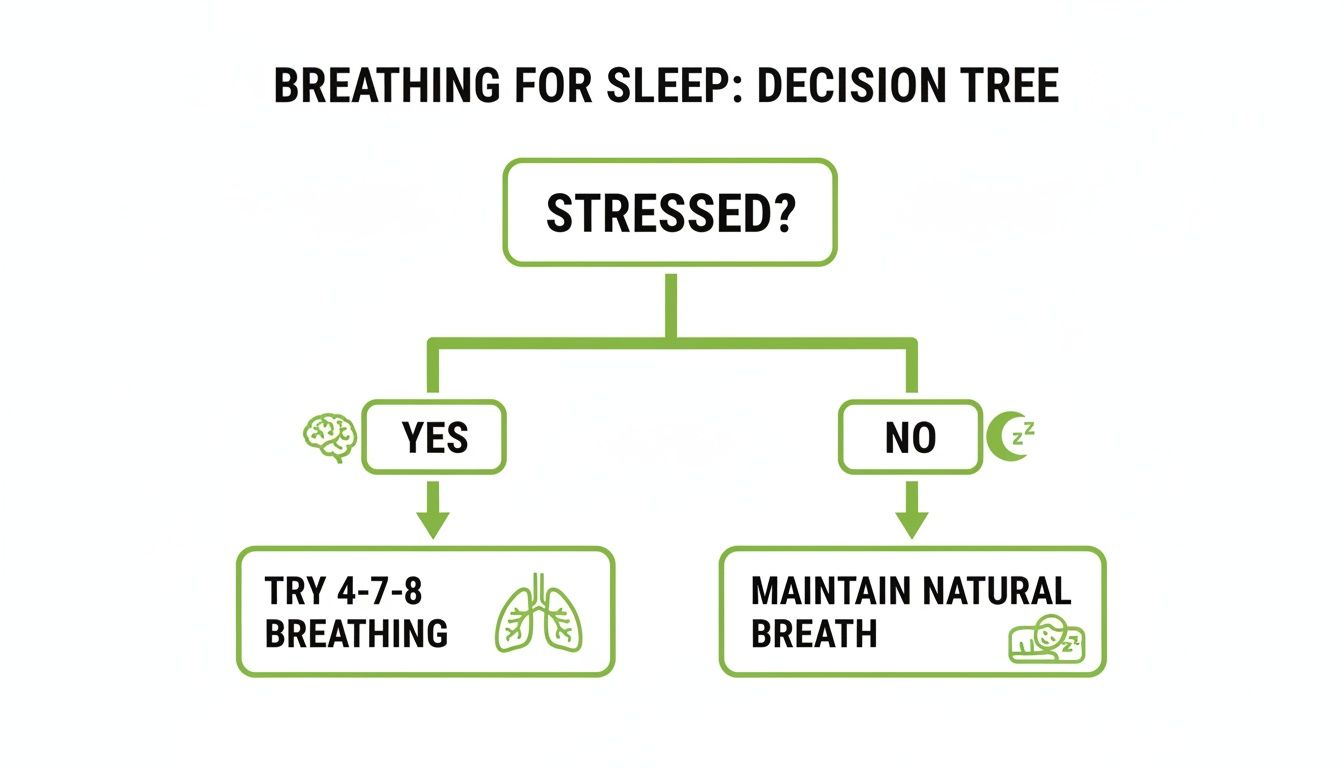
The visualization above highlights how a simple technique like 4-7-8 breathing can be your go-to tool for calming a stressed mind and preparing your body for sleep.
TMJ disorders can also contribute to airway problems. By affecting your jaw's position, they can narrow your airway and make issues like snoring and sleep apnea even worse. If you're wondering whether your symptoms might point to a breathing issue, learning how to diagnose sleep apnea at home can be a very insightful next step.
Your Next Steps Toward Real Solutions
If these red flags sound familiar, it’s time to seek a professional assessment. At the Pain and Sleep Therapy Center, we specialize in getting to the root cause of complex sleep and facial pain issues. Our approach looks beyond temporary fixes to offer lasting, non-surgical solutions.
Through detailed diagnostics, we can pinpoint whether your sleep is being compromised by airway issues, TMJ dysfunction, or improper breathing patterns. From there, we create a personalized plan using advanced therapies like orofacial myofunctional therapy and Buteyko breathing to restore proper function for good.
You don't have to keep guessing why you're so tired. Taking that next step to get a professional evaluation is the most direct path to understanding what your body needs and finally achieving the deep, restorative sleep you deserve.
Your Questions About Better Sleep, Answered
Once you start making changes to your sleep routine, it's totally normal for questions to pop up. You might be wondering how long it'll take to feel a real difference, or if the way you've slept your whole life is actually part of the problem. We hear these questions all the time, so let's get right into some clear, practical answers.
Think of this as your quick-start guide to troubleshooting your sleep. Getting these details right can make all the difference between feeling stuck and finally getting the deep, restorative rest you're looking for.
How Long Does It Take to See Results?
This is the big one, and the honest answer is: it varies. The good news is some strategies can pay off almost instantly. If you make your room pitch-black and cool tonight, you’ll likely sleep better tonight. It's that fast.
But for changes that involve retraining your body's internal clock, you'll need a little more patience. When you start sticking to a consistent wake-up time and getting morning sunlight, it can take one to two weeks for your circadian rhythm to really lock in. Your body needs time to trust that this new schedule is here to stay.
The most important thing here is patience. You're working to undo habits that might have been there for years. Aim for consistency, not perfection, and don't forget to celebrate the small wins—like falling asleep five minutes faster or waking up one less time during the night.
For the more foundational work, like retraining yourself to breathe through your nose while you sleep, the timeline might be a bit longer. It can take several weeks of dedicated practice before nasal breathing becomes your automatic, go-to pattern at night. But the payoff—truly uninterrupted, deeper sleep—is absolutely worth the effort.
Is There a Best Sleep Position?
While you should always listen to what feels comfortable, your sleep position has a huge impact on your physiology—especially your breathing.
- On Your Back (Supine): This is often recommended for spine alignment, but it can be a disaster for your airway. Gravity is not your friend here. It pulls the soft tissues in your throat downward, which can narrow your airway and lead to snoring or even sleep apnea.
- On Your Stomach (Prone): While this position does keep your airway nice and open, it usually forces you to crank your neck to one side for hours on end. That’s a recipe for neck pain, stiffness, and headaches, which will just trade one sleep problem for another.
- On Your Side (Lateral): For most of us, this is the sweet spot. Side sleeping keeps the airway open and supports the natural curve of your spine. Bonus tip: sleeping on your left side, specifically, has been shown to help with things like reducing acid reflux.
The goal? Try to make side sleeping your default. You can make it even more comfortable by tucking a pillow between your knees to align your hips and hugging another to support your shoulders.
How Do I Know If It Is a Sleep Disorder?
It’s one thing to have a few bad nights because of stress, but it's another thing entirely to have a true, underlying sleep disorder. So, how can you tell the difference? It really comes down to chronicity and severity.
It’s time to seek a professional opinion if your symptoms are:
- Persistent: You’re struggling with sleep at least three times a week, and it’s been going on for more than a month.
- Disruptive: The fatigue is so bad it’s getting in the way of your work, your relationships, or your ability to function safely (like feeling drowsy behind the wheel).
- Accompanied by Red Flags: You’re dealing with other specific signs like loud, chronic snoring, waking up gasping for air, constant morning headaches, or nagging jaw pain.
Normal tiredness gets better after a night or two of good rest. The exhaustion from a sleep disorder is a relentless, bone-deep fatigue that just won’t go away, no matter how early you go to bed. If that sounds familiar, it's a strong signal that self-help strategies might not be enough. An underlying issue like sleep apnea or a TMJ disorder could be the real culprit, and getting it properly diagnosed is the only path to real, lasting relief.
At the Pain and Sleep Therapy Center, we specialize in getting to the root cause of these complex sleep and facial pain issues. If you're done with the guesswork and ready for a clear, personalized plan to finally sleep better, we're here to help. Visit us online to schedule your comprehensive assessment today.