It's the question that keeps countless partners awake at night: Is that loud rumble just a harmless snore, or is it a sign of something more serious? Getting to the root of that noise is the first, most critical step toward finding real solutions for better sleep and long-term health.
While both snoring and sleep apnea start in the airway, they are fundamentally different. Think of simple snoring as a vibration, but sleep apnea as a complete obstruction that cuts off your breathing again and again.
Is It Just Snoring Or Is It Sleep Apnea?
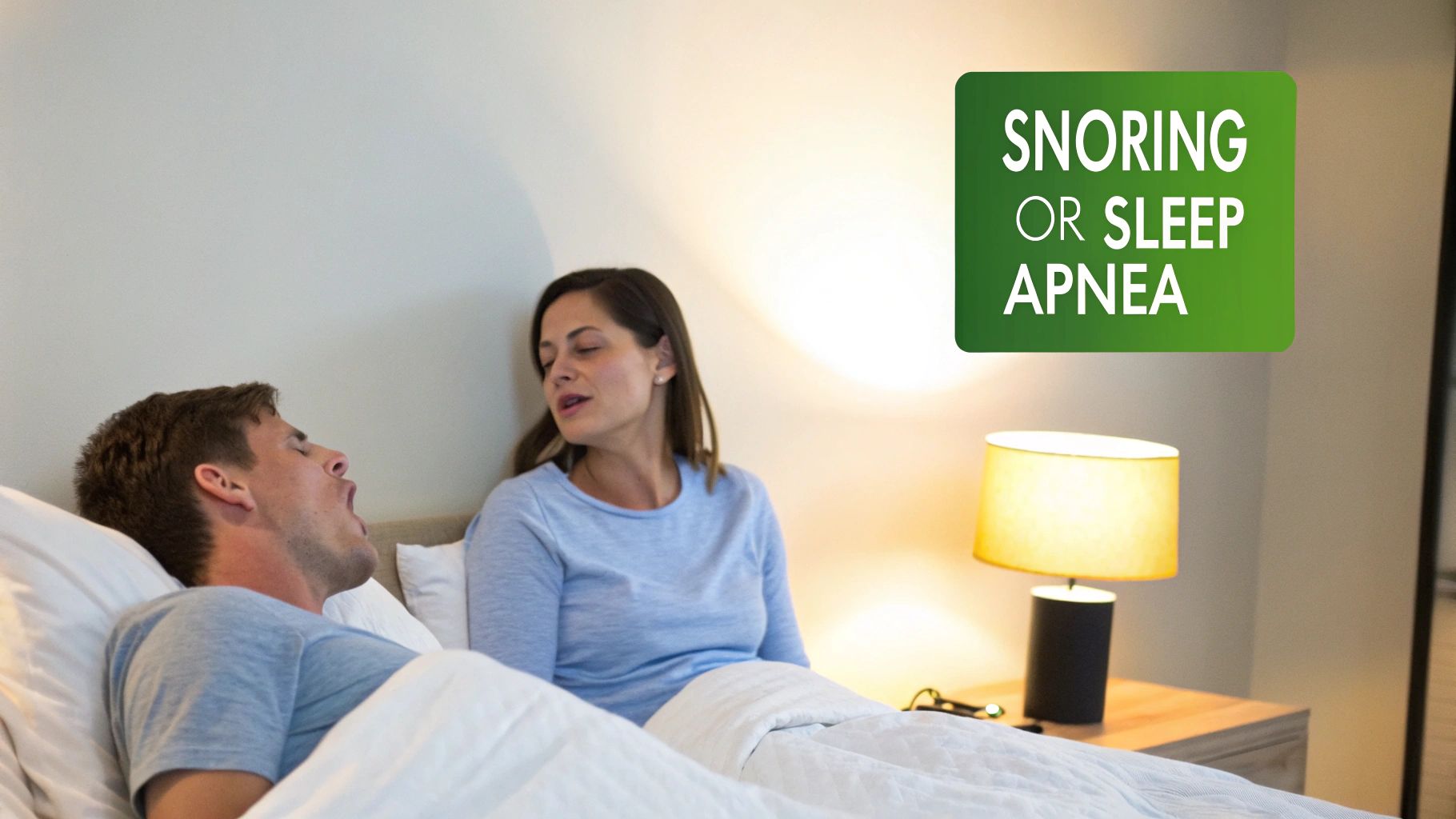
Let's use an analogy. Simple snoring is like a garden hose with a thumb partially over the end. The water still gets through, but the restriction creates a lot of noisy, turbulent flow. It can be disruptive, but the water supply isn't cut off.
Obstructive Sleep Apnea (OSA), on the other hand, is like the hose kinking completely, stopping the flow altogether. During an apnea event, the airway collapses, and breathing stops for 10 seconds or more. Your brain, starved of oxygen, sends a panic signal to jolt you just awake enough to gasp for air. This can happen hundreds of times a night, often without you ever remembering it.
Red Flags That Point to Sleep Apnea
So, how can you tell the difference? While loud snoring is the hallmark symptom of OSA, you need to look for other clues that go beyond the noise.
These are the tell-tale signs that it’s more than just snoring:
- Waking up gasping or choking for air: This is a classic sign your body is fighting to reopen a blocked airway.
- Witnessed pauses in breathing: A partner might notice your snoring stops abruptly, followed by an unnerving silence, then a loud snort or gasp as you start breathing again.
- Constant daytime sleepiness: Feeling exhausted no matter how long you’re in bed is a huge red flag that your sleep is being fragmented.
- Morning headaches and dry mouth: These are common side effects of low oxygen levels and breathing through your mouth all night.
The table below breaks down the key differentiators to help you spot the signs.
Snoring vs Sleep Apnea Key Differentiators
| Symptom / Factor | Simple Snoring | Obstructive Sleep Apnea (OSA) |
|---|---|---|
| Breathing Pattern | Consistent, though noisy. No pauses in breathing. | Repeated stops and starts in breathing, often with gasps. |
| Noise Level & Pattern | Rhythmic and relatively steady. | Loud, disruptive snoring interrupted by periods of silence. |
| Daytime Energy | Generally normal energy levels. | Chronic, excessive daytime sleepiness and fatigue. |
| Morning Symptoms | May have a slightly dry or sore throat. | Frequent morning headaches, dry mouth, and sore throat. |
| Health Impact | Primarily a social issue or nuisance. | Serious health risks, including heart disease and high blood pressure. |
| Key Indicator | Vibration in the airway tissues. | Full or partial collapse of the airway. |
If the "Obstructive Sleep Apnea" column looks familiar, it’s a clear signal that it's time to dig deeper.
Who Is at Risk?
Snoring is incredibly common. In fact, men tend to snore about 10 minutes longer per night than women, with snoring frequency peaking between the ages of 55 and 64. But these widespread statistics don't tell the whole story, because OSA has a more specific set of risk factors.
If you recognize these patterns in yourself or a loved one, it’s essential to look into the common signs and symptoms of sleep apnea in more detail. Finding a lasting solution means addressing the real source of the problem—the struggling airway—not just trying to muffle the noise.
Uncovering the Root Causes of Your Airway Issues
To find a real, lasting solution for snoring and sleep apnea, we have to look past the symptoms and ask why. Just quieting the noise with a device or forcing air into the lungs overnight doesn't fix the underlying problem. The real answer is almost always found in the structure and function of your jaw, face, and airway.
Think of it this way: if your home’s foundation is well-built, the main hallway is wide and clear. But if that foundation is underdeveloped or misaligned, the hallway becomes narrow, cramped, and easily blocked.
This is exactly what happens with snoring and sleep apnea. The issue isn't just a floppy soft palate; it’s often a structural problem that’s been developing for years.
The Anatomy of a Compromised Airway
Three key factors often work together to create the perfect storm for sleep-disordered breathing. When these are present, they systematically shrink the space available for air to flow freely—especially when you lie down and your throat muscles relax.
Understanding these root causes completely changes the goal. We shift from just managing a nightly crisis to restoring the body’s natural, healthy function.
Underdeveloped Jaws: When your jaws are set too far back or are too narrow, it directly shrinks the size of your airway. This is often the result of developmental issues from childhood, like a diet of soft foods or an unresolved tongue-tie that kept the jaw from growing to its full potential.
Poor Tongue Posture: Your tongue is a powerful muscle that should rest naturally against the roof of your mouth. When it drops down and forward—a very common issue—it falls back into the throat during sleep, creating a major obstruction.
Chronic Mouth Breathing: We were designed to breathe through our noses. Breathing through your mouth, often due to allergies or chronic congestion, destabilizes the airway and encourages the tongue to maintain that low, problematic posture.
These three factors aren’t separate issues. They’re interconnected parts of a larger functional problem. A narrow jaw makes proper tongue posture difficult, which in turn encourages mouth breathing. It’s a vicious cycle that perpetuates airway collapse night after night.
Why Your Body's "Hardware" Matters
If your car's engine was sputtering because the fuel line was too narrow, you wouldn't just keep pouring more gas in the tank. You’d fix the line. It's the same principle here. Addressing the anatomical "hardware" of your airway offers a much more permanent solution than a device that only works when you're wearing it.
This anatomical perspective is key. By identifying and correcting the underlying structural and functional deficits, we can often reduce or even eliminate the need for lifelong device dependency. It's about empowering your body to breathe correctly on its own.
Recognizing these root causes is the first step toward a totally different kind of treatment. Instead of just propping the airway open with forced air, we can begin to remodel and retrain the entire system.
This approach involves therapies that guide proper growth, strengthen critical muscles, and restore correct oral function. For example, specific exercises can retrain your tongue to rest in its proper position, while targeted interventions can help expand the jaw to literally create more space.
By focusing on the "why," we open the door to solutions that do more than just put a bandage on the problem. We aim to fix the foundational issues so you can achieve restful, unobstructed breathing, naturally. This sets the stage for a truly effective diagnosis and a personalized treatment plan that works.
How We Diagnose the Source of Your Sleep Issues
Finding the right solution for snoring and sleep apnea starts with a clear diagnosis. It’s not enough to know that you have sleep apnea; we need to dig deeper and find out why it's happening. Our diagnostic process goes way beyond a standard sleep study to pinpoint the exact structural and functional problems causing your airway to collapse at night.
We know this can feel overwhelming, but we guide you every step of the way. Our goal is to uncover the root cause of your sleep issues so we can build a treatment plan that actually solves the problem instead of just managing symptoms.
Think of it this way: a standard sleep study is like a smoke alarm. It alerts you to the fire, but it can't tell you where it started or what’s feeding the flames. Our approach is more like having the building's blueprint and a thermal imaging camera—we see the entire structure and can identify the precise hotspots causing all the trouble.
Creating a 3D Map of Your Airway
To get a true look at what's going on inside, we use advanced imaging tools like cone-beam computed tomography (CBCT). This is a quick, completely painless scan that creates a highly detailed 3D model of your entire facial anatomy—including your jaws, nasal passages, and, most importantly, your airway.
This 3D map is an absolute game-changer. It lets us digitally measure the exact size and shape of your airway, from your nose all the way down to your throat. We can turn the image, look at it from every angle, and see exactly where things get narrow or become vulnerable to collapse.
This gives us critical information that a standard sleep test simply can't, such as:
- The narrowest point of your airway: We can find the specific location of the blockage.
- The overall volume of your airway: This tells us if there’s enough room for air to flow freely.
- The position of your jaws and tongue: We see exactly how these structures are crowding the airway space.
With this level of data, we’re no longer guessing. We can move forward with a diagnosis driven by facts, not assumptions. We're not just treating snoring or apnea anymore; we're addressing the specific anatomical issues that cause it. You can learn more about how at-home tests contribute to this process in our guide on how to diagnose sleep apnea at home.
Connecting the Dots for a Complete Picture
An airway problem rarely happens in a vacuum. More often than not, it’s connected to other issues that might seem totally unrelated at first. Our team is trained to connect these dots to build a complete picture of your craniofacial health.
For instance, that nagging TMJ pain or those chronic headaches you’ve been dealing with are often red flags for an underlying structural imbalance that’s also contributing to your sleep-disordered breathing. A misaligned bite or an underdeveloped jaw can force your facial muscles to work overtime, leading to pain while simultaneously shrinking your airway when you lie down.
By looking at the entire system—jaw joints, muscles, posture, and breathing patterns—we can put together a truly effective treatment plan. Our goal is to restore balance and function, which not only resolves sleep issues but often takes care of the associated pain and discomfort, too.
This comprehensive evaluation ensures your treatment is tailored to your unique anatomy. Instead of a one-size-fits-all approach, we design snoring and sleep apnea solutions that fix the foundational cause, paving the way for lasting relief and better overall health.
Exploring Your Treatment and Therapy Options
Once we have a clear picture of what’s happening inside your airway, we can start looking at the best snoring and sleep apnea solutions for you. A lot of people think their options are limited, but the field has come a long way. We can now move beyond just managing symptoms to addressing the root cause of the problem.
The key is to understand how each approach works—its strengths, its weaknesses, and how it might fit into your life. This isn't about a one-size-fits-all fix. It’s about finding the path forward that makes sense for your health, your lifestyle, and your long-term goals.
The Conventional Approach: CPAP Therapy
For years, the go-to medical treatment for moderate to severe obstructive sleep apnea has been Continuous Positive Airway Pressure (CPAP). A CPAP machine uses a hose and mask to deliver a steady stream of pressurized air, which acts like a splint to physically hold your airway open while you sleep.
There’s no doubt that for many, CPAP is incredibly effective at stopping apnea events and getting oxygen levels back to normal. But its success hinges entirely on one thing: using it every single night. And that’s where the trouble often starts.
Many people just can't get used to it. They struggle with a leaky mask, the noise from the machine, or a feeling of claustrophobia. The reality is that studies show CPAP compliance can be as low as 50%, which means millions of people are left without the treatment they desperately need.
This is a huge problem, especially when you consider the sheer scale of the issue. The global burden of obstructive sleep apnea is staggering. Recent data reveals that around 936 million adults between 30 and 69 are affected worldwide. That’s a nearly tenfold jump from what we used to think, and it highlights just how critical it is to have treatments people can actually tolerate. You can read more about these findings on the global impact of sleep apnea.
Oral Appliance Therapy: A Comfortable and Effective Alternative
For anyone with mild to moderate sleep apnea, or even for those with severe cases who can’t tolerate CPAP, oral appliance therapy is a game-changer. These aren't like the boil-and-bite mouthguards you see at the store; they are sophisticated, custom-fitted medical devices.
They work by gently shifting your lower jaw slightly forward as you sleep. It’s a subtle adjustment, but it has a powerful ripple effect:
- It pulls the base of your tongue forward, keeping it from falling back and blocking your airway.
- It stabilizes the jaw and nearby soft tissues, which cuts down on the vibrations that create snoring.
- It opens up the airway, creating more space for air to flow smoothly and quietly.
Unlike a clunky CPAP machine, an oral appliance is small, silent, and incredibly easy to travel with. And because it’s molded perfectly to your teeth, it’s comfortable and secure, which is why compliance rates are so much higher.
Getting a custom appliance is a very precise process, as you can see in this diagnostic pathway.
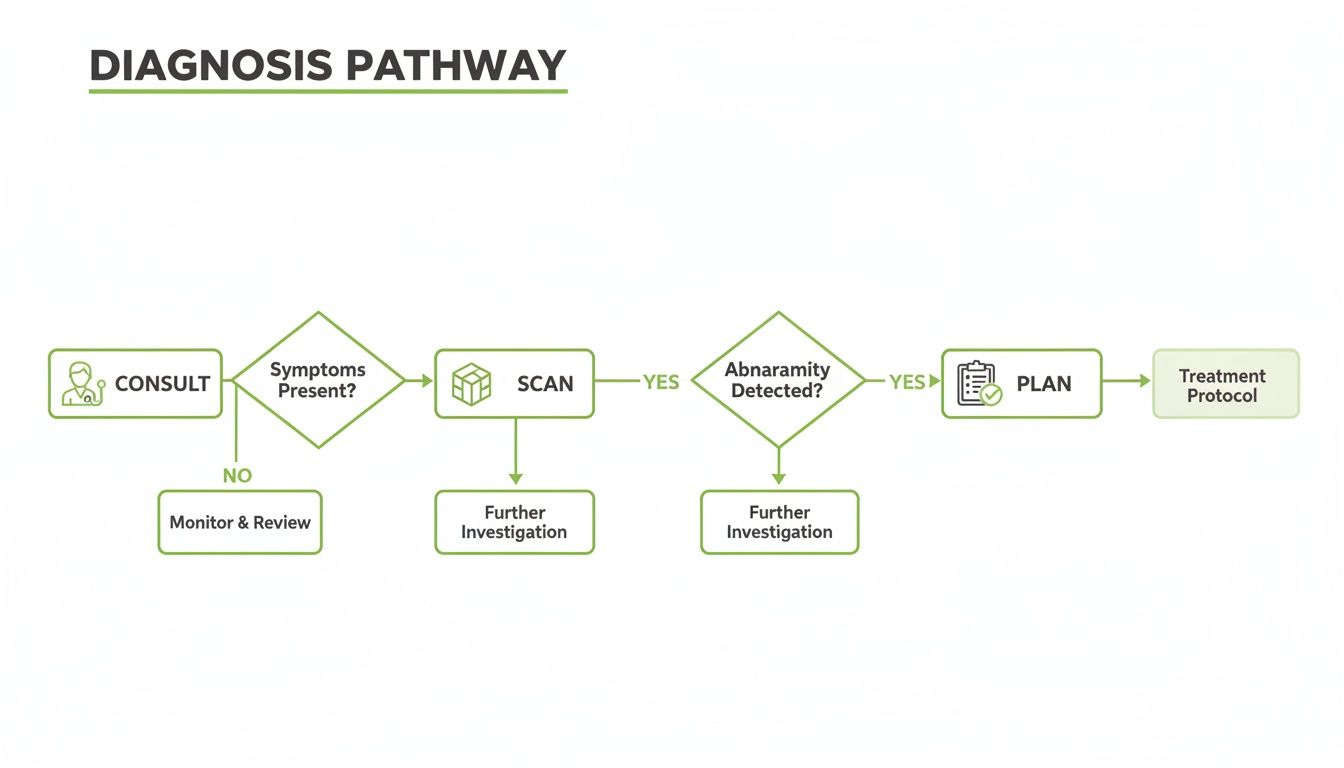
As the chart shows, a great outcome starts with a detailed consultation, moves to advanced scanning to map your unique anatomy, and ends with a personalized treatment plan designed just for you.
Choosing the Right Path for You
Deciding between a CPAP machine and an oral appliance isn't always a simple either-or decision. Sometimes, they can even be used together for the best results. At the end of the day, the best snoring and sleep apnea solution is the one you will actually use, every single night.
Here’s a quick rundown of the key differences:
| Feature | CPAP Therapy | Oral Appliance Therapy |
|---|---|---|
| Mechanism | Uses pressurized air to keep the airway open. | Physically moves the lower jaw forward. |
| Ideal For | All levels of OSA, especially severe cases. | Mild to moderate OSA; severe OSA if CPAP isn't tolerated. |
| Comfort | Can be cumbersome, noisy, and restrictive. | Discreet, silent, and allows free movement. |
| Portability | Bulky and needs power, making travel a hassle. | Small, compact, and perfect for travel. |
| Maintenance | Requires daily cleaning of the mask, hose, and water chamber. | Simple cleaning with a toothbrush and cleanser. |
The ultimate goal is to find a treatment that not only works but also fits seamlessly into your life. A real conversation with a specialist who truly understands the nuances of both options is the best first step toward quiet, restful nights and better health.
Restoring Natural Breathing Beyond Devices
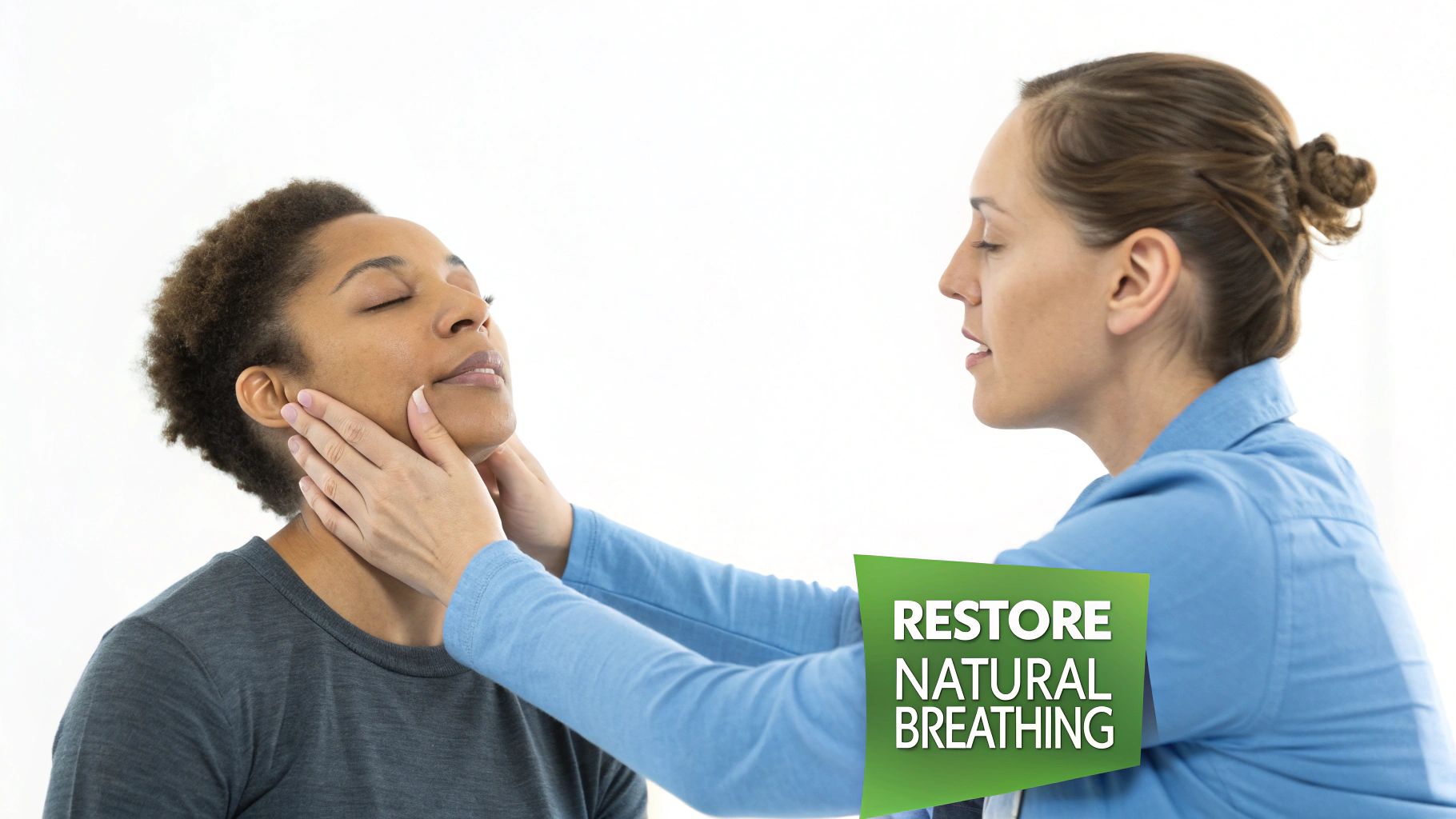
While devices like oral appliances are powerful tools for managing an obstructed airway, our ultimate goal is more ambitious. We want to help your body relearn how to breathe correctly on its own.
This means addressing the functional habits and muscle weaknesses that caused the problem in the first place.
This approach goes way beyond just propping the airway open at night. It’s about creating lasting change by retraining the very systems responsible for breathing and oral function. Think of it as physical therapy for your face, tongue, and throat.
These non-invasive therapies work to restore your body’s natural design, empowering you to breathe properly around the clock. Over time, this can reduce or even eliminate the need for a nighttime device, offering a path to true breathing independence.
Orofacial Myofunctional Therapy: The Missing Link
One of the most effective non-device snoring and sleep apnea solutions is Orofacial Myofunctional Therapy (OMT). Simply put, OMT is a series of targeted exercises for the muscles of the mouth, tongue, and face. It’s designed to correct the poor habits that directly contribute to airway collapse during sleep.
Imagine your tongue is the rudder of a ship, guiding the development and function of your entire facial structure. If it’s not in the right place—resting gently against the roof of your mouth—it can cause a cascade of problems, including falling back and blocking your throat.
OMT addresses these core issues by:
- Strengthening the Tongue: Targeted exercises build tone in the tongue muscle so it’s far less likely to relax and obstruct your airway.
- Promoting Nasal Breathing: It retrains you to breathe through your nose, which is critical for filtering air and keeping the airway stable.
- Correcting Swallowing Patterns: An improper swallow can contribute to poor tongue posture and muscle imbalances that worsen airway issues.
Through consistent practice, these exercises create new muscle memory. Just like going to the gym builds strength in your arms and legs, OMT builds the strength and coordination needed to keep your airway open naturally.
By correcting dysfunctional oral habits, Orofacial Myofunctional Therapy helps rebuild the foundation for healthy breathing. It's not just about stopping snoring; it's about restoring the natural harmony between your muscles and your airway.
Retraining Your Breathing Patterns
Beyond muscle function, how you breathe matters immensely. Many people with sleep-disordered breathing have developed dysfunctional patterns, like chronic over-breathing or mouth breathing, which only make their condition worse.
This is where techniques like the Buteyko Breathing Method come in. This is a form of breath retraining focused on helping you breathe more efficiently. It teaches you to restore a natural, calm breathing rhythm that improves your body's oxygen uptake.
The core idea is to reduce chronic hidden hyperventilation. By learning to breathe more lightly and exclusively through your nose, you can increase your carbon dioxide tolerance. This simple shift helps improve circulation and oxygen delivery to your tissues and brain, often leading to less nasal congestion and a more stable airway during sleep.
The growth in these types of functional therapies reflects a huge shift in understanding sleep health. The Sleep Therapy Devices and Diagnostics market was valued at $6.2 billion in 2024 and is projected to hit $8.9 billion by 2029—a trend driven by the growing recognition of sleep disorders as serious health concerns.
A Path to Lasting Improvement
Combining these functional therapies with treatments like oral appliances creates a powerful, multi-faceted approach. The appliance provides immediate support at night, while OMT and breathing retraining work in the background to fix the underlying issues for good. You can explore more about how myofunctional therapy for sleep apnea creates these lasting changes in our detailed guides.
This integrated strategy offers both short-term relief and a long-term solution. It empowers you with the skills to take active control of your breathing and your health. Ultimately, our goal is to help your body function so well that external support is no longer a nightly necessity.
Common Questions About Sleep Apnea Solutions
Diving into the world of sleep apnea solutions can feel overwhelming. It’s completely natural to have questions about how treatments work, what they cost, and how they’ll fit into your life.
We hear these questions every day. This section is designed to give you clear, straightforward answers to help you feel confident about taking the next step toward better sleep and better health.
How Long Does It Take to See Results from Myofunctional Therapy?
This is a great question because it gets right to the heart of managing a problem versus truly fixing it. A custom oral appliance can give you immediate relief—often from the very first night. Orofacial Myofunctional Therapy (OMT), on the other hand, is all about creating deep, lasting change.
Think of it like this: an oral appliance is a bit like a crutch that helps you walk right after an injury. OMT is the physical therapy that strengthens your muscles so you eventually don't need the crutch at all.
Many people notice improvements like quieter sleep and feeling more rested during the day within just a few weeks of starting their OMT exercises. But achieving the permanent changes in muscle function and oral posture that can fundamentally fix an airway issue—that’s a longer journey. It typically takes several months of consistent, daily practice to retrain habits you've had your whole life. It’s an investment in a long-term solution, not just a quick fix.
Will My Insurance Cover These Sleep Apnea Treatments?
Concerns about cost are completely valid, but the good news is that many treatments are covered. Obstructive Sleep Apnea (OSA) is a recognized medical condition, so most medical insurance plans cover its diagnosis and treatment.
This coverage almost always includes snoring and sleep apnea solutions like:
- Diagnostic sleep studies: Both in-lab and at-home sleep tests are generally covered to get an official OSA diagnosis.
- Oral appliance therapy: Custom-fit Mandibular Advancement Devices are a primary, FDA-approved treatment for mild to moderate OSA and are widely covered by medical insurance.
Coverage for functional therapies like OMT can vary depending on your plan. Our team has years of experience navigating the ins and outs of insurance benefits. We’ll work with you to understand your coverage, handle the paperwork, and find flexible payment options to make sure you can get the care you need without the financial stress.
Can Children Have Sleep Apnea and How Is It Treated?
Yes, absolutely. Sleep apnea in children is a serious health issue that often gets missed. The signs can be sneaky, showing up as things like ADHD-like behavior, bedwetting, or trouble focusing in school rather than loud snoring.
The root causes in kids are often different from adults and are frequently tied to:
- Enlarged tonsils and adenoids that physically block their small airway.
- Chronic allergies or congestion that force them to breathe through their mouth.
- Anatomical issues like a tongue-tie that restrict proper growth.
For children, our approach is all about early intervention. We start with a thorough evaluation to pinpoint these underlying issues. Orofacial Myofunctional Therapy is key for kids because it can guide proper jaw and facial growth, establish healthy nasal breathing habits, and correct problems before they turn into more serious airway issues in adulthood. Getting this right early can set a child up for a lifetime of healthy breathing.
Addressing sleep-disordered breathing in childhood is one of the most powerful preventative measures a parent can take. It supports proper physical development, cognitive function, and long-term health, preventing a lifetime of compromised sleep.
Do I Have to Stop Using My CPAP to Try an Oral Appliance?
Not at all. Moving from a CPAP machine to an oral appliance is a carefully managed process we coordinate directly with your sleep physician. You would never be asked to just stop one treatment without knowing for sure that the new one works. Oral appliances are a first-line, FDA-approved treatment for mild to moderate OSA and a fantastic alternative for severe OSA patients who just can't tolerate CPAP.
The transition is designed to be completely safe and effective. After we fit your custom oral appliance, we have you do a new sleep study while wearing the device.
This follow-up study confirms that the appliance is successfully keeping your airway open and your oxygen levels stable all night long. This data-driven approach ensures there are no gaps in your treatment. It lets you switch with total confidence, moving from a therapy you struggle with to a comfortable solution you can actually use every single night.
Ready to find a solution that addresses the root cause of your sleep issues? The team at Pain and Sleep Therapy Center is here to guide you with personalized, non-invasive therapies that restore natural breathing and improve your quality of life. Learn more and schedule your consultation with us today.