If you're constantly exhausted, it’s easy to write it off as a symptom of a busy schedule. But what if it’s more than that? Persistent fatigue, loud snoring, and waking up gasping for air aren't just quirks—they are potential red flags for Obstructive Sleep Apnea (OSA). Finding a local specialist is the critical first step toward getting your energy and your life back.
Why That Tired Feeling Is Not Normal
That bone-deep exhaustion you can't seem to shake, no matter how early you go to bed, is more than just an inconvenience. It’s your body sending out a distress signal. For millions of people, the hidden culprit is Obstructive Sleep Apnea, a condition where your breathing repeatedly stops and starts all night long.
Think of it like this: every time you stop breathing, your brain senses the drop in oxygen and panics, jolting you partially awake just long enough to restart your airflow. These episodes, called apneas, can happen hundreds of times a night without you ever consciously remembering them. The end result is incredibly fragmented sleep that robs your body of the deep, restorative stages it needs to heal and recharge.
The Scope of the Problem
Most people dismiss their symptoms, thinking loud snoring is just a harmless annoyance their partner has to deal with. But the scale of this issue is massive. An estimated 936 million adults globally between the ages of 30 and 69 are dealing with mild to severe OSA.
This points to a huge underdiagnosis crisis. In the US alone, nearly 80% of moderate and severe cases go undetected, leading to hidden costs of almost $150 billion annually from lost productivity, workplace accidents, and car crashes. You can explore the full research on the global prevalence of OSA and its impact to learn more.
Ignoring these signs does far more than just make you tired. Untreated sleep apnea puts a tremendous strain on your cardiovascular system, seriously increasing your risk for major health complications. These hidden dangers often include:
- High Blood Pressure: Constant drops in oxygen stress your heart and blood vessels.
- Heart Disease: The risk of heart attack, stroke, and atrial fibrillation rises significantly.
- Type 2 Diabetes: Sleep apnea can disrupt your body's ability to use insulin effectively.
- Cognitive Decline: Persistent brain fog, memory problems, and difficulty concentrating are all common side effects.
Searching for a "sleep apnea specialist near me" in the Charlotte area is a proactive step toward finally addressing these risks. This guide will walk you through the path from diagnosis to modern, effective treatment, empowering you to get the restful, life-giving sleep you deserve.
Recognizing the Hidden Symptoms of Sleep Apnea
Most people think sleep apnea is just about loud snoring. While that's often part of the picture, the condition’s true impact runs much deeper, showing up in subtle ways that sabotage both your nights and your days. Spotting these hidden clues is the first real step toward getting the right help.
Imagine you're holding your breath underwater. Your body's oxygen levels plummet, and a panic signal jolts your brain, forcing you to gasp for air. Now, picture that same life-or-death cycle happening dozens, or even hundreds, of times every single night—without you ever fully waking up.
This constant stress shatters your sleep architecture, preventing your brain and body from reaching the deep, restorative stages they desperately need to repair and recharge. The result is a whole collection of symptoms that are all too easy to blame on stress or a busy schedule, but are actually your body's cry for help.
Nighttime Clues and Daytime Struggles
The evidence of sleep apnea isn't just a nighttime problem. The nightly struggle for oxygen has a direct, domino-like effect on your waking hours, draining your energy, mood, and mental clarity. Understanding how the two are connected is key.
During the night, you or your partner might notice things like:
- Loud, persistent snoring that’s more than just a little noise.
- Episodes of gasping, choking, or snorting that briefly interrupt breathing.
- Waking up frequently for no clear reason, or to use the restroom.
- Restless sleep filled with tossing and turning.
These disruptions lead straight to serious daytime problems. Many people who come to see us are finally pushed to do so by the daily grind of morning headaches, overwhelming fatigue, and a constant feeling of brain fog.
The connection is crystal clear: a night spent fighting for breath leads to a day spent fighting exhaustion. This isn't just "feeling tired." It's a chronic state of unrest that can impact every part of your life, from your relationships to your performance at work.
To help you connect the dots, we've put together a simple checklist that breaks down the most common symptoms by when they typically show up.
Sleep Apnea Symptoms Checklist: Day vs. Night
This table can help you identify patterns that might point to an underlying sleep issue. See how many of these feel familiar.
| Symptom Category | Common Signs and Experiences |
|---|---|
| During the Night | • Loud, chronic snoring that disrupts others. • Pauses in breathing noticed by a partner. • Abruptly waking up gasping or choking for air. • Frequent bathroom trips and restless sleep. |
| During the Day | • Waking up with a dry mouth or sore throat. • Morning headaches that are difficult to explain. • Overwhelming daytime sleepiness, even after a full night's rest. • Difficulty concentrating, memory problems, and irritability. |
If you find yourself nodding along to several of these points, it's a strong sign that a sleep disorder could be the culprit. The next step is to understand how a specialist can give you a definitive answer.
Your Diagnostic Journey: From Home Tests to In-Lab Studies
After you’ve talked through your symptoms, the next step is getting a clear picture of what’s happening while you sleep. The idea of a “sleep study” can sound a little intimidating, but modern options have made the whole process much more straightforward and comfortable.
Your diagnostic path will usually start with one of two tests, each designed for different needs.
The Convenient First Step: Home Sleep Apnea Testing
For many people, the journey begins right in their own bed with a Home Sleep Apnea Test (HSAT). Think of it as a quick, convenient snapshot of your breathing overnight. We provide a small, simple-to-use kit that you wear while you sleep. It’s designed to be as non-intrusive as possible.
This little device tracks the essentials: your oxygen levels, heart rate, airflow, and how much effort you’re putting into breathing. Because it’s so easy and accessible, an HSAT is often the perfect first move for patients who are otherwise healthy and show the classic signs of obstructive sleep apnea.
The Deeper Dive: In-Lab Polysomnography
Sometimes, we need to dig a little deeper. If the HSAT is a snapshot, then an in-lab sleep study—called a polysomnography (PSG)—is the full-length documentary of your night. This is where we get an incredibly detailed look at your entire sleep architecture.
During a PSG, a trained technologist monitors you all night using advanced, sensitive equipment. This allows us to measure things an at-home test just can't catch, like:
- Brain wave activity (EEG) to see exactly when you’re in deep sleep, light sleep, or REM.
- Eye movements, which help pinpoint REM sleep stages.
- Leg movements to check for other sleep disruptors like restless legs syndrome.
- Body position, so we can see if your apnea gets worse when you’re on your back.
This incredibly rich data is crucial for diagnosing more complex cases, like central sleep apnea, or for situations where a home test didn’t give us a clear answer. We’ll always recommend the test that makes the most sense for you.
This simple quiz helps visualize that very first decision-making step.
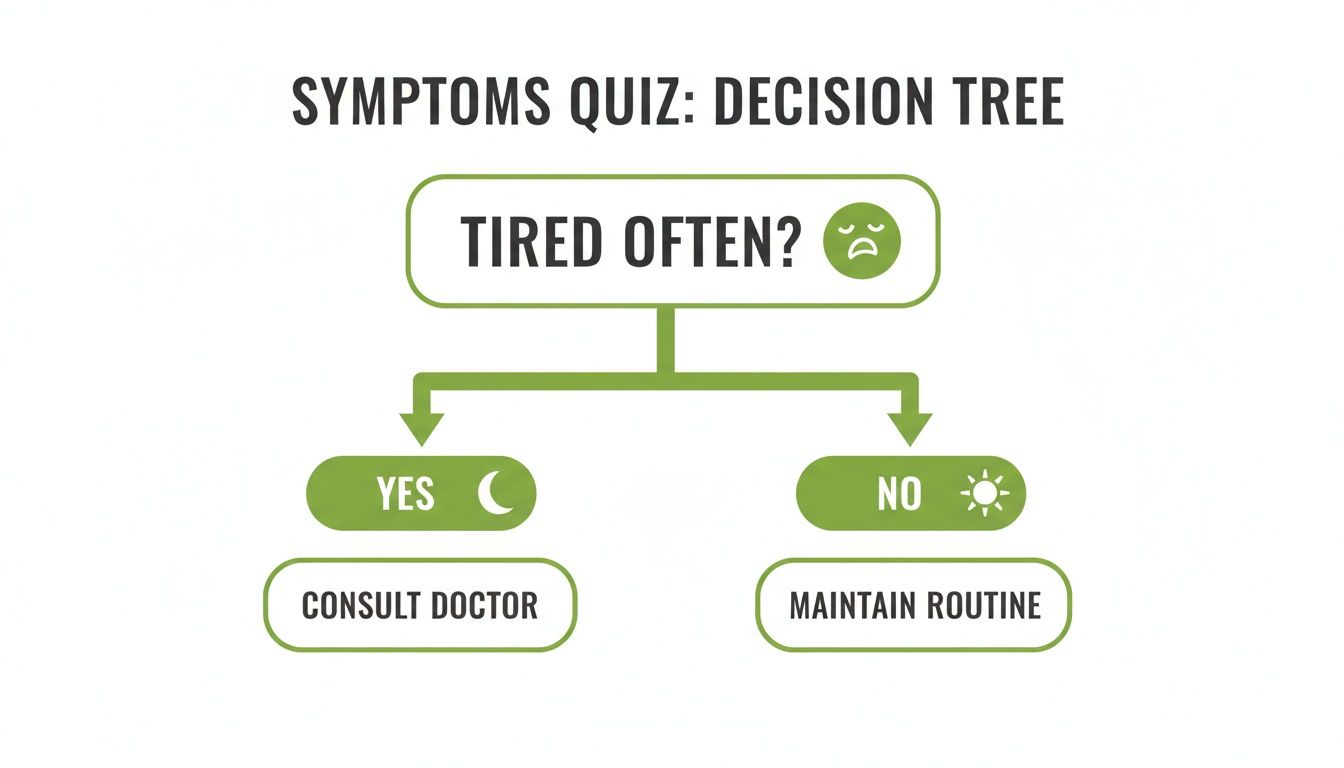
The flowchart drives home a key point: if you're chronically tired, it’s a sign that deserves a professional look. Don't just brush it off.
An accurate diagnosis is the foundation of effective treatment. Without understanding the frequency and severity of your apnea events, creating a personalized and successful treatment plan is impossible.
Whether you start with a test at home or come into the lab, the goal is the same: to get objective, undeniable data about your sleep. This information empowers both you and your specialist to choose the right path forward to restore your health.
You can learn more about how to diagnose sleep apnea at home in our detailed guide. From there, we can build a plan that gets you back to feeling like yourself again—energized and truly rested.
Modern Sleep Apnea Treatments Beyond the CPAP Mask
When most people hear “sleep apnea treatment,” the first thing that comes to mind is a CPAP machine. And while CPAP is definitely the “gold standard” for a reason, the idea of wearing a mask to bed makes a lot of people hesitate to get help.
The good news? Modern sleep medicine has come a long way. Today, a skilled sleep apnea specialist is focused on finding a solution that fits you—not just prescribing the same device for everyone. The goal is to match the treatment to your unique anatomy, lifestyle, and the severity of your sleep apnea. This way, you get a solution that not only works but that you can actually stick with long-term.
It's a bigger issue than many realize. In the United States, at least 25 million adults have Obstructive Sleep Apnea, but a shocking 80% of moderate-to-severe cases go completely undiagnosed. This is a growing health crisis, and seeking specialist care is key to lowering the risks of related conditions like hypertension, Type 2 diabetes, stroke, and depression.
Oral Appliance Therapy: A Comfortable Alternative
One of the most popular and effective alternatives to CPAP is Oral Appliance Therapy (OAT). Think of it like a custom-fit mouthguard you wear only while sleeping. It’s not bulky or complicated.
The appliance works by gently shifting your lower jaw and tongue slightly forward. This tiny adjustment is all it takes to keep your airway open, preventing the soft tissues in your throat from collapsing and blocking your breath.
For anyone with mild to moderate sleep apnea, or for those who just can't get comfortable with CPAP, OAT can be a total game-changer. It's discreet, easy to travel with, and simple to care for.
Strengthening Your Airway from the Inside Out
Another exciting approach isn't about a device at all—it's about actively strengthening the muscles that support your airway. Instead of just managing the problem each night, these therapies address the root anatomical weakness causing the obstruction in the first place.
Two key methods we use are:
- Orofacial Myofunctional Therapy (OMT): This is essentially physical therapy for the muscles of your mouth, tongue, and throat. A trained therapist walks you through specific exercises to build muscle tone, correct your tongue posture, and encourage proper nasal breathing.
- Buteyko Breathing: This technique retrains your breathing patterns to be lighter, slower, and more efficient—all through your nose. It helps reduce the tendency to over-breathe (hyperventilate), which stabilizes your oxygen levels and can dramatically reduce apnea events.
By strengthening the foundational muscles of your airway, these therapies can produce lasting improvements. They empower you to take an active role in your treatment, addressing the underlying weakness rather than just managing the symptoms each night.
Regenerative and Surgical Options
For certain structural issues, we may look at more advanced interventions. Regenerative therapies, for instance, use your body's own natural healing abilities to strengthen and tighten the soft tissues in the throat, making them less likely to collapse while you sleep.
In other cases, surgical procedures might be the most direct path to a permanent fix. This could involve removing excess tissue, like enlarged tonsils, or correcting a structural jaw misalignment. Your specialist will carefully evaluate if you're a good candidate for these types of approaches.
As you can see, there are many ways to fix sleep apnea without a CPAP machine, opening the door to better sleep and renewed health.
Why a TMJ-Focused Specialist Matters for Sleep Apnea
When you're searching for a "sleep apnea specialist near me," it’s easy to get lost in a sea of options. But there's a critical factor many people—and even many doctors—overlook: the incredibly close relationship between your jaw and your airway.
Most traditional sleep centers are focused on the symptom—the fact that you stop breathing. But they don't always ask why the airway is collapsing. That’s where a specialist with a deep understanding of the temporomandibular joint (TMJ) changes the entire conversation.
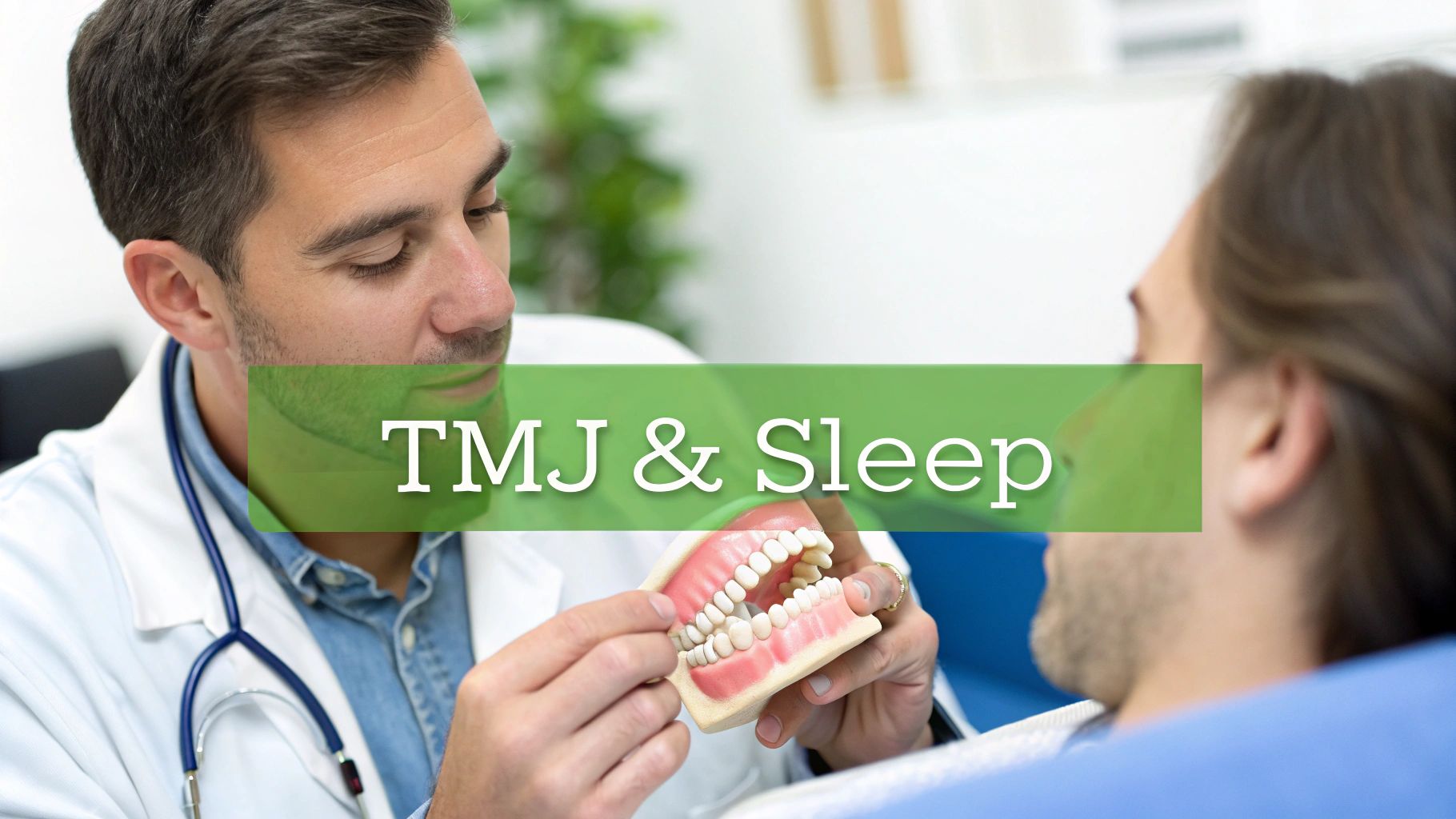
Think of your airway like a garden hose. The structures of your jaw and throat are what keep it open. If your jaw is even slightly out of position—maybe it’s set too far back—it can push your tongue and soft tissues backward, effectively pinching that hose. This narrowing creates the perfect setup for obstructive sleep apnea.
It’s no coincidence that so many people with sleep apnea also complain of jaw pain, clicking sounds, or chronic headaches. They're all connected.
A TMJ-focused approach doesn't just put a band-aid on the breathing problem. It digs deeper to find the anatomical root cause, paving the way for a real, lasting solution.
The Integrated Approach to Airway Health
At the Pain and Sleep Therapy Center, we operate from a simple but powerful truth: the jaw, airway, and facial muscles are all part of one interconnected system. You can’t fix one without considering the others. Dr. Greg D. Larson’s triple board certification in this area is rare, and it allows our team to see the bigger picture and connect dots that others might miss.
Our unique, interdisciplinary process is built around this idea.
- Comprehensive Assessment: We don’t just look at your breathing patterns. We evaluate your jaw function, how your teeth come together, and even your oral posture.
- Root-Cause Diagnosis: We move beyond simply saying, "You have sleep apnea." We identify the structural issues causing it, whether that’s a recessed jaw, poor tongue posture, or something else entirely.
- Personalized Treatment Plans: Based on the true cause, your plan might involve a custom oral appliance to gently guide the jaw forward, orofacial myofunctional therapy to strengthen your airway muscles, or regenerative therapies to improve tissue health.
This integrated model isn’t just about managing sleep apnea. It's about fundamentally improving the health and function of your entire airway system for more sustainable results.
A specialist who only sees sleep apnea may prescribe a CPAP. A specialist who also sees the jaw and airway connection can design a solution that corrects the underlying problem, potentially reducing or eliminating the need for a machine altogether.
Specialized Care for the Whole Family
This focus on anatomy is absolutely critical when it comes to kids. Addressing jaw development and airway issues early on can prevent sleep-disordered breathing from becoming a lifelong battle. Our team provides specialized pediatric care, including services like tongue-tie evaluations and releases, to support healthy growth right from the start.
By choosing a specialist who understands this vital connection, you’re not just treating a symptom—you're investing in a more complete and effective form of healthcare. Taking a moment to see how a sleep apnea dentist near you can offer this specialized approach is a great next step. It's this deep focus on the underlying anatomy that truly sets comprehensive care apart, guiding patients in Charlotte toward lasting relief and genuine wellness.
Got Questions? Let's Talk About Sleep Apnea Treatment
Starting any new health journey brings up a lot of questions. When it’s about something as personal as your sleep, you deserve to feel confident and fully informed before you begin. Here, we’ll tackle some of the most common questions we hear from patients looking for a "sleep apnea specialist near me."
Our goal is to pull back the curtain on the treatment process, giving you the clarity you need to take that next step toward better health and better sleep.
Is Sleep Apnea Treatment a Lifelong Thing?
This is one of the first questions people ask, and the answer isn't a simple yes or no. For many, sleep apnea is a chronic condition that needs ongoing management, a bit like managing high blood pressure or diabetes. Treatments like oral appliances or CPAP are designed to work for you every single night.
But it’s not always a permanent sentence. For some people, lifestyle and targeted therapies can make a huge difference.
- Weight Management: For some, losing excess weight can dramatically improve or even resolve obstructive sleep apnea by reducing tissue around the airway. A 10% weight loss can cut apnea events by over 25%.
- Targeted Therapies: Orofacial Myofunctional Therapy and Buteyko breathing exercises aren't just a band-aid; they strengthen the muscles around the airway, addressing the root weakness. Over time, this can reduce the condition's severity and even lessen your dependence on a nightly device.
Ultimately, how long you need treatment really depends on what’s causing your specific case of sleep apnea.
Will My Insurance Cover Sleep Apnea Treatment?
Navigating insurance can feel overwhelming, but here's the good news: most health insurance plans do cover the diagnosis and treatment of obstructive sleep apnea. It's widely recognized as a serious medical condition, and insurers understand the health risks of leaving it untreated.
Typically, coverage includes:
- Initial consultations and sleep studies (both in-lab and at-home tests).
- Medical equipment like CPAP machines and their supplies.
- Custom-made oral appliances prescribed by a qualified specialist.
It's always a good idea to confirm the specifics directly with your insurance provider. Our team is also here to help you make sense of your benefits. We provide clear cost information upfront so there are never any surprises.
We firmly believe that financial concerns should never stand in the way of essential healthcare.
What If I Can't Stand CPAP?
You are not alone. The fear of being stuck with an uncomfortable CPAP mask is a huge reason why many people put off getting a diagnosis in the first place. If you've already tried CPAP and just couldn't get used to it, you absolutely have other options.
A modern sleep apnea specialist knows that a one-size-fits-all approach is doomed to fail. We focus on finding the right solution that fits your anatomy, your lifestyle, and your comfort.
Here are some effective alternatives we often recommend:
- Oral Appliance Therapy (OAT): A comfortable, custom-fitted mouthguard that's discreet and easy to travel with.
- Orofacial Myofunctional Therapy (OMT): Think of it as physical therapy for your airway muscles, designed to address the core problem.
- Positional Therapy: Sometimes, simple strategies to keep you from sleeping on your back—where apnea is often worse—can make a big impact.
At the end of the day, the best treatment is the one you'll actually use consistently. Your comfort is our top priority.
At Pain and Sleep Therapy Center, we’re committed to providing personalized solutions that get to the root cause of the problem instead of just masking symptoms. If you're ready to find lasting relief and get your energy back, we invite you to schedule a consultation with our expert team.