
If you're dealing with chronic fatigue, relentless snoring, or persistent jaw pain, you're not just tired—your body is sending out clear signals. Searching for a sleep disorder specialist near me is the first real step toward understanding what’s truly happening after you close your eyes. This is about more than just feeling exhausted; it's about getting to the root of the problem before it starts to impact your long-term health.
When Do You Really Need a Sleep Specialist?
So many of us write off persistent exhaustion as just a normal part of a busy life. We get used to waking up with a headache, feeling that afternoon slump, or hearing a partner complain about our snoring.
But these aren't minor inconveniences. They are often clear signs that your body isn't getting the deep, restorative sleep it needs to function.
Think about it: is your brain fog so thick that you struggle to focus at work? Does your jaw click, pop, or ache every single morning? These experiences are incredibly common, but they are absolutely not normal. They can point to serious underlying issues like obstructive sleep apnea (OSA), where your breathing repeatedly stops and starts all night, or temporomandibular joint (TMJ) disorders that completely disrupt your sleep.
You can dig deeper into the specific signs and symptoms of sleep apnea to see if they feel familiar.
From "Coping" to Seeking a Real Diagnosis
The turning point for most people is when they shift from just "coping" with bad sleep to actively seeking a diagnosis. This is a critical move. Unresolved sleep issues are directly linked to major health risks, including heart problems, high blood pressure, and metabolic disorders.
A specialist can connect the dots in a way you might not have considered. For instance, that nagging morning headache could be from your jaw clenching all night long because of a restricted airway.
The reality is, many people seriously underestimate how severe their sleep problems are. Simply "living with it" means you're ignoring a critical piece of your overall health and well-being.
It’s a Widespread Problem
This struggle isn't just you—it's a global issue. Imagine losing nearly three full nights of quality sleep every single week. According to ResMed's fifth annual Global Sleep Survey, that’s the reality for countless people worldwide.
What’s shocking is that a staggering 22% of people globally just choose to 'live with' their poor sleep, while 45% don't even track it, completely missing out on crucial clues about their health. With over a third of adults enduring insomnia and two-thirds facing nightly disturbances, it's clear that professional help isn't a luxury—it's a necessary step toward better health. You can explore more details about these global sleep trends and their impact.
Navigating the Different Types of Sleep Experts
When you start searching for a “sleep disorder specialist near me,” you’ll quickly realize it’s not a one-size-fits-all profession. Sleep medicine is a surprisingly diverse field, with different experts focusing on very distinct parts of the problem.
The key to finding the right help is to listen to your body. Your symptoms are the best clues for figuring out who you should see first.
Are you dealing with loud, disruptive snoring and waking up gasping for air? Or is your biggest complaint a clicking jaw and pounding morning headaches? The answers point to very different types of specialists. It's a common myth that all sleep issues lead straight to a CPAP machine; the right treatment always depends on the root cause.
This simple flowchart can help you start thinking about whether you're just tired or if specific symptoms point toward a deeper issue needing professional attention.
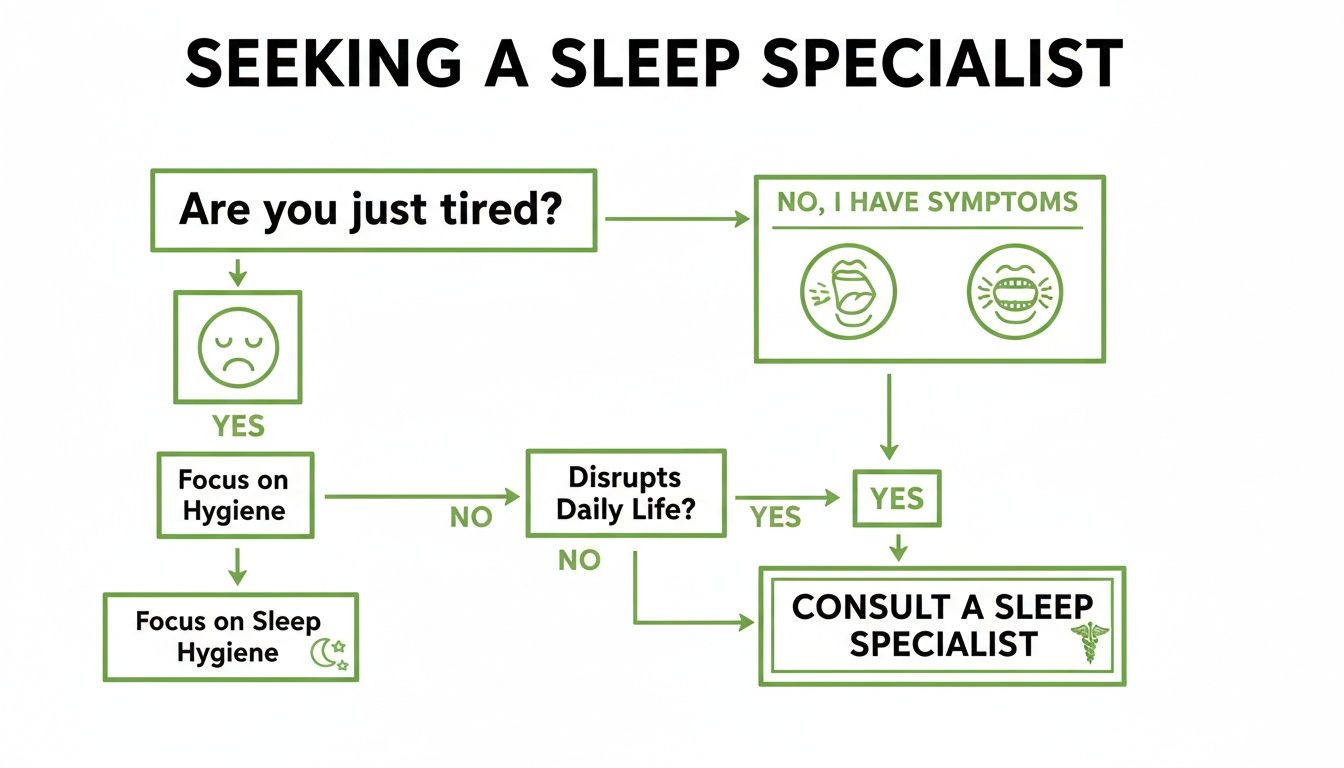
The takeaway here is that physical symptoms like snoring, jaw pain, or gasping at night are clear signals to seek specialized care rather than just trying to get more rest.
Matching Your Symptoms to the Right Specialist
To cut through the confusion, here’s a quick-reference guide to help you identify which type of sleep-related medical professional might be the best fit for your needs.
| Specialist Type | Area of Expertise | Best For Symptoms Like… |
|---|---|---|
| Pulmonologist | Lungs and respiratory system. | Severe snoring, choking or gasping in sleep, diagnosed COPD or asthma. |
| Neurologist | Brain and nervous system. | Narcolepsy, restless legs syndrome (RLS), chronic insomnia. |
| ENT (Otolaryngologist) | Ear, nose, and throat structures. | Chronic stuffiness, deviated septum, enlarged tonsils, sinus issues. |
| Dental Sleep Medicine Specialist | Jaw, tongue, and airway anatomy. | Snoring, mild to moderate OSA, TMJ/jaw pain, morning headaches, CPAP intolerance. |
| Orofacial Myofunctional Therapist | Muscle function of the face and mouth. | Mouth breathing, tongue thrust, incorrect swallowing patterns. |
| Pediatric Specialist | Airway issues in children. | Tongue-tie, feeding difficulties, childhood snoring, developmental concerns. |
Remember, this is a starting point. The best care often involves a team of experts working together to address the full picture of your health.
Pulmonologists and Neurologists
Traditionally, medical sleep doctors like pulmonologists (lung specialists) and neurologists have been the gatekeepers for diagnosing sleep disorders. They are true experts in identifying conditions affecting your respiratory and central nervous systems during sleep.
- Pulmonologists are often the first stop for severe breathing-related issues. They primarily diagnose conditions like obstructive sleep apnea (OSA) through in-lab sleep studies (polysomnography) and are the main prescribers of CPAP therapy.
- Neurologists zero in on sleep disorders that start in the brain, such as narcolepsy, restless legs syndrome, or certain types of insomnia.
While their role is essential, their focus is often on managing the condition with devices or medication rather than addressing the underlying structural or anatomical causes.
Dental Sleep Medicine Specialists
This is where a different kind of expert comes in: the dental sleep medicine specialist. These are dentists who have completed extensive training in how the anatomy of your jaw, tongue, and airway directly impacts your breathing while you sleep. They bring a completely unique perspective to the table.
A dental sleep medicine specialist looks at the "why" behind your breathing obstruction. Is your tongue collapsing into your airway because of poor oral posture? Is your jaw structure the root of the problem?
They are the go-to experts for creating custom-fit oral appliance therapy (OAT), a device that works by gently repositioning your jaw to keep your airway open. For many patients who can't tolerate a CPAP machine, this non-invasive approach is a game-changer. If you're looking for solutions beyond the mask, learning more about how a sleep apnea dentist near you can help is a fantastic next step.
Other Important Collaborators
The best care is rarely a solo act. You might also work with other professionals as part of a comprehensive treatment plan:
- Otolaryngologists (ENTs): They examine your nose, throat, and airway for physical blockages like a deviated septum or enlarged tonsils that could be causing your sleep issues.
- Orofacial Myofunctional Therapists: These therapists use specialized exercises to retrain the muscles in your face and tongue, improving oral posture and promoting proper nasal breathing.
- Pediatric Specialists: They focus on issues like tongue-tie in infants, which can impact feeding, breathing, and the future development of a healthy airway.
Understanding these roles helps you become an empowered patient, ready to find the right expert for your specific needs.
How to Find and Vet the Right Local Specialist
Kicking off the search for a “sleep disorder specialist near me” can feel a little overwhelming. But a few smart strategies will quickly narrow down your options to a provider who actually fits your needs. The goal here is to go beyond a basic web search and find a clinic focused on root-cause solutions, not just managing symptoms.

Start by getting specific with your search terms. Instead of something generic, try a query that reflects what you’re really looking for. For instance, searching for “non-CPAP sleep apnea treatment in Charlotte” or “pediatric tongue-tie specialist near me” will pull up far more relevant results. This simple tweak helps you find true experts in the areas you care about, whether it's TMJ pain relief or alternatives to traditional sleep apnea therapies.
What to Look for on Their Website
Once you have a shortlist of potential specialists, their website is your first real vetting tool. A professional-looking site is a good start, but you need to dig deeper. Look for clear signs of expertise and a patient-first approach.
Pay close attention to these elements:
- Board Certifications: Does the specialist hold certifications from respected boards like the American Board of Dental Sleep Medicine (ABDSM) or the American Board of Orofacial Pain (ABOP)? This isn't just a piece of paper; it shows a serious commitment to their field.
- Patient Success Stories: Look for testimonials or case studies. Do they describe situations similar to yours? Real stories from real people give you a glimpse into the patient experience and how effective their treatments are.
- Treatment Philosophy: Spend some time on their “About Us” or "Our Approach" pages. Do they talk about getting to the root of the problem? Or does their language focus on just managing symptoms with devices and medications?
A clinic that talks about a collaborative, interdisciplinary approach—mentioning partnerships with ENTs, physical therapists, or myofunctional therapists—is often a great sign. It points to a more complete, patient-focused practice.
This initial research helps you understand their philosophy before you even pick up the phone. It’s about finding a healthcare partner, not just a provider. For example, many patients want to learn how to diagnose sleep apnea at home, and a specialist's site that offers resources on topics like this shows they're focused on patient education.
Reading Between the Lines
A specialist’s website can also tell you a lot about their commitment to modern, patient-friendly care. Are they talking about advanced diagnostic tools beyond a standard sleep lab study, like high-resolution pulse oximetry or airway imaging? This shows they invest in technology that provides a more detailed picture of your health.
Also, take a look at the range of treatments they offer. A provider truly focused on wellness will often feature services designed to restore function, not just mask problems.
Keep an eye out for offerings like:
- Orofacial Myofunctional Therapy: To correct poor oral posture and muscle function.
- Custom Oral Appliances: As a proven, non-invasive alternative to CPAP.
- Regenerative Therapies: For TMJ issues, which indicates a focus on genuine healing.
Finding a specialist who offers a spectrum of solutions shows they are equipped to create a personalized plan for your specific anatomical and functional needs. This deeper dive ensures you connect with a professional dedicated to your long-term health and recovery.
Key Questions for Your First Consultation
Walking into your first appointment prepared can completely change the dynamic. It shifts you from a passive patient to an active partner in your own health journey. Arming yourself with smart questions helps you find a specialist whose approach actually aligns with your goals, whether that’s avoiding surgery or finding a viable CPAP alternative.
Instead of asking generic questions, you need to get specific about their process, philosophy, and the tools they use. This is how you figure out if they're a modern, root-cause-focused clinic or one that follows a more traditional, symptom-management playbook.
Questions About Diagnostics and Technology
A specialist's investment in diagnostic tech says a lot about their commitment to accuracy. The global sleep studies market is advancing quickly, thanks to tools like AI and sophisticated wearables. Clinics that embrace these tools can offer a far more precise diagnosis. You can learn more about the significant growth in the sleep studies market and see why modern diagnostics are becoming the new standard of care.
Try asking these direct questions:
- What diagnostic tools do you use beyond a standard in-lab sleep study?
- Do you use airway imaging or at-home monitoring to get a fuller picture of my sleep?
- How do you test for issues related to TMJ, tongue posture, and nasal breathing?
Their answers will tell you if they look at the complete system or just focus on a single symptom.
A great specialist will be able to explain why they choose certain diagnostic tools and what specific information those tests will provide about the root cause of your sleep issues.
Questions About Treatment Philosophy
This is where you can truly see if a provider is the right fit. Their treatment philosophy dictates the kind of care you’ll receive, so you're looking for a partner who offers personalized, functional solutions—not just a one-size-fits-all device.
Probe their approach with questions like these:
- What is your philosophy on non-surgical treatments? This is crucial if you're hoping to avoid invasive procedures for issues like TMJ or sleep apnea.
- How do you approach CPAP alternatives like oral appliance therapy? Their answer will quickly reveal their expertise and real-world experience with these effective devices.
- Do you incorporate therapies like Orofacial Myofunctional Therapy or Buteyko breathing? This shows a commitment to addressing underlying muscle function and breathing habits.
- How do you collaborate with other specialists like ENTs or physical therapists? A team-based approach is almost always a sign of a thorough and patient-centered practice.
Getting clear answers here empowers you to choose the best sleep disorder specialist near me—one who won’t just treat your symptoms but will guide you toward lasting health and truly restorative sleep.
A Look Inside Modern Sleep Diagnostics and Treatments
Once you have a potential specialist in mind, what can you actually expect? The world of sleep medicine has changed dramatically. Gone are the days when your only option was an awkward overnight stay in a sleep lab. Today’s approach is far more convenient, incredibly detailed, and laser-focused on figuring out the why behind your sleep problems.
A truly modern specialist will start with more than a clipboard and a questionnaire. They'll often use advanced at-home sleep tests that monitor your breathing, oxygen levels, and sleep stages right from your own bed. This is frequently paired with a complete airway assessment, which might even include imaging to get a clear picture of how your jaw, tongue, and soft tissues are contributing to airway blockages.
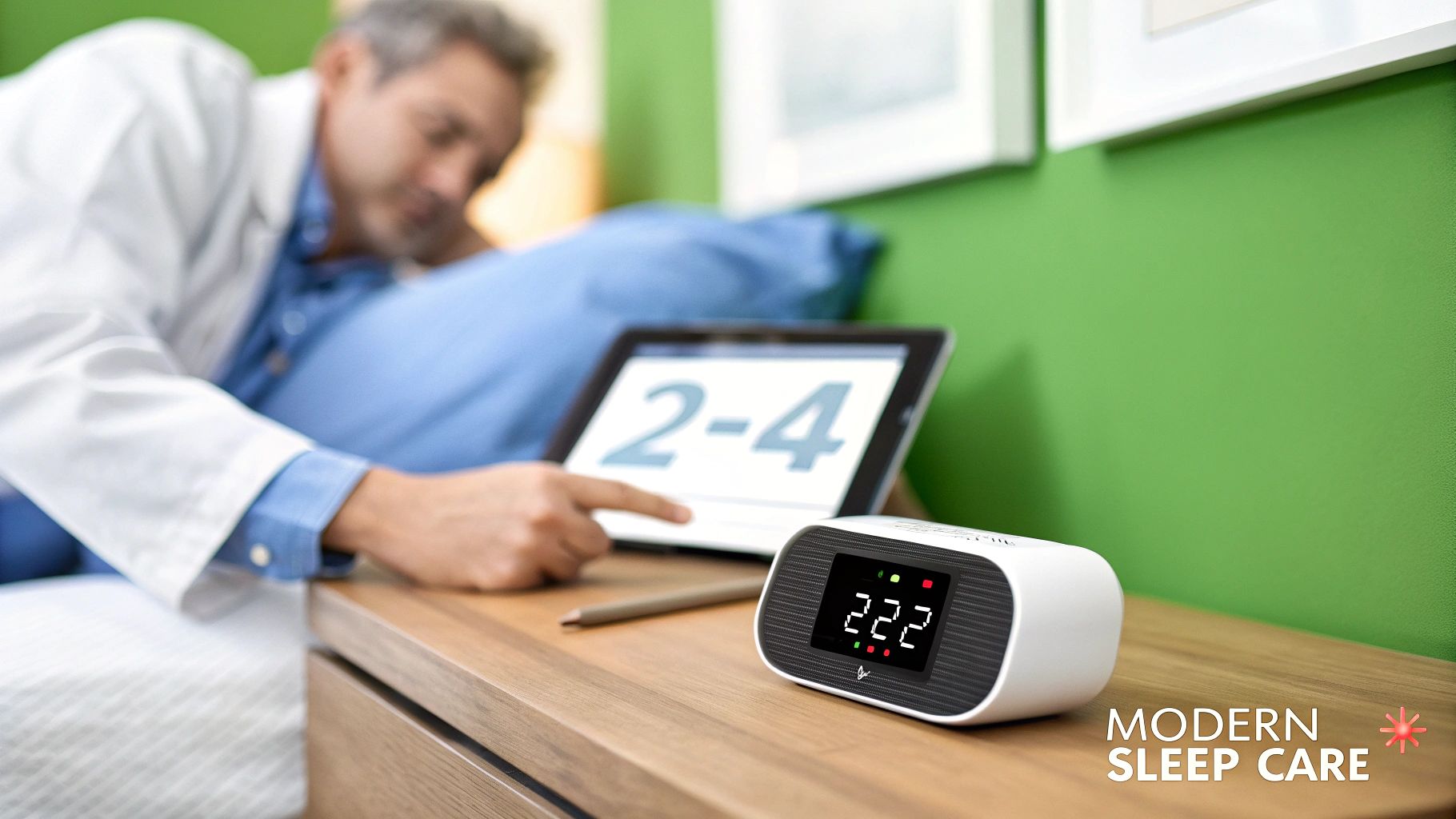
This detailed diagnostic work is absolutely critical. It’s what allows for a personalized treatment plan that actually works, because it’s not just about slapping a label on your problem—it’s about understanding its unique structural and functional roots.
Moving Beyond Just Managing Symptoms
The biggest shift in sleep care is the focus on treatments that correct the root cause of the disorder. While a CPAP machine is still the right call for severe sleep apnea, many patients now have access to a whole range of non-surgical therapies aimed at restoring the body’s natural, healthy function. Think of it as retraining your body, not just propping it up with a machine every night.
A specialist might create a plan for you that includes a combination of therapies, such as:
- Orofacial Myofunctional Therapy (OMT): This is essentially physical therapy for your mouth, tongue, and face. With targeted exercises, OMT helps correct poor oral posture, encourages proper nasal breathing, and strengthens the very muscles that keep your airway open while you sleep.
- Buteyko Breathing Techniques: It's surprising how many people with sleep-disordered breathing have developed dysfunctional breathing habits during the day. This method helps retrain you to breathe correctly—gently, through your nose—which can have a massive impact on your nighttime breathing and oxygen levels.
The goal here isn't just to make you snore less or have fewer apnea events. It’s to fundamentally restore the way you breathe and hold your posture, creating a lasting solution that improves your health 24/7.
This proactive approach is more important than ever. The global sleep disorder market is expected to explode to USD 70.54 billion by 2034, and diagnostics alone make up a huge 45% of that. Yet, with only about one sleep specialist for every 43,000 people in the US, there's a serious need for therapies that get to the root of the problem efficiently. You can read more about this pressing need for advanced sleep care.
Regenerative Options for More Complex Cases
For patients whose sleep problems are tangled up with TMJ dysfunction or chronic jaw pain, leading-edge clinics now offer regenerative therapies. These treatments are designed to help the body heal itself, providing a powerful alternative to surgery or a lifetime of pain medication.
Some of the options you might come across include:
- Platelet-Rich Fibrin (PRF) Injections: By using a concentration of your own blood platelets, PRF can be injected into the jaw joint to kickstart tissue repair, calm inflammation, and reduce pain.
- Prolotherapy: This technique uses an injection of a natural solution to trigger the body’s own healing response, which helps strengthen the ligaments and tendons supporting the jaw.
- Cold Laser Therapy: A completely non-invasive treatment, cold laser uses low-level light to decrease pain and inflammation, encouraging healing at the cellular level.
When you find a "sleep disorder specialist near me" who offers this level of in-depth diagnosis and root-cause treatment, you’ve found more than just a doctor—you’ve found a partner in your long-term health.
Getting Your Questions Answered About Finding a Sleep Specialist
Once you have a shortlist of potential specialists, the practical questions start popping up. Things like insurance, referrals, and costs can feel like a whole new set of hurdles. Let's walk through these common concerns so you can move forward and find the right sleep disorder specialist without getting bogged down in logistics.
Think of this as the final piece of the puzzle, giving you the practical info you need to take that next step.
Do I Need a Doctor's Referral to See a Sleep Specialist?
This is a big one, and the answer usually comes down to your insurance plan. If you have an HMO, you’ll almost certainly need a referral from your primary care doctor to get a specialist visit covered. It's their way of making sure your care is coordinated.
But here's a pro tip: many specialized clinics, especially those in dental sleep medicine, let you book a consultation directly. The easiest way to find out is to just call the office. A quick phone call will clear up their policy and save you a ton of time and guesswork.
What's the Difference Between a Sleep Doctor and a Dental Sleep Medicine Specialist?
This is a crucial distinction. A medical sleep doctor—often a pulmonologist or neurologist—is trained to diagnose the full spectrum of sleep disorders. They’re the ones who typically prescribe CPAP therapy, looking at the problem from a respiratory or neurological angle.
A dental sleep medicine specialist, on the other hand, comes at it from a structural perspective. We focus on the anatomy of your airway, jaw, and tongue. We're the experts in treating sleep-disordered breathing with custom-fit oral appliances. If you're looking for an effective CPAP alternative or also deal with related TMJ pain and morning headaches, a dental sleep medicine specialist is exactly who you need to see.
What Should I Expect a Consultation or Sleep Study to Cost?
Costs can be all over the map depending on where you live, your insurance plan, and what you need. An initial consultation with a specialist might run you anywhere from $150 to $500.
Sleep studies have an even wider range:
- At-home sleep tests are the more affordable option, often costing just a few hundred dollars.
- In-lab polysomnograms are much more comprehensive and can cost several thousand dollars.
Any reputable clinic will be completely transparent about pricing. Don't ever hesitate to ask for a detailed cost breakdown before you commit to an appointment. It's also a good idea to see if they offer payment plans or financing to make treatment more accessible.
Will Insurance Cover Treatments Like Oral Appliance Therapy?
The good news is that coverage for oral appliance therapy (OAT) has gotten so much better over the years. Today, most medical insurance plans, including Medicare, will cover a custom oral appliance for obstructive sleep apnea when it's deemed medically necessary. This has opened the door for millions of people who need an alternative to CPAP.
Coverage for complementary treatments like orofacial myofunctional therapy or Buteyko breathing can be a bit less predictable since they're still considered emerging therapies by some carriers. The single most important thing you can do is have the clinic’s insurance coordinator verify your specific benefits before starting any treatment. This simple step ensures there are no surprises when the bill arrives.
At the Pain and Sleep Therapy Center, we believe in providing clear answers and getting to the root cause of your sleep and TMJ issues. Our interdisciplinary team is here to guide you through every step, from diagnosis to a personalized treatment plan that works for you. Visit us to learn more about our comprehensive approach to helping you reclaim your health.