

Snoring is more than just a nighttime nuisance; it's a direct signal from your body that your airway is compromised during sleep. While often dismissed as a minor annoyance for bed partners, chronic snoring can significantly disrupt sleep quality, strain relationships, and even indicate more serious underlying health issues like obstructive sleep apnea (OSA). The sound of snoring is the sound of tissue vibrating, a clear sign of turbulent, restricted airflow. Addressing this issue is crucial not just for quiet nights but for overall health and well-being.
The good news is that many of the root causes, from poor oral posture and habitual mouth breathing to specific lifestyle factors, can be addressed without resorting to invasive procedures or cumbersome devices. Many people are looking for effective ways to stop snoring naturally, and the solutions often lie in re-establishing proper physiological function. This comprehensive guide moves beyond generic advice and dives into ten powerful, evidence-informed strategies designed to tackle snoring at its source.
You will learn actionable, science-backed methods like orofacial myofunctional therapy, nasal breathing restoration, and strategic positional therapy. These techniques focus on retraining your body's natural mechanics to restore a clear, stable airway. By strengthening the muscles of the tongue and throat, optimizing your sleep posture, and ensuring clear nasal passages, you can create the conditions for effortless breathing. The goal is to help you and your loved ones achieve the deep, quiet, and truly restorative sleep you deserve.
1. Nasal Breathing Exercises and Restoration
Breathing through your nose is the physiological gold standard for optimal airway function and restful sleep. When we switch to mouth breathing at night, the soft tissues in the throat are more likely to relax and collapse. This creates the airway vibration we recognize as snoring. Restoring nasal breathing is one of the most effective ways to stop snoring naturally because it addresses the problem at its source.
Nasal breathing improves airway stability, reduces airway resistance, and naturally encourages the tongue to rest in its proper position against the roof of the mouth. This oral posture is crucial for keeping the airway open and unobstructed during sleep. Unlike other methods that simply manage symptoms, nasal breathing exercises retrain your body's default respiratory pattern for long-term improvement.
How to Implement Nasal Breathing
Consistent practice is key to making nasal breathing your automatic habit, both day and night.
- Start During the Day: The first step is to build awareness. Consciously keep your mouth closed and breathe through your nose while working, walking, or watching TV.
- Practice Simple Cycles: Dedicate 10-15 minutes daily to focused practice. A simple starting point is a 4-count inhale through the nose, followed by a 6-count exhale, also through the nose. This calms the nervous system and reinforces the breathing pattern.
- Clear Your Passages: If nasal congestion is a barrier, use a saline rinse or nasal strips to clear obstruction before you begin your exercises. This makes nasal breathing feel more comfortable and achievable.
- Seek Professional Guidance: For a structured approach, working with an orofacial myofunctional therapist can provide personalized exercises tailored to your specific needs. These targeted exercises are designed to strengthen oral and facial muscles, further supporting an open airway.
Clinical Insight: Research and clinical observations show significant results. For example, patients who adopted consistent nasal breathing protocols have demonstrated a 40-60% reduction in snoring intensity within just six weeks. This method directly addresses the mechanics of airway collapse.
This approach is particularly beneficial for individuals who are chronic mouth breathers or suspect their snoring is linked to poor oral posture. For more advanced techniques, you can explore specialized exercises for sleep apnea, which often overlap with snoring cessation strategies. Find out more about specialized orofacial exercises on pscharlotte.com.
2. Orofacial Myofunctional Therapy (OMT)
Orofacial myofunctional therapy (OMT) is a highly effective, exercise-based program that retrains the muscles of the tongue, lips, jaw, and face. It corrects dysfunctional habits like improper tongue posture and incorrect swallowing patterns, which are significant contributors to airway obstruction. By strengthening and coordinating these key muscle groups, OMT helps maintain an open airway during sleep, directly addressing one of the primary causes of snoring.

This therapeutic approach is grounded in the principle of neuromuscular re-education. Just like physical therapy for a knee injury, OMT uses targeted exercises to restore proper function and tone to the orofacial muscles. A strong, well-coordinated tongue that rests correctly against the roof of the mouth acts as a natural support system for the airway, preventing the soft palate and other tissues from collapsing and vibrating.
How to Implement Orofacial Myofunctional Therapy
Success with OMT relies on consistent, precise practice guided by a trained professional. The goal is to make correct oral function an unconscious, automatic habit.
- Seek a Professional Assessment: The first step is to consult a certified orofacial myofunctional therapist (OMT). They can identify specific dysfunctions, such as tongue-tie, improper swallowing, or poor tongue posture, and create a customized exercise plan.
- Establish a Daily Routine: Dedicate 10-15 minutes, two to three times per day, to your prescribed exercises. Consistency is more important than intensity, especially in the beginning. Practicing in front of a mirror helps ensure you are using the correct form.
- Focus on Tongue Posture: A core goal is to train your tongue to rest fully against the roof of your mouth, with the tip just behind your front teeth. Be mindful of this position throughout the day to reinforce the new neuromuscular pattern.
- Integrate with Breathing: OMT is most effective when combined with proper nasal breathing. Practice your exercises while maintaining closed-lip, nasal breathing to strengthen the entire airway system.
Clinical Insight: Research validates OMT as a powerful method for improving airway health. Clinical studies have shown OMT can reduce the apnea-hypopnea index (a measure of sleep apnea severity) by 36-62% in patients with mild to moderate OSA. Patients often report significant snoring reduction and improved daytime energy within 8-12 weeks.
This approach is particularly beneficial for individuals whose snoring is linked to low muscle tone in the throat, incorrect tongue posture, or mouth breathing. To see examples of these exercises, you can watch the video below or find more about Orofacial Myofunctional Therapy exercises on pscharlotte.com.
3. Buteyko Breathing Technique
The Buteyko Breathing Technique is a form of breath retraining developed to correct dysfunctional breathing patterns, particularly chronic overbreathing or hyperventilation. When we overbreathe, we exhale too much carbon dioxide (CO2), a gas crucial for oxygen release to our tissues and for keeping the smooth muscles of our airways relaxed. Restoring optimal CO2 levels helps reduce airway inflammation and irritation, making the pharyngeal tissues less likely to collapse and vibrate during sleep.
This method is one of the most effective ways to stop snoring naturally because it directly targets the physiological cause of airway instability. By teaching controlled nasal breathing and gentle breath-holding exercises, the Buteyko technique improves your body's tolerance to CO2. This leads to calmer, quieter breathing and a more stable airway, significantly reducing the vibrations that produce snoring. It is a holistic approach that retrains your autonomic nervous system for healthier respiratory function around the clock.
How to Implement the Buteyko Breathing Technique
Mastering the Buteyko method requires precision and understanding, so formal instruction is highly recommended. However, you can begin with foundational principles.
- Seek Certified Instruction: The most effective way to learn is through a certified Buteyko instructor. Proper guidance ensures you perform exercises like the Control Pause and Reduced Breathing safely and correctly for maximum benefit.
- Practice Reduced Breathing: A core exercise involves consciously breathing less air than you feel you need, without causing stress. Sit upright, relax your muscles, and focus on taking quiet, gentle breaths through your nose, making the exhale relaxed and passive.
- Use the Control Pause (CP): The CP is a measurement of your body’s CO2 tolerance. After a normal exhale, you pinch your nose and time how long it takes until you feel the first definite urge to breathe. A low CP often correlates with snoring and other breathing issues.
- Integrate into Daily Life: The goal is to make light, calm, nasal breathing your default pattern. Practice Buteyko principles while walking, working, and especially before sleep to prepare your body for a quiet night.
Clinical Insight: Clinical studies have demonstrated the effectiveness of the Buteyko method. Research shows that practitioners can achieve a 30-50% reduction in sleep apnea severity, an issue closely linked to snoring. Athletes who adopt the technique also report enhanced endurance and better sleep quality after just 8-12 weeks of consistent practice.
This approach is especially beneficial for those who snore loudly, wake up feeling unrefreshed, or experience daytime sleepiness. It addresses the root biochemical imbalances that contribute to airway collapse. For expert-led programs combining Buteyko with other airway-focused therapies, consider a specialized clinic. Learn more about integrative sleep solutions at Pain and Sleep Therapy Center.
4. Side-Sleeping Position and Positional Therapy
Sleeping on your back is often the primary trigger for snoring. When you lie supine, gravity pulls your tongue and soft palate backward, partially obstructing your airway. This gravitational collapse narrows the passage, causing the soft tissues to vibrate as air is forced through, resulting in the sound of snoring.
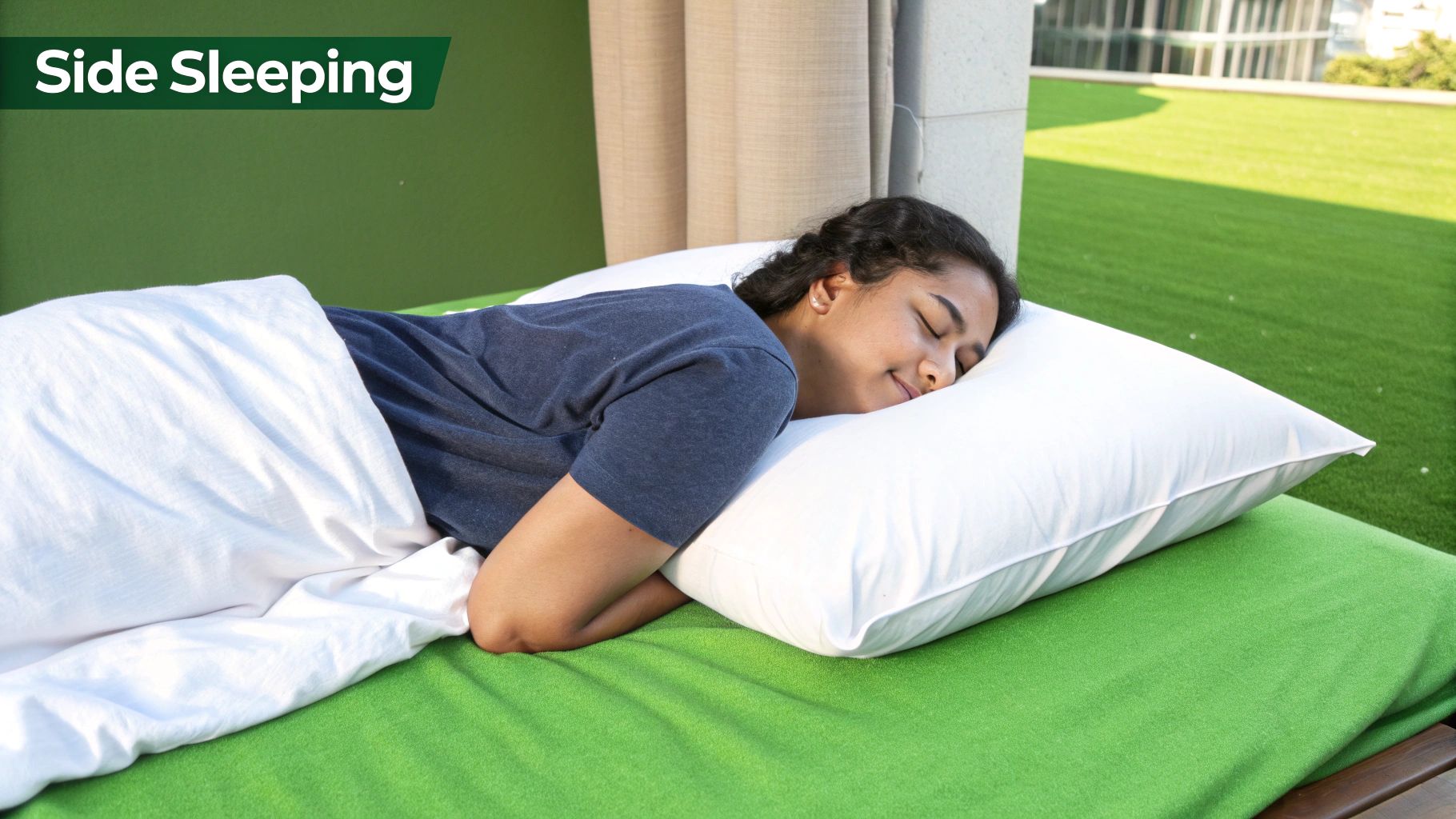
Adopting a side-sleeping position is one of the most immediate and effective ways to stop snoring naturally. This simple postural adjustment, known as positional therapy, keeps your airway more aligned and open by preventing the soft tissues from collapsing backward. For many, this change alone can dramatically reduce or even eliminate snoring without any other interventions.
How to Implement Positional Therapy
Training your body to stay on its side throughout the night requires a bit of strategy and consistency.
- Use Pillows for Support: A body pillow is an excellent tool to help maintain a side-sleeping position. Placing it against your back prevents you from rolling over, while hugging it in front provides comfort and support.
- Create a Gentle Reminder: Some people find success by placing a tennis ball in a pocket sewn onto the back of their pajama top. When you start to roll onto your back, the discomfort will prompt you to return to your side.
- Elevate Your Head: Using a wedge pillow or an adjustable bed to slightly elevate your head and upper body can also help prevent airway collapse, even if you shift positions during the night.
- Optimize Knee and Hip Alignment: Placing a small pillow between your knees helps align your hips and spine, making the side-sleeping position more comfortable and sustainable throughout the night.
Clinical Insight: Positional therapy is remarkably effective, especially for those whose snoring is position-dependent. Studies have shown that up to 70% of snorers experience significant improvement with positional therapy alone. Many mild sleep apnea cases also resolve or improve when back-sleeping is avoided.
This approach is highly recommended for individuals who notice their snoring is worse when they wake up on their back. It is a foundational strategy that can be combined with other natural methods for even greater success.
5. Weight Management and Lifestyle Optimization
Excess weight, particularly around the neck and throat, is a primary contributor to snoring. This added fatty tissue narrows the airway, increasing the likelihood that soft tissues like the soft palate and uvula will vibrate during sleep. Optimizing your weight is one of the most impactful ways to stop snoring naturally because it directly reduces the physical obstruction that causes the sound.
Losing even a moderate amount of weight can significantly decrease this fatty tissue, creating a wider and more stable airway. This not only quiets snoring but also improves overall respiratory function during sleep, leading to more restorative rest. This approach addresses the root anatomical cause rather than just managing a symptom, offering a powerful, long-term solution.
How to Implement Weight Management
A sustainable and holistic approach is far more effective than a crash diet. The goal is to create lifestyle changes that support both weight loss and better sleep.
- Aim for Modest Reduction: You don't need a dramatic transformation to see results. A weight loss of just 5-10% of your total body weight can lead to a noticeable reduction in snoring frequency and intensity.
- Combine Diet and Exercise: Integrate regular physical activity with dietary adjustments. Aim for at least 150 minutes of moderate aerobic exercise, such as brisk walking or cycling, per week, combined with strength training.
- Focus on Anti-Inflammatory Foods: Adopt a diet rich in whole foods, lean proteins, and vegetables, similar to the Mediterranean diet. Reducing processed foods, sugars, and excessive alcohol intake can decrease systemic inflammation, which also benefits airway health.
- Avoid Late-Night Eating: Finishing your last meal at least two to three hours before bed prevents GERD and acid reflux, which can irritate the throat and worsen snoring.
Clinical Insight: The link between weight and airway health is well-documented. Clinical studies consistently show that a 10% reduction in body weight can reduce the severity of sleep-disordered breathing by over 20%. Many patients who lose just 10-15 pounds report a 50% or greater reduction in their snoring within three months.
This strategy is especially crucial for individuals who have gained weight and noticed their snoring start or worsen concurrently. It provides a foundational improvement that enhances the effectiveness of other natural snoring remedies.
6. Nasal Saline Irrigation and Congestion Relief
Nasal congestion is a primary driver of mouth breathing, which in turn leads to a narrowed airway and the vibrations that cause snoring. When your nasal passages are blocked, your body instinctively switches to mouth breathing to get enough oxygen. This forces the tongue and soft palate to drop, obstructing the throat and significantly worsening snoring. Nasal saline irrigation is a powerful natural remedy that directly addresses this root cause.
By flushing the nasal passages with a saline solution, you can clear out mucus, allergens, and other irritants. This process reduces inflammation, moisturizes the nasal lining, and restores clear airflow. Restoring the ability to breathe comfortably through your nose is a fundamental step in retraining your body's respiratory patterns for quieter, more restful sleep.
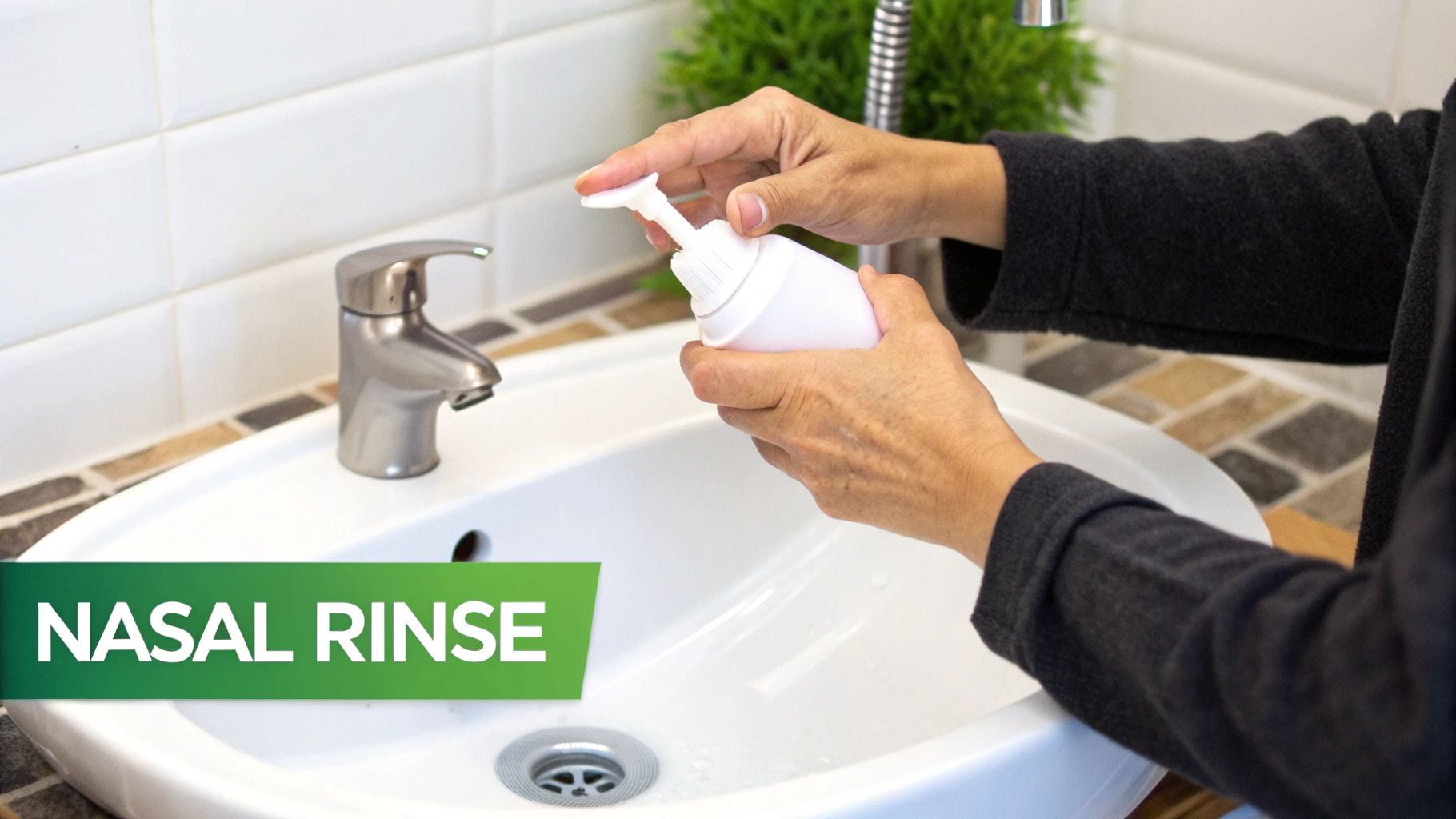
How to Implement Nasal Saline Irrigation
Consistency is crucial for managing congestion and maintaining open nasal passages. Incorporating this practice into your daily routine can yield significant results.
- Choose Your Device: You can use a neti pot, a simple squeeze bottle, or an electric nasal rinse device. All are effective, so choose the one you find most comfortable and convenient.
- Prepare the Solution: Always use distilled, sterile, or previously boiled water to avoid introducing contaminants. Mix it with a pre-measured packet or create an isotonic saline solution (0.9% sodium chloride) to match your body's natural salinity.
- Perform the Rinse: Lean forward over a sink, tilting your head to one side. Gently pour or squeeze the solution into the upper nostril, allowing it to flow through your nasal cavity and exit the other nostril. Repeat on the other side.
- Establish a Routine: For best results, perform the irrigation once in the morning to clear overnight buildup and again in the evening before bed to ensure clear breathing throughout the night.
Clinical Insight: Studies and patient reports highlight the effectiveness of this method. Individuals with seasonal allergies or chronic post-nasal drip have reported a 60-80% reduction in snoring after adopting a daily saline rinse routine. The mechanical action of clearing the airway provides immediate and noticeable relief.
This approach is especially beneficial for those whose snoring is linked to allergies, sinus issues, or environmental irritants. When combined with nasal breathing exercises, it creates a comprehensive strategy for keeping the airway open and functional. You can learn more about how airway health impacts sleep at pscharlotte.com.
7. Elevation of Head and Upper Body Positioning
One of the simplest yet most effective ways to stop snoring naturally involves changing your sleep posture through elevation. When you lie flat, gravity pulls your tongue and soft palate backward, narrowing your airway. This partial collapse leads to the tissue vibration that causes snoring. Elevating your head and upper body uses gravity to your advantage, keeping these tissues forward and your airway clear.
This positional modification directly addresses the physical mechanics of snoring. By creating a downward slope, it reduces airway resistance, improves airflow, and can even lessen nasal congestion by promoting sinus drainage. It is a foundational strategy that stabilizes the airway without requiring complex exercises or devices, offering immediate relief for many individuals.
How to Implement Head and Upper Body Elevation
Achieving the right angle and support is crucial for both comfort and effectiveness. The goal is to elevate the entire upper torso, not just bend your neck.
- Aim for the Right Angle: The ideal elevation is a 30 to 45-degree angle. This is steep enough to prevent airway collapse but gentle enough to allow for comfortable sleep.
- Use a Wedge Pillow or Adjustable Bed: The best tools for this are a foam wedge pillow designed for sleeping or an adjustable bed frame. These options provide consistent, stable support for your entire upper back, shoulders, and head.
- Stack Firm Pillows Correctly: If using regular pillows, stack two or three firm pillows to create a gradual incline. Start the stack from your mid-back upwards to ensure your whole upper torso is supported, preventing an unnatural bend in your neck.
- Combine with Side Sleeping: For maximum benefit, pair elevation with sleeping on your side. This combination offers two-pronged protection against airway collapse, making it one of the most powerful natural snoring solutions.
- Maintain the Position: Use body pillows placed behind your back or in front of you to prevent rolling onto your back during the night, ensuring you maintain the elevated, side-sleeping posture.
Clinical Insight: The impact of this simple change is well-documented. Studies show that proper upper body elevation can reduce the severity of sleep-disordered breathing events by over 30%. Many patients report a 40-60% reduction in snoring loudness and frequency simply by adopting this sleep position.
This approach is especially beneficial for back sleepers and those whose snoring worsens when lying flat. It is a non-invasive, accessible starting point for anyone looking to manage their snoring through practical, evidence-based lifestyle adjustments.
8. Oral Posture Correction and Jaw Positioning
Your waking posture directly influences your nighttime airway. Poor oral posture, such as a low-resting tongue, retracted jaw, or forward head position, significantly narrows the airway and is a primary biomechanical driver of snoring. Correcting these postural habits is one of the most effective ways to stop snoring naturally because it physically creates more space for air to pass through.
Proper oral posture involves the tongue resting gently against the roof of the mouth, which stabilizes the jaw and prevents the soft palate from collapsing backward. This alignment supports an open, unobstructed airway throughout the night. By consciously retraining your body's default posture during the day, you set the stage for better breathing mechanics and quieter, more restorative sleep.
How to Implement Oral Posture Correction
Building awareness and consistent practice are essential for correcting long-standing postural habits and creating lasting change.
- Practice the 'Mewing' Technique: This involves training your tongue to rest flat against the palate, not just the tip. Gently press the entire tongue upward, keeping your lips sealed and teeth lightly touching. This action helps tone the muscles that support your airway.
- Perform Chin Tucks: To counteract forward head posture, gently pull your chin back as if making a double chin, holding for five seconds. Repeat this 10 times, three times a day, to strengthen neck muscles and promote neutral head alignment where your ears are over your shoulders.
- Use Mirror Feedback: Regularly check your posture in a mirror or reflection. Notice if your head is jutting forward and consciously correct it. This visual reinforcement helps build the new postural habit.
- Address Physical Restrictions: Sometimes, a physical restriction like a tongue-tie can prevent proper tongue posture. If you struggle to rest your tongue on the palate, it may be worth investigating. You can find out more about how to check for a tongue-tie here.
Clinical Insight: Biomechanical interventions show powerful results. Studies reveal that patients correcting forward head posture can achieve a 30-50% reduction in snoring. When oral posture correction is combined with orofacial myofunctional therapy, success rates in improving mild sleep-disordered breathing can reach 60% or higher.
This approach is especially powerful for individuals who notice their snoring is worse in certain positions or who also experience neck pain or headaches. It directly addresses the physical structure of the airway for a fundamental, non-invasive solution.
9. Allergen Avoidance and Environmental Control
Allergies and environmental irritants are significant but often overlooked causes of snoring. When you inhale allergens like dust mites, pollen, or pet dander, your nasal passages can become inflamed and swollen. This inflammation leads to congestion and post-nasal drip, forcing you to breathe through your mouth and increasing the likelihood of airway collapse and snoring.
Controlling your bedroom environment is one of the most direct ways to stop snoring naturally if allergies are a contributing factor. By removing these triggers, you reduce nasal inflammation, maintain open airways for comfortable nasal breathing, and address a primary cause of airway obstruction. This approach is not just about managing symptoms; it is about creating a sleep space that actively supports healthy, quiet breathing.
How to Implement Environmental Controls
A systematic approach to reducing allergens in your bedroom can yield significant improvements in both allergy symptoms and snoring.
- Purify Your Air: Use a high-quality HEPA (High-Efficiency Particulate Air) filter in your bedroom to capture airborne particles like pollen, dust, and dander. Run it continuously, especially during sleep.
- Manage Your Bedding: Wash all bedding, including sheets, pillowcases, and blankets, weekly in hot water (at least 130°F or 54°C) to kill dust mites. Encase your mattress, pillows, and duvet in allergen-proof covers.
- Control Humidity: Maintain indoor humidity levels between 30-50%. High humidity encourages mold and dust mite growth, while low humidity can dry out your airways. Use a dehumidifier or humidifier as needed.
- Optimize Your Surfaces: If possible, replace bedroom carpeting with hard flooring, which is easier to keep free of dust. Minimize clutter and fabric-covered furniture where allergens can accumulate, and keep pets out of the bedroom.
Clinical Insight: Studies focused on environmental modifications show a clear link between allergen reduction and snoring improvement. Allergy sufferers who implemented strict bedroom allergen avoidance protocols reported a 50-70% reduction in snoring severity. This highlights how managing your environment directly impacts airway health and sleep quality.
This method is particularly effective for individuals whose snoring worsens seasonally or is accompanied by symptoms like a stuffy nose, sneezing, or itchy eyes. By creating an allergen-free sanctuary, you remove a major obstacle to effortless nasal breathing and quiet sleep.
10. Hydration Optimization and Mucous Membrane Health
Proper hydration is a foundational element of respiratory health, yet it is often overlooked as a way to stop snoring naturally. When your body is dehydrated, your mucus secretions become thicker and stickier. This can lead to congestion in your nasal passages and soft palate, narrowing the airway and creating the perfect conditions for the vibrations that cause snoring.
Optimizing your fluid intake helps maintain the health of your mucous membranes, ensuring they are moist and thin. This promotes proper drainage of secretions and keeps your airways clear for unobstructed breathing during sleep. While hydration alone may not completely eliminate snoring, it is a crucial supportive strategy that enhances the effectiveness of nearly every other natural treatment, from nasal breathing to positional therapy.
How to Implement Hydration Optimization
Integrating consistent hydration into your daily routine is a simple yet powerful step toward quieter nights. The goal is to keep your respiratory tissues healthy and clear.
- Establish a Baseline: Aim to drink 8-10 glasses of water daily. Increase this amount if you exercise regularly, live in a dry climate, or consume dehydrating beverages like coffee and alcohol.
- Time Your Intake: Front-load your hydration during the day and begin to taper off a few hours before bed. This prevents disruptive nighttime urination while ensuring you go to sleep well-hydrated. A small glass 60 minutes before bed is often beneficial.
- Add Atmospheric Moisture: Use a humidifier in your bedroom, especially during dry seasons or in arid climates. This adds moisture to the air you breathe, preventing your nasal and throat passages from drying out overnight.
- Use Saline Support: A saline nasal spray used just before bed can directly moisten the nasal passages. This practice is particularly helpful for keeping mucus thin and preventing airway stickiness that contributes to snoring.
Clinical Insight: Observational studies show a clear link between hydration and respiratory function. For instance, individuals in dry climates who implemented a combination of proper hydration and in-room humidifiers reported significant reductions in snoring and morning throat irritation. The principle is simple: hydrated tissues are less likely to become inflamed and obstructive.
This approach is particularly beneficial for anyone living in a dry environment, those who frequently suffer from nasal congestion, or individuals who consume dehydrating substances like alcohol or caffeine in the evening. Optimizing hydration is a low-effort, high-impact strategy that supports all other ways to stop snoring naturally.
Comparison of 10 Natural Snoring Remedies
| Intervention | Implementation Complexity 🔄 | Resource Requirements ⚡ | Expected Outcomes ⭐📊 | Ideal Use Cases 📊 | Key Advantages 💡 |
|---|---|---|---|---|---|
| Nasal Breathing Exercises and Restoration | Moderate — daily practice, technique training | Low — time, possible nasal strips/therapist | ⭐⭐⭐ — 40–60% snoring reduction over 4–8 weeks; improved sleep quality | Mouth-breathers, mild–moderate snoring, postural dysfunction | Addresses root cause, non‑invasive, broad health benefits |
| Orofacial Myofunctional Therapy (OMT) | High — structured program, months of practice | Moderate — certified therapist, short daily sessions | ⭐⭐⭐⭐ — 36–62% AHI reduction in mild–moderate OSA; lasting results with adherence | Tongue/posture dysfunction, mild–moderate OSA, TMJ issues | Evidence‑based retraining, durable neuromotor change |
| Buteyko Breathing Technique | High — steep learning curve, guided instruction | Moderate — classes or instructor, daily practice time | ⭐⭐⭐ — 30–50% reduction in apnea severity over 2–3 months | Overbreathing/hyperventilation issues, nasal breathing retraining | Improves autonomic regulation; no equipment; complementary |
| Side‑Sleeping / Positional Therapy | Low — habit change or simple device | Low — pillows or positional reminder device | ⭐⭐⭐ — immediate snoring reduction; 50–70% effective for positional snorers | Positional snorers, mild–moderate OSA | Immediate, low cost, safe for all ages |
| Weight Management & Lifestyle Optimization | High — sustained behavior change over months | Moderate — nutrition/exercise support, time investment | ⭐⭐⭐⭐ — significant long‑term reductions; 10% weight loss lowers severity | Overweight/obese individuals, multifactorial snoring contributors | Wide-ranging health gains; may eliminate need for other treatments |
| Nasal Saline Irrigation & Congestion Relief | Low — simple technique, short learning period | Low — neti pot/saline, filtered water | ⭐⭐⭐ — rapid congestion relief; large effect when congestion is primary cause | Allergy or congestion‑driven snoring | Fast onset, affordable, safe adjunct therapy |
| Head & Upper Body Elevation | Low — simple setup (adjustable bed or pillows) | Low — pillows or adjustable bed | ⭐⭐⭐ — immediate reduction; 25–35% AHI improvement in some studies | GERD‑related snoring, congestion, mild OSA | Immediate, non‑invasive, aids reflux and drainage |
| Oral Posture Correction & Jaw Positioning | Moderate — habit retraining (4–6 weeks) | Low — awareness, possible professional assessment | ⭐⭐⭐ — 30–60% improvement when combined with OMT | Forward head posture, tongue thrust, TMJ dysfunction | Targets biomechanical causes; improves TMJ and facial posture |
| Allergen Avoidance & Environmental Control | Moderate — home changes and ongoing maintenance | Moderate — HEPA filters, bedding, humidity control | ⭐⭐⭐ — 50–70% improvement for allergy‑related snoring | Allergy‑triggered nasal inflammation, household exposures | Reduces allergy symptoms, benefits whole household |
| Hydration Optimization & Mucous Membrane Health | Low — daily habit adjustments | Low — water, optional humidifier | ⭐⭐ — modest improvements (30–40%) when dehydration is a factor | Dry climates, dehydrated individuals, adjunctive use | Simple, systemic benefits; complements other therapies |
Your Next Step Towards Silent, Restful Sleep
Navigating the journey to stop snoring naturally is about much more than just quieting a nightly nuisance; it's about reclaiming your health, improving your sleep quality, and restoring harmony in your household. Throughout this guide, we have explored a comprehensive suite of powerful, non-invasive strategies that address the root causes of snoring. You've learned that the path to silent nights is multifaceted, involving a conscious effort to retrain your body and optimize your environment.
The key takeaway is that you have significant control over the factors contributing to your snoring. These methods are not quick fixes but sustainable lifestyle adjustments that work synergistically to open your airway, reduce tissue vibration, and promote healthy, efficient breathing. From the foundational practice of restoring nasal breathing to the muscle-toning exercises of orofacial myofunctional therapy, each strategy empowers you to make meaningful changes.
Weaving Your Personalized Anti-Snoring Plan
The true power of this information lies in its application. A scattered, inconsistent approach will yield limited results. Instead, think of these techniques as building blocks for a personalized action plan. Start by identifying the most likely contributors to your snoring. Is it chronic nasal congestion? Poor oral posture during the day? Or perhaps a tendency to sleep on your back?
Here are some actionable next steps to put these concepts into practice:
- Start with Self-Assessment: For one week, keep a simple sleep journal. Note your sleep position, any alcohol or heavy meals before bed, and the perceived severity of your snoring (you can use a sleep tracking app or ask a partner). This will provide a baseline and highlight clear patterns.
- Pick Two High-Impact Habits: Don't try to change everything at once. Select two strategies that seem most relevant to you. For instance, you might commit to practicing Buteyko breathing exercises for ten minutes each day and consistently using a nasal saline rinse before bed.
- Optimize Your Sleep Sanctuary: Make immediate, tangible changes to your environment. Elevate the head of your bed with risers, invest in a quality pillow that encourages side-sleeping, and use an air purifier to manage potential allergens. These adjustments create a supportive foundation for your other efforts.
The cumulative effect of these natural snoring solutions can be transformative. Mastering them means you are not just masking a symptom; you are fundamentally improving your respiratory function, which has far-reaching benefits for your energy levels, cognitive function, and long-term cardiovascular health.
When Natural Ways Aren't Enough: Recognizing the Need for Expert Guidance
While the ways to stop snoring naturally are incredibly effective for many, it is crucial to recognize their limitations. Loud, chronic snoring, especially when accompanied by daytime sleepiness, morning headaches, or witnessed pauses in breathing, can be a sign of a more serious underlying condition like obstructive sleep apnea (OSA).
If you have diligently applied these natural strategies without significant improvement, or if you suspect your snoring is a symptom of something more, seeking a professional evaluation is the most important next step you can take. Ignoring these warning signs can have serious consequences for your health. A specialist can provide a definitive diagnosis and guide you toward a treatment plan that addresses the specific anatomical or physiological cause of your sleep-disordered breathing. Your journey toward quiet, restorative sleep is a worthy investment in your overall well-being.
If your efforts to stop snoring naturally haven't delivered the results you need, or if you suspect a deeper issue like sleep apnea, don't wait. The expert team at the Pain and Sleep Therapy Center, led by Dr. Greg D. Larson, specializes in advanced diagnostics and personalized, non-invasive treatments that integrate many of the principles discussed here. Take the definitive step towards a lasting solution by scheduling a consultation at the Pain and Sleep Therapy Center today.