That loud, disruptive snoring from your partner might be more than just a nightly annoyance—it’s often the most obvious sign of sleep apnea. But the real red flags are the things that happen between the snores: the witnessed pauses in breathing, the sudden gasps for air, and the persistent, bone-deep exhaustion the next day that no amount of coffee can touch.
These aren't just quirks of a bad night's sleep. They're critical signals that something is wrong.
Decoding the Signs and Symptoms of Sleep Apnea
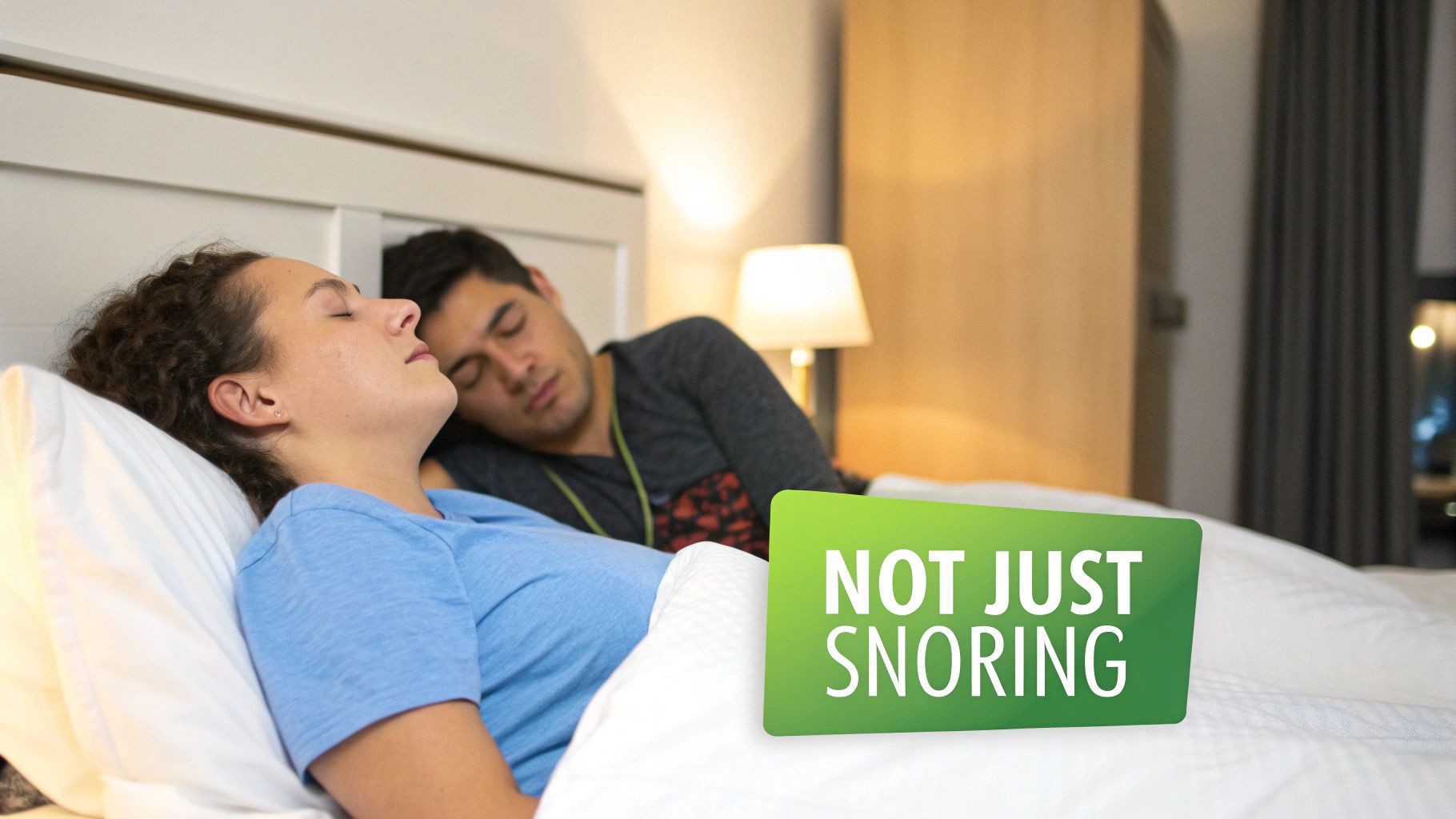
It’s easy to brush off snoring as a harmless, if frustrating, habit. But it’s crucial to know the difference between simple snoring and the more troubling signs of sleep apnea.
Think of your airway as a flexible straw. When you sleep, the muscles in your throat naturally relax. For someone with obstructive sleep apnea (OSA), those muscles relax a little too much, causing the "straw" to collapse and temporarily cut off your air supply.
This blockage is what triggers the most telling symptoms. That unnerving silence after a loud bout of snoring? That’s often a breathing pause, what we call an apnea event. Your brain, sensing a dangerous dip in oxygen, jolts you awake with a sudden gasp or snort just long enough to reopen your airway. This cycle can repeat hundreds of times a night, often without you ever consciously remembering it.
More Than Just a Bad Night's Sleep
The constant interruptions have a profound impact that stretches far beyond the bedroom. While your partner might be the one noticing the nighttime drama, you’re the one left dealing with the consequences all day long.
We can break down the primary symptoms into two main camps:
- Nighttime Indicators: These are the events that happen while you're asleep, and they're usually what a bed partner reports. Think loud, chronic snoring, audible gasping or choking, and restless tossing and turning.
- Daytime Consequences: These are the direct fallout from getting such fragmented, poor-quality sleep. This looks like excessive daytime sleepiness, morning headaches, difficulty concentrating (that "brain fog" feeling), and unexplained moodiness or irritability.
This isn’t just about feeling a bit tired. It’s a state of chronic exhaustion that seeps into your work, your relationships, and your overall quality of life. The problem is far more widespread than many realize, with some studies suggesting that sleep apnea affects a staggering 936 million adults globally. Here in the United States, at least 25 million adults are estimated to have OSA.
The real issue with sleep apnea isn't the sound of the snoring itself, but the silence that follows. Those pauses are moments when your body is being starved of oxygen, putting immense strain on your heart and brain.
Recognizing these symptoms is the first, most important step toward getting your health back. Instead of seeing them as personal failings, view them as clues your body is giving you.
If you're struggling with snoring and daytime fatigue, our guide on natural ways to stop snoring can offer some great starting tips. However, understanding the full picture is key to getting the right diagnosis and care.
Sleep Apnea Red Flags At a Glance
Sometimes, seeing all the symptoms laid out can help connect the dots. This table offers a quick snapshot of what to look for, both during the night and throughout the day.
| Symptom Category | What to Watch For | How It Manifests |
|---|---|---|
| Nighttime | Loud, persistent snoring that disrupts others | The sound is often punctuated by sudden choking, snorting, or gasping noises. |
| Nighttime | Witnessed pauses in breathing (apneas) | A bed partner observes moments where breathing completely stops, followed by an abrupt awakening. |
| Nighttime | Restless sleep | Frequent tossing and turning, or waking up often throughout the night for no clear reason. |
| Daytime | Excessive daytime sleepiness | Feeling an overwhelming urge to sleep during the day, even after a "full" night's rest. |
| Daytime | Morning headaches | Waking up with a dull, persistent headache that typically fades within a few hours. |
| Daytime | Cognitive issues ("brain fog") | Difficulty concentrating, memory problems, or a feeling of mental cloudiness. |
| Daytime | Mood changes | Increased irritability, anxiety, or feelings of depression without an obvious cause. |
If several of these red flags feel familiar, it's a strong sign that it's time to investigate further. A proper diagnosis is the only way to get to the root of the problem and start feeling like yourself again.
The Nightly Battle Inside Your Airway
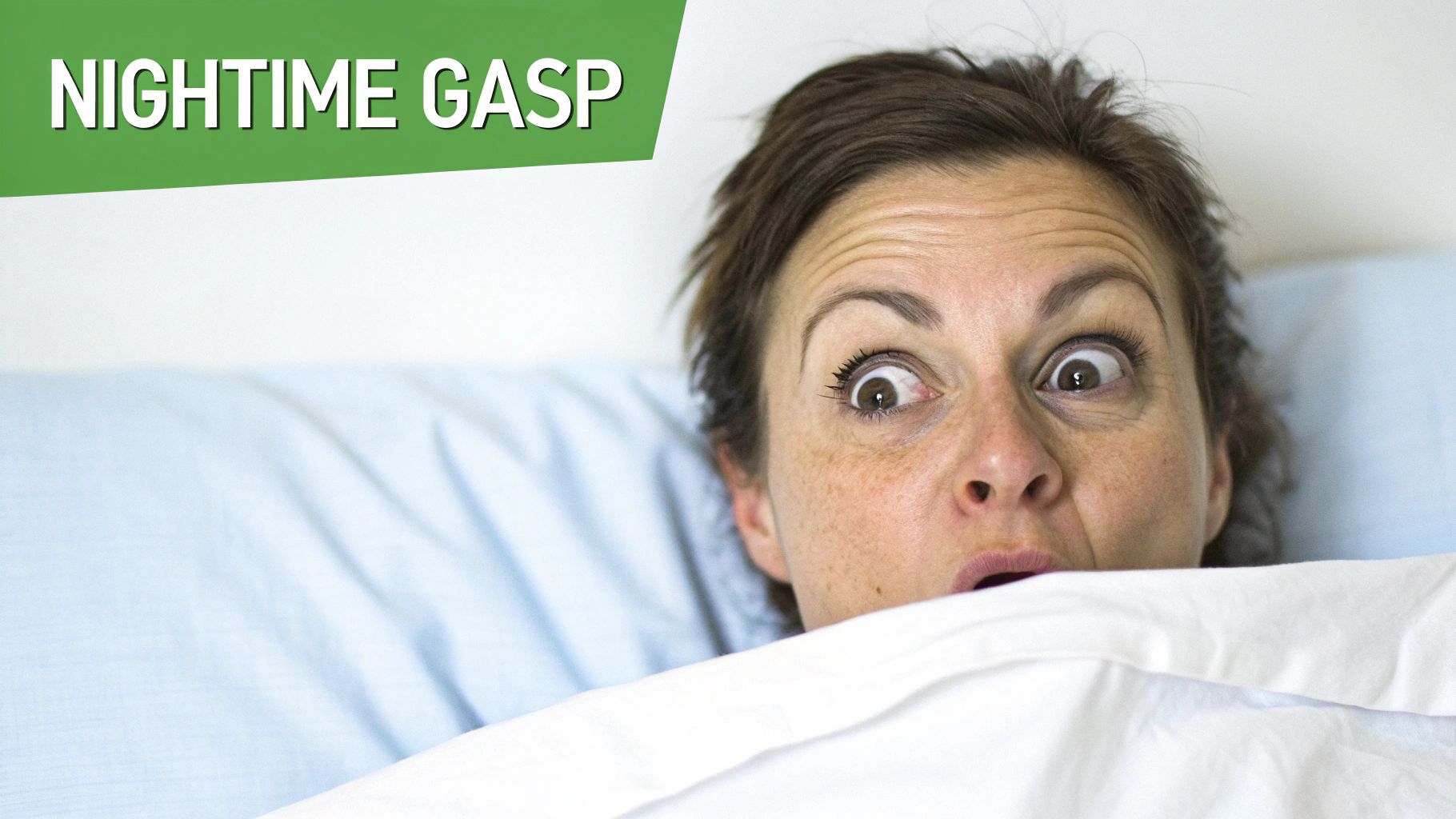
While feeling exhausted during the day is a huge red flag, the real fight in sleep apnea happens long after you’ve turned out the lights. These nighttime symptoms aren’t just annoying disturbances; they are the direct result of your body repeatedly struggling to breathe, preventing you from getting the deep, restorative rest you need to function.
For many people, the first sign is loud, persistent snoring. But it’s the silence that follows the snoring that’s truly concerning. That sudden quiet is an apnea event—a moment where breathing stops entirely because the airway has collapsed.
Your brain, sensing the dangerous drop in oxygen, immediately sounds an internal alarm. This triggers a frantic, sudden awakening, often with a loud gasp, snort, or choking sound, just long enough to force the airway open and take a breath. This brutal cycle can repeat dozens, or even hundreds, of times an hour, all without you consciously remembering it the next morning.
Your Brain's Security System on High Alert
Think of your brain as a hyper-vigilant security system for your body. Its main job during sleep is to monitor vital functions, especially your oxygen levels.
When an apnea event happens and oxygen plummets, it's like a burglar tripping a sensor. The brain’s alarm system blares, jolting you out of deep sleep just enough to get you breathing again. The immediate danger is gone, but the system stays on high alert, waiting for the next "break-in."
Imagine a home security alarm going off every few minutes, all night long. You would never feel truly rested or safe. This is exactly what happens to your brain during sleep apnea, keeping you from ever reaching the deep, healing stages of sleep.
This constant state of emergency is why you can be in bed for eight hours and wake up feeling like you haven't slept at all. Your body spent the night fighting to survive, not resting and repairing itself. You can learn more about the mechanics of this condition in our detailed explanation of what obstructive sleep apnea is.
Beyond Just Gasping and Snoring
While choking and gasping are dramatic signs, other nighttime symptoms also point to this hidden battle. Many are subtle and easily brushed off or blamed on something else.
- Frequent Nighttime Urination (Nocturia): Waking up to use the bathroom multiple times isn't just a nuisance. During an apnea event, pressure changes in your chest can trigger a hormone that ramps up urine production, sending you on repeated trips.
- Restless Tossing and Turning: The physical struggle for air often looks like agitated sleep. If your bed partner complains about your constant movement or you find yourself kicking off the covers, it could be your body’s reaction to being repeatedly jolted awake.
- Waking with a Dry Mouth or Sore Throat: Having to breathe through your mouth all night to get enough air is a common workaround for a blocked airway, but it leaves you waking up with serious discomfort.
The Snowball Effect of Disrupted Nights
Each of these nighttime events—the snores, the pauses, the gasps, the trips to the bathroom—are individual clues. Together, they paint a clear picture of fragmented, poor-quality sleep.
Individually, they might seem like minor issues. But when they happen relentlessly, night after night, they create a massive sleep debt that impacts every single aspect of your health. Recognizing these nighttime disturbances is the critical first step toward uncovering the root cause and finally finding a path back to peaceful, uninterrupted rest.
The Daytime Fallout from a Sleepless Night
The consequences of a night spent gasping for air don't just disappear at sunrise. They spill over into every part of your day, often disguised as stress, aging, or just the side effects of a busy life. So many people push through these daily struggles for years, never connecting them to a serious underlying medical condition.
This isn’t about feeling a little groggy after one bad night. We're talking about a profound, bone-deep exhaustion called excessive daytime sleepiness (hypersomnia). It’s the kind of tired that has you fighting to stay awake in meetings, feeling dangerously drowsy behind the wheel, or needing a nap just to function in the afternoon.
This relentless fatigue is a classic sign of sleep apnea. Because your body is constantly jolted awake to breathe, you never get to sink into the deep, restorative stages of sleep. You might spend eight hours in bed, but you're not getting any of the benefits, leaving you to face the day on an empty tank.
More Than Just Feeling Tired
This chronic sleep debt does more than just make you sleepy. It triggers a whole cascade of cognitive and emotional issues that can seriously impact your quality of life. Many people end up blaming themselves, thinking these struggles are personal failings instead of medical clues.
Common daytime signs include:
- Morning Headaches: Waking up with a dull, throbbing headache is a frequent complaint. This often happens because the blood vessels in your brain expand overnight, trying to make up for low oxygen levels.
- Persistent "Brain Fog": This is that frustrating feeling of mental cloudiness where you can't concentrate, remember things, or think clearly. Simple tasks can feel overwhelming, and you might find yourself reading the same email over and over.
- Unexplained Mood Swings: When you're constantly exhausted, your emotional fuse gets incredibly short. This can show up as irritability, anxiety, or even feelings of depression that seem to come out of nowhere.
It’s so important to reframe these experiences. They aren't character flaws; they're your body's physiological response to being in distress.
A Global Problem Hiding in Plain Sight
This isn't just a minor inconvenience; it's a massive public health issue. That constant daytime fatigue, a sneaky but powerful symptom of sleep apnea, affects millions. Recent research found that 22.6% of adults globally with moderate-to-severe OSA are battling this exhaustion every single day. That finding, from a 2021 study that analyzed over 11.6 million nights of sleep data across 20 countries, shows just how widespread this is.
Here in the United States, where 50-70 million people have a sleep disorder, OSA-driven tiredness is a major problem that can even triple the risk of a car crash. You can dig deeper into the global sleep apnea prevalence and its effects in the full study.
Think of your brain's daily energy as a phone battery. A good night's sleep charges it to 100%. But with sleep apnea, your charger is getting unplugged and plugged back in all night long. You wake up with only 20% battery—and you have to make that last the entire day.
This chronic energy deficit is why you might find yourself dozing off in quiet situations, like watching a movie or riding as a passenger in a car. It's not laziness. It's your body's desperate cry for the rest it was denied all night.
Realizing that your daily struggles with focus, mood, and energy are direct signs of sleep apnea is the first, most powerful step you can take toward getting answers and reclaiming your life.
Recognizing Sleep Apnea in Children
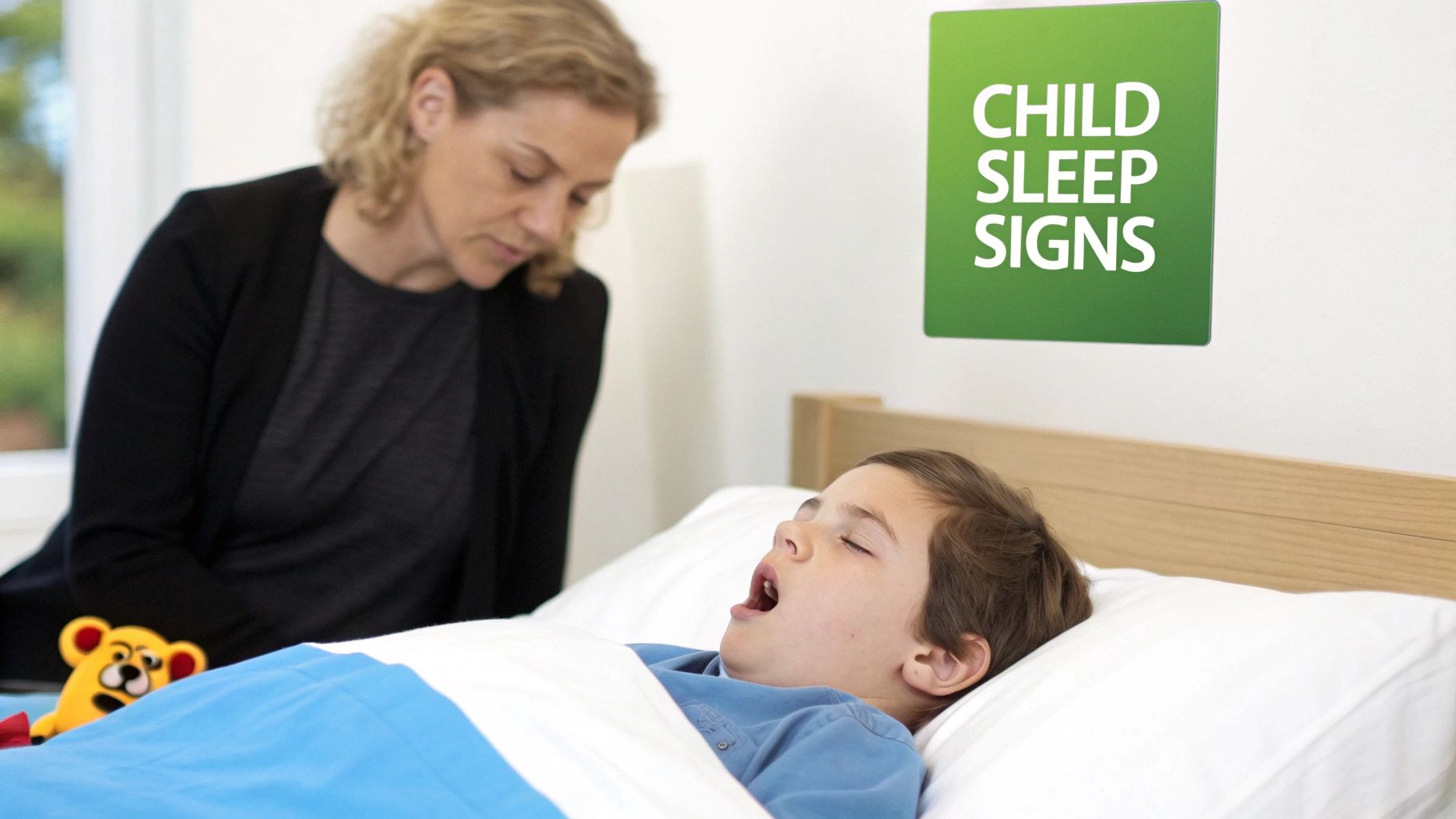
Sleep apnea isn’t just an adult problem. But the way it shows up in kids is often much more subtle and easily mistaken for something else. For parents, learning to spot these unique clues is the first step in protecting their child’s health and development for years to come.
In adults, we often look for loud snoring and obvious daytime exhaustion. Children, however, can present a completely different picture. While some kids do snore, many of the most telling signs are behavioral and physical changes that are easy to overlook.
It's a common myth that sleep apnea only affects older, overweight men. The reality is that an estimated 1 in 10 children has some form of sleep-disordered breathing. Catching it early is critical, as untreated pediatric sleep apnea can affect everything from facial growth to their performance in school.
Beyond Snoring: What to Look For
Parents often have to play detective, piecing together clues from their child's sleep habits and daytime behavior. Many of the most important signs are often brushed off as normal childhood quirks or even behavioral issues, which is why seeing the whole picture is so important.
Common signs of sleep apnea in children include:
- Persistent Mouth Breathing: If your child breathes through their mouth, both during the day and while asleep, it’s a major red flag that something is compromising their nasal airway.
- Restless or Unusual Sleep Positions: Kids with sleep apnea toss and turn all night long. You might find them in strange positions—like with their head hanging off the bed or neck arched way back—as their body instinctively tries to open their airway.
- Heavy Sweating at Night: Waking up with damp pajamas or sheets can be a sign of the extra effort their body is putting in just to breathe.
- Chronic Bedwetting: While common in toddlers, bedwetting that continues past the typical age can be linked to the fragmented sleep that apnea causes.
The Daytime Impact on Behavior and Growth
That nightly struggle for air has profound consequences during the day, and they’re often mislabeled. The chronic lack of deep, restorative sleep can manifest in ways that look a lot like other conditions, leading to confusion and a delayed diagnosis.
One of the most common misdiagnoses is attention-deficit/hyperactivity disorder (ADHD). A child who is chronically sleep-deprived can be hyperactive, irritable, and unable to focus at school. It's essential to rule out a sleep disorder as the root cause before accepting a behavioral diagnosis.
On top of that, the body releases growth hormone during deep sleep. When sleep is constantly interrupted, this process is disrupted, which can lead to slower physical growth compared to their peers. Spotting these signs is crucial.
Identifying the Root Cause for a Lasting Solution
For many children, the immediate culprit behind obstructive sleep apnea is enlarged tonsils and adenoids. However, other structural issues like a narrow palate or a tongue-tie can also be major contributors by restricting proper oral posture and airway function.
Early evaluation is key. Here at the Pain and Sleep Therapy Center, we focus on identifying and addressing these foundational problems. A proper diagnosis opens the door to treatments that provide a real, lasting solution, ensuring your child can breathe properly, sleep soundly, and thrive. By addressing the root cause, we can support healthy facial and airway development for life.
Understanding Your Risk Factors and Health Complications
Recognizing the signs of sleep apnea is the first step, but understanding why it's happening and what it's doing to your body is just as important. Certain things can make you more likely to have your airway collapse during sleep, setting the stage for this nightly struggle.
This isn't about blame; it’s about getting the knowledge you need to protect your health for the long haul.
Just like a narrow two-lane road gets jammed with traffic more easily than a wide highway, certain physical traits can create an airway that's more likely to get blocked. And it’s not always about weight—it’s about your body's unique structure.
Key Factors That Increase Your Risk
Often, it's not just one thing but a combination of factors that contribute to disordered breathing at night.
- Excess Body Weight: This is probably the most well-known risk factor. Extra fatty tissue can build up around the upper airway, narrowing the passage and making it more likely to collapse when you lie down.
- Large Neck Circumference: A larger neck—generally over 17 inches for men and 16 inches for women—is a big red flag. It often means there's more soft tissue in the throat area that can obstruct breathing.
- Anatomical Structure: Some of us are just built with narrower throats, a larger tongue, or big tonsils and adenoids. The shape and position of your jaw also play a huge role in keeping your airway open.
- Age and Gender: Men are more prone to developing sleep apnea than women, but a woman's risk jumps significantly after menopause. For both genders, the risk climbs as we get older and muscle tone naturally decreases.
It's critical to remember that even slender people with none of these obvious risk factors can still have sleep apnea because of their underlying anatomy. That’s why a professional evaluation is so important.
The Ripple Effect on Your Overall Health
Leaving sleep apnea untreated is like ignoring a small leak in your roof. At first, it’s just a minor drip, but over time, the damage spreads and can seriously compromise the entire house. The repeated drops in oxygen and the constant stress of waking up put a huge strain on your body.
Every time you stop breathing, your body floods with stress hormones like adrenaline. This happens over and over, all night long.
Think of it like this: Your body is being forced to run a high-stress marathon every single night, for hours on end. This nightly battle drives up your blood pressure, wears out your heart, and messes with your body's ability to regulate itself, paving the way for major health problems.
This chronic, nightly strain is directly linked to some very serious conditions:
- High Blood Pressure (Hypertension): Those frequent drops in oxygen cause your blood vessels to tighten up while stress hormones surge, leading to consistently high blood pressure.
- Heart Disease: The constant strain on your heart dramatically increases your risk for heart attacks, an irregular heartbeat (atrial fibrillation), and even heart failure.
- Stroke: People with untreated moderate to severe sleep apnea are up to four times more likely to have a stroke. The constant swings in oxygen and blood pressure can damage the delicate blood vessels in the brain.
- Type 2 Diabetes: Sleep apnea can interfere with how your body uses insulin, leading to insulin resistance and a much higher chance of developing type 2 diabetes.
Understanding this connection is incredibly powerful. It changes how you see the symptoms of sleep apnea—they're not just little annoyances but serious warning signs. Getting a diagnosis is one of the most proactive things you can do to prevent these complications and protect your health for years to come.
How to Find Lasting Relief
Recognizing the signs of sleep apnea is a huge first step. But it immediately leads to the most important question: what now?
Finding lasting relief isn't about just managing symptoms—it’s about getting to the root cause of why your airway isn't staying open at night. Too often, treatment is presented as a one-size-fits-all fix, but a truly effective approach has to be personalized to your unique anatomy and needs.
The journey starts with a proper diagnosis. This critical step demystifies what’s actually happening inside your body and gives us a clear roadmap for treatment. We're not just identifying a problem; we're uncovering the why behind it.
Moving Beyond Standard Treatments
While CPAP (Continuous Positive Airway Pressure) is the most well-known treatment, it’s not the only option. And frankly, it’s not the right fit for everyone.
Modern sleep medicine offers a range of effective, non-invasive solutions that focus on correcting the underlying structural and functional issues causing the problem in the first place. The goal is simple: find a solution you can comfortably use every single night, because consistency is what reclaims your health.
Here are a few powerful alternatives:
- Custom Oral Appliances: These devices look a lot like a mouthguard and are designed to gently shift your lower jaw forward while you sleep. This subtle repositioning is often all it takes to keep your airway open all night, offering a comfortable and portable alternative to a CPAP machine.
- Orofacial Myofunctional Therapy (OMT): Think of this as physical therapy for the muscles in your mouth, tongue, and throat. OMT uses specific exercises to strengthen the very muscles responsible for keeping your airway clear. A stronger, more toned airway is far less likely to collapse during sleep.
- Specialized Breathing Techniques: Methods like Buteyko breathing help retrain your body's ingrained breathing patterns. By promoting nasal breathing and correcting dysfunctional habits, you can improve oxygen efficiency and reduce the strain on your system, both day and night.
This visual decision tree shows just how easily untreated sleep apnea can snowball into serious health issues.
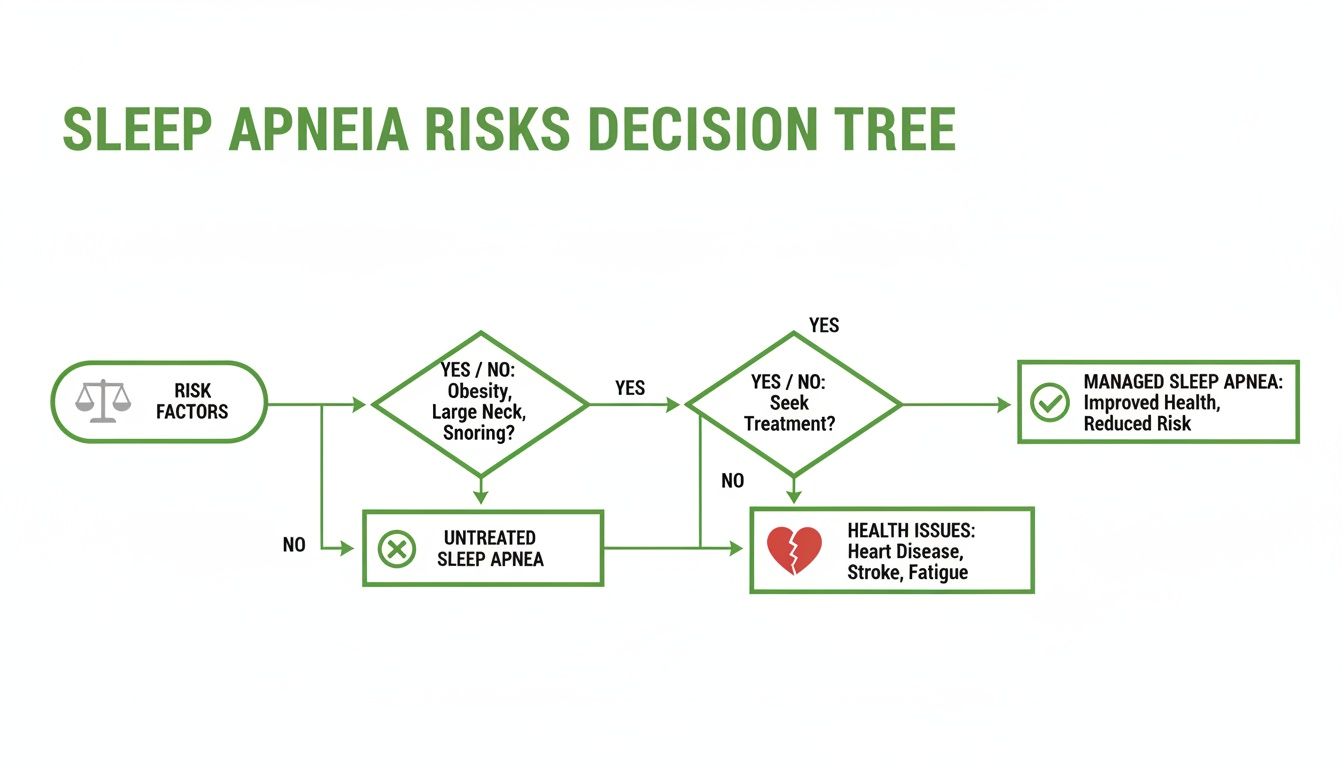
The flowchart makes it clear: ignoring the signs of sleep apnea isn’t a passive choice. It's a direct path toward increased health complications down the road.
A Collaborative Approach to Your Health
The most effective treatment plans are never created in a vacuum. Real, lasting relief comes from an interdisciplinary team that looks at your health from every possible angle.
By bringing together experts in dental sleep medicine, myofunctional therapy, and other related specialties, we build a plan that is truly tailored to you. This collaborative strategy ensures that every single contributing factor is addressed—from your jaw position and muscle tone to your everyday breathing habits.
It’s all about empowering you with the knowledge and tools to take back control of your sleep, and by extension, your overall vitality.
Lasting relief is not just about stopping the snores or the gasps. It's about restoring your body's natural ability to breathe and sleep peacefully, allowing you to wake up feeling rested, focused, and ready for the day.
At the Pain and Sleep Therapy Center, we are committed to this root-cause approach. We believe in providing solutions that do more than just put a temporary patch on the problem. If you're tired of feeling exhausted and want to explore your options, you can learn more about sleep apnea treatment without CPAP in our detailed guide. Effective, personalized care is within reach.
Your Sleep Apnea Questions, Answered
Once you start connecting the dots between symptoms like fatigue, snoring, and poor sleep, it's normal for more questions to pop up. Here are some of the most common ones we hear from patients at our center, with clear, straightforward answers to help you understand what's really going on.
I Don't Snore, So I Can't Have Sleep Apnea, Right?
Not at all. While loud, chronic snoring is the most famous sign of obstructive sleep apnea, it's far from the only one. Relying on snoring as the single deciding factor is a huge mistake and causes many people to go undiagnosed.
Some people, especially those with Central Sleep Apnea (a version where the brain forgets to tell the body to breathe), may not snore at all. For others with obstructive sleep apnea, the main red flags might be silent pauses in breathing, waking up gasping for air, or just incredibly restless sleep.
How Do Symptoms Look Different in Kids?
The signs in children can be completely different from adults, which is a major reason pediatric sleep apnea is so often missed or mistaken for something else. Most people think of an adult who snores loudly and is exhausted during the day.
Kids, however, often show behavioral problems that look a lot like ADHD. Other common signs in children include:
- Bedwetting that continues past the typical age
- Breathing through their mouth constantly, day and night
- Sleeping in strange positions, like with their neck arched way back
- Even falling behind on their growth charts
Is a CPAP Machine My Only Option for Treatment?
Definitely not. A CPAP machine is just one tool in the toolbox, and modern sleep medicine has come a long way. The goal today isn't just to force air into your lungs—it's to find and fix the root cause of why your airway is collapsing in the first place.
The best treatment is one that fits your specific anatomy, your lifestyle, and your personal comfort. For many of our patients, a less invasive approach leads to far better long-term results and health improvements.
Depending on your unique needs, treatments like a custom-fitted oral appliance can be a fantastic alternative. These devices gently guide your jaw forward to keep your airway open while you sleep. We also use orofacial myofunctional therapy to strengthen the muscles around the airway, making them less likely to collapse.
Can I Just Lose Weight to Cure My Sleep Apnea?
For some people, lifestyle changes can make a world of difference and may even resolve a mild case of sleep apnea. Excess weight, especially around the neck, is a major risk factor because it physically narrows the airway.
Losing weight, exercising regularly, and avoiding things like alcohol or sedatives before bed can seriously reduce the severity of symptoms. But for many, anatomy is a big piece of the puzzle, too. That’s why lifestyle changes are often most powerful when paired with other targeted treatments that address the specific structural reason for your sleep-disordered breathing.
If these signs and symptoms sound familiar, it's time to stop guessing and start getting answers. At Pain and Sleep Therapy Center, we specialize in root-cause diagnosis and create personalized treatment plans to help you get your sleep—and your life—back. Schedule a consultation with our team today to start your journey toward restful nights and energized days.