
When you're dealing with a clicking, aching jaw, the first question on your mind is almost always the same: how long is this TMJ pain going to last? The answer really depends on what's causing it. A brief flare-up might stick around for a few days to a couple of weeks, but chronic pain can drag on for months or even years without the right care.
The trick is figuring out if your pain is just a temporary visitor or if it's moved in for the long haul.
Understanding Your TMJ Pain Timeline
Think of TMJ pain like a sports injury. If you slightly strain a muscle at the gym, you might feel it for a few days, but it gets better with some rest and an ice pack. A temporary TMJ flare-up works the same way. Maybe it was triggered by a stressful week of clenching your jaw or a long dental appointment—it can feel intense, but it's usually short-lived.
But what about a more serious injury, like a torn ligament? That requires a real recovery plan. Chronic TMJ pain, which is pain that lasts for three months or longer, is like that more serious injury. It's a sign that there's an underlying issue—like an imbalanced bite, joint inflammation, or deep-seated muscle tension—that simple self-care won't be enough to fix.
Acute vs. Chronic Duration
The good news is that most acute TMJ flare-ups don't stick around. They often resolve on their own in a few days to several weeks, sometimes clearing up in just two to three weeks with some basic at-home care. These episodes are surprisingly common, affecting an estimated 20 million adults in the US each year from triggers like stress or minor jaw injuries. You can learn more about TMJ pain duration and its triggers from the Pain and Sleep Therapy Center.
Grasping the difference between acute and chronic pain is the first step on your road to recovery. An acute flare-up can usually be managed with simple, immediate steps to calm the joint and muscles down.
A chronic condition, on the other hand, demands a completely different strategy. It’s not just about getting through the pain today; it’s about figuring out the root cause to stop it from becoming a permanent fixture in your life.
Your personal pain timeline is shaped by a few key factors that we'll dive into, including:
- The specific cause of your TMJ disorder (e.g., muscle strain vs. joint arthritis).
- Your daily habits, like grinding your teeth (bruxism) or slouching at your desk.
- Your overall stress levels and general health.
Understanding these influences is the first step toward getting targeted, effective relief and finally breaking the cycle of pain.
To make things a bit clearer, here's a quick look at what you might expect.
TMJ Pain Duration at a Glance
This table provides a simple overview of how long TMJ pain might last, depending on whether you're managing it at home or seeking professional help.
| Pain Type | Typical Duration with Self-Care | Duration with Professional Care |
|---|---|---|
| Acute Flare-Up | A few days to 2-3 weeks | A few days to 2 weeks |
| Chronic Pain | 3+ months (often ongoing without resolution) | Varies; significant improvement often seen in 4-12 weeks |
Keep in mind these are just general guidelines. Every person's experience is unique, but this gives you a solid starting point for what to expect on your journey to feeling better.
Is your jaw pain just a temporary visitor, or has it become an unwelcome resident? Knowing the difference between a fleeting flare-up and a persistent, chronic condition is the first step in figuring out how long TMJ pain might last—and what to do about it.
Think of an acute flare-up as your jaw’s way of protesting. It's usually sparked by something specific, like biting into a tough piece of steak, sitting through a long dental procedure, or even just a really stressful week at work. The pain can be sharp and frustrating, but it typically fades within a few days to a couple of weeks once the trigger is gone and the joint gets a chance to rest.
From Temporary Pain to a Persistent Problem
Chronic TMJ pain, on the other hand, is a much more stubborn issue. We’re talking about pain that sticks around for three months or more, becoming a constant source of discomfort. It’s less about a single event and more about an underlying imbalance in the system that hasn’t been resolved.
This is where many people get stuck. An untreated acute episode can easily snowball into a chronic condition if the root causes—like poor oral posture or airway issues—are ignored. The cycle of pain just keeps going. For those dealing with this, exploring effective natural remedies for chronic pain can be an important part of a long-term strategy.
Without addressing the real problem, that nagging ache can settle in for the long haul, seriously impacting daily life. In fact, chronic TMJ pain (persisting over 3-6 months) only affects about 15% of patients who get timely, interdisciplinary treatment that includes regenerative therapies.
Why the Distinction Matters for Treatment
Knowing whether your pain is acute or chronic changes the entire game plan. The two scenarios require completely different approaches to find effective, lasting relief.
The goal shifts from simply managing today’s symptoms to developing a comprehensive strategy that addresses the fundamental cause, ensuring the pain doesn't become a permanent part of your life.
The approach for each type of pain is worlds apart:
Acute Flare-Up Management: Here, the focus is on immediate relief and calming things down. This usually means rest, applying ice or heat, switching to soft foods, and doing some gentle jaw stretches. The goal is simply to get you comfortable while the temporary irritation subsides.
Chronic Condition Management: This requires a much deeper investigation to find the "why" behind the pain. Treatment looks at correcting the underlying issues, which might involve custom oral appliances, orofacial myofunctional therapy, or advanced regenerative options. We have a detailed guide explaining what causes TMJ to flare up that can help you start identifying your personal triggers.
Factors That Influence Your Recovery Timeline
Why does one person’s TMJ pain go away in a week while someone else struggles for months? There's no single answer—your recovery is less like a fixed formula and more like a personal recipe. Several key ingredients determine how long your jaw pain will last, and understanding them is the first step toward finding real relief.
Your recovery timeline is shaped by a mix of biological, habitual, and even psychological factors. Each one plays a part in either helping you heal or keeping your jaw stuck in a painful cycle.
The Root Cause of Your Pain
First and foremost, the specific origin of your TMJ disorder matters a lot. If your pain is from simple muscle fatigue after a long dental procedure, you might feel better in just a few days. But if the cause is more complex, like degenerative arthritis in the joint or a disc that has slipped out of place, the road to recovery will naturally be longer.
Think of it this way: a strained muscle just needs a little rest. A damaged joint, on the other hand, needs a much more structured plan to heal correctly. The underlying issue sets the baseline for your recovery.
Daily Habits and Unconscious Actions
Your everyday behaviors play a massive role in how long TMJ pain sticks around. Many of these are unconscious actions, often called parafunctional habits, that put constant strain on your jaw joint and the muscles around it.
Common culprits include:
- Bruxism (Teeth Grinding): Clenching or grinding your teeth, especially while you sleep, keeps your jaw muscles fired up, preventing them from ever resting and recovering.
- Poor Posture: Slouching over a desk or constantly looking down at your phone forces the muscles in your neck and shoulders to overwork, which pulls on your jaw.
- Nail-Biting or Chewing on Objects: These habits create repetitive, uneven pressure on the TMJ, which leads directly to irritation and inflammation.
These actions might seem small, but their cumulative effect can seriously delay healing. They can easily turn a short-term flare-up into a nagging, persistent problem.
The body has a remarkable ability to heal, but it can't keep up if it's constantly being reinjured by daily habits. Identifying and modifying these behaviors is one of the most powerful steps you can take to shorten your recovery time.
The Impact of Stress and Overall Health
Finally, your general health and stress levels are critical pieces of the puzzle. When you’re under chronic stress, your body pumps out hormones like cortisol, which ramps up muscle tension everywhere—including your jaw. When those muscles are perpetually tight, they simply can't heal properly.
On top of that, conditions that cause body-wide inflammation, like autoimmune disorders, can make your TMJ more sensitive to pain and slow down the entire healing process. Managing stress with practices like meditation or yoga and taking care of your overall health creates an internal environment that helps you recover from TMJ pain much more effectively.
Finding Relief With At-Home and Conservative Care
When you're dealing with a TMJ flare-up, the most empowering thing to realize is that you have control over how long the pain lasts. Starting with simple, at-home care can dramatically shorten a painful episode, while conservative professional treatments create a clear path toward lasting stability. The whole idea is to reduce strain and calm inflammation, giving your jaw the break it desperately needs to start healing.
For immediate help, a practical guide on how to relieve joint pain often starts with the basics. These foundational steps are designed to bring comfort within hours and can lead to major improvements over several days if you stick with them. Think of it as first aid for your jaw.
Simple Self-Care for Quick Relief
Your first line of defense is always going to be gentle, supportive measures that ease muscle tension and give the jaw joint a little space. You can start these today.
- Apply Moist Heat: Grab a warm compress and place it on the sides of your face for 10-15 minutes a few times a day. The heat is fantastic for relaxing those tight, spasming muscles that are causing so much of the pain.
- Adopt a Soft-Food Diet: Seriously, give your jaw a vacation. Avoid hard, chewy, or crunchy foods for a few days. Sticking to things like smoothies, soups, and yogurt minimizes how much the joint has to work, preventing any further irritation.
- Practice Gentle Stretching: Slowly open your mouth as wide as you comfortably can and hold for a few seconds. This can help with mobility and stiffness, but it should never be forced or painful. If it hurts, stop.
The goal of self-care is simple: break the cycle of pain and tension. By consistently using these strategies, you can often knock down acute inflammation and muscle soreness within just a few days to a week.
Professional Conservative Treatments
If you’ve tried self-care and the pain is still hanging around, it’s time to look at conservative professional options. These treatments are non-surgical and get to the heart of the mechanical issues causing your TMJ disorder. You can learn more about specific approaches with our detailed guide to effective TMJ home care.
One of the most common and effective starting points is a custom-fit oral appliance, sometimes called a splint or nightguard. Unlike the boil-and-bite guards from the drugstore, a professionally made splint is meticulously designed to put your jaw in its most relaxed, optimal position. This decompresses the joint and stops the damage from clenching and grinding. Many patients feel a significant drop in pain within the first few weeks of wearing it consistently.
The infographic below shows how the root cause of your TMJ issue, your daily habits, and even your stress levels all play a part in your recovery timeline.
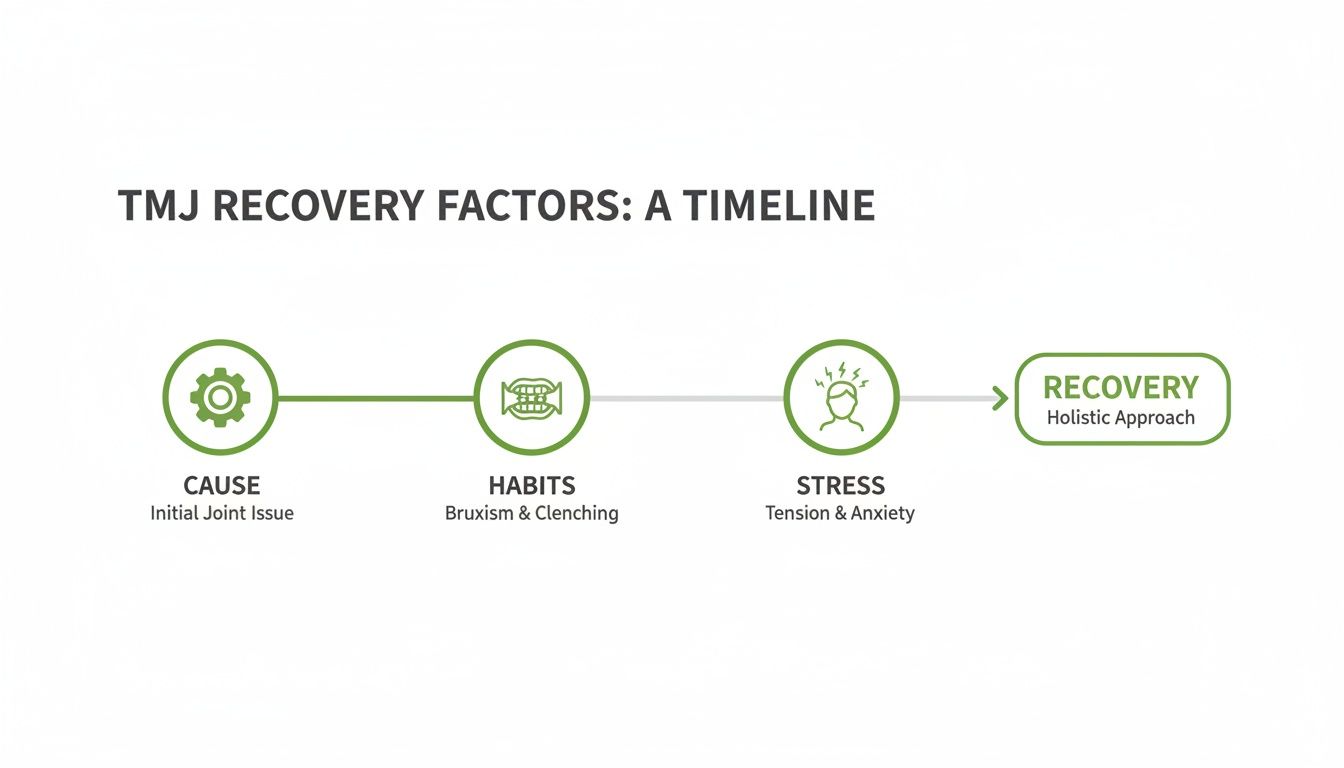
It’s a great reminder that a faster recovery comes from looking at the whole picture, not just chasing the pain.
Another powerful tool in our arsenal is orofacial myofunctional therapy. Think of it as physical therapy specifically for the muscles of your face, mouth, and tongue. A trained therapist guides you through exercises to correct improper chewing, swallowing, and even breathing patterns that contribute to jaw strain. While this approach is more of a long game, the results are profound because you're retraining your muscles for long-term health and stability.
How Advanced Therapies Can Accelerate Healing
When self-care and more traditional treatments don't bring the lasting relief you're looking for, it’s easy to feel stuck. This is often the point where modern, non-surgical therapies can make a world of difference.
Instead of just managing pain, these advanced options shift the focus to actively healing the joint. They're designed to get to the root cause of chronic TMJ pain by kickstarting your body's own natural repair mechanisms.
This approach offers a powerful alternative for those who want a solution beyond temporary fixes. For the 11-12 million US adults struggling with jaw pain each year, getting started with these kinds of non-surgical options can dramatically shorten recovery, restoring comfort without relying on medication or invasive procedures.
Regenerative and Biostimulatory Treatments
We have several advanced therapies that are especially effective for stubborn TMJ issues. Each one works in a unique way to promote healing and cut down how long TMJ pain lasts.
- Cold Laser Therapy: This therapy uses low-level light energy to penetrate deep into the tissue. It’s fantastic for reducing inflammation and stimulating cellular repair, often providing a noticeable drop in pain after just the first few sessions.
- Prolotherapy: This involves injecting a natural solution (like dextrose) into the ligaments around your TMJ. This intentionally triggers a localized healing response, encouraging the body to strengthen and repair weakened ligaments that contribute to joint instability.
- Platelet-Rich Fibrin (PRF): Think of this as using a super-concentrated dose of your body's own healing power. We take a small sample of your blood, process it to isolate powerful growth factors, and then inject them directly into the joint to jumpstart tissue regeneration and repair.
These therapies aren't just about feeling better temporarily; they are about fundamentally changing the health of the joint itself. By prompting natural repair, they help build a stronger, more resilient jaw structure for the long term.
It's important to have realistic expectations. While cold laser therapy might offer more immediate comfort, regenerative options like PRF and Prolotherapy work more gradually. You'll likely notice improvements over several weeks to months as your body gets to work rebuilding and reinforcing the joint tissue.
You can explore our full range of non-surgical TMJ treatment options to see how a personalized plan can help accelerate your healing journey.
When You Should See a TMJ Specialist

While at-home care is a great first line of defense for a minor flare-up, there are clear signals that it’s time to stop guessing and get professional help. Knowing these red flags is critical to keep a temporary problem from turning into a chronic, life-disrupting issue.
Think of these signs as your body’s check-engine light. They mean there's an underlying issue that needs an expert diagnosis to fix properly and get you lasting relief.
Critical Signs to Watch For
If you’re dealing with any of the following symptoms, it’s a strong sign you should schedule an evaluation with a TMJ specialist. These go way beyond typical muscle soreness and point to more significant joint or structural problems.
A Locked Jaw: This is when your jaw gets stuck open or closed. It's a clear signal of an internal problem with the joint, like a displaced disc, and it needs immediate attention to get things working again.
Severe, Disruptive Pain: Is the pain so bad it’s messing with your sleep, ability to eat, or concentration during the day? That's your cue to see an expert. Pain at that level often points to significant inflammation or even nerve involvement.
A Sudden Change in Your Bite: If you suddenly feel like your teeth just don’t fit together right anymore, it could mean your jaw's position has actually shifted. This requires a professional evaluation to find out why and prevent further damage.
Pain with Other Symptoms: When jaw pain shows up with friends—like tinnitus (ringing in the ears), dizziness, or stubborn earaches—it often points to a more complex TMJ disorder that’s affecting the surrounding structures.
These symptoms are more than just minor inconveniences; they are direct warnings that the mechanics of your jaw are compromised. Acting decisively when you notice these signs is the most effective way to shorten your overall recovery timeline and protect your long-term health.
Common Questions About How Long TMJ Pain Lasts
When you're dealing with jaw pain, it's natural to have a lot of questions about what comes next. Let's walk through some of the most common concerns we hear from patients to give you a clearer picture of the road to recovery.
Can TMJ Pain Go Away on Its Own and Never Come Back?
Sometimes, yes. If you have a minor, one-off flare-up—maybe from a particularly chewy meal or a day of high stress—the pain can certainly resolve on its own and not bother you again. Think of it as a temporary strain.
However, if the pain keeps showing up, it's usually a sign of a deeper issue. Things like chronic teeth grinding, poor posture, or even an underlying airway problem won't just disappear. In these cases, the pain is your body's way of sending a warning signal that something needs to be properly addressed before it can get better for good.
How Do I Know if My Headache Is Related to TMJ?
This is a big one. TMJ-related headaches often disguise themselves as common tension headaches, showing up as a dull ache in your temples, behind your eyes, or at the base of your skull. The pain usually gets worse when you're chewing, talking, or clenching your jaw.
If your headaches come with any of these other classic TMJ symptoms, there’s a good chance they’re connected:
- Clicking, popping, or grinding sounds in your jaw
- Soreness in your face and cheek muscles
- A persistent earache or a stuffy feeling in your ears
A specialist can help connect the dots with a proper evaluation, but if you're experiencing these together, your jaw is a very likely culprit.
It's so important to see how your symptoms are linked. A headache is rarely just a headache when there's jaw dysfunction involved. Recognizing that connection is the first real step toward finding a treatment that actually works.
Will I Need Surgery if My Jaw Pain Lasts for Months?
Not necessarily. Hearing that your pain is "chronic"—meaning it has lasted three to six months or longer—can be alarming, but it absolutely does not mean surgery is your only path forward. In fact, for TMJ disorders, surgery is always the last resort.
Many long-term TMJ conditions respond incredibly well to non-surgical treatments. A combination of therapies like custom oral appliances, targeted physical therapy, and even advanced regenerative options can make a world of difference by healing the joint and, most importantly, addressing the root cause of the problem.
At Pain and Sleep Therapy Center, our entire focus is on getting to the bottom of your pain to create a personalized, non-surgical treatment plan that delivers lasting relief. Learn more and schedule your consultation today.