Imagine waking up without that nagging jaw pain or the tension headache that’s been your constant companion. For so many of our patients, cold laser therapy for pain relief is the science-backed, gentle answer that finally lets their body heal itself. It doesn't just put a band-aid on the symptoms; it uses specific wavelengths of light to actually jump-start cellular repair.
Your Guide to Lasting Non-Invasive Pain Relief
Chronic pain can feel like an unwelcome guest that just won't leave, impacting everything from your mood to your ability to enjoy a simple meal. While pain medications might offer a brief escape, they rarely fix what’s actually causing the problem. It’s a frustrating cycle of temporary relief followed by the pain’s inevitable return, leaving you searching for a real solution.
This is where cold laser therapy, also known as low-level laser therapy (LLLT), offers a completely different approach. It’s a non-invasive treatment that works with your body, not just on it.
Think of it this way: if your cells are like tiny, depleted batteries struggling to function, cold laser therapy acts as a cellular charger. It delivers targeted light energy to restore their power and promote genuine healing from the inside out.
A Drug-Free Approach to Healing
The magic behind this therapy is a process called photobiomodulation. It sounds complex, but the idea is simple. We use specific, non-thermal light photons that penetrate through the skin to the underlying tissues. Once this light energy is absorbed by your cells, it sets off a cascade of positive biological effects.
This cellular boost leads to some incredible benefits:
- Reduced Inflammation: It helps calm the inflammatory response right at the source, which is key for easing swelling and tenderness.
- Accelerated Tissue Repair: By kicking cellular metabolism into high gear, it helps damaged tissues regenerate faster and more effectively.
- Natural Pain Alleviation: The therapy encourages your body to release endorphins—its own powerful, built-in pain relievers.
By targeting the root cause of the discomfort, cold laser therapy helps break the frustrating cycle of chronic pain. It's not about a temporary patch; it's about fostering genuine, long-term healing and getting you back to feeling like yourself.
The evidence backing this up is getting stronger all the time. Clinical studies have shown impressive results, with one major review noting an 86% overall efficacy rate in patients who received laser treatment alone. That’s a world apart from the results seen in placebo or medication-only groups.
This makes it an incredibly powerful tool for complex conditions like TMJ disorders, where muscle tension and joint inflammation are the main culprits. By precisely targeting the jaw and surrounding facial muscles, the therapy offers a focused solution for pain that often radiates into the head and neck. If you think this might be what you're dealing with, you can learn more about TMJ symptoms and treatment options in our guide. This therapy is a major step forward, offering a safe, effective, and drug-free option for anyone seeking lasting relief.
How Light Energy Recharges Your Body's Cells
To get a handle on how cold laser therapy works, it helps to think of your body’s injured or inflamed cells like tiny, drained batteries. They just don't have the energy to kickstart the repair process, which leads to nagging pain and slow healing. Cold laser therapy acts like a biological jump-start, delivering specific light energy to recharge these cells from the inside out.
The technical term for this is photobiomodulation, but it’s not as complicated as it sounds. It's a well-documented biological process. During a session, a specialized device sends low levels of red and near-infrared light through the skin to reach the damaged tissues below. Your cells have components called chromophores that are designed to absorb this light—kind of like how plants use chlorophyll to absorb sunlight for photosynthesis.
Fueling the Cellular Engine
Once the cells absorb this light energy, it triggers a crucial reaction inside the mitochondria, which are essentially the powerhouses of your cells. The light stimulates the production of a molecule called Adenosine Triphosphate (ATP). Think of ATP as the high-octane fuel that powers every single function in your body, from muscle movement to, most importantly, tissue repair.
When your cells are struggling with injury or chronic inflammation, their ATP production tanks. They simply run out of gas. By giving them a direct boost in ATP, cold laser therapy provides the exact energy these cells need to get back to work and accelerate healing on a microscopic level.
You can't fix a car with an empty toolbox and no power. By boosting ATP, cold laser therapy stocks the toolbox and turns the power back on, letting your cells carry out their essential repair jobs.
This infographic really breaks down the core benefits that get switched on by this cellular recharge.
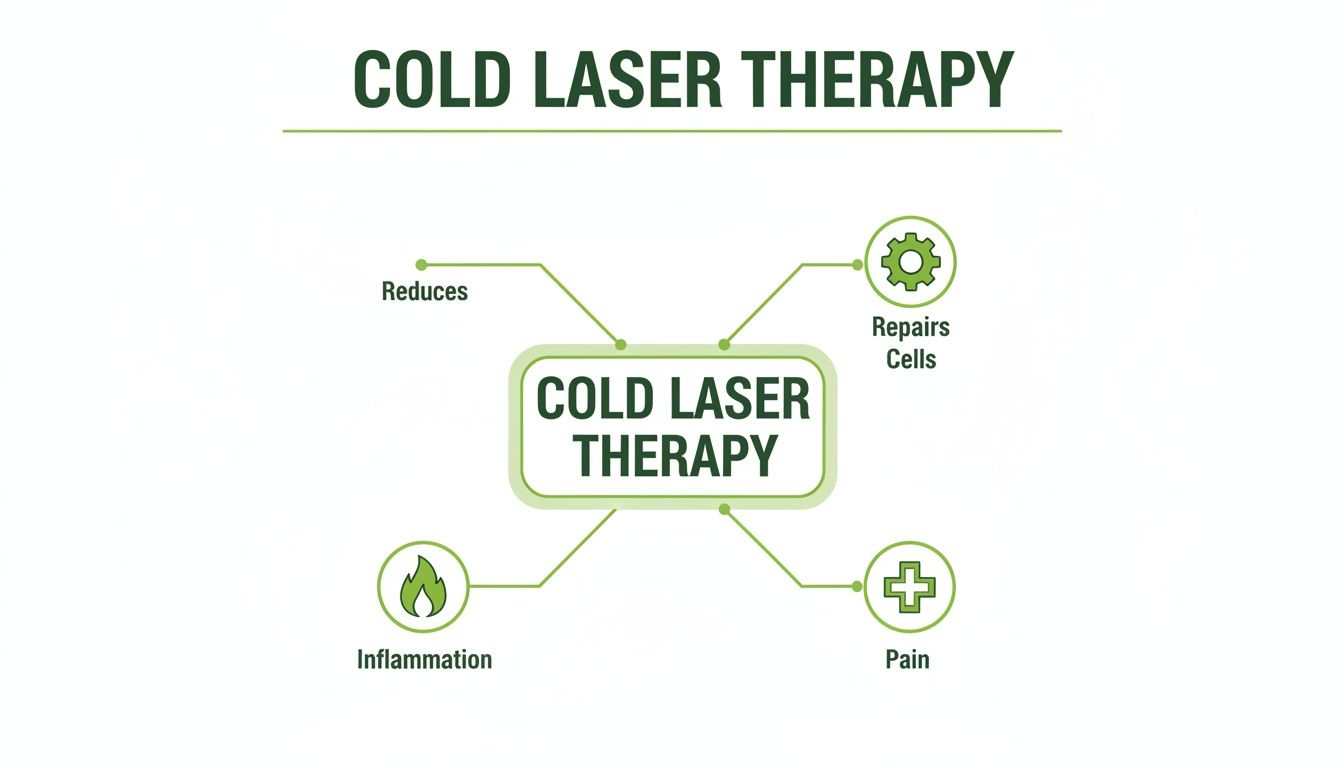
As you can see, it’s a three-pronged approach: it calms inflammation, repairs the actual cell damage, and directly soothes the pain signals you feel.
Turning Down Inflammation and Pain Signals
Beyond just supplying energy, this targeted light therapy actively dials down the two things causing you the most trouble: inflammation and pain. The light energy helps slow down the production of inflammatory chemicals in the area. This is like turning down the volume on your body's alarm system, which is what helps reduce swelling, redness, and tenderness.
At the same time, the therapy has a direct calming effect on nerve cells. It helps slow the transmission of pain signals to the brain, often providing immediate relief. It also encourages your body to release endorphins—its own natural pain-relieving chemicals.
This dual-action approach is what makes cold laser therapy for pain relief so effective in our clinic. It creates the perfect environment for healing by:
- Providing Cellular Energy: Supercharging the mitochondria to produce more ATP for repair.
- Reducing Swelling: Decreasing the inflammatory markers that cause puffiness and tenderness.
- Improving Blood Flow: Helping new capillaries form to bring more oxygen and nutrients to the site.
- Blocking Pain: Directly soothing nerve sensitivity while releasing natural endorphins.
This isn't just about masking pain; it's about addressing the root cause of the dysfunction. By empowering your cells to heal themselves, cold laser therapy helps restore normal function and provides a path toward lasting relief without relying on drugs or invasive procedures.
Precision Relief for TMJ, Facial Pain, and Headaches
General pain relief is one thing, but when you're dealing with the complex and often debilitating pain in your head, face, and jaw, you need a much more precise approach. Conditions like temporomandibular joint (TMJ) disorders, myofascial facial pain, and chronic headaches aren’t just isolated problems—they involve an intricate network of muscles, nerves, and joints. This is where the targeted nature of cold laser therapy for pain relief truly shines, offering a non-invasive way to address discomfort right at its source.
Instead of a broad, one-size-fits-all treatment, cold laser therapy lets us deliver focused light energy exactly where it’s needed. This precision allows us to calm inflammation, release knotted muscle tension, and promote healing in the specific structures causing your pain. The result is often more effective and lasting relief.
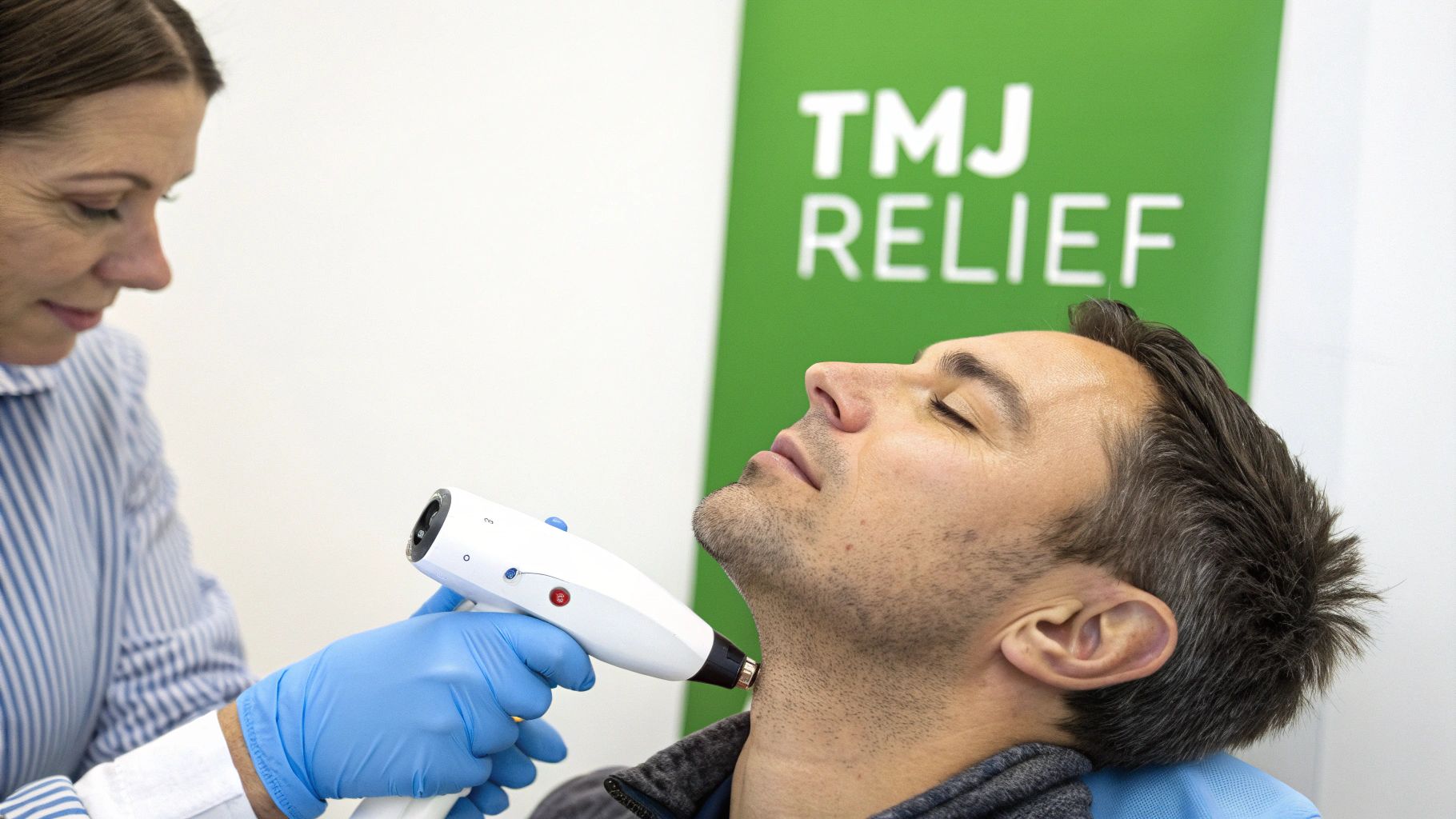
Calming the Jaw and Easing TMJ Symptoms
If you live with a TMJ disorder, you know the daily symphony of frustrating symptoms—clicking, popping, locking, and that deep, persistent ache in your jaw joint. This discomfort usually comes from two places: inflammation inside the joint and chronic tension in the chewing muscles around it.
Cold laser therapy gets right to work on both problems. The light energy penetrates deep into the temporomandibular joint, helping to reduce the inflammatory chemicals that cause swelling and pain. At the same time, it helps relax the overworked jaw muscles, like the masseter and temporalis, that are often stuck in a state of constant contraction.
By addressing both joint inflammation and muscle hyperactivity, the therapy helps restore more normal, pain-free movement to the jaw. This can lead to a significant reduction in the clicking and locking sensations that make chewing and talking so difficult.
Ultimately, this targeted approach helps break the cycle of pain and dysfunction that defines TMJ disorders.
Releasing Facial Pain and Trigger Points
Myofascial pain is another common complaint we see, often showing up as tender "trigger points" or knots in the muscles of the face and neck. Think of these knots as tiny, tight bands of muscle fiber that can shoot pain to other areas, creating a confusing and widespread sense of discomfort.
Cold laser therapy is exceptionally good at deactivating these trigger points. The focused light helps increase circulation and oxygen flow to these knotted areas, which encourages the muscle fibers to soften and release.
This process provides relief in a few key ways:
- It helps break down the knot itself, allowing the muscle to return to a more relaxed state.
- It flushes out metabolic waste products that get trapped in tight muscles and contribute to pain.
- It restores healthy function, improving your range of motion and reducing the referred pain you're feeling.
By zeroing in on these knots, we can often alleviate facial pain without resorting to injections or manual techniques that can sometimes be uncomfortable.
Alleviating Headaches at Their Source
Believe it or not, many tension headaches and even some migraines don't actually start in your head. They are often the result of referred pain from tight, overworked muscles in your neck and upper shoulders—especially the trapezius and suboccipital muscles.
Just treating the head often fails to address the root cause. Cold laser therapy allows us to target these specific muscle groups along the cervical spine and shoulders that are sending pain signals upward. By reducing inflammation and releasing tension in these foundational muscles, we can often stop a headache before it even gets going.
This is a much more direct strategy than simply managing symptoms with medication. It aims to correct the underlying musculoskeletal imbalance triggering the headaches in the first place. For an even more complete approach, we often pair therapy with exercises to improve posture and muscle function. Our guide to orofacial myofunctional therapy exercises offers excellent insights into how to strengthen and re-coordinate these crucial muscle groups.
By delivering precise, targeted energy, cold laser therapy provides a sophisticated and effective solution for some of the most challenging types of chronic pain.
What to Expect During Your Treatment Journey
Trying a new treatment for the first time can feel a little uncertain, but knowing what's ahead makes all the difference. We believe your experience with cold laser therapy for pain relief should feel straightforward and comfortable right from the start. Our goal is to walk you through the entire process so you feel confident and prepared every step of the way.
It all begins not with the laser, but with a conversation. We take the time to listen to your story, understand exactly what your pain feels like, and pinpoint its source. This initial assessment is critical—it allows us to create a treatment plan that’s precisely targeted to your needs, ensuring we apply the therapy exactly where it will do the most good.
Your First Session Experience
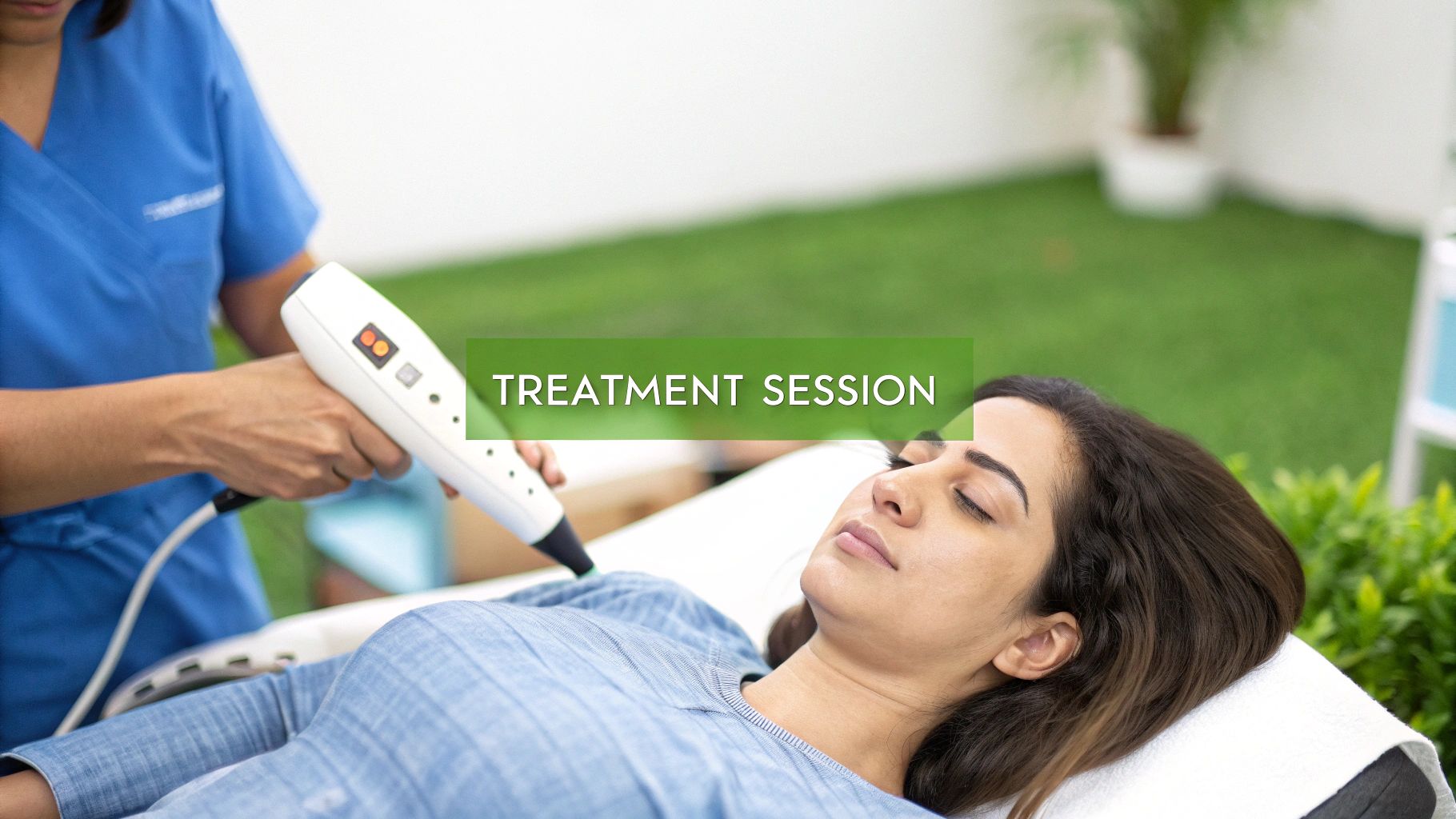
Once we’ve mapped out your personalized plan, your first treatment can begin. You’ll get settled in a comfortable position, either sitting or lying down, as we expose the area we need to treat.
We then gently place a small, handheld device against your skin over the target area. Most people feel next to nothing. You won’t feel any heat, vibration, or pain. In fact, many of our patients find the quiet, focused nature of the treatment to be quite calming and relaxing. It’s a completely non-invasive and gentle process.
The beauty of a cold laser therapy session is its simplicity and comfort. There are no needles, no incisions, and no jarring movements—just the quiet application of therapeutic light designed to wake up your body’s natural healing abilities.
Each session is also surprisingly brief. Depending on the size of the area and the specifics of your condition, the laser application itself might only last for a few minutes. This efficiency makes it easy to fit appointments into a busy schedule without disrupting your day.
Mapping Out Your Treatment Plan
Cold laser therapy isn’t a one-and-done fix; its real power comes from its cumulative effect. Think of it like a fitness program for your cells. A single workout is a good start, but consistent sessions are what build strength and create lasting change. In the same way, each therapy session builds on the last, progressively reducing inflammation and speeding up tissue repair.
The total number of sessions you'll need really depends on you. A treatment plan for a more recent, acute injury might involve 6 to 8 sessions. On the other hand, a chronic condition like a long-standing TMJ disorder could benefit from 10 to 12 sessions or more to achieve the best results.
The frequency of your appointments is also key to building momentum. We typically start with more frequent visits, usually 2 to 3 times per week. As your symptoms improve and healing gets underway, we’ll gradually reduce the frequency. This structured approach gives your cells a consistent boost of energy right when they need it most, leading to more durable, meaningful relief.
This kind of therapy has seen incredible growth and acceptance, especially within well-established healthcare systems. North America has become the dominant market, projected to hold 42.2% of the global market share by 2025. This is largely driven by a strong healthcare infrastructure and ongoing FDA clearances for new innovations, cementing its role in modern pain management. You can dive deeper into the data on the cold laser therapy market and its growth on Coherent Market Insights.
Our commitment is to guide you through every step, adjusting your plan based on how you're progressing. We’ll continuously monitor your response to make sure you’re on the fastest and most effective path toward getting you out of pain for good.
Comparing Your Regenerative Pain Treatment Options
Choosing the right path for your pain relief is a big decision, and understanding your options is the first step. While cold laser therapy for pain relief is an incredible non-invasive tool, it’s just one of several advanced regenerative treatments we have here at the clinic.
Two other key players we rely on are Prolotherapy and Platelet-Rich Fibrin (PRF) injections. Each one has its own unique strengths, and it’s important to see them not as competitors, but as potential collaborators in your healing plan.
Understanding the Different Approaches
So, what's the difference? Think of it this way:
-
Cold laser therapy uses light energy to calm down inflammation and give your cells a much-needed energy boost. It's a fantastic standalone treatment and also works beautifully alongside other therapies.
-
Prolotherapy, on the other hand, involves injecting a natural solution (like dextrose) into ligaments or tendons that have become weak or damaged. This creates a mild, controlled inflammatory response that basically tells your body, "Hey, we need some healing over here!" It's a signal to send in growth factors and start rebuilding.
-
Platelet-Rich Fibrin (PRF) is even more direct. We use a concentration of your own blood platelets—which are packed with growth factors—and inject them right into the injured area. This gives your body a powerful, localized boost to jumpstart and speed up the healing cascade.
To help you see how they stack up, we've put together a simple comparison.
Regenerative Pain Relief Options at a Glance
This table breaks down the non-surgical regenerative therapies we offer here at the Pain and Sleep Therapy Center, giving you a quick overview of how each one works and what to expect.
| Therapy | How It Works | Best For | Sensation | Recovery Time |
|---|---|---|---|---|
| Cold Laser Therapy | Uses light energy (photobiomodulation) to reduce inflammation and boost cellular energy for repair. | Widespread muscle pain, TMJ inflammation, nerve pain, and reducing swelling. | Completely painless; some may feel a slight tingling or warmth. | None. You can return to normal activities immediately. |
| Prolotherapy | Injects a natural irritant solution to trigger a localized healing response and strengthen ligaments/tendons. | Chronic joint instability, ligament laxity, and persistent joint pain. | A pinching sensation from the injection, with temporary soreness. | Minimal; soreness for 1-3 days is common. |
| Platelet-Rich Fibrin | Uses a concentration of your own platelets to deliver powerful growth factors directly to damaged tissue. | Degenerative joint conditions, tendon injuries, and areas needing significant tissue regeneration. | Similar to a standard injection, with some post-procedure fullness or soreness. | Mild soreness for a few days; activity modification may be advised. |
Remember, the goal isn't just to pick one. The real magic often happens when we combine them.
Creating a Synergistic Treatment Plan
The true power of these treatments is often unlocked when we use them together. They aren’t mutually exclusive; in fact, they frequently enhance each other's effects.
Let’s say a patient is getting Prolotherapy or PRF injections for a TMJ disorder. It's normal to have some temporary soreness and inflammation—that’s just part of the healing process.
This is where cold laser therapy becomes an invaluable partner. We can use it between injection sessions to manage inflammation, soothe discomfort, and accelerate the cellular repair that Prolotherapy and PRF have initiated.
This combined approach creates a comprehensive healing environment. While the injections work to rebuild and strengthen the underlying structures, the laser makes sure the process is as comfortable and efficient as possible. It’s all about building a truly personalized plan that uses the best of each therapy for your specific needs.
We explore more approaches like this in our detailed guide on the latest TMJ treatment options available. By combining therapies, we can tackle your pain from multiple angles, leading to more robust and lasting results.
Common Questions About Cold Laser Therapy
It’s completely normal to have questions when you’re thinking about starting a new treatment. We want you to feel confident and informed every step of the way, so we’ve put together answers to the most common questions we hear about cold laser therapy for pain relief.
Our goal here is to be straightforward and clear. We believe in total transparency, so we’ll cover everything from safety and results to cost and who this therapy is best for.
Is This Treatment Safe and Does It Have Side Effects?
This is usually the first question people ask, and for a good reason. We’re happy to say that cold laser therapy has an outstanding safety record. It’s been cleared by the FDA for a long list of conditions, which speaks to just how reliable and well-researched it is. This isn’t some new fad; it’s been trusted in human medicine for decades.
The word "laser" might make you think of the powerful surgical tools used for cutting, but this is a totally different technology. Cold lasers—also called low-level lasers—don’t produce heat, so they can’t burn or damage your skin or the tissue underneath. It’s a completely non-invasive and gentle treatment.
Side effects are incredibly rare and, if they happen at all, are very mild. A few patients might feel a slight tingling in the treated area, but that usually fades quickly. Best of all, there’s no downtime. You can get right back to your daily routine immediately after your session.
Our first priority is to provide a healing experience that is both effective and completely safe. The non-invasive, drug-free nature of this therapy makes it a cornerstone of our commitment to gentle, patient-centered care.
This strong safety record is one of the biggest reasons for its growing popularity. The global cold laser therapy market was valued at around $126.9 million in 2025 and is expected to hit $187.1 million by 2032. This growth shows a real demand for safe, non-addictive alternatives to pain medication and proves its value in modern healthcare.
How Soon Can I Expect to See Results?
We know you’re looking for relief, and you want it as soon as possible. The timeline for seeing results from cold laser therapy is a little different for everyone—each person’s body and condition is unique. Still, we can give you a general idea of what to expect.
Some patients feel a noticeable drop in pain and inflammation after just one or two sessions. This happens because the therapy has an immediate effect on calming nerve cells and reducing swelling. It's often a great sign that your body is responding well.
But the real magic of cold laser therapy is in its cumulative effect. Lasting relief comes from the deep healing that happens at a cellular level over a series of treatments. Think of it like watering a plant; one watering helps, but it’s the consistent care that allows it to grow strong and healthy.
For real, lasting change, consistency is key. Here’s a typical progression:
- Acute Injuries: If you have a recent issue like a muscle strain, you'll likely see significant improvement in a shorter time frame, maybe 6 to 8 sessions.
- Chronic Conditions: For long-term problems like TMJ disorders or chronic facial pain that have been around for months or years, a longer course of 10 to 12 sessions (or more) is often needed to really get to the root of the cellular dysfunction.
The benefits build with each session. Your cells get better at producing energy, inflammation continues to go down, and your tissue repairs itself more quickly. We’ll work with you to set realistic expectations and create a personalized plan to achieve the most durable, long-term relief possible.
Is Cold Laser Therapy Covered By Insurance?
Figuring out insurance coverage is a practical and important step in planning your care. It’s a major consideration for many of our patients, and we’re committed to being completely upfront about it.
Insurance coverage for cold laser therapy really varies between providers and plans. While it’s gaining more and more recognition in the medical world for its effectiveness, it isn't universally covered for every condition just yet. Some plans might cover it for specific diagnoses, but others may still see it as an elective or investigational treatment.
We know how confusing insurance benefits can be. Our administrative team is here to help you figure out your options. We can provide all the necessary documentation and billing codes for you to submit to your insurance company for potential reimbursement.
We believe that financial concerns should not be a barrier to receiving high-quality care. Our commitment is to make treatment accessible for everyone seeking relief.
To back that up, we provide transparent pricing right from the start, so you’ll never have any surprises. For patients whose insurance doesn’t cover the therapy or for those with high deductibles, we offer flexible and convenient payment plans. These are designed to help you invest in your health without the financial stress, so you can focus on what really matters—getting better.
Who Should Avoid This Type of Therapy?
While cold laser therapy is incredibly safe for most people, our absolute top priority is your well-being. To ensure the best and safest outcomes, there are a few specific situations and conditions where we don't recommend this therapy. We call these contraindications.
A thorough health assessment is a mandatory first step in our process. This helps us confirm you’re a great candidate for the treatment and spot any potential concerns before we even start. We will never move forward with therapy unless we're confident it’s a safe and appropriate choice for you.
The main contraindications for cold laser therapy include:
- Over Active Cancerous Lesions: We avoid using the laser directly over any known active cancer, as we don’t want to stimulate cellular activity in those areas.
- Pregnancy: As a precaution, treatment is avoided over the abdomen, lower back, or pelvis of pregnant women.
- Over the Thyroid Gland: We typically avoid direct application over the thyroid gland to prevent any potential impact on its function.
- Photosensitivity: If you have a medical condition or are taking medications that cause extreme sensitivity to light, this therapy may not be right for you.
This careful screening process is part of our commitment to responsible, personalized patient care. By identifying these contraindications, we make sure every patient who receives cold laser therapy at our clinic can relax, knowing they're in safe hands.
Ready to explore a drug-free, non-invasive solution for your pain? The team at the Pain and Sleep Therapy Center is here to create a personalized treatment plan that addresses the root cause of your discomfort. Schedule your comprehensive consultation today and take the first step toward lasting relief.