If you’re tossing and turning every night, battling chronic snoring and exhaustion, your first thought is probably to call a sleep doctor. But what if the key to unlocking truly restful sleep is actually sitting in your dentist's chair? For many people, searching for a "sleep apnea dentist near me" is the first step toward finding a comfortable, effective, and life-changing alternative to a CPAP machine.
Why Your Dentist Could Be the Answer to Better Sleep
When most people think of sleep apnea, they picture a bulky, noisy CPAP machine. And while CPAP is certainly a gold-standard treatment, it’s not the only option—and for many, it’s far from the best fit. This is where a dentist with specialized training in sleep medicine comes in, shifting the focus from just treating a breathing problem to addressing its root cause: your oral and airway anatomy.
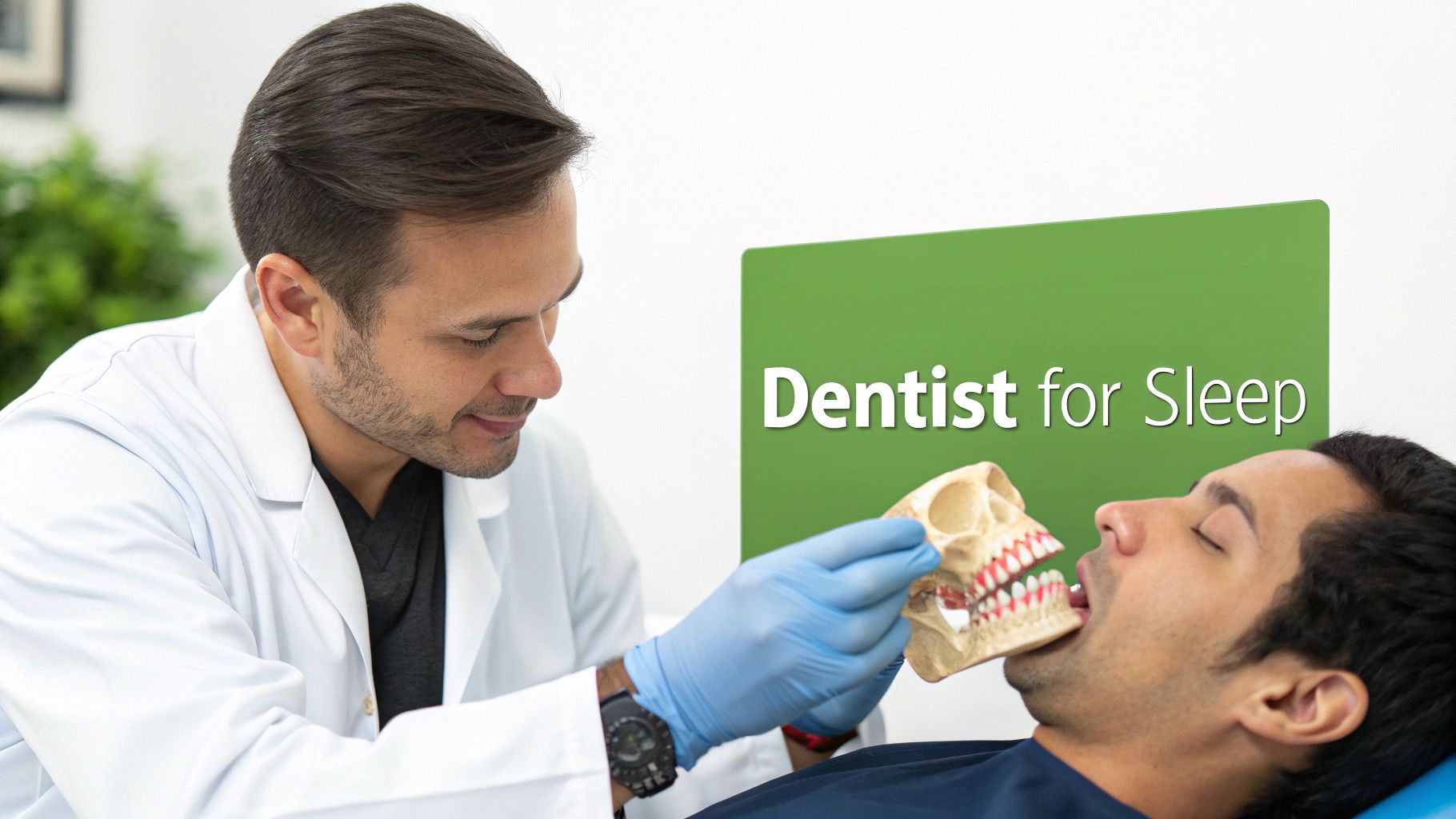
Understanding the Airway Roadblock
At its core, obstructive sleep apnea (OSA) is a physical problem. Think of it like a temporary roadblock that forms in your throat over and over again while you sleep, stopping your breath. This blockage happens when the soft tissues at the back of your throat—like your tongue and soft palate—relax and collapse, completely cutting off your airway.
A dentist with advanced training in sleep medicine is an expert in the very structures that cause this roadblock. They have a deep, practical understanding of how your jaw, tongue, and the overall shape of your mouth are all connected, and, more importantly, how their positioning can impact airflow.
A sleep physician is great at diagnosing the "traffic jam" in your airway. A qualified sleep dentist acts like the traffic engineer, redesigning the intersection (your jaw and tongue position) to keep air flowing smoothly all night long.
Introducing Oral Appliance Therapy
This is where your dentist's unique role becomes crystal clear. They can design and create a custom-fitted Oral Appliance Therapy (OAT) device. This is nothing like a generic, boil-and-bite mouthguard you’d find at a drugstore. It's a precision-molded device designed specifically for your mouth.
Its job is simple but powerful: it gently shifts your lower jaw slightly forward while you sleep.
This tiny adjustment is often all it takes to keep the airway from collapsing. By stabilizing the jaw and tongue, the device ensures your airway stays open, allowing you to breathe continuously and quietly through the night. For many people with mild to moderate sleep apnea, an oral appliance is a game-changer.
It’s an alternative that is:
- Comfortable and Discreet: There’s no mask, no hose, and no machine noise.
- Convenient for Travel: It's small enough to fit in your pocket or carry-on.
- Easy to Use: You just pop it in your mouth before going to sleep.
That search for a "sleep apnea dentist near me" isn’t just about finding a new provider. It's about opening the door to a proven, comfortable, and highly effective way to reclaim your sleep and get your health back on track.
The Hidden Epidemic of Obstructive Sleep Apnea
It's easy to dismiss heavy snoring as just a loud habit, but it’s often the most obvious sign of a much more serious condition hiding in plain sight. Obstructive sleep apnea (OSA) is far more widespread than most people think, acting like a silent epidemic that impacts millions who have no idea they’re even affected.
And this isn't an issue for just one type of person. It cuts across all ages, genders, and body types.
The true scale of the problem is genuinely staggering. While older figures were already concerning, a landmark 2018 study revealed that obstructive sleep apnea affects an incredible 936 million adults between the ages of 30 and 69 worldwide. That number is nearly ten times higher than what experts previously believed, completely reframing OSA as a major global health crisis.
More Than Just Lost Sleep
Understanding these numbers is so important because untreated sleep apnea is anything but harmless. Every time you stop breathing, your brain has to jolt itself awake just enough to kickstart your respiratory system. You won't remember these tiny awakenings, but they can happen hundreds of times a night.
This constant cycle of disruption prevents you from ever sinking into the deep, restorative stages of sleep your body and brain need to repair themselves. It does more than just make you feel groggy the next day; it puts an immense strain on your entire system. The repeated drops in your blood oxygen levels trigger a cascade of stress responses that can lead to severe health consequences down the road.
Untreated sleep apnea isn't just about feeling tired. It's about a nightly cycle of oxygen deprivation and stress that significantly increases your risk for chronic diseases like heart attacks, strokes, and type 2 diabetes.
Recognizing the Broader Health Impact
The link between OSA and other serious health problems is incredibly well-documented. That nightly pattern of fragmented sleep and low oxygen is directly tied to a higher risk of developing:
- Cardiovascular Problems: This includes high blood pressure, atrial fibrillation, and even heart failure. The strain on your heart from constantly fighting for air can be immense.
- Type 2 Diabetes: Sleep apnea can throw off your body's ability to regulate insulin, often leading to insulin resistance.
- Daytime Impairment: Chronic fatigue dramatically increases the risk of drowsy driving incidents and accidents at work, which can be life-threatening.
The point here isn't to scare you—it's to empower you. Recognizing just how common and how serious sleep apnea is is the first real step toward taking back control of your health. When you understand the risks, the importance of getting a proper diagnosis and finding an effective treatment becomes crystal clear.
If any of this sounds familiar, you can learn more about the signs and symptoms of sleep apnea in our detailed guide. Protecting your long-term health and reclaiming your energy starts with addressing the root cause.
How Dentists Treat Sleep Apnea Without a CPAP
How can a dentist possibly fix a breathing problem? It sounds a little strange at first, but the answer is a remarkably effective and straightforward solution called Oral Appliance Therapy (OAT). This approach is a game-changer for people who can't stand the noise, discomfort, and hassle of a traditional CPAP machine.
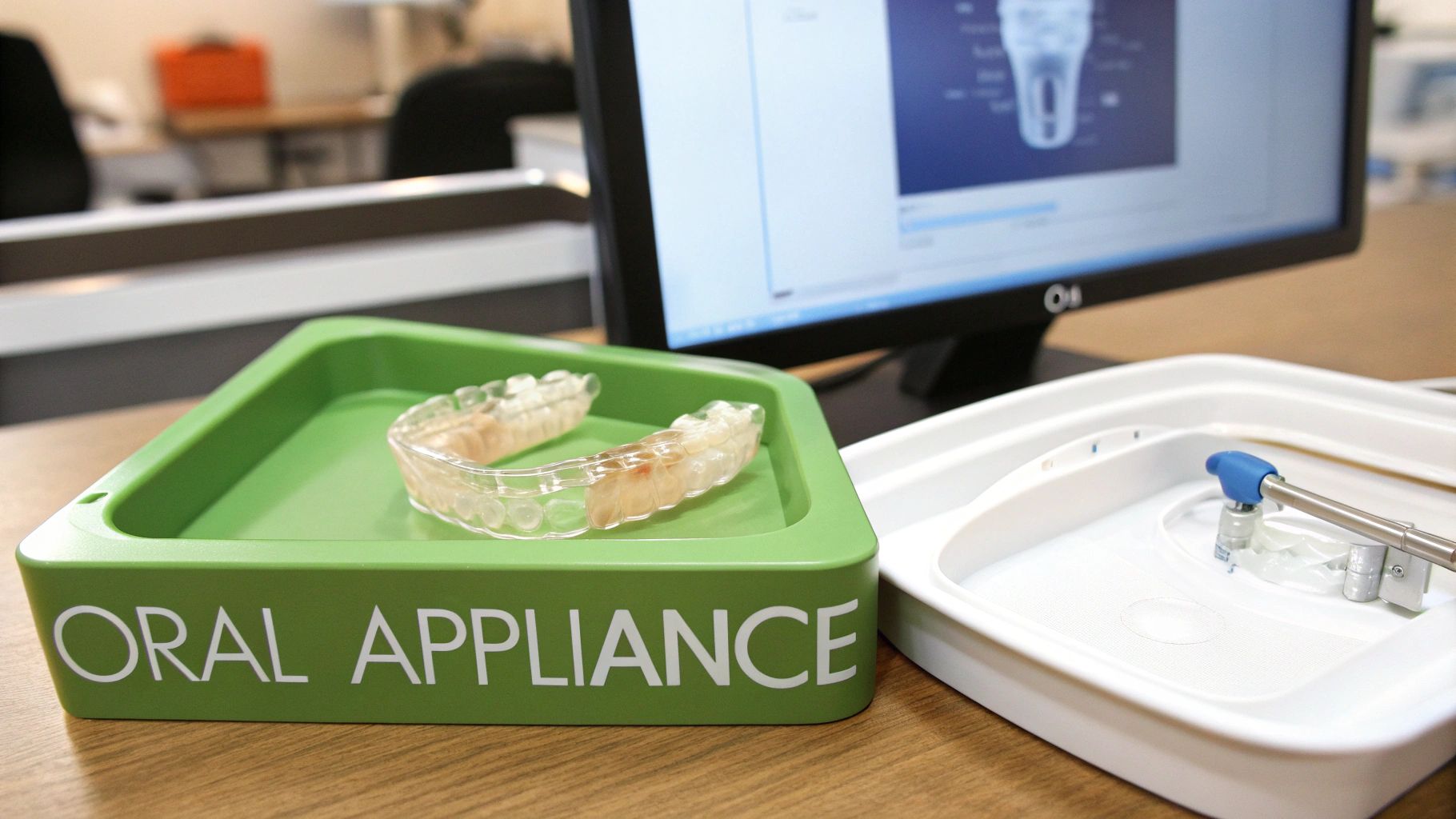
Think of a custom-fit mouthguard, sort of like what an athlete wears, but engineered with a very specific job. An oral appliance for sleep apnea is designed to gently shift your lower jaw into a slightly forward position while you sleep.
That small, precise movement is all it takes to work wonders. It tightens the soft tissues at the back of your throat and stops your tongue from falling backward, keeping your airway clear and open all night. The result? You get to breathe consistently and effortlessly, finally enjoying deep sleep without all those disruptive breathing pauses that define OSA.
The Science Behind a Simple Solution
Don't let the simple appearance fool you—creating your custom device is a meticulous process rooted in advanced dental technology. A qualified sleep apnea dentist doesn't just take a quick mold. Instead, they perform a detailed analysis of your unique jaw and airway anatomy.
Here’s a look at how it works:
- Comprehensive Airway Assessment: First, your dentist evaluates your jaw, tongue, and palate to pinpoint exactly where the obstruction is happening.
- Precise Digital Impressions: Using state-of-the-art 3D scanning, they create a perfect digital model of your teeth and bite. This guarantees a snug, comfortable fit that won't slip or cause irritation.
- Custom Fabrication: Those scans are then sent to a specialized lab where your personalized oral appliance is crafted from durable, medical-grade materials.
- Expert Fitting and Adjustment: Once your device is ready, you'll come back in for a fitting. Your dentist will make micro-adjustments to ensure it’s both effective and completely comfortable for you to wear every single night.
This careful, personalized process is what makes OAT so successful. The device is tailored not just to your teeth, but to your specific airway needs, making it a true medical solution.
For many, an oral appliance is the key to finally sticking with sleep apnea treatment. Adherence rates for OAT often reach 80% or more—significantly higher than for CPAP—simply because the device is comfortable, silent, and incredibly easy to use.
When trying to decide on the best path forward, it helps to see a direct comparison.
Comparing Sleep Apnea Treatments: CPAP vs. Oral Appliance
| Feature | CPAP Machine | Oral Appliance Therapy (OAT) |
|---|---|---|
| How It Works | Delivers pressurized air through a mask to keep the airway open. | A custom-fit device gently repositions the jaw to prevent airway collapse. |
| Comfort | Can be cumbersome due to the mask, hose, and headgear. Some find it claustrophobic. | Small and discreet, worn only inside the mouth. Generally very comfortable. |
| Noise Level | The machine produces a constant humming sound, which can disturb the user or their partner. | Completely silent. |
| Portability | Bulky and requires electricity, making travel inconvenient. | Small, lightweight, and fits in your pocket. Perfect for travel. |
| Maintenance | Requires daily cleaning of the mask, hose, and water chamber to prevent bacteria buildup. | Simple cleaning with a toothbrush and approved cleaner. |
| Best For | All levels of sleep apnea, especially severe cases. | Mild to moderate sleep apnea, or for those who cannot tolerate CPAP. |
While CPAP is highly effective, its bulk and noise make it a difficult long-term solution for many. Oral appliances offer a much simpler, more comfortable experience that people are more likely to use every single night.
Life-Changing Benefits Beyond the CPAP
The appeal of OAT is about more than just how it works. For patients with mild to moderate sleep apnea or those who are "CPAP-intolerant," the benefits can be truly transformative. You can finally get the restful sleep you need without a mask strapped to your face, a noisy machine on your nightstand, or a tangled hose.
These devices are discreet, silent, and so easy to travel with—they can fit right into a pocket or purse. That convenience leads to consistent use, which is the key to better health outcomes. You can explore a full breakdown of sleep apnea treatment without a CPAP to understand all the options available. For the right person, this simple device is the key to unlocking quieter nights and more energized days.
What to Look for in a Qualified Sleep apnea Dentist
Not every dentist can treat a complex medical condition like sleep apnea. You wouldn't go to a family doctor for heart surgery, and the same principle applies here. You need a dentist with specific, advanced training in what's known as dental sleep medicine.
Finding the right provider is probably the single most important step you can take. It's what ensures your treatment will be both safe and successful.
A general dentist is fantastic for your teeth, but a true sleep apnea dentist has spent hundreds of hours in additional education. They've focused specifically on airway anatomy, the mechanics of sleep disorders, and the technology behind oral appliances. They understand the delicate relationship between your jaw, tongue, and throat that can lead to airway collapse.
Key Credentials to Verify
When you're searching for a "sleep apnea dentist near me," you need to look beyond the standard DDS or DMD after their name. The gold standard is a practitioner who is board-certified or holds "Diplomate" status from a recognized organization.
Look for credentials from groups like:
- The American Board of Dental Sleep Medicine (ABDSM)
- The American Academy of Dental Sleep Medicine (AADSM)
These aren't just letters; they represent a deep commitment to this specific field and a proven level of expertise. It means the dentist has passed tough exams and stays up-to-date on the latest research. This distinction is crucial, because an improperly fitted appliance can be completely ineffective or, worse, cause jaw problems.
Essential Questions for Your Consultation
Once you find a potential dentist, the initial consultation is your opportunity to gauge their experience and approach. Don't be afraid to ask direct questions—your health depends on it.
A great sleep apnea dentist doesn't just make a device; they manage a medical condition. They should be a collaborative partner with your sleep physician, creating a seamless bridge between your dental and medical care.
Come prepared with questions like these:
- How many sleep apnea patients have you treated? Experience really matters. You want someone who has seen it all, not someone who is just getting started.
- How do you collaborate with sleep physicians? A good answer will involve clear communication, sharing diagnostic reports, and working as a team to track your progress.
- What is your process for follow-up and adjustments? Effective treatment isn't a "one and done" deal. It requires ongoing care to make sure the appliance stays comfortable and effective.
- What technology do you use for impressions and fitting? Many modern practices use digital scanning, which creates a much more precise and comfortable fit than old-school putty molds.
The prevalence of sleep apnea is staggering. It's estimated that up to 25 million Americans have the condition. What’s even more shocking is that a massive 80% of moderate to severe cases remain undiagnosed. This highlights a huge gap in public health awareness. You can learn more about the scope of sleep apnea in the US.
Choosing a truly qualified expert ensures you get the specialized care needed to address this serious condition correctly, right from the start.
Your First Visit and What to Expect
Walking into any new medical appointment can be a little nerve-wracking, especially when it’s for something as personal as sleep apnea. It helps to know what’s coming, so let’s pull back the curtain on that first visit.
Think of this initial meeting less like a traditional dental check-up and more like a detailed conversation. It’s all about you—your sleep history, the symptoms you’re dealing with day-to-day, and what you’re hoping to get out of treatment. This is your time to ask questions and feel heard.
A Deeper Look at Your Airway
To figure out exactly what’s causing your breathing to stop at night, the dentist needs to get a precise picture of your unique anatomy. This isn’t about guesswork; it's about using advanced, non-invasive tools like digital imaging or 3D scans to map out your entire airway.
This technology creates a detailed blueprint of your throat. It allows the dentist to see the specific structures—maybe it's your jaw position, tongue size, or soft palate—that are contributing to the airway collapse. This pinpoint accuracy is what makes a custom-fit oral appliance so effective.
The infographic below breaks down the simple, three-step process for making sure you've found the right expert.
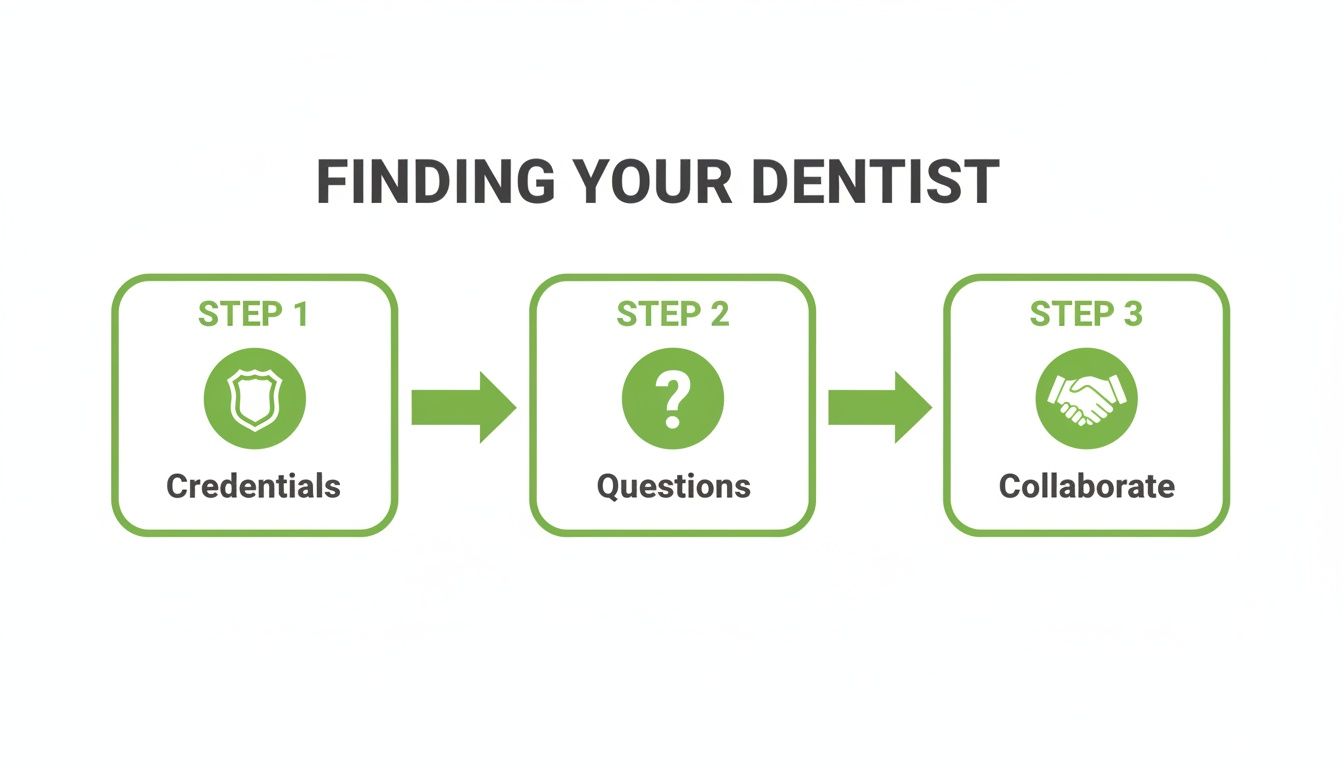
As you can see, success comes down to verifying credentials, asking the right questions, and working collaboratively with your physician.
Building Your Collaborative Care Team
One of the most important things to know is that you’re not in this alone. A qualified sleep apnea dentist works hand-in-hand with your primary care physician or sleep doctor. They’ll review your formal sleep study results and keep the lines of communication wide open to create a treatment plan that actually works.
This teamwork is absolutely critical. In North America, obstructive sleep apnea has a 26% prevalence in adults aged 30-70—a rate much higher than in other parts of the world. These numbers show just how important an integrated medical approach is. You can learn more about global sleep apnea trends from recent analyses.
By the end of your first appointment, you should leave feeling informed, confident, and with a clear path forward.
Going Beyond the Appliance for Lasting Results
A custom-fit oral appliance can be a game-changer, but the best treatment plans don't just stop there. A truly forward-thinking sleep apnea dentist looks at the bigger picture, targeting the root causes of your airway issues instead of just propping them open every night. It's about creating real, lasting change in how your airway actually works.
Think of it this way: your oral appliance provides crucial support, but it's most effective when paired with therapies that strengthen the system around it. The appliance is the scaffolding, while these other treatments are like physical therapy, building up the muscles for more profound and sustainable results.
Strengthening Your Airway from the Inside Out
One of the most powerful tools we have is orofacial myofunctional therapy (OMT). If you've ever had physical therapy for an injured knee, you already get the basic idea. OMT is essentially physical therapy for your tongue, throat, and face.
A trained therapist guides you through simple, specific exercises designed to correct poor muscle habits that contribute to airway collapse. The goals are straightforward but have a huge impact:
- Fix Your Tongue Posture: Training your tongue to rest naturally on the roof of your mouth is a simple way to help keep your airway from narrowing.
- Tone Airway Muscles: Targeted exercises strengthen the soft palate and throat, making them less likely to collapse and cause an apnea event.
- Encourage Nasal Breathing: So many people with sleep issues are chronic mouth breathers. OMT helps retrain your body to breathe through the nose, which is how we're designed to breathe for healthy sleep.
This therapy doesn't just make your oral appliance work better; it actively improves the way your airway functions on its own. You can dive deeper into how myofunctional therapy for sleep apnea creates such a significant difference.
Retraining Your Body to Breathe Correctly
Beyond muscle training, we also look at how you breathe. Specialized techniques, like the Buteyko method, focus on teaching you to breathe more efficiently—calmly, quietly, and through your nose. This retraining can reduce hyperventilation and stabilize your breathing patterns, putting far less stress on your system while you sleep.
A comprehensive treatment plan doesn't just hand you a device and send you on your way. It empowers you with the knowledge and tools to actively participate in your own recovery, addressing the source of the problem for results that last for years to come.
By combining the immediate support of an oral appliance with therapies that strengthen and retrain your airway, you aren't just putting a band-aid on the problem. You are fundamentally improving your body’s ability to breathe the right way, paving the path to truly restful sleep and better overall health.
Your Questions About Dental Sleep Apnea Treatment Answered
When you start looking into sleep apnea treatment, it’s completely normal to have a lot of questions. As you search for a "sleep apnea dentist near me," you're probably wondering about the cost, how comfortable it will be, and if a dental approach is really the right path for you. Let's clear up some of the most common concerns we hear from patients.
Is Oral Appliance Therapy Covered by Insurance?
Yes, in most cases, it is. Here’s a detail that often surprises people: because obstructive sleep apnea is a diagnosed medical condition, the treatment is billed through your medical insurance, not your dental plan. This is a critical piece of the puzzle that makes this therapy accessible for so many.
A qualified dental sleep practice will have an experienced administrative team that handles this whole process for you. They’ll be able to verify your benefits, submit all the necessary paperwork, and work directly with your insurer to maximize coverage, which can dramatically lower what you pay out-of-pocket.
Think of it this way: an oral appliance is considered durable medical equipment, just like a CPAP machine. That’s why it falls under your medical insurance policy.
How Do I Know if an Oral Appliance Is Right for Me?
The only way to know for sure is to have a thorough evaluation with a dentist who specializes in sleep medicine. They don’t make this decision in a vacuum; they work hand-in-hand with your sleep physician, reviewing your diagnosis and carefully assessing your specific anatomy.
Generally speaking, oral appliances are an excellent, FDA-approved treatment for:
- People with mild to moderate obstructive sleep apnea.
- Patients who are CPAP-intolerant—meaning they just can't get used to their machine or use it consistently.
- Chronic heavy snorers who might not have OSA but are desperate for relief.
Everything from your lifestyle and the severity of your condition to your physical anatomy gets factored in to create a truly personalized recommendation.
Will the Appliance Actually Stop My Snoring?
For the vast majority of our patients, the answer is a huge "yes." Snoring is just the sound of soft tissues vibrating in an airway that’s partially blocked. An oral appliance works by gently repositioning your jaw to keep that airway open and stable all night long.
By addressing the root cause, the appliance eliminates the vibration itself. Most patients—and especially their partners—tell us they notice a massive reduction or even the complete elimination of snoring. It leads to much quieter, more restful nights for everyone in the house.
Ready to find out if an oral appliance is the solution you’ve been searching for? The team at the Pain and Sleep Therapy Center is here to guide you through every step, from diagnosis to insurance and getting the perfect fit. Learn more about our approach and schedule your consultation today.